Banking on bricks: entrepreneur builds a business case for recycling plastic waste
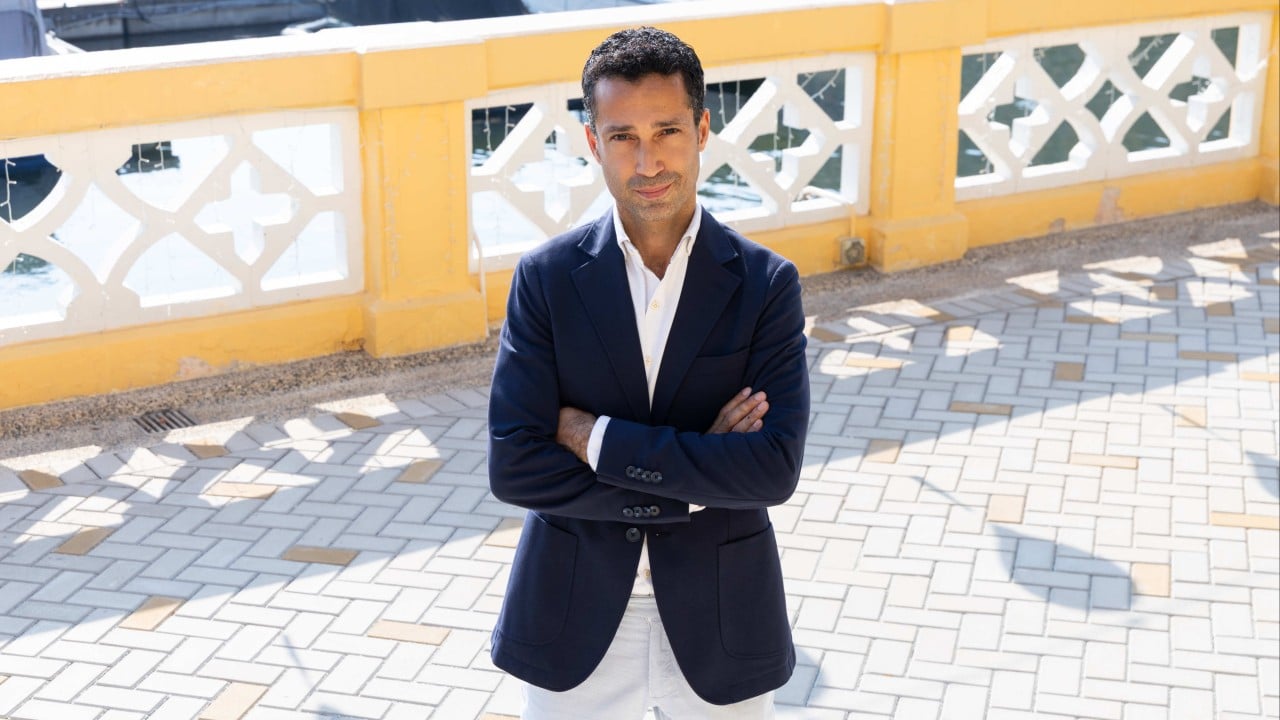
Former investment banker Shervin Sharghy takes a practical approach to plastic recycling, first asking whether it makes financial sense before tackling the technical challenges.
The founder of Hong Kong-based EcoBricks said the main obstacle to recycling plastic was often economic rather than scientific.
Collecting, sorting, cleaning and processing waste plastic typically costs more than producing new materials from oil and gas, particularly at the small scale at which most recyclers operate.
Sharghy is a finalist for the Spirit of Entrepreneurship Award in this year’s Spirit of Hong Kong Awards, co-organised by Sino Group and the South China Morning Post.
He founded EcoBricks after leaving investment banking to help tackle the global plastic waste crisis.
The company turns plastic waste into concrete, the world’s most widely used material. It manufactures fully certified concrete paving and wall blocks in Hong Kong, helping to reduce waste and carbon emissions.
“The first step was to prove that there is a sustainable business model,” he said. “Sustainable solutions come after.”
The company developed detailed financial models alongside its technical research. Once it had demonstrated that the technology was commercially and technically viable, seed funding enabled it to establish a pilot facility and produce bricks on an industrial scale.
EcoBricks believes customers should not have to pay extra for environmental benefits. It competes with conventional materials on cost and quality while helping customers reduce waste, cut costs and meet their sustainability goals.
Customers can send concrete, glass, ceramics and plastic to its facility for recycling, lowering their disposal costs. They can then buy products made from their own waste.
“I want to solve a problem for them first. It’s not just a case of ‘buy my brick’. It’s ‘let me help you to solve a problem’. We believe that sustainability should be a win-win.”
Sino Group was an early commercial customer, with its Gold Coast development in Tuen Mun serving as a testing ground.
Sharghy said an initial installation of about 700 bricks was monitored for several months before about 15,000 were installed in January 2022. Following several years of monitoring, a much larger area has now been paved with EcoBricks.
The company’s cold process can handle mixed plastics and materials rejected by conventional recyclers. It can therefore work with existing collection and sorting systems, using processed plastic that might otherwise end up in landfills, incinerators or Hong Kong’s natural environment.
The company has also considered what happens when its products reach the end of their useful lives. Sharghy said used EcoBricks could be recycled entirely into new ones, a capability he regarded as essential to keeping materials in use rather than discarding them.
Manufacturing in Hong Kong nevertheless presents challenges. Suitable industrial sites are scarce and expensive, while heavy machinery requires space, power and appropriate land-use permissions.
But Sharghy said the city also offered advantages for an early-stage venture bringing new technology to market. Its compact market and access to government, major businesses and decision makers could help new ideas gain traction quickly.
“A lot of people ask us why we set up our company in Hong Kong. What really matters is the ecosystem, the infrastructure and the relationship between industry, government and start-ups,” he said.
He added that Hong Kong’s stringent building standards and internationally renowned clients also helped establish EcoBricks’ credibility when approaching overseas markets.
In response to customer demand, the company has expanded beyond outdoor paving to offer fire-certified internal wall blocks. It is also developing several products to help recycle more of Hong Kong’s waste.
Sharghy said sustainable materials were more likely to gain acceptance when customers also had a clear financial incentive to use them.
“Do it because it’s good for your business and it’s good for the planet,” he said.
The Spirit of Hong Kong Awards were established in 2013 to recognise the city’s unsung heroes and organisations whose work might otherwise escape public attention.
KioskNews shows a cleaned-up reading view extracted from the publisher’s page — the original always lives on their site, not ours.