Asean’s Myanmar peace push needs Japan’s ‘silent diplomacy’
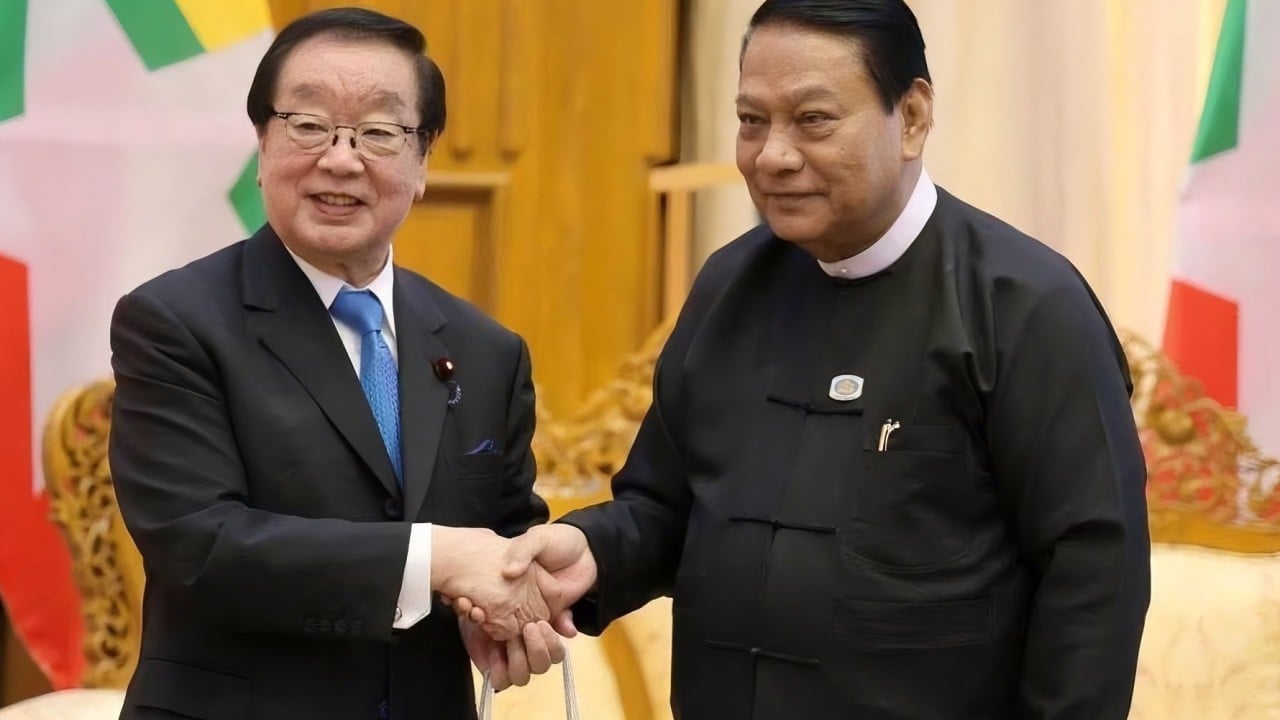
Japan has long established itself as a pioneer of mediation in Southeast Asia. In 1990, for example, its officials helped broker talks between Cambodia’s warring factions, supplementing international efforts to end conflict in the country.
Now, Tokyo is seeking to upgrade its diplomatic toolkit. The Ministry of Foreign Affairs’ International Peace Mediation Unit was set up in March, followed by the launch of the Parliamentary Association for Peace Mediation in May.
Around the same time, the Tokyo-based Sasakawa Peace Foundation separately opened a Centre for Mediation Support, providing another channel for Japanese actors to engage in peacemaking efforts.
For Myanmar, these developments are relevant because Japan has stayed quietly engaged since the coup. Yohei Sasakawa, the well-connected Japanese philanthropist, calls this Japan’s “silent diplomacy”. Tokyo took part in the Oslo Forum’s round table on Myanmar in June, Sasakawa himself visited Naypyidaw in August and two Japanese parliamentarians followed a month later.
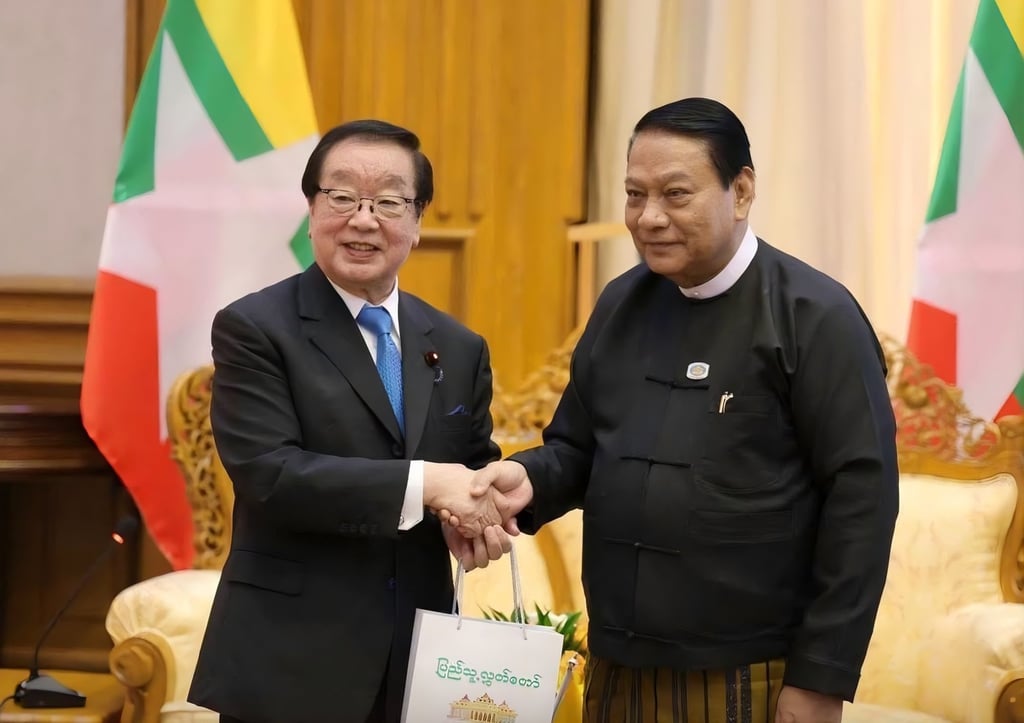
Japan has engaged in dialogue and offered to mediate peace in Myanmar for years. When Western nations condemned the violent crackdown on the Rohingya in 2017, for instance, Tokyo worked through private actors to promote human rights in Rakhine state.
In November 2020, Sasakawa mediated an informal humanitarian ceasefire between the military and the Arakan Army (AA), despite the civilian government designating the group a terrorist organisation that same year. He kept mediating after the 2021 coup and successfully brokered another informal ceasefire in November 2022.
That second truce lasted for about a year; thereafter, the AA launched a new offensive in 2023 and took part in Operation 1027 as part of the Three Brotherhood Alliance, alongside the Ta’ang National Liberation Army (TNLA) and Myanmar National Democratic Alliance Army (MNDAA). By late 2023, the AA had begun capturing townships in Chin and Rakhine states, contributing to heavy territorial losses for the military.
For Myanmar’s military, the collapse of that 2022 ceasefire left a lasting impact on how it views international mediation. The junta had hoped the truce would improve its international reputation and rehabilitate its image in Rakhine, especially after its 2017 crackdown on the Rohingya. Instead, the AA used the pause in fighting to consolidate local support and mobilise its forces. It then reneged on the agreement and resumed its offensive following Naypyidaw’s abysmal performance against the Three Brotherhood Alliance in northern Shan state.
The resumption of hostilities not only undermined Sasakawa’s mediation efforts but also appears to have convinced the regime that ceasefires are increasingly ineffective at serving its interests. Moreover, the AA’s distrust of external mediators grew too. China’s subsequent mediation led to the transfer of Lashio, northern Shan state’s economic hub, from the MNDAA to the junta in 2025. The handover of this city may have further reinforced the AA’s scepticism towards externally brokered arrangements and made it less willing to return to the negotiating table.
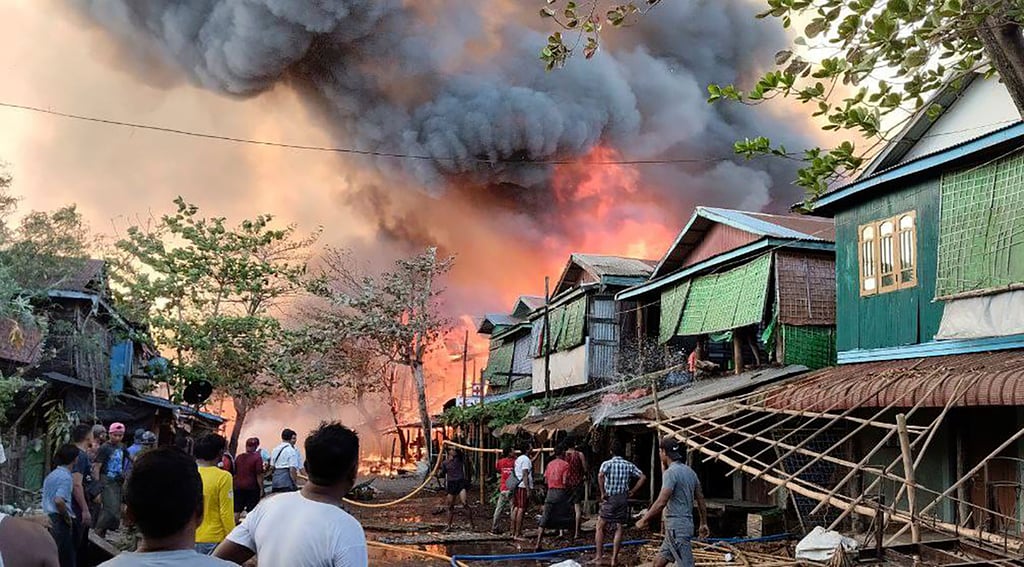
Despite the military’s reservations about another internationally brokered ceasefire, Sasakawa’s recent visit to Naypyidaw suggests it has not entirely ruled out externally facilitated deals. Japan also has the advantage of being viewed as more trusted and less coercive than other major powers. This lends it greater credibility as a mediator both sides in a civil war might accept.
As Japan steps up its peace diplomacy, the Association of Southeast Asian Nations could find in it an effective partner on Myanmar. Tokyo’s long experience of engaging the country through its kakehashi (bridging) approach, including its previous ceasefire efforts, could help inform the benchmarks for measuring progress in Myanmar that Asean foreign ministers agreed on July 12 to develop.
Possible entry points for this encompass the agreement struck in May between Japan and the Philippines to strengthen cooperation on peace mediation expertise and capacity, as well as the attendance of representatives from the Singapore embassy in Tokyo at the inaugural meeting of the Parliamentary Association for Peace Mediation that same month.
According to the ISEAS - Yusof Ishak Institute’s latest State of Southeast Asia Survey, Asean members place a relatively high level of trust in Japan to “do the right thing” for peace, security and prosperity, which will help it to remain a consistent and reliable partner regardless of which member state holds the Asean chair.
Tokyo remains attentive to Beijing’s growing influence in the Myanmar peace process. China has been expanding its peace mediation role in Southeast Asia, as its shuttle diplomacy during the 2025 Thailand-Cambodia conflict showed. It has also played the most prominent external role in Myanmar’s ceasefires, though largely by favouring bilateral engagement over supporting Asean-led efforts.
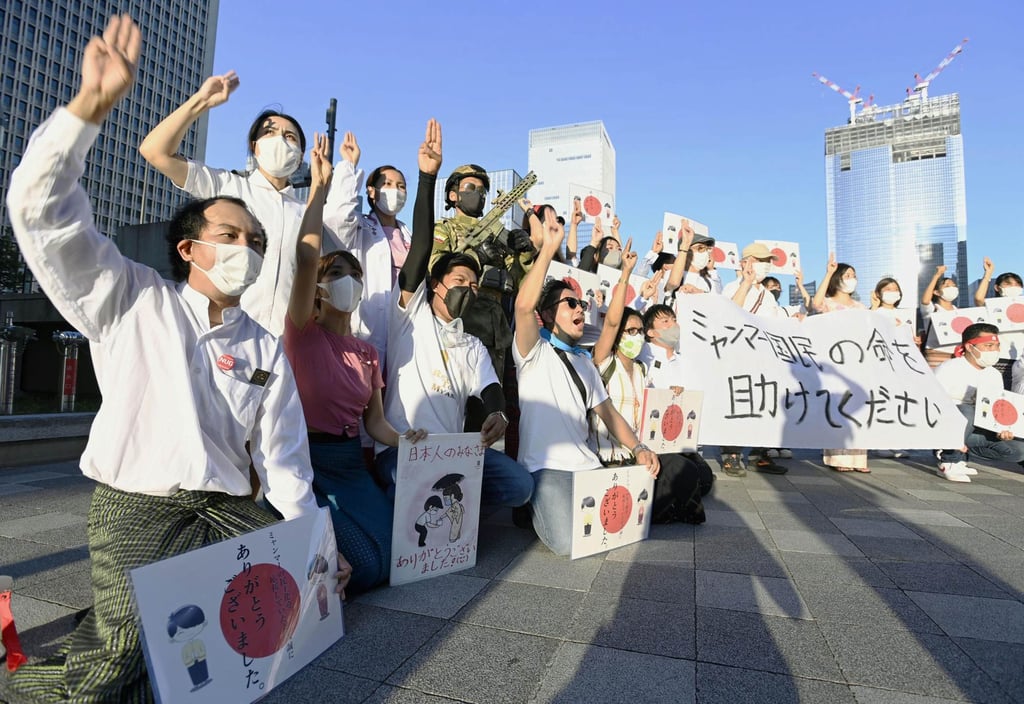
Japan’s approach to peacebuilding, meanwhile, has a strong Official Development Aid component, stressing the importance of human security as the basis of long-term conflict prevention and delivering material benefits to regional partners. About 300 Japanese companies also continue to operate in Myanmar, giving Tokyo potential economic leverage.
Japan’s decades of engagement in the Mindanao peace process demonstrate its ability to sustain long-term peacebuilding efforts. It also has deep institutional experience working with Asean mechanisms for humanitarian and emergency response assistance. Through its Official Security Assistance scheme, for example, it supplied material support to Asean observer teams during the Thailand–Cambodia dispute.
Tokyo thus knows how to support an Asean-led process without taking ownership of it. A similar model could make Japan a quiet partner in Asean’s Myanmar engagement, providing mediation experience and resources while supporting the bloc to steer the dialogue process.
Hirokazu Omatsu is an independent researcher focusing on peacebuilding and civil conflict. Kyi Sin is a Research Officer in the Myanmar and Thailand Studies Programmes at ISEAS - Yusof Ishak Institute. This article was first published by the institute’s commentary website fulcrum.sg
KioskNews shows a cleaned-up reading view extracted from the publisher’s page — the original always lives on their site, not ours.