‘My biggest fear was being shot down’: how an injured Ukrainian soldier was evacuated by drone
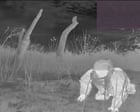
Artem Lytvyn was crossing a field when the bang happened. Up ahead was a tree line. Not far beyond that the Russian border. The 25-year-old Ukrainian soldier had spent five days trekking to a dangerous forward position in the north-eastern Kharkiv region. Along the way he and six comrades dodged drones, and killed two Russians in a foxhole.
A few hundred metres short of his destination, he trod on a mine. “I didn’t hear anything. It was a magnet type. My rifle set it off,” Lytvyn said. He applied two tourniquets to his shattered right leg and pulled off his combat boot. Fellow soldiers dragged him and another wounded platoon member, Siava, into bushes. The same blast ripped off Siava’s leg. He died two days later.
Evacuating casualties from the frontline of Russia’s war in Ukraine is notoriously difficult. In the five years since Vladimir Putin’s full-scale invasion, it has become a heavily surveilled and ever-widening “kill zone” where constant drone attacks mean even armoured vehicles can no longer be used. Soldiers are often forced to spend months in dugouts without rotation.
Members of Lytvyn’s brigade, the 129th, tried to evacuate him. They dispatched a remote-controlled land robot used to deliver supplies and transport casualties but it and three further robots got stuck. The terrain was unfavourable: rivers, muddy fields, a forest of oaks and aspens. A 10-person stretcher party set off but after five days it had covered just 6.8 miles (11km) – half the distance to where Lytvyn lay.
“I felt really bad. I couldn’t eat or sleep. I slept one night in eight days,” he said “The guys dropped pain killers, cigarettes and food – porridge and stewed meat – by drone.” With no prospect of rescue he requested a crutch, determined to hobble out. But when he tried to stand up he immediately fell over.
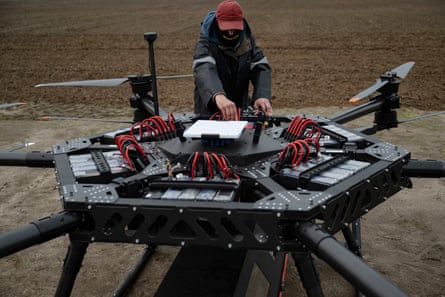
Soon after this hopeless moment, Lytvyn’s radio crackled into life. “They told me they were sending a huge bird,” he said. The “bird” was a gigantic drone capable of carrying a 150kg (330lb) payload. Manufactured by the Ukrainian company SkyFall, the unmanned aerial vehicle (UAV) came with a coffin-like capsule suspended beneath six powerful black rotor blades.
A rescue using this kind of purpose-built evacuation vehicle had not been tried before. One of the pilots involved on the unmanned mission, Andrii, described it as complex and risky. The StarGate drone they would use was big and conspicuous – a tempting target for Russia’s elite Rubicon drone force, which could either bring it down using smaller UAVs, or simply jam it so it tumbled to the ground.
Andrii said he and his colleagues from the 475th Separate Assault regiment (also known as Code 9.2) plotted the route for a week. “I didn’t sleep because I was thinking about this situation. I just napped on the couch for 15 minutes,” he said. The drone was fitted with a navigation module using AI so it could continue to fly on a mapped route even if its GPS system was scrambled – at least in theory.
Eight days after his foot was blown off, at 3am on 21 October, Lytvyn heard a faint noise in the inky distance. The whirring grew louder and soon the drone landed next to him. The next few minutes would determine whether he survived or perished. A remarkable video filmed by the drone’s onboard camera shows Lytvyn crawling out of his hiding place, pushing himself forward using his hands and left leg.
“I climbed into the capsule. I lit a cigarette, closed the hatch. That was it – I looked out at the horizon and took off. I left my radio and my assault rifle behind,” he said. “At that moment I felt happy and excited.” The drone flew low over a night-time landscape. “I wasn’t worried about technical failure. My biggest fear was being shot down.”
Andrii followed its progress nervously from a remote location. “Our hands were sweaty and shaky. It was completely silent in the room. Everybody was anxious,” he said. His unit had dispatched other drones to escort Lytvyn on the 18-mile journey. They included heavy duty Vampire drones, which bombarded known Russian positions. The idea was to create a diversion. It worked.
Twenty minutes later the StarGate drone landed in a clearing. A voice cried out: “Are you friendly?”. Lytvyn shouted back: “Friendly”. In the control room there was relief and applause. “I’ve never done anything scarier and more important in my life,” Andrii said.
Ukrainian soldiers materialised out of the gloom and carried Lytvyn into a small cellar. They cut off his uniform and doused his leg with hydrogen peroxide to kill the maggots – a frequent problem with untreated battlefield wounds. The soldier had previously cut away parts of his foot with a knife. The treatment did not work. “The maggots were still there. There were loads of them,” Lytvyn said.
A few hours later, around lunchtime, an armoured Humvee rolled up and took him to an ambulance, which drove him to an operating theatre in Kharkiv, Ukraine’s under-fire second city. There, surgeons gave Lytvyn a blood transfusion and amputated his right leg at the knee.
He was transferred to a military hospital in the western city of Lviv, where he is now recuperating on a ward with four other soldiers who have lost limbs.
“What happened to me is a miracle. I rose into the heavens,” Lytvyn said, adding: “Travelling by StarGate is better than by land robot. A ground robot moves slowly and throws you around as if you are in a washing machine. If you are hurt, it can be painful.”
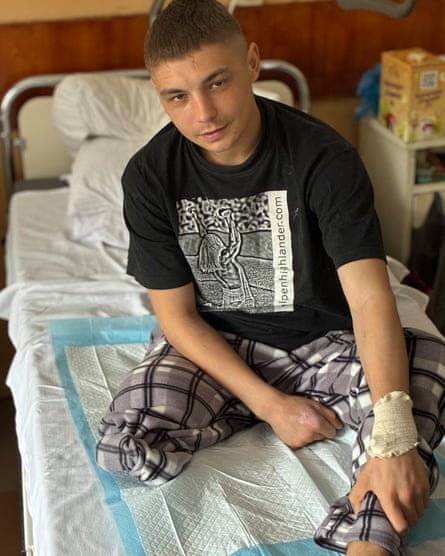
Lytvyn’s girlfriend, Alyona, and his younger brother, Nikita, perched on the end of the bed. They only learned that Lytvyn was seriously wounded after his extraordinary escape. From time to time they brought him cups of tea and cake. The soldier added: “The ride was cool. I’d love to fly again. Not in a situation like that, of course, but I’d just like to have a go. We need to develop this system further.”
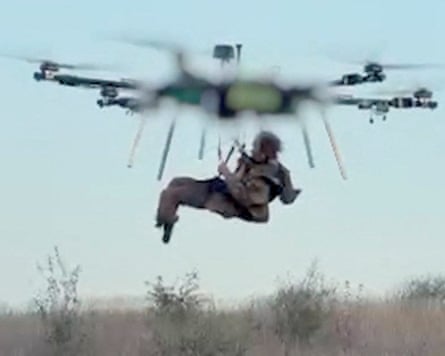
Last month, another wounded soldier, 49-year-old Kostiantyn Vlasenko, became the first to be airlifted by drone from the frontline after 491 days at his position. It was a different drone to the StarGate one and Vlasenko dangled from a harness on his nine-mile journey. A third soldier, 54-year-old Andriy “Donbas”, was last week rescued by drone.
Europe’s biggest war since 1945 has in the last years evolved into an all-out drone battle, characterised by competition and rapid technical innovation. SkyFall is just one of many Ukrainian defence industrial startups. The company also manufactures heavy bombers, mid-range strike drones and a high-speed interceptor that can ram the Russian jet-powered UAVs terrorising Kyiv and other cities.
By the end of the year it plans to produce 1,000 StarGate drones a month. “I believe that thanks to them dozens of lives will be saved. Maybe hundreds,” Andrii said.
The extreme efforts made by Ukrainian regiments to rescue wounded combatants contrast with the attitudes shown by Russian commanders who order soldiers into “meat assaults” with little chance of survival. According to Kyiv, 54,400 Russian soldiers were killed or injured in October – the highest figure since the war began.
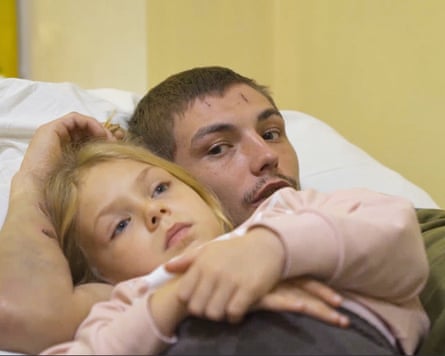
Lytvyn’s plans for the future are uncertain. Home is Dnipropetrovsk oblast in south-eastern Ukraine. “I need to recover first,” he said, adding that he wants to spend time with his seven-year-old daughter, Mia.
But he said he had no regrets about going on a risky mission to the edge of Ukrainian-held territory – from where he very nearly did not return. “This is our country, our territory. We are defending it.”
KioskNews shows a cleaned-up reading view extracted from the publisher’s page — the original always lives on their site, not ours.