These 10 Sci-Fi Movies Are Officially the Best of All Time
As a genre, science fiction can be boundlessly creative, whether it comes from low budget ingenuity or big budget ambition. Look at any one of the best sci-fi movies ever made and what you'll notice immediately is how different they are from each other. They're all singular movies that collectively represent how expansive the genre they share truly is. From time travel comedies to dystopian dramas to interstellar horror, these movies are the best representation of what sci-fi cinema has to offer.
What makes a sci-fi movie one of the best doesn't necessarily have anything to do with how extravagant its visual effects are or how deeply it explores scientific concepts. Many of the best simply use the genre as a means to an end to tell a more emotional story, whether that involves a latchkey child becoming best friends with an alien or a teenager trying like hell not to sleep with his own mother. Sci-fi movies can be fun, weird, or thought-provoking, and that's on full display in the best ten of all time.
'Metropolis' (1927)
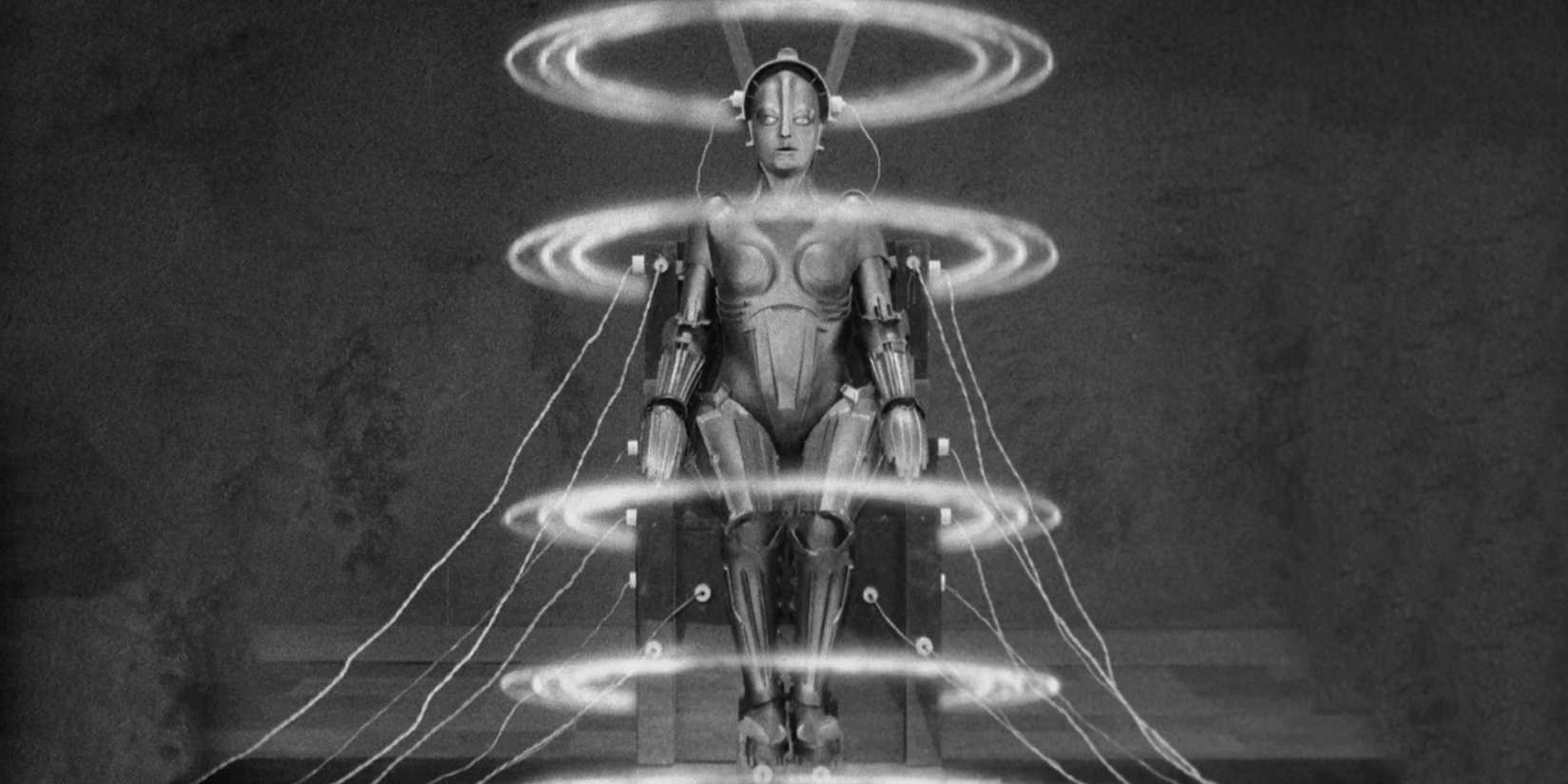
One of the earliest and most influential sci-fi films of all time, Fritz Lang's Metropolis is still astounding for how impressive its effects are. The film was the first to depict a sci-fi city of the future and one of the earliest to feature an android. Both its sprawling cityscape and its robotic designs have both become enduring icons of the genre, and their influence is visible in dozens of sci-fi films that would follow. Similarly, the themes of class warfare and wealth disparity have also proven to be enduring. While that's more of a sad statement on modern society, it gives Metropolis a power that's universal.
The titular city is the setting for the film's central conflict between the wealthy elite who live at the literally highest levels of society and the working class who keep their city running by operating the machinery in its deepest pits. Into this conflict comes the son of the city's master, who seeks to become the mediator between both sides. It's a simplistic depiction of class conflict with a naive resolution, but the broader elements of the plot are still affecting. That, along with its visionary production and character designs, is what has affixed Metropolis as one of the best sci-fi films of all time.
'Forbidden Planet' (1956)

Just as influential and impactful on the sci-fi genre as Metropolis, the sci-fi film Forbidden Planet established the foundation on which all future interstellar adventures would be built upon. The two greatest lines of influence that can be drawn from the film lead directly into Star Wars and Star Trek, and from there branch into hundreds of beloved sci-fi films, television series and beyond. That foundation was, of course, based on the blueprints set by many previous sci-fi authors and filmmakers, as well as some flourishes from William Shakespeare's The Tempest, but it established the new standard.
The elevation of B-movie elements with an A-level budget and ambition is a descriptor that's been applied to many classic sci-fi movies, and Forbidden Planet may be the truest first example of that. With a budget of nearly $2 million, the film was able to bring the interstellar journey of its spacefaring crew to the remote planet of Altair IV to life with a fidelity that just wasn't present in its many B-movie contemporaries. Even if the effects may look quaint through a modern lens, the designs are still iconic and one of the purest filmic influences on retrofuturism. From Robby the Robot to the costume design to the electronic score, every element of Forbidden Planet represents the ideal form of sci-fi escapism.
'2001: A Space Odyssey' (1968)

If films like Metropolis and Forbidden Planet represent the bedrock of the sci-fi genre, Stanley Kubrick's 2001: A Space Odyssey was a tectonic shift. A truly audacious cinematic experience that sought to bring a new level of realism to the genre through unparalleled levels of research and visual effects technology. More than just aging gracefully, the film has only become more impressive with time, through its near-seamless visual effects, and reverberating themes. 2001 elevated the entire genre of science fiction, set the standard for hard sci-fi and continues to inspire filmmakers and enrapture audiences.
Kubrick's notoriously meticulous level of control has never been more apparent than in 2001, where almost every shot represents some kind of groundbreaking technical achievement. From the iconic opening of the sun rising set to "Also Sprach Zarathustra", the film announces itself as something entirely new and different for science fiction. While its plot of a group of astronauts investigating the re-emergence of an alien monolith is relatively straightforward, it's grappling with much larger ideas regarding humanity's place in the universe and our relationship with technology. 2001: A Space Odyssey is science fiction filmmaking at its highest level.
'Stalker' (1979)
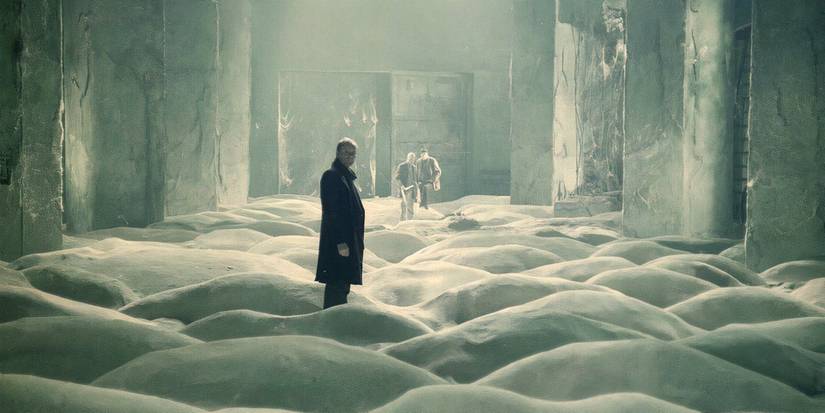
While 2001 has received plenty of acclaim from critics, audiences and filmmakers, director Andrei Tarkovsky found its focus on technological innovation over emotional content to be a soulless pursuit. That inspired him to make his first sci-fi masterpiece, Solaris, which focused on the cosmic effects of space on the human psyche. The director would get even into deeper psychological territory with his post-apocalyptic Stalker. It's an examination of human desire, faith and purpose, made with Tarkovsky's typically patient style of filmmaking that slowly draws the audience into its dark, surreal world.
Loosely inspired by the novel Roadside Picnic, by Arkady and Boris Strugatsky, the film tells its own story of the titular character, who serves as a guide through the supernatural area known as the Zone for those seeking to reach the Room, which has the ability to make anyone's innermost desires real. It's an allegorical film that has been examined through every lens imaginable, its opaque nature making it all the more malleable to interpretation. Stalker is a slow, methodical journey through human nature that's one of the most rewarding sci-fi experiences of all time.
'Alien' (1979)

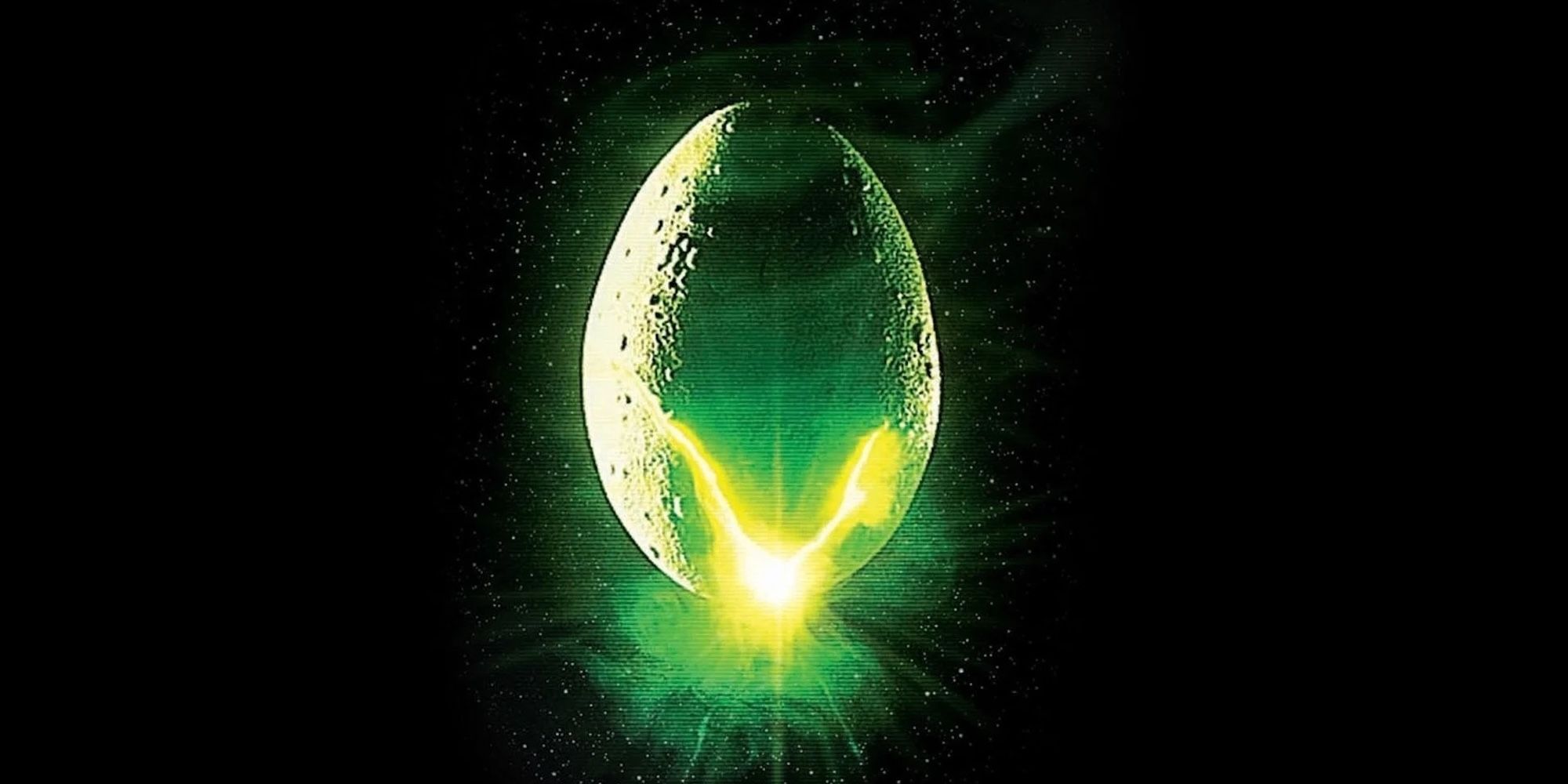
Ridley Scott is an essential sci-fi filmmaker thanks to movies like Blade Runner and The Martian, but his greatest contribution to the genre is his first entry into a cinematic universe that has continued to expand. Though there have been multiple sequels, prequels and a television series, with two entries directed by Scott himself, there's no improving on the purity of the original Alien. Taking a B-movie concept filtered through the warped mind of writer Dan O'Bannon, shaped by the cutthroat efficiency of producers Walter Hill and David Giler, and examined through Scott's keen visual eye, Alien is a grimy, slimy horror film filled with cosmic sci-fi terror.
What could have been a cheap Roger Corman production about an alien monster running amuck on a spaceship is elevated in every way by all its singular elements. The production design deftly combines industrial sci-fi with gothic horror, the biomechanical and hypersexual creature design by H.R. Giger has no equal, and the performances are perfectly grounded. Taking influence from films like It! The Terror from Beyond Space and Planet of the Vampires, Alien perfected space horror and every film that has come since has existed in its shadow.
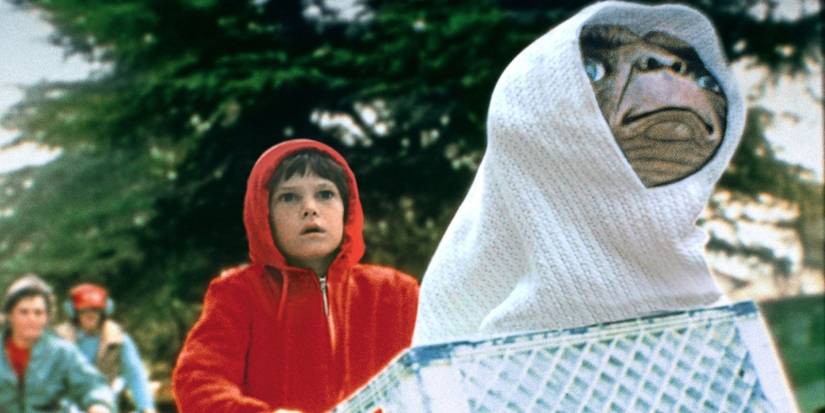
While many filmmakers have exploited aliens for the purposes of eliciting primal fear, Steven Spielberg has more often used them for the purposes of wonder. It's at the core of his first sci-fi film, Close Encounters of the Third Kind, and is the beating heart of his best sci-fi film, E.T. the Extra-Terrestrial. What began in its gestational form as another alien horror movie instead became a fully formed fable of childhood, which no filmmaker may be better suited for than Spielberg. It engages you on a purely emotional level like no other science fiction film in history.
While Spielberg's production company, Amblin Entertainment, has produced a wide variety of films across every genre, E.T. remains its definitive film, as evidenced by the use of its most iconic image as the company logo. The story of a young boy who befriends an alien exemplifies the emotional and awe-inspiring aspects of Spielberg's filmography that continue to influence family and young adult-oriented genre fare. Few filmmakers inspire the same kind of raw emotion as Spielberg, and no film of his does it better than the best sci-fi film to ever make anyone fall in love with a wrinkly-faced alien.
'Back to the Future' (1985)
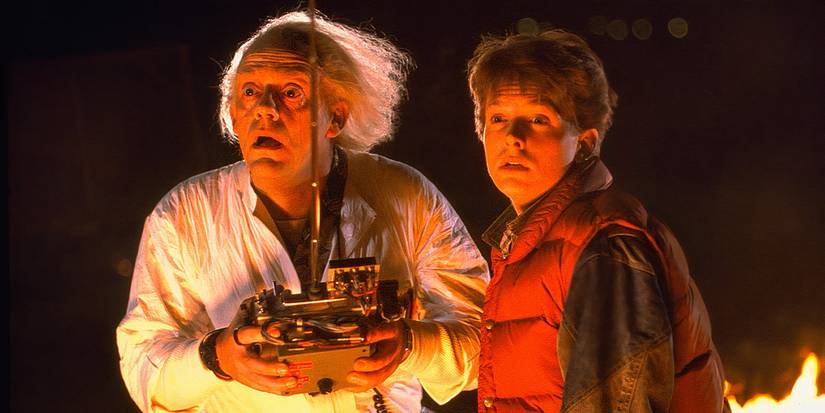
One filmmaker who is undoubtedly indebted to Spielberg for the success of his career is Robert Zemeckis, who was a protégé of his and established his own blockbuster career under him in the 80s, beginning with Back to the Future. Though both directors share a fondness for spectacle and technological innovation, Zemeckis has a slightly more satirical edge than Spielberg that makes his time-travel teen comedy classic more subtly subversive. When the film was first being pitched to studio executives, it was deemed too sweet by the standards of teen comedies of the era, and too sexual by those at Disney, demonstrating the strange balance of the film.
That balance is the result of the brilliant script by Zemeckis and Bob Gale, who were inspired by the idea of being able to meet their parents as teenagers and combined it with a mad scientist plot. While the sci-fi aspects of the plot are merely used as a mechanism for its inciting incident and to add a layer of stakes to it, they are also what allows for the most cleverly structured cause and effect jokes. That sense of humor, and the relationship between Michael J. Fox's Marty McFly and Christopher Lloyd's Doc Brown, has had its own butterfly effect on pop culture, with everything from Avengers: Endgame and Rick and Morty a direct result of it.
'Brazil' (1985)
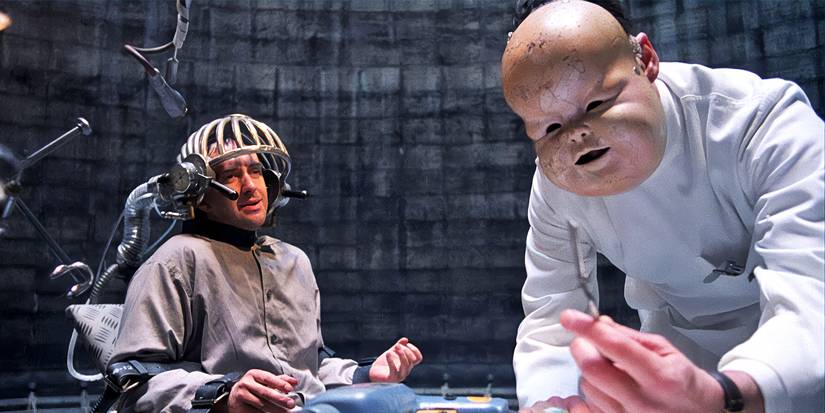
For a filmmaker with a far sharper satirical edge, there's Terry Gilliam, the former member of Monty Python and animator who has crafted a career out of stylized, surreal odysseys that don't just blur the lines between genres so much as they melt them together. His greatest film, and one of the best sci-fi films of all time, is the bureaucratic dystopian nightmare Brazil, which encapsulates both Gilliam's visual extravagance and his absurdist point of view. Inspired equally by George Orwell's 1984 and Federico Fellini's 8½, the film combines the dystopian themes of the former with the surreal style of the latter into one of the most bitterly funny sci-fi movies ever made.
The design of the film's dystopic future carries on the lineage of classic films like Metropolis, and inspired filmmakers as varied as Tim Burton and the Coen Brothers, but it serves as an out-of-time depiction of a totalitarian society defined by its bureaucracy and consumerism. When a film's plot is incited by a bug that creates a typo that leads to an innocent man being tortured to death, it's announcing exactly what kind of bizarre journey it's going to take you on. Brazil demonstrates how science fiction is often better suited to exposing the absurdities of the real world, and no filmmaker is better suited to exposing absurdity than Gilliam.
'The Prestige' (2006)

Christopher Nolan is better known as a filmmaker of spectacle, and that applies to his biggest sci-fi films, Inception, Interstellar, and Tenet, but his greatest film is the one that doesn't fit as neatly into any genre. The Prestige, based on the novel by Christopher Priest, is a wholly unique cinematic experience, a Victorian-era tale of obsession and revenge based in the world of stage magicians which introduces sci-fi elements through a fictional version of real-life inventor Nikola Tesla. It's made with the same devotion to practical craft and narrative misdirection as all of Nolan's films, but is also his most precise and revelatory.
The star personas of Christian Bale and Hugh Jackman are exploited in the roles as dueling magicians, one a technical perfectionist, the other a charismatic showman. Their conflict is the perfect representation of Nolan's own evolution as a filmmaker and the balance between creating thought-provoking illusions and providing grand entertainment. The sci-fi element of the plot could very well represent Nolan's own pursuit of technical innovation, and the danger of losing himself within those mechanics. The Prestige was Nolan's last modestly budgeted movie, and while the showman in him may have won out, there's nothing more satisfying than this perfect magic trick of a sci-fi film.
'Arrival' (2016)

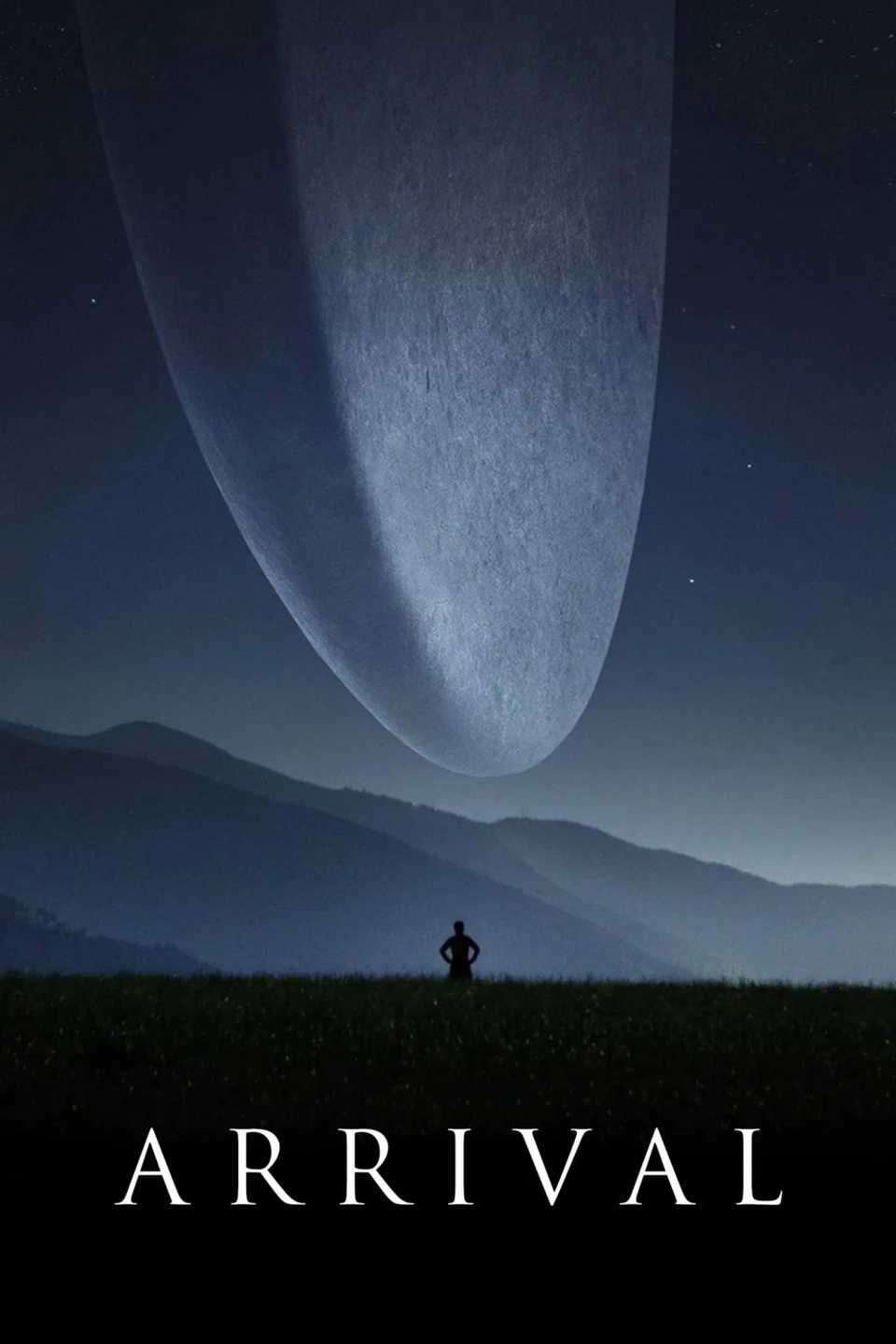
Denis Villeneuve has had a similar career trajectory as Nolan, starting with dark crime films and thrillers before ascending to blockbusters, with an emphasis on science fiction. Also similar to Nolan, Villeneuve's greatest sci-fi film is the one that preceded his larger-scale epics. While Arrival doesn't have the expansiveness of films like Dune or Blade Runner 2049, it's epic in its exploration of human emotion, connection and communication. Like all the best sci-fi films of all time, Arrival uses science fiction to explore the human experience in a way that no other genre can.
Amy Adams gives an award-worthy performance as the linguist brought in to attempt communication with a race of aliens that has appeared across the world and avoid an international, and intergalactic, conflict. That provides the narrative with tension and propulsion, but it's in the resolution of the alien communication, which allows a human to experience time in a non-linear fashion, that the film engages in its most emotional content. It raises questions of fate, choice and human experience, and it's what makes Arrival one of the best sci-fi movies of all time.
Arrival
- Release Date
- November 11, 2016
- Runtime
- 116 minutes
- Director
- Denis Villeneuve
- Writers
- Eric Heisserer
KioskNews shows a cleaned-up reading view extracted from the publisher’s page — the original always lives on their site, not ours.