Bank Indonesia boosts LCT implementation to maintain rupiah stability
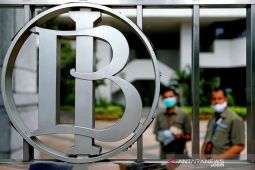
Jakarta (ANTARA) - Bank Indonesia (BI) continues to expand the implementation of local currency transactions (LCT) with key partner countries to safeguard the stability of the rupiah exchange rate amid ongoing global uncertainty and geopolitical tensions.
Speaking at a seminar organized by the National Development Planning Ministry (Bappenas) and the Asian Development Bank Institute (ADBI) in Jakarta on Wednesday, Head of the Macroeconomic Group at BI's Department of Economic and Monetary Policy Jardine A. Husman said the LCT framework aims to diversify international trade settlements away from heavy reliance on the US dollar.
According to Husman, strengthening the LCT framework forms part of the central bank's broader strategy to deepen domestic money and foreign exchange markets while reinforcing the resilience of Indonesia's external sector.
Indonesia currently maintains active LCT partnerships with several countries, including Malaysia, Thailand, Japan, China, South Korea, the United Arab Emirates, and Singapore.
In addition to expanding LCT usage, BI continues to deploy a comprehensive policy mix to maintain rupiah stability, including foreign exchange interventions in domestic and offshore markets, interest rate adjustments, and the deployment of Bank Indonesia Rupiah Securities (SRBI) to attract foreign portfolio inflows.
The central bank also maintains adequate liquidity across the domestic money market and banking system while tightening oversight of large-value US dollar purchases.
To support national economic growth and productivity, Husman highlighted that BI maintains close synergy with the government, particularly the Ministry of Finance.
"We coordinate very closely with the government, especially the Finance Ministry. We buy government securities in the secondary market to provide adequate liquidity for the market," Husman said.
BI is also enhancing macroprudential liquidity incentive policies to encourage bank lending to the real sector while accelerating payment system digitalization across the national economy.
Husman noted that Indonesia's external resilience remains strong, supported by foreign exchange reserves totaling US$146.5 billion, equivalent to 5.4 months of imports—well above the international benchmark of three months.
Despite persistent global headwinds, including sluggish global growth, sticky inflation, and tight monetary stances, Husman reaffirmed that Indonesia's economic fundamentals, controlled inflation, and digital transformation continue to support steady domestic growth.
Related news: Indonesia, BI strengthen policy coordination amid global uncertainty
Related news: BI vows policy continuity after Perry Warjiyo's surprise resignation
Related news: Economist urges new BI governor to lead rupiah stability
Translator: Shofi Ayudiana, Yashinta Difa
Editor: Azis Kurmala
Copyright © ANTARA 2026
KioskNews shows a cleaned-up reading view extracted from the publisher’s page — the original always lives on their site, not ours.