Every year, the Ganga is cleaned in Haridwar. Every year, the waste comes back
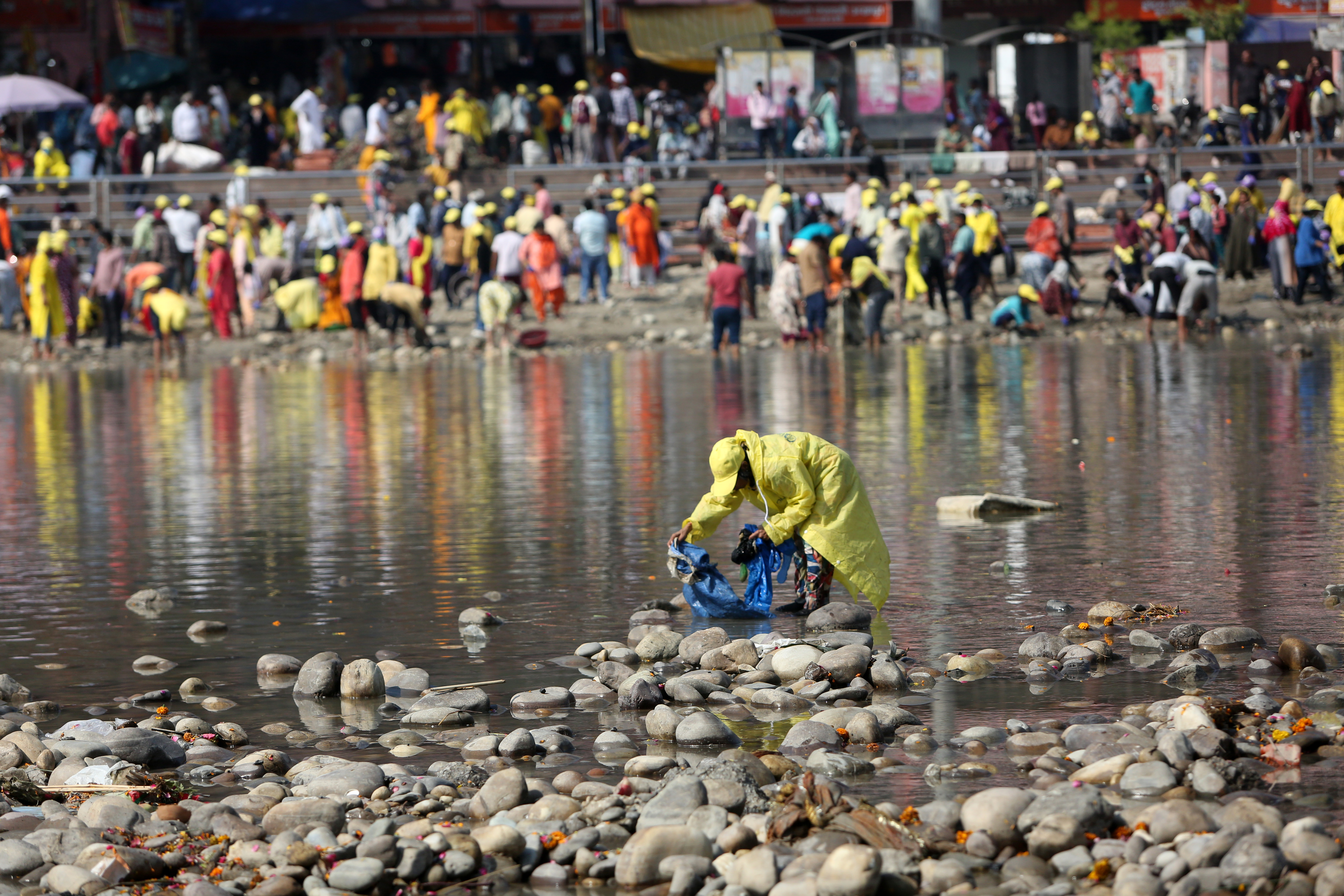
When the Ganga recedes, Vijay’s chances of finding a coin rises.
On the exposed riverbed, beneath the towering Shiva statue near the Old Vishnu Ghat in Haridwar, the 20-year-old stands bent over, sifting through the silt with his fingers. He has been doing this since he was 10. A green paper plate beside him holds the brown, muddied coins he has found. Some mornings, the riverbed gives him a little money; on others, nothing.
“Jab Ganga Maa chahti hai toh kuch paise de deti hai (When the Ganga wishes, she gives me a little money),” says Vijay, a Class 7 dropout whose parents work as daily-wage labourers at a construction site.
Every year, the annual closure of the Upper Ganga Canal for maintenance leaves the riverbed at Haridwar dry and exposed for about 18 days, filling Vijay and other wastepickers with hopes of better earnings. It’s also a brief 18-day window when authorities can clean around 10 km of the river stretch from Khadkadhi to Jwalapur, covering Har ki Pauri and its neighbouring ghats.
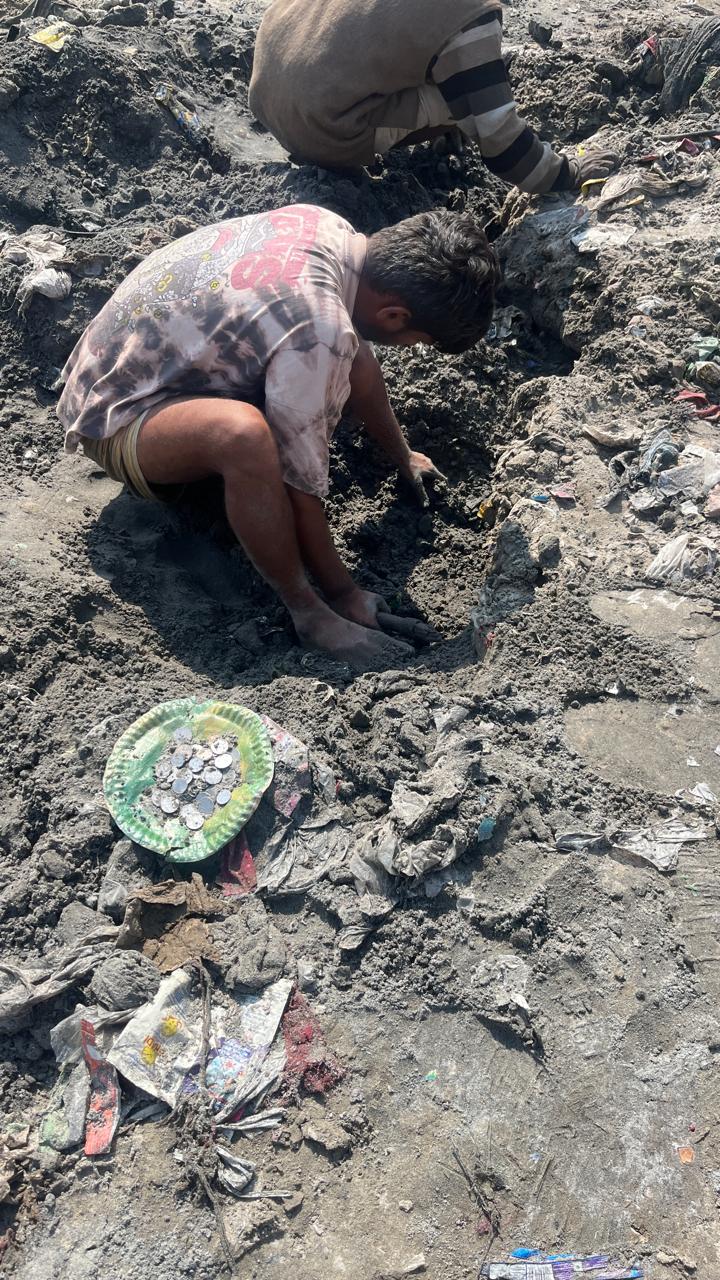 Vijay sifts through the silt, looking for coins. (Express Photo by Vidheesha Kuntamalla)
Eighteen days of an army of machines and around 200 men and women — municipal workers, volunteers, ashram inmates, and civic groups — working for about 12 hours daily, from 5 am until sundown, to clean what’s considered the most sacred of rivers.
But this year, there is an added urgency. The 2027 Ardh Kumbh, held once in six years, kicks off in January, when millions of pilgrims will descend on these banks. As the devotees throng the steps leading to the river, they will make more offerings to the river, but before that, the riverbed had to be cleaned of what was left behind: red and saffron garments, plastic bags, footwear, flowers, coconut shells and the remains of countless rituals.
Municipal workers and volunteers collected around 150 metric tonnes of waste — roughly the weight of 30-37 adult Asian elephants — from the ghats, before the Upper Ganga Canal was reopened and the waters returned to Har ki Pauri at midnight on November 7. During last year’s cleaning exercise, around 70-80 metric tonnes of waste was collected.
Story continues below this ad
For the pilgrimage city of Haridwar, the Ganga is much more than a river that ebbs and flows. At the iconic Har ki Pauri, said to be the point where the river enters the plains, the fast-flowing Ganga is the reason pilgrims arrive. It is the centre around which the town’s religious life, economy and everyday rhythms have been built.
But the question is whether the river that is cleaned every year can be protected from the waste that keeps returning to it.
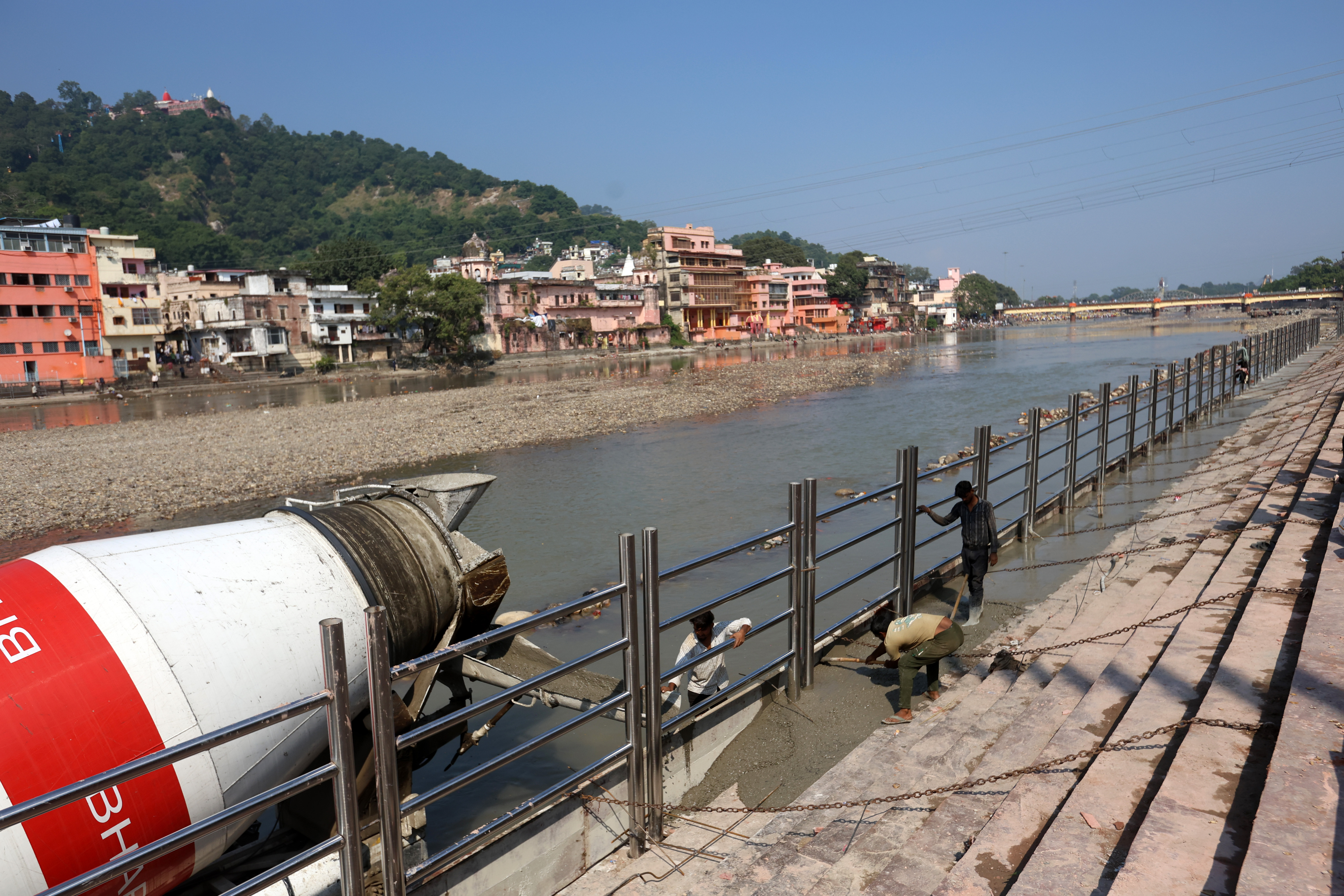 After the Upper Ganga Canal was reopened, the water returned to Har ki Pauri at midnight on November 7. (Express Photo by Gajendra Yadav)
What the river leaves behind
On a Saturday afternoon, 10 days after the Upper Ganga Canal had been shut for maintenance, an army of municipal workers, volunteers and members of social and educational organisations, some of them in fluorescent yellow jackets, spreads across the vast, exposed riverbed. After a few lumbering earthmovers scoop out the silt-covered ground, workers dig through the sludge to painstakingly retrieve layers of accumulated waste. Just as one patch is cleared, another reveals more trash. Tractors and JCBs ferry away enormous heaps of muck and discarded clothes to a designated point on the ghat for the municipality truck to pick it up.
Mahakal, a sanitation worker with the Haridwar Nagar Nigam, the city municipal corporation, had begun his day at 5 am. Every day for 18 days of the clean-up, the 50-year-old, dressed in a fluorescent reflective vest, gloves and boots, would work until 2 pm, fishing out shreds of clothes, plastic and other waste from the riverbed. Every year, he says, the cycle is familiar: the waste is removed, the water returns, and much of the same material accumulates again.
Story continues below this ad
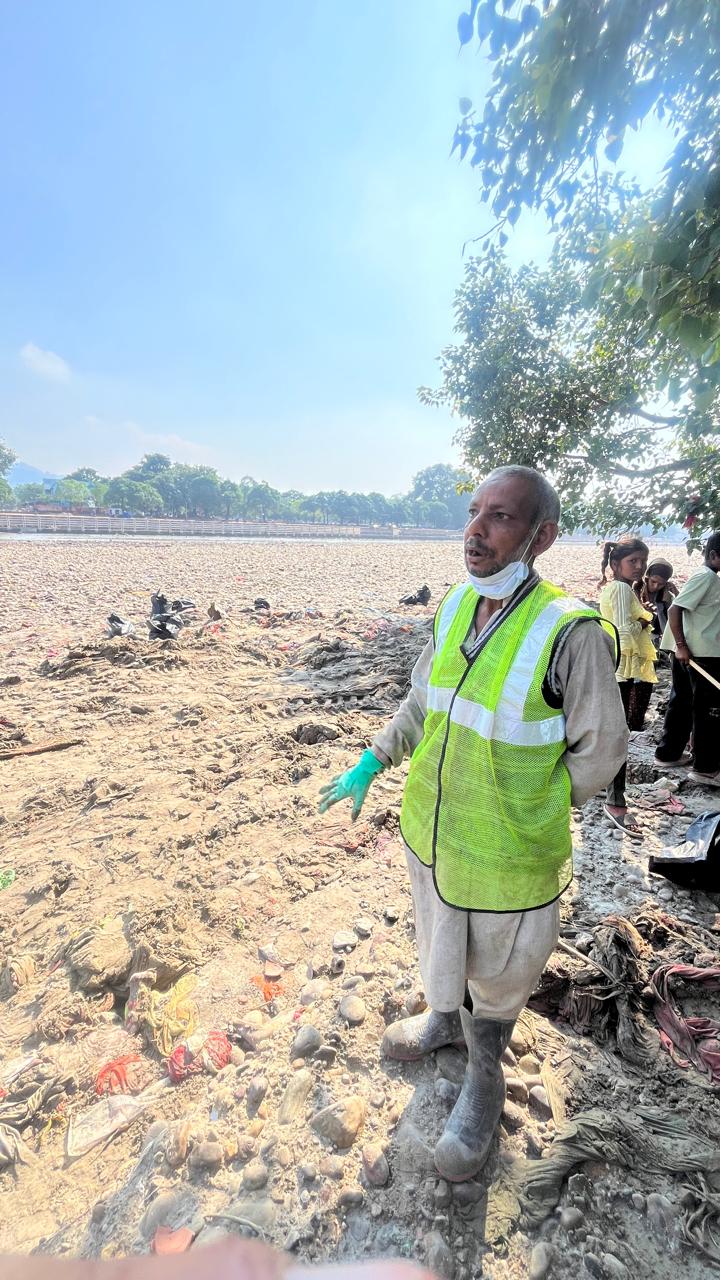 Mahakal is a sanitation worker with the Haridwar Nagar Nigam. (Express Photo by Vidheesha Kuntamalla)
To Mahakal, the Ganga’s plight feels personal. “Every year the waste keeps increasing. Log bas Ganga maa ko takleef pahunchate hai (People keep burdening the Ganga every year),” he says.
Heera Vallabh Pant, who is associated with the Shri Bhuvneshwari Mahila Ashram in Har ki Pauri, says discarded clothes and footwear form a substantial part of what volunteers collect. “Leaving behind clothes worn during a ritual bath is believed to be a way of shedding impurities or washing away sins. But what is an act of spiritual cleansing for one person becomes waste for someone else to remove,” says Pant.
During the Kanwar Yatra between July and August, Pant says, around 70 metric tonnes of clothes and footwear were collected from the ghats. “But this year’s cleaning operation was more intensive than in previous years,” he says.
Ahead of the 2027 Ardh Kumbh, the National Mission for Clean Ganga (NMCG), a Central government initiative to check pollution and rejuvenate the Ganga, has approved a Rs 115.61-crore sanitation and waste-management plan for Haridwar. The Municipal Corporation, in a first, is planning to deploy floating conveyor belts to intercept debris at key points along the Ganga, the Amarpura Ghat and Jatwara bridge, to collect waste.
Story continues below this ad
 ⠀
Speaking to The Indian Express, Haridwar Municipal Commissioner Nandan Kumar said, “These conveyor belts can only intercept floating debris. They cannot remove dissolved pollutants… their effectiveness will depend on how regularly they are cleared and how the collected waste is disposed of.”
For those who have spent their lives around the ghats, however, the problem is measured not just in tonnes, but in the distance between the river and the people who have built their lives around it. The ghats remain crowded with shrines, shops and places for rituals, but the water no longer reaches the steps the way some older residents remember it to.
Tarun Sharma, 42, a priest at the temple near the Old Vishnu Ghat, says he has heard older generations describe a time when the river flowed much closer. “The cleaning has been carried out for generations. The river has given people a lot; in turn all it gets is filth. Fifty or 60 years ago, the water would reach the entrance of the temple. I have heard it from my father, he was a priest at this temple before me… If Ganga ji is not here, how will we survive, how will devotees come?”
When the barrage gates shut
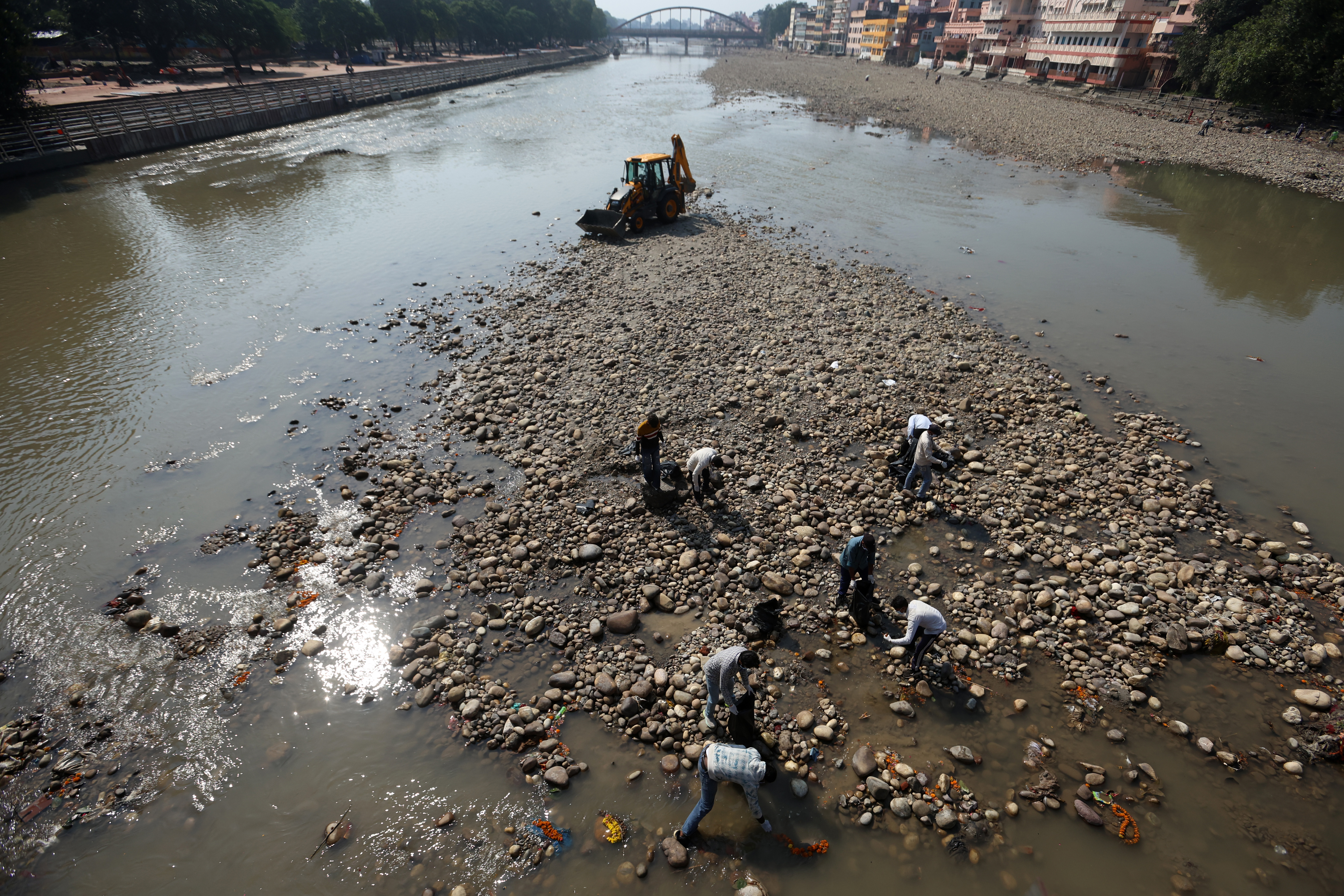 A JCB ferries away muck and discarded clothes. (Express Photo by Gajendra Yadav)
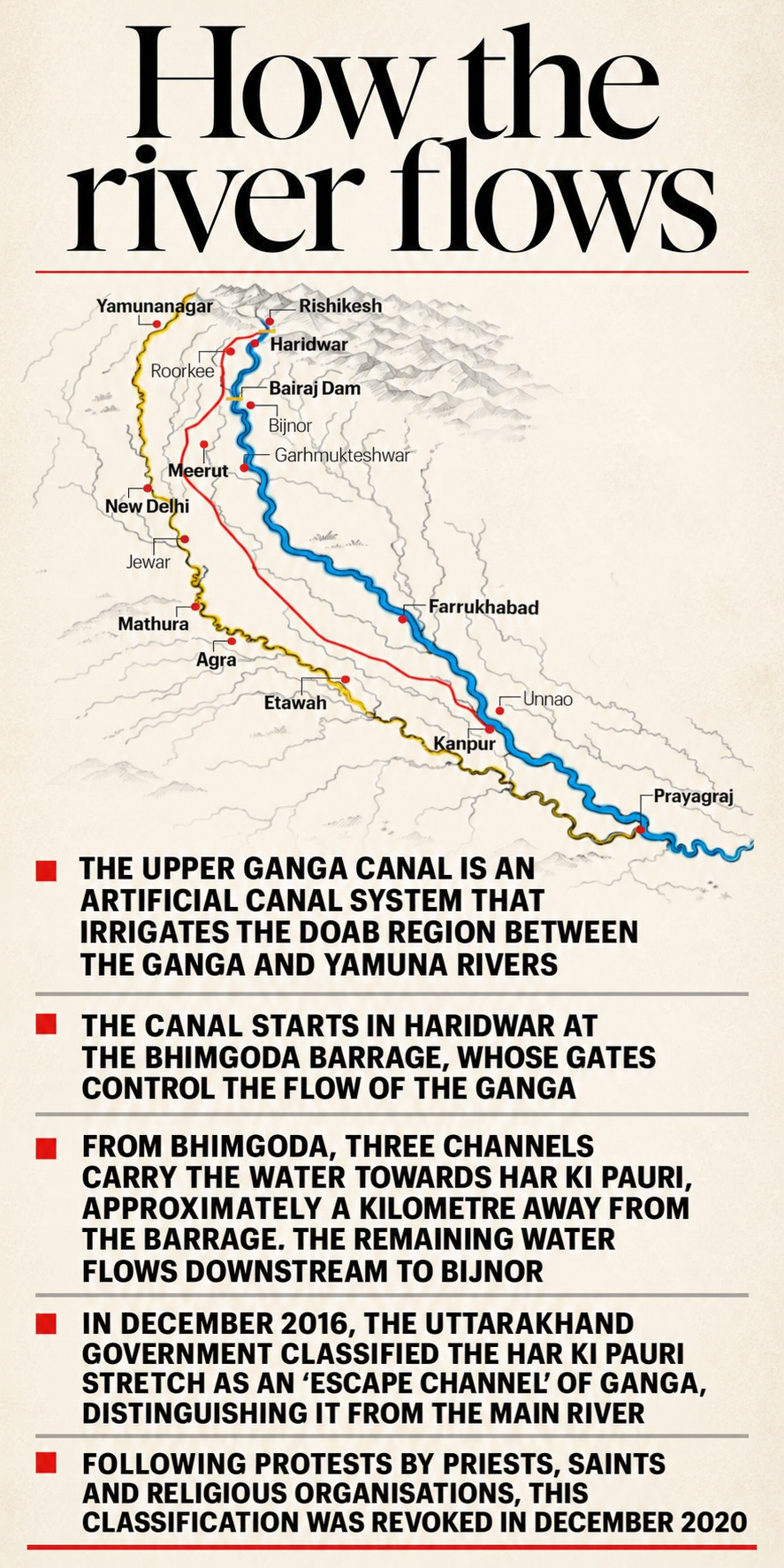
The annual reduction in water at Har ki Pauri is linked to the maintenance of the Upper Ganga Canal, which carries water from the Ganga to parts of Uttarakhand, Uttar Pradesh and beyond through a 400-km network. The region between the Ganga and Yamuna rivers depends on water from the canal network for drinking and irrigation. Every year, after the monsoon, the canal is temporarily closed so the silt deposited along its bed can be removed and repairs carried out.
Story continues below this ad
At Haridwar, the process is controlled at the Bhimgoda Barrage, about a kilometre from Har Ki Pauri. Water from the Pashulok Barrage near Rishikesh, about 17 km upstream, reaches Bhimgoda, where some of the water is directed into the channels supplying Har Ki Pauri and the wider canal network. The remaining water passes downstream through the main river channel towards Bijnor and Kanpur, ultimately flowing into the Bay of Bengal.
Harish Prasad, a junior engineer with the Uttar Pradesh Irrigation Department that controls the flow into the Upper Ganga Canal, explains that during the annual closure, the department shuts the gates of the channels leading towards Har ki Pauri and lifts the gates of the Bhimgoda Barrage. Water arriving from the Pashulok Barrage in Rishikesh then passes through the barrage downstream into the main river channel.
The Upper Ganga canal system that supplies to Haridwar is generally closed around midnight on Dussehra and reopened around midnight on Chhoti Diwali. This year, the closure began on the night of October 20–21, and water returned to Haridwar at midnight on November 7.
Even during the closure, however, water has to be made available for the evening Ganga Aarti. Officials, who monitor how much water has reached the ghat, lift the barrage gates once the required level is achieved. “This process takes around one to one-and-a-half hours. Around two to three feet of water is required at Har ki Pauri for the ritual,” says Prasad.
Story continues below this ad
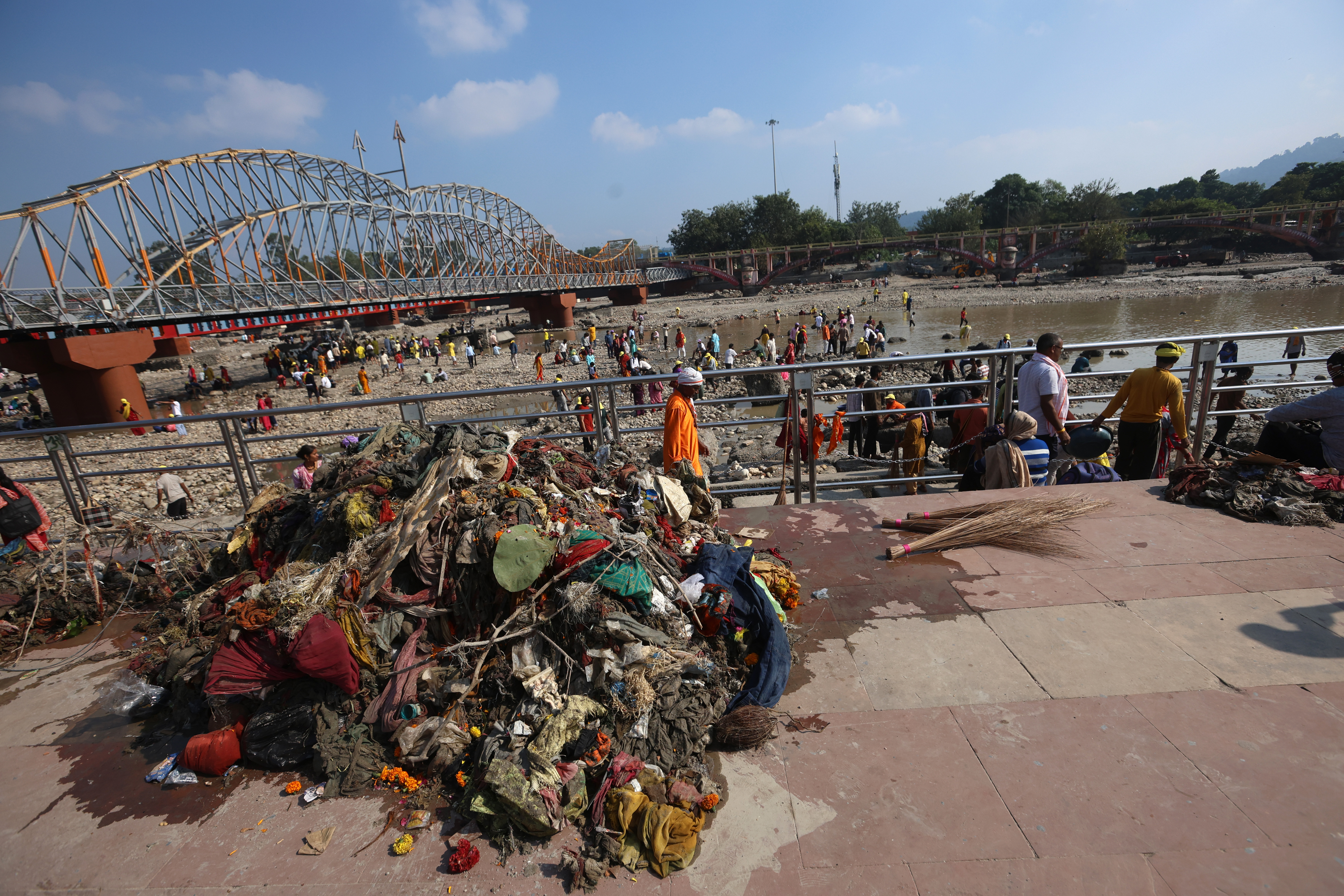 Around 200 workers cleared the Ganga stretch over 18 days. (Express Photo by Gajendra Yadav)
He said that while there were demands from Haridwar to extend the closure — given the mammoth cleaning task at hand ahead of the Ardh Kumbh — the Irrigation Department couldn’t have kept the gates shut for long. Around 16 districts downstream in UP, including Firozabad, Agra, Muzaffarnagar, Ghaziabad, Prayagraj and Kanpur, among others, depend on water from the canal for drinking and irrigation.
“Every year, when the flow is stopped at the Bhimgoda Barrage, these areas do not receive fresh water through the canal, eventually leading to a shortage of water supply in these 16 districts,” he says.
‘We are battling small fires’
Despite the annual cleaning exercise along the length of the canal system, those working to rejuvenate the Ganga say a cleaner canal may not be an indicator of the health of the larger river system.
That’s because, they point out, the water that flows through Har ki Pauri is controlled and supplied through the canal system.
Story continues below this ad
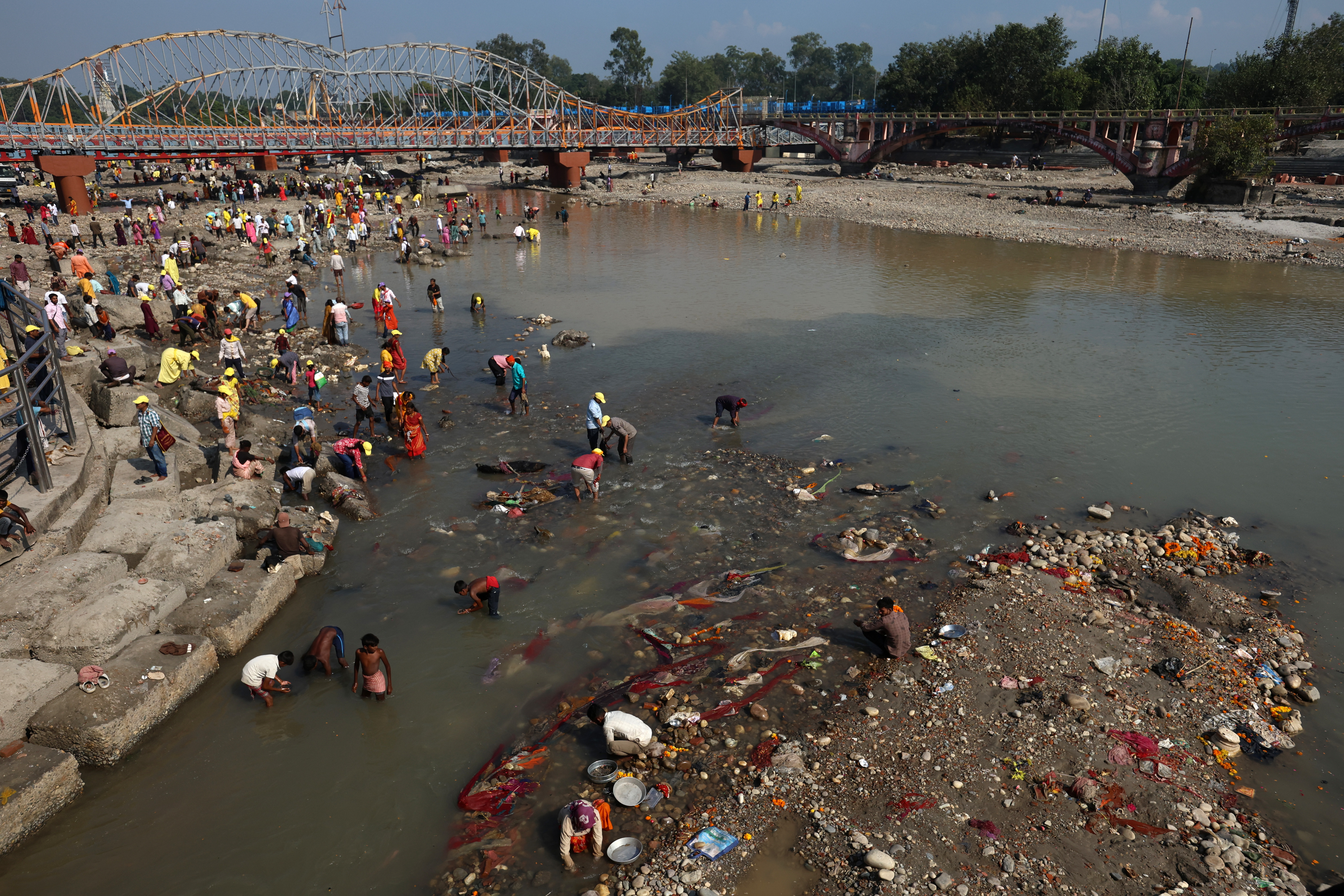 Volunteers clearing trash from the dried riverbed. (Express Photo by Gajendra Yadav)
Shailendra Kumar Kumre, a scientist at the National Institute of Hydrology in Roorkee, says, “Har ki Pauri receives water from this canal. It is not a separate natural river channel in the way people might imagine. Historically, the Ganga may have occupied a much wider floodplain in this area, but as the region developed, its course became more confined.”
The distinction between the canal-fed stretch at Har ki Pauri and the main river channel has long been contentious in Haridwar. In 2016, the state government classified the stretch as an “escape channel” of the Ganga Canal, triggering protests from priests, saints and religious groups who argued that it undermined the sacred identity of Har ki Pauri. The order was revoked in December 2020 following sustained opposition.
Scientists say given the burden on the ghats, a lot more than visible cleaning of the river needs to be undertaken to restore the Ganga.
An audit of the Namami Gange programme in Uttarakhand, carried out by the Comptroller and Auditor General between 2018 and 2023, found that the total coliform count at Har Ki Pauri rose fivefold, from 26 MPN/100 mL (Most Probable Number per 100 milliliters) in October 2014 to 130 MPN/100 mL in October 2023, indicating rising contamination from human and animal waste.
Story continues below this ad
The audit also found that Haridwar’s water quality remained in Category B throughout 2018-2023, a classification that makes it suitable “only for organised outdoor bathing”. It found that 12 of 37 sewage treatment plants physically inspected were discharging untreated sewage into the Ganga and its tributaries.
Anup Nautiyal, an environmental activist in Dehradun, says, “We are battling small fires, but we are not looking at issues in totality.”
He argues that river conservation has placed disproportionate emphasis on “hardware” (sewage treatment plants, drains, ghats and other infrastructure) while neglecting the “software” (public participation, behavioural change and preventing waste from entering the river in the first place).
Ruchi Badola, Dean and Scientist at the Wildlife Institute of India (WII) and Principal Investigator of the NMCG–WII Jalaj Project, Dehradun, says, “Diverting a substantial quantity of water from the Ganga for 18 days may alter the river’s depth, water velocity, habitat conditions and ecological connectivity…Reduced water flow may also influence dissolved oxygen levels and sediment transport, which, in turn, can bring changes to the overall river ecosystem.”
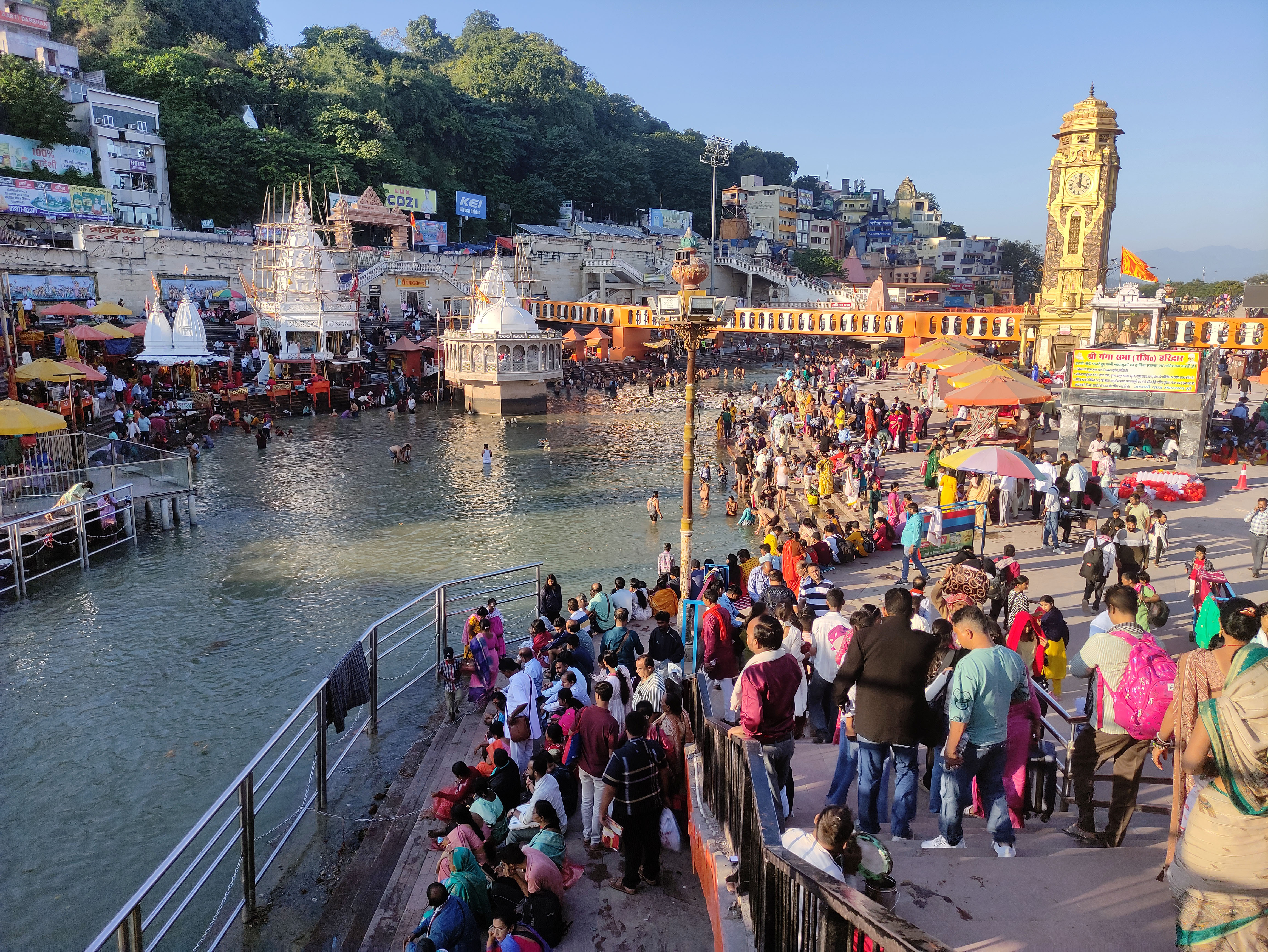 Devotees at Har ki Pauri take a dip in Ganga River. (ANI Photo)
Back in Haridwar, around early evening, the ghats come alive — loudspeakers advertising restaurants and hotels, the toll of temple bells and the chatter of pilgrims.
Further along, at Old Vishnu Ghat, 60-year-old Savita Devi sits on a cot outside her shop, where she sells snacks and water bottles. The shop is an extension of the home Savita and her husband built three decades ago. From here, they have watched the Ganga, and the life around it, change over the years.
As her husband does a small puja, offering water to the Ganga before the start of the day’s business, Savita looks out at the workers on the riverbed.
“Every year, we see more and more tractors trying to clean the Ganga. But the river keeps getting worse and we can’t do anything about it. Ganga pe bohot bojh daal rahe hain (We are placing too much of a burden on the Ganga), but the river can no longer bear it,” she says.
Savita has seen the water recede over the years, and with it her fortunes. “Fewer pilgrims have been coming these days, except for the Kanwar Yatra…Most pilgrims are now going to Varanasi. We are now waiting for the Ardh Kumbh so that our business picks up,” she says.
Vijay is back on the riverbed after his lunch break. He has managed to collect a hundred Re 1 coins. “I’ll now try and sell them, take a rickshaw home for Rs 20, and sleep. I have to wake up early and come back here,” he says.
KioskNews shows a cleaned-up reading view extracted from the publisher’s page — the original always lives on their site, not ours.