Takeaways from the early vote in the 2026 midterms two weeks out
With less than two weeks until the 2026 midterm elections, early votes cast so far serve as one more piece of evidence that Democratic enthusiasm is high in some key states, according to ABC News' analysis.
What the early vote shows and doesn’t show
More than 18 million Americans had cast their votes early by mail or in person as of Thursday morning, according to the Election Lab at the University of Florida.
Registered Democrats and those modeled as likely to vote for Democrats have cast an even higher share of early votes in all states except for Alaska and Michigan, where the share is similar to 2024. This is according to ABC News' own analysis run on Tuesday using voter file data from L2, a company that aggregates voter registration data with other sources to provide insights into voters and their behavior such as demographics and partisanship. The analysis includes the voters that L2 has successfully matched across elections.
Democrats have cast a higher share of early and absentee ballots relative to 2024 in Georgia and Iowa, where the total early vote is about 18 points more Democratic this year.
Modeled partisans are voters in states that do not have party registration but where L2 uses available information like turnout in primaries and other factors to predict what party they are likely to support. Neither official party registration nor being modeled to be a likely party voter guarantees that a voter will cast their ballot for that party’s candidates.
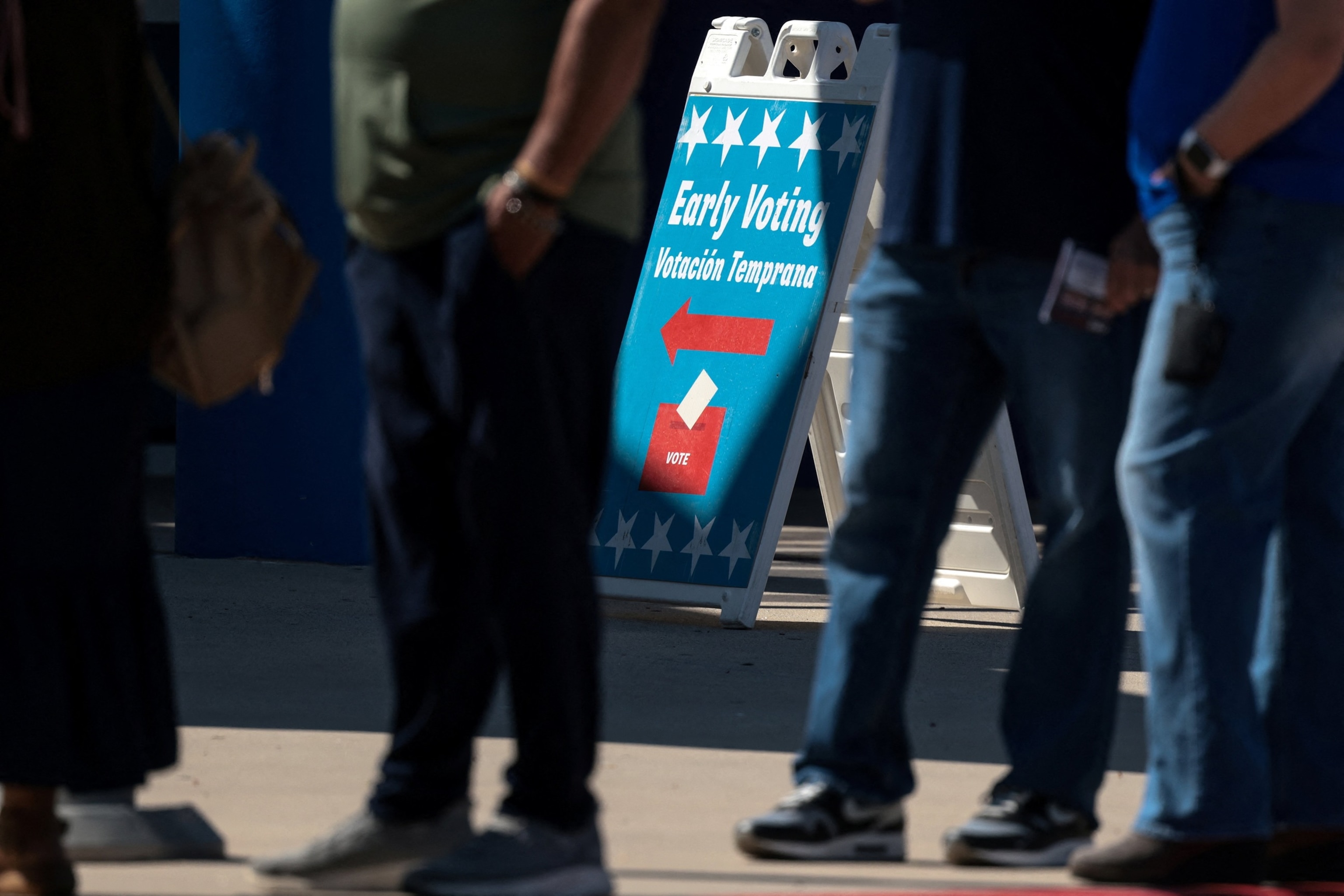
People wait in line to vote early in-person for the midterm elections at the Marty Robbins Recreation Center in El Paso, October 19, 2026.
Evelyn Hockstein/Reuters
For ballots cast so far, Democrats comprise a much larger share, according to ABC News' analysis. This possible advantage in the early vote is consistent with higher Democratic turnout in this year’s primary elections, suggesting that Democratic enthusiasm is higher.
This aligns with recent polling that shows Democrats are more enthusiastic to vote than Republicans, including in a recent ABC News/Washington Post/Ipsos poll that found that 72% of Democratic voters said they were certain to vote compared to 65% of Republican voters. And a Reuters/Ipsos poll found 36% of Democrats saying they were very enthusiastic about voting in 2026 midterms compared to 29% of Republicans.
The early vote numbers are only one piece of the story, and they do not say anything about whether low-propensity (voters who skip some elections) Democrats or Republicans will vote later in the early vote period or on Election Day. In previous elections, Republicans have been much more likely to vote on Election Day and Republican candidates won votes cast on that day.
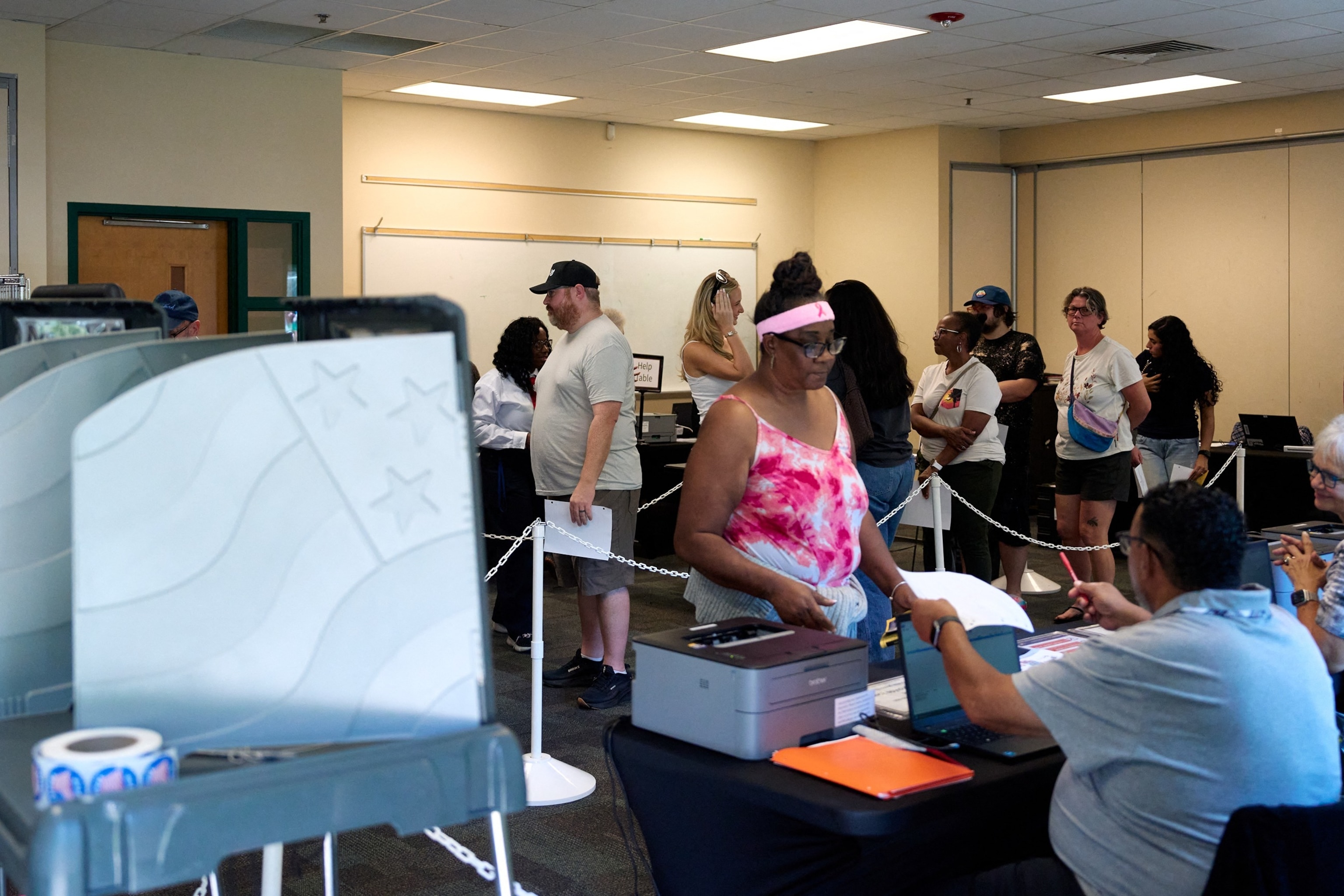
People stand in line to cast their ballot at the Knightdale Recreation Center on the first day of early voting in Knightdale, North Carolina, October 15, 2026.
Matt Ramey/AFP via Getty Images
In the past two elections, the number of total votes ultimately cast broke down relatively evenly across early in-person votes, mail-in votes and Election Day votes.
Calculated from a large-scale Pew Research Center survey, which matched survey respondents with their vote record in 2024, Democrats had a margin of 24 points with absentee or mail ballots while Republicans won early in-person by 14 points and Election Day by 16 points. These estimates are in line with actual vote totals from the 11 states that break out results by vote method.
Likely voters who plan to vote early this year -- or who already have voted early or by mail -- supported Democrats over Republicans in congressional vote choice by 26 points in our ABC News/Washington Post/Ipsos poll. Those who plan to vote early at a polling place or who already have favor Democrats by 14 points. Those who plan to or who have already dropped off a ballot before Election Day support Democrats over Republicans by a 50-point margin. But those who plan to vote in person on Election day support Republicans over Democrats by 11 points.
A look at Georgia and Michigan
In Michigan, as of Oct. 19, about 670,000 voters had already cast their ballots when ABC News ran this analysis; 90% of them have voted in at least three out of four of the most recent general elections. Only 1.3% of voters in 2026 so far are either new voters or "newly returned" voters, meaning they did not vote in the four most recent general elections in Michigan.
Out of the subset of voters who have voted in all four of the most recent general elections, about 58% of them are Democrats and 40% are Republicans. In 2024, that number among voters who had voted in four out of four of the most recent general elections was 57% Democrat to 41% Republican.
In Georgia, as of Oct. 19, nearly 850,000 votes had already been cast as of the time ABC News ran this analysis.
When comparing who is turning out this year compared to 2024, an even higher share in 2026 is comprised of the highest propensity voters (who voted four out of four times in most recent general elections): 71% compared to 2024's 63%.
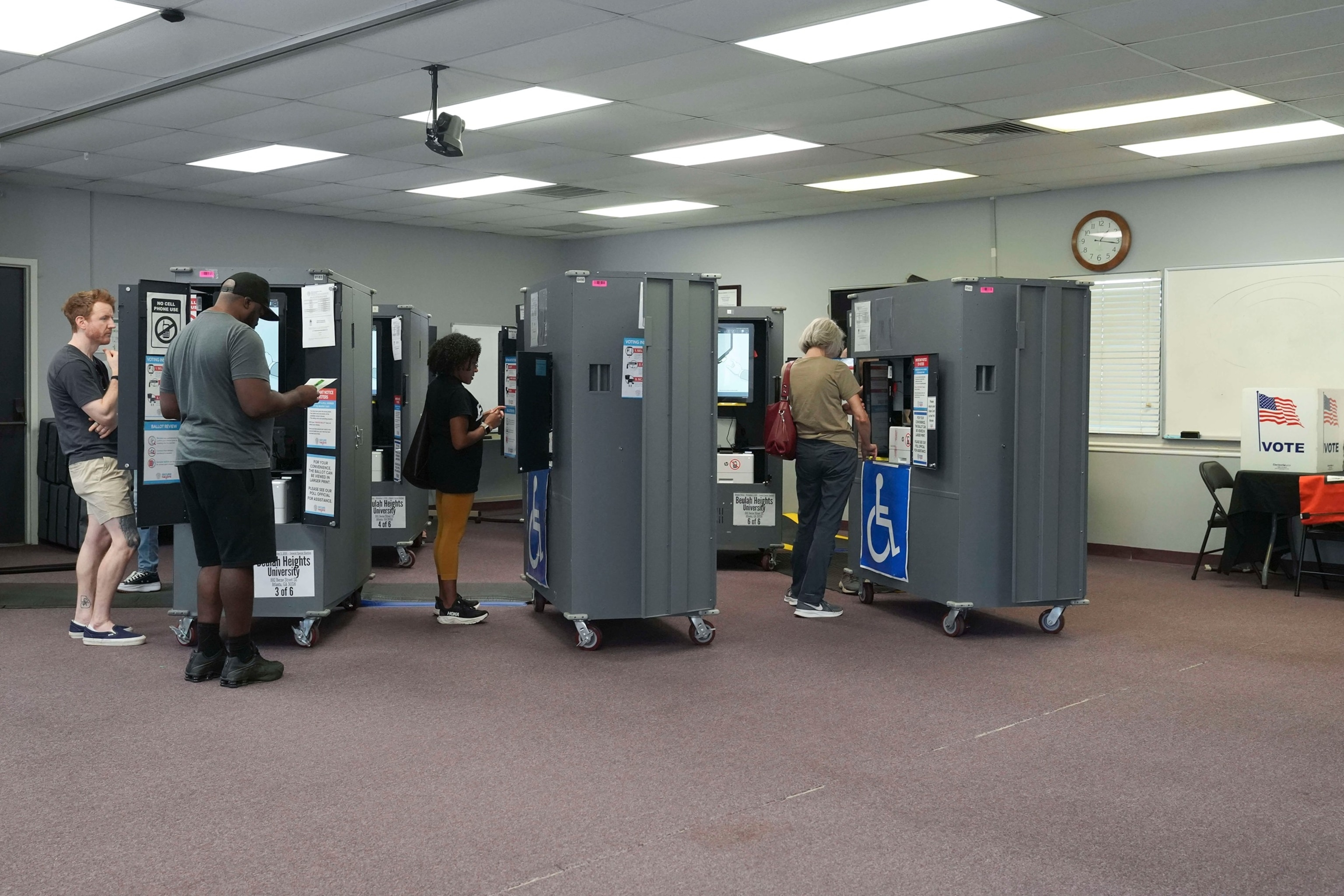
People cast their vote on the first day of early voting on October 13, 2026 in Atlanta, Georgia.
Megan Varner/Getty Images
A smaller share of the ballots this year are being cast by low-propensity voters, which is understandable given that this year is not a presidential election year; but those voters are still far more Democratic by modeled partisanship than they were in 2024.
The big question in Georgia and across the country will be whether lower propensity Republicans turn out.
Getting party faithful to vote early is valuable for a campaign, but it is difficult to draw inferences from this data since it does not necessarily indicate what turnout will be like on Election Day. If lower-propensity Republican voters turn out to counteract what appears to be an enthusiastic Democratic base, Republicans will be more competitive.
KioskNews shows a cleaned-up reading view extracted from the publisher’s page — the original always lives on their site, not ours.