People build 108 stupas for Bhutan’s ‘mindfulness’ city
Tens of thousands of volunteers yesterday took part in building 108 Buddhist stupas in Bhutan, marking the Himalayan kingdom’s ambitious plans for a “mindfulness” city aimed at driving economic growth.
The 15m-tall solid towers — sacred Buddhist monuments found across the Himalayas — stretch along 12km of riverbank near the Indian border, at the site of the future Gelephu Mindfulness City.
More than 40,000 volunteers participated in building the structures in a single day as “a physical form of prayer” after starting work post-midnight, officials said.
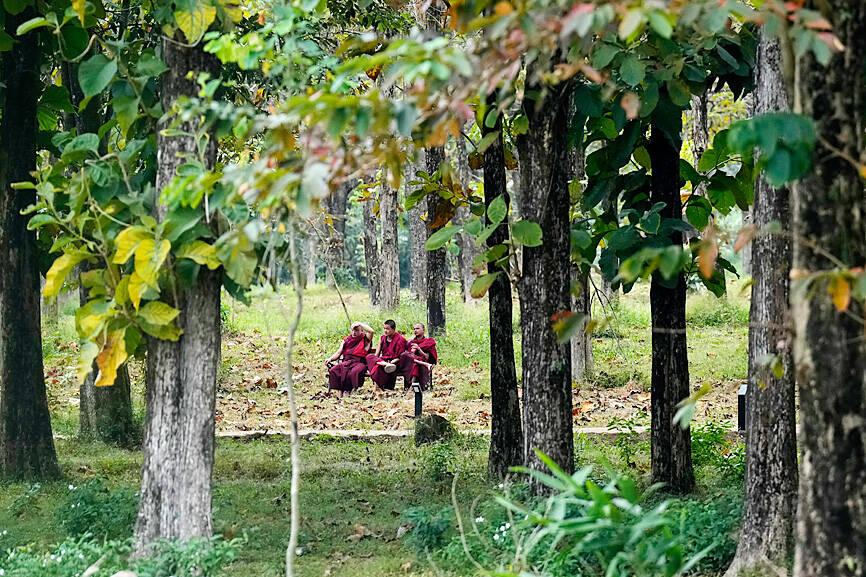
Monks arrive to attend the royal initiative to build 108 stupas in Gelephu Mindfulness City, Bhutan, on Saturday.
Photo: AP
Bhutan is known for its policy of prioritizing “Gross National Happiness” alongside economic growth.
It hopes the city will boost its economy and persuade more young people to stay, attracting investment in sustainable business, green technology, education, tourism and financial services.
Bhutan faces a declining birthrate and an exodus of young people seeking opportunities abroad.
King Jigme Khesar Namgyel Wangchuck established the special zone by royal charter in 2024, saying its purpose was to “create a vibrant economic hub.”
“This occasion will be recorded in our history for generations to come,” said Nima Gyeltshen, head of the Organisation for Youth Empowerment, which helps young Bhutanese find work.
The sleepy town has a population of less than 10,000, the last census in 2017 showed.
Together, the 108 stupas — a number with significance in Buddhist traditions — stand more than 10 times the height of Egypt’s Great Pyramid of Giza, organizers say, at an estimated cost of US$21 million.
Analysts have questioned whether Bhutan can attract sufficient investment to realize its vision, but Indian billionaire Gautam Adani, head of the ports-to-power conglomerate, joined Gelephu Mindfulness City as a founding member in January.
The site is to be connected to India’s rail network in neighboring Assam, with an international airport slated to open in 2029.
The project is also linked to Bhutan’s cryptocurrency ambitions, with the kingdom mining bitcoin using surplus hydropower and pledging to use digital assets to support the city’s development.
KioskNews shows a cleaned-up reading view extracted from the publisher’s page — the original always lives on their site, not ours.