Thailand plans US$1.5b solar subsidy to help one million households
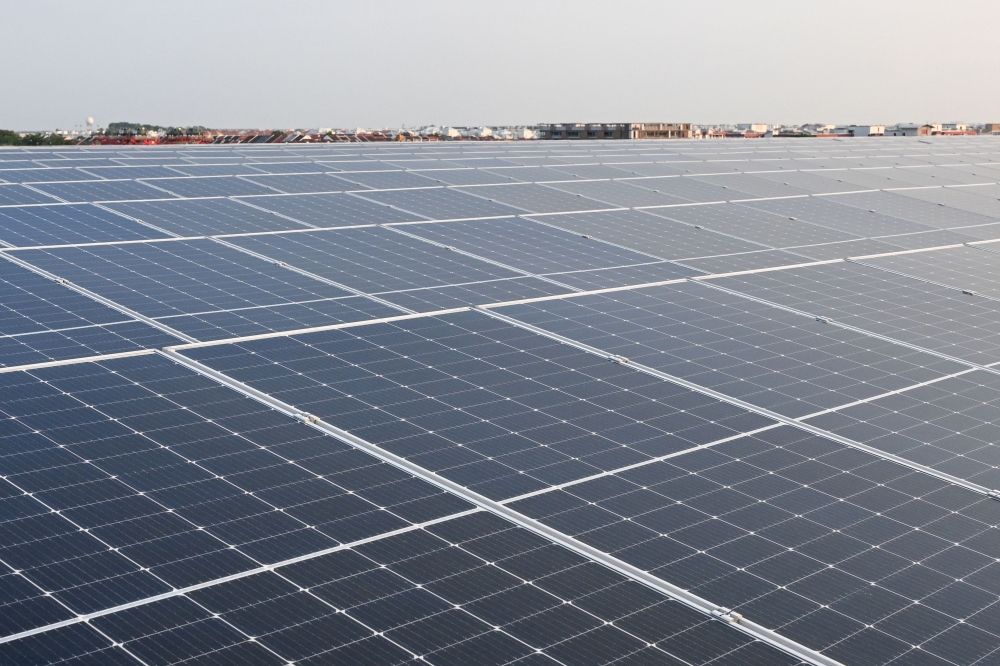

This file picture taken on September 2, 2026 shows solar panels on the roof of the Digital Realty data centre in Singapore. Thailand offered subsidies worth up to US$1.5 billion Monday to help households install solar panels, as it seeks to boost renewable energy and reduce dependence on costly imports. — AFP pic
First Published: Monday, 26 Oct 2026 6:47 PM MYT
BANGKOK, Oct 26 — Thailand offered subsidies worth up to US$1.5 billion (RM6.13 billion) Monday to help households install solar panels, as it seeks to boost renewable energy and reduce dependence on costly imports.
The government offered almost US$1,500 (50,000 baht) towards installation costs for up to one million households, while also promising low-interest loans and tax benefits for those fitting panels to their homes or land.
“Today, we import a lot of our energy, we’re among the top buyers globally,” Finance Minister Ekniti Nitithanprapas told reporters.
But he said this “was not a sustainable solution”.
The solar panel subsidy is expected to be approved at a cabinet meeting on Tuesday, with applications to open soon after, Ekniti said.
It will be funded out of a 400-billion-baht emergency borrowing package announced earlier this year to cushion the economic impacts of the Middle East war
Around 60 per cent of electricity production in Thailand comes from natural gas, with renewables making up almost 11 per cent, according to government data from January to July 2026.
Much of the gas has historically come from offshore production or via pipeline from Myanmar, but declining production has forced Bangkok to step up liquid natural gas (LNG) imports.
Imported LNG made up 32 per cent of its natural gas in the January-July period.
Qatar was a major supplier but its gas infrastructure has been hit by the US and Israeli war with Iran, as has energy production across the region.
Thailand aims to have 51 per cent of domestic electricity generated from renewable sources by 2037. — AFP
KioskNews shows a cleaned-up reading view extracted from the publisher’s page — the original always lives on their site, not ours.