The 8 Best Movies About the End of the World, Ranked


Jeremy has more than 2800 published articles on Collider to his name, and has been writing for the site since February 2022. He's an omnivore when it comes to his movie-watching diet, so will gladly watch and write about almost anything, from old Godzilla films to gangster flicks to samurai movies to classic musicals to the French New Wave to the MCU... well, maybe not the Disney+ shows.
His favorite directors include Martin Scorsese, Sergio Leone, Akira Kurosawa, Quentin Tarantino, Werner Herzog, John Woo, Bob Fosse, Fritz Lang, Guillermo del Toro, and Yoji Yamada. He's also very proud of the fact that he's seen every single Nicolas Cage movie released before 2022, even though doing so often felt like a tremendous waste of time. He's plagued by the question of whether or not The Room is genuinely terrible or some kind of accidental masterpiece, and has been for more than 12 years (and a similar number of viewings).
When he's not writing lists - and the occasional feature article - for Collider, he also likes to upload film reviews to his Letterboxd profile (username: Jeremy Urquhart) and Instagram account.
He has achieved his 2025 goal of reading all 13,467 novels written by Stephen King, and plans to spend the next year or two getting through the author's 82,756 short stories and 105,433 novellas.
Sign in to your Collider account
There’s going to be a distinction made here between post-apocalyptic movies and movies about the end of the world. Some movies about the end of the world show the world ending, and then they might spend some time with characters in a post-apocalyptic landscape, but those films that are “just” about being in a post-apocalyptic setting aren’t going to count, for present purposes. If you're confused why the likes of The Road and none of the Mad Max films are here, that’s why.
The following movies are about the end of the world and only sometimes a bit post-apocalyptic. The main thing is that they either show the world ending, or the whole movie is about some kind of very high-stakes conflict, the outcome of which will more or less decide whether the entire world endures or ends. A movie being here might technically be a mild spoiler, but remember, the end of the world isn't necessarily shown to happen in all of them… just some.
8 'Independence Day' (1996)

Independence Day is a distinctly American movie about saving the world, but with that sort of title, what did you expect? Well, admittedly, its director, Roland Emmerich, is German, but many of his movies are American and also feel aggressively American, and when he’s doing something great, it is a lot of fun, even if silly. So, Independence Day is a ton of fun, just silly at the same time. Or maybe it’s fun in part because it’s ridiculous?
The threat here is of an extra-terrestrial variety, and the aliens do quite famously do a decent amount of damage before Earth sends forces to defend the planet. It’s an all-out sci-fi war movie with the highest stakes imaginable, what with the complete destruction of the world being the thing that has to be prevented. Again, almost comically simple stuff, but it works, and it’s easily one of the most crowd-pleasing movies about either the end of the world or the prevention of the end of the world.
7 'The Day After' (1983)

It is admittedly a TV movie, but still, The Day After is undeniably bleak and raw, and something so easily viewable going to the lengths it does makes it arguably more impressive. In any event, it’s a look at the possibility of the world ending, thanks to nuclear war, that rivals a good many non-TV movies in terms of intensity. The conflict here is between the two world superpowers you'd expect, for a 1980s release, and it spends quite a bit of its runtime building up tension.
There are sequences that fit disaster movie genre conventions, just with less spectacle because of the way The Day After was produced, and the screens upon which it was expected to be viewed. Also, there is one other movie that was made-for-TV, came out in the 1980s, and dealt with nuclear war, but it came one year on from The Day After, and was even more striking in so many ways, so it'll be mentioned in a bit.
6 'The World's End' (2013)

Actually, one movie here that’s probably a bit breezier than Independence Day is The World’s End, though the title of the latter here is very much accurate. It goes for comedy more often, at least intentionally. And it’s another movie about alien invaders threatening the existence of the world, but it’s also a comedy, and then it’s further a movie that deals with some drama that’s very much not of a sci-fi or fantastical nature.
It’s part of a trilogy with Shaun of the Dead and Hot Fuzz, raising the stakes found in either of those while playing around with different genres (though Shaun of the Dead is about the possibility of a zombie apocalypse and all). Anyway, The World’s End doesn’t get as much love as those two movies, but it should, because it’s a blast, and then it also has value for how introspective and brutally honest about certain things it’s willing to be.
5 'The End of Evangelion' (1997)

Infamously, Neon Genesis Evangelion ended on a bit of an odd note, to put it mildly, but then there was a bit more concrete a finale following the airing of that series, fittingly called The End of Evangelion. Yes, it’s animated, and sure, it’s part of a TV series, but The End of Evangelion was feature-length and definitely went bigger and stranger (in many ways) than the original anime show had.
So much of Neon Genesis Evangelion concerns a desperate and continually confusing fight for the future of humanity, and then The End of Evangelion… well, it’s about the end of a few things, and visceral with how it shows the world coming closer to collapsing entirely. There is a great deal by way of things to find mortifying here, but since The End of Evangelion, there have been the Rebuild of Evangelion films, meaning those who don’t like The End of Evangelion being an end can check out what might well be the “true” ending.
4 'Avengers: Infinity War' (2018)
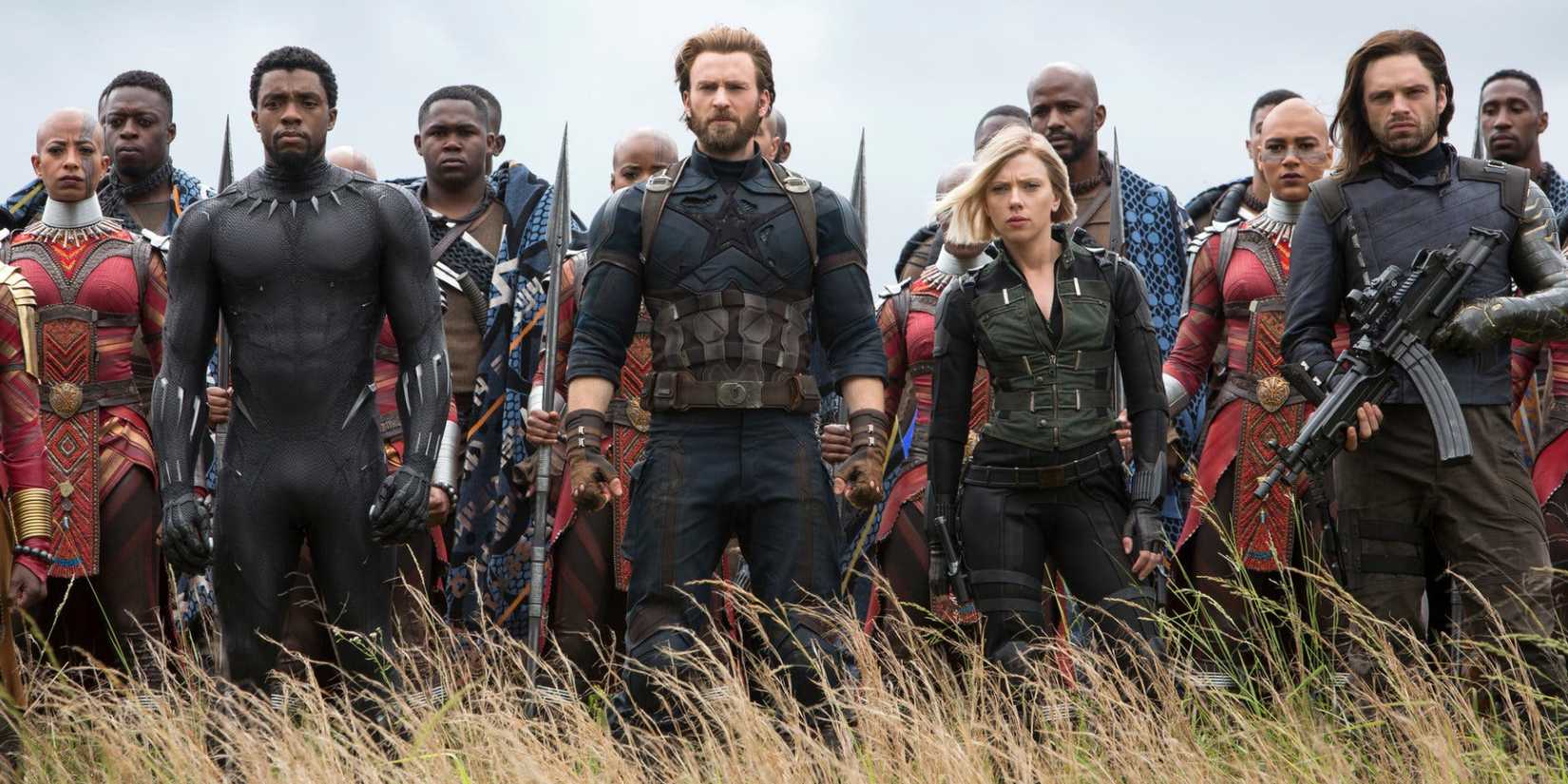
Since it’s a superhero movie, high stakes are to be expected, but Avengers: Infinity War undoubtedly went a step further than most, with the entire universe at stake because of what Thanos (the film’s main villain) wanted to do. So, it’s really about the end of the universe, and since the world is part of the universe, and that’s where most of the characters people really care about are from, Avengers: Infinity War still fits here.
Well, okay, Thanos sets out to eradicate half of all life in the universe, but that would (and does) have dramatic consequences for those left behind, and would cause untold problems into the future, too. It’s to this film’s credit that you do really feel the desperation and size of the whole conflict, and it’s telling that the only way the Marvel Cinematic Universe has figured out to up the stakes from Infinity War and Avengers: Endgame is by saying, “Uh, guess we could have multiple universes or something?”
3 'Godzilla: Final Wars' (2004)
Lots of Godzilla movies have high stakes, and perhaps the implication that Godzilla or another monster could eventually destroy the world, if left to rampage, yet few go as far in showcasing worldwide destruction as Godzilla: Final Wars. This movie was made to commemorate 50 years of Godzilla, and could well have served as a gonzo finale to the entire series.
It mainly achieved this by featuring so many different past foes (and some occasional allies) for Godzilla to either fight or fight alongside… more the former than the latter, though, because Godzilla is pretty independent here, and also at basically his most powerful. Other monsters are used to try and conquer Earth, and eventually, Godzilla: Final Wars is about Godzilla himself stomping his way around the globe and defeating all those monsters. It’s wild, very over-the-top, and also one of the most entertaining giant monster movies ever made (do not allow the haters to tell you otherwise).
2 'Dr. Strangelove or: How I Learned to Stop Worrying and Love the Bomb' (1964)

The entirety of Dr. Strangelove or: How I Learned to Stop Worrying and Love the Bomb is about preventing a nuclear war, with the sentiment of all being that nuclear war would basically mean the end of the world. It’s true, and was made at a time when such fears were particularly intense, given the Cold War was very much underway in 1964. Stanley Kubrick, though, handled it all as a comedy.
And he made it work, because Dr. Strangelove is up there among the funniest films ever made, and also one of the most effective as far as anti-war films (specifically, anti-nuclear-war films) go, too. It’s striking how funny and despair-filled the whole thing manages to be without falling over itself, but it really is a classic, everything here hits in precisely the way it’s supposed to.
1 'Threads' (1984)

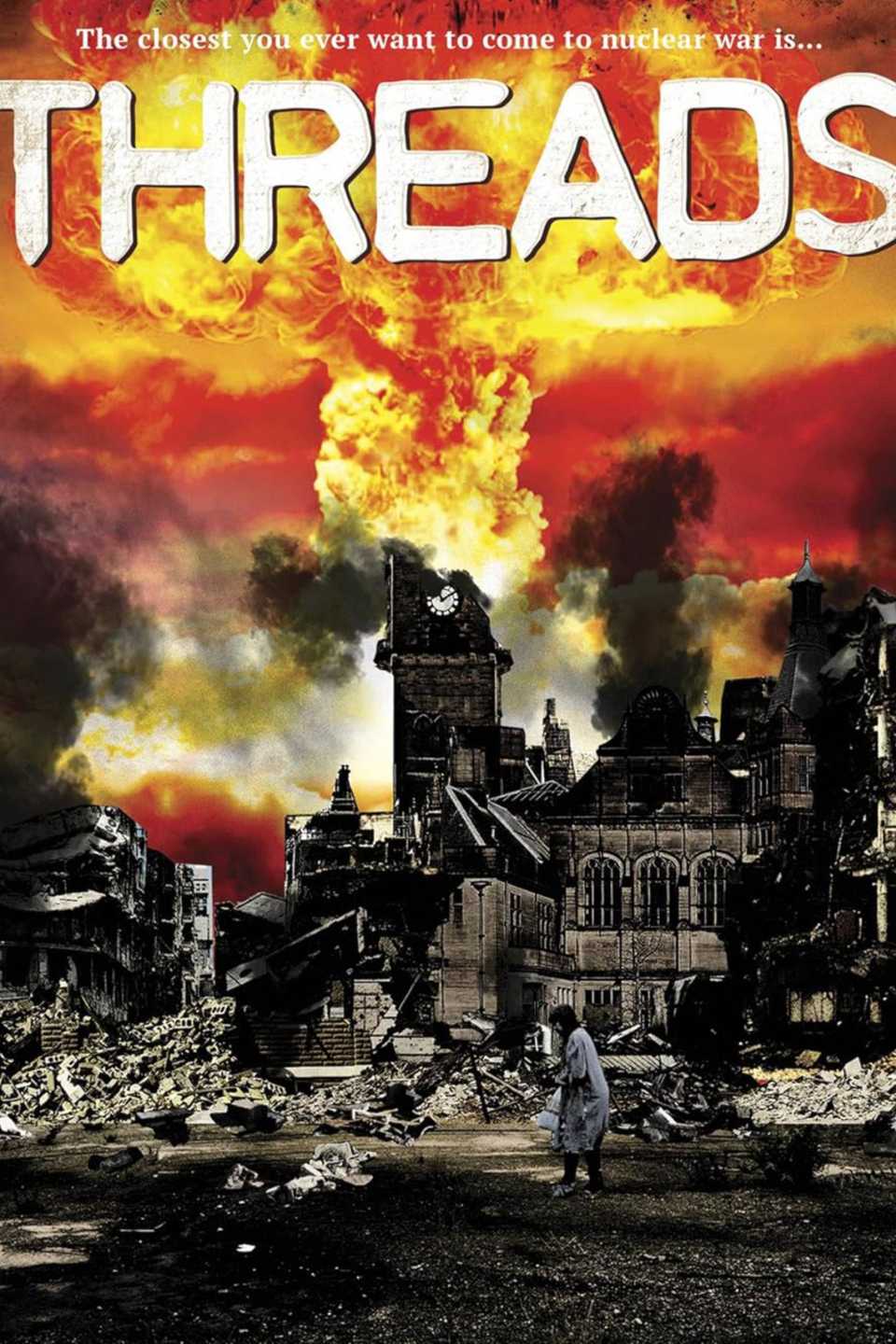
If, for whatever reason, 1983’s The Day After wasn’t horrifying enough for you, then you only had to wait one more year to see Threads, which was also a TV movie that put a good many theatrical releases to shame, in terms of impact. It’s as unapologetically realistic as movies about nuclear war can possibly get, and that means it also deals with the end of the world. It happens surprisingly fast, in all honesty.
The structure, when it comes to Threads, involves showing the world right before it happens, then nuclear war destroying almost everything very fast, and then a grueling stretch of time is spent on showing things getting worse and worse for the small number of survivors. Every step of the way is unsettling and intense for different reasons, and by the end of it all, you really do feel like you’ve watched one of the most horrifying non-horror movies ever made.
Threads
- Release Date
- September 23, 1984
- Runtime
- 112 Minutes
- Director
- Mick Jackson
- Writers
- Barry Hines
KioskNews shows a cleaned-up reading view extracted from the publisher’s page — the original always lives on their site, not ours.