The makers of the 7 Up series set out to prove a point about class. What they achieved is far more profound | Jonathan Freedland

For an hour or two this week, I’ve been in the company of people whose lives I’ve seen unfold, almost from the beginning, almost to the end. They are people whom, with one exception, I’ve never met. And yet I’ve shared in their triumphs and disappointments for decades.
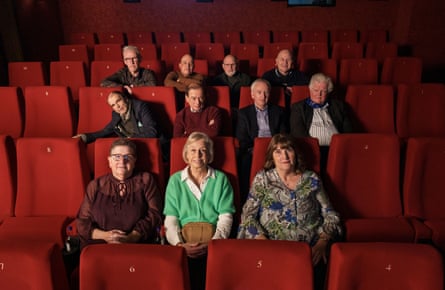
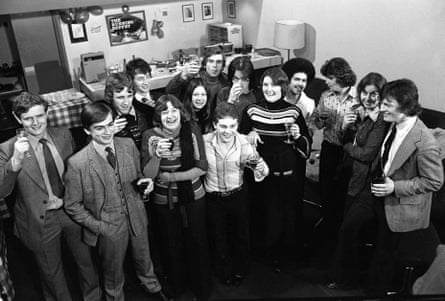
They are the group who, in 1964, when they were seven years old, were the subjects of what was initially a single, 40-minute ITV documentary, but which flowered into a work that is quite magical. Returning to those same boys and girls every seven years, watching as they turned first into shy and awkward teenagers, then into husbands and wives, then into parents and grandparents, the 7 Up series has become a document of our times – but also something larger and far more revealing. This week the broadcaster aired what it says will be the final chapter: the seven-year-olds are now 70.
The original aim of the show, made under the World in Action banner, was sociological and transparently political. It wanted to expose the entrenched nature of the British class system. And so it watched a trio of pre-prep school boys singing verses in Latin, contrasting them with the cheeky East End kids living just a few miles and a world away. While the posh trio could name, even then, the specific Oxbridge colleges their parents had in mind for them, Paul, raised in a children’s home, asked: “What does university mean?”
Sure enough, we have seen how those born into money keep it, while those with less have less – though what the programme missed was the huge and expanding group in between. By focusing either on foxhunting John at one end or cabbie Tony at the other, it largely left out what would turn out to be the story of these decades, namely the sprawling growth of the middle class.
Indeed, it’s the programme’s early assumptions that often turn out to illuminate most sharply how much society has changed. In 1964, the researchers only thought to include one child who wasn’t white: Symon. In a later episode, we hear the director, the late Michael Apted, ask him about being “illegitimate”, until Symon gently sets him straight: “We’re living in different times.” Apted is also admonished for his sexism: why, says Jackie, does he always ask the women about marrying and settling down, but not the men?
We get glimpses of the politics of these years. Lynn was a devoted children’s librarian, until successive rounds of budget cuts hacked away at the service to which she had given much of her life. We hear Tony complain about immigrants enjoying easy access to benefits, including housing – except that footage is from the 1970s, a reminder that the current debates are anything but new. We see that Bruce, who as a seven-year-old aspired to be a missionary in Africa in order to help the neediest, is now a lifeboat volunteer for the RNLI. Aware of the recent assaults on that organisation, we suspect he’s still doing God’s work.
Perhaps most striking is the shifting view of mental illness. When 28 Up aired in 1984, much of the nation was shocked by the fate of Neil, who as a wide-eyed seven-year-old had dreamed of being an astronaut, and who was now found lonely, wandering and homeless. There is vague talk of a “nervous complaint” and Apted asks him, “Can you lick it?”, as if a stiff upper lip and cold shower might do the trick. Now, Neil speaks directly of a lifelong battle with depression, naming it at last.
It’s not wrong to speak of “much of the nation”, by the way. 7 Up came of age in the era of terrestrial, limited-choice TV when the audiences were enormous and major programmes were collective experiences. The medium had weight and a kind of patience, so that a six-decades-long project like this one was at least conceivable. In the age of YouTube Shorts and Instagram Reels, there won’t be another. (Though before we romanticise the olden days too much, 70 Up self-critically notes that the children’s parents never gave anything that we would recognise as consent.)
Still, it’s not here – in the charting of shifts in society or broadcasting – that the magic lies. If the original ambition was to examine class in modern Britain, the series very soon transcended that to becomebigger, to become, like the best works of art, both timeless and universal. As Peter, now retired from teaching, says, “It’s a film about living a human life.”
We see the compromises that real people in real situations have to make. Bruce was once “the only socialist in the village” who, on principle, taught maths at an inner London school to kids who had none of the privileges he had known as a boy. At 49, we found him in a master’s gown at a public school, facing accusations from old friends that he had sold out. But life, we realise, is not political theory. Sometimes it just takes a different course. There are events you cannot plan for, including, of course, the lottery of health and the random intrusions of mortality. You know it’s coming, but it stops you all the same: two of the seven-year-olds of 1964 are dead.
after newsletter promotion
Those who remain are very clear on what matters. One after another, they say they now understand the centrality of family. At 70 and a retired lawyer, Andrew offers an age-old lament when he wonders if, perhaps, he should have forsaken those extra hours in the office that seemed so important at the time, and gone instead to his children’s school play or sports day. Apted overlooked this dimension, too, often asking his subjects about their career disappointments or the apparent modesty of their achievements, failing to see what he eventually recognised as the “power” of the families they had built.
We hardly need to be told that, because we see it for ourselves. We see again and again how these people were shaped, yes, by class but also by the family situations they were born into, and especially by what was missing. So many of them devoted themselves to avoiding the mistakes of their parents, to ensuring their own children enjoyed the stability they had lacked.
Perhaps the most vivid example is Symon. At seven he was in care; now aged 70, it still gnaws at him that he never knew his father. In the 1964 film, the kids visited an adventure playground: Symon and Paul, both raised in the same children’s home, immediately set about moving planks and bricks. They were trying to build a house. In the latest film, we learn that Symon and his wife became foster parents, not just once or twice but, over the decades, to a staggering 130 children. As Symon said of his own children when he was 28, “They’ve got everything. They’ve got a father.” The animating premise of each of the Up films was the old Jesuit saying: “Give me a child until he is seven, and I will give you the man.” There turns out to be great truth in that, a truth far more profound than the political point the film-makers first set out to prove.
As Nick, a boy who dreamed of exploring the moon and went on to become a nuclear physicist, says, we are moved when we see time-lapse photography of a single flower, watching it “blossom and then fade away”. How breathtaking then to see the full span of a human life, several of them at once – the quiet, ordinary mystery of it. How breathtaking and how beautiful.
-
70 Up is available on ITVX
-
Jonathan Freedland is a Guardian columnist
-
Do you have an opinion on the issues raised in this article? If you would like to submit a response of up to 300 words by email to be considered for publication in our letters section, please click here.
KioskNews shows a cleaned-up reading view extracted from the publisher’s page — the original always lives on their site, not ours.