When school violence happens, the whole community needs to listen
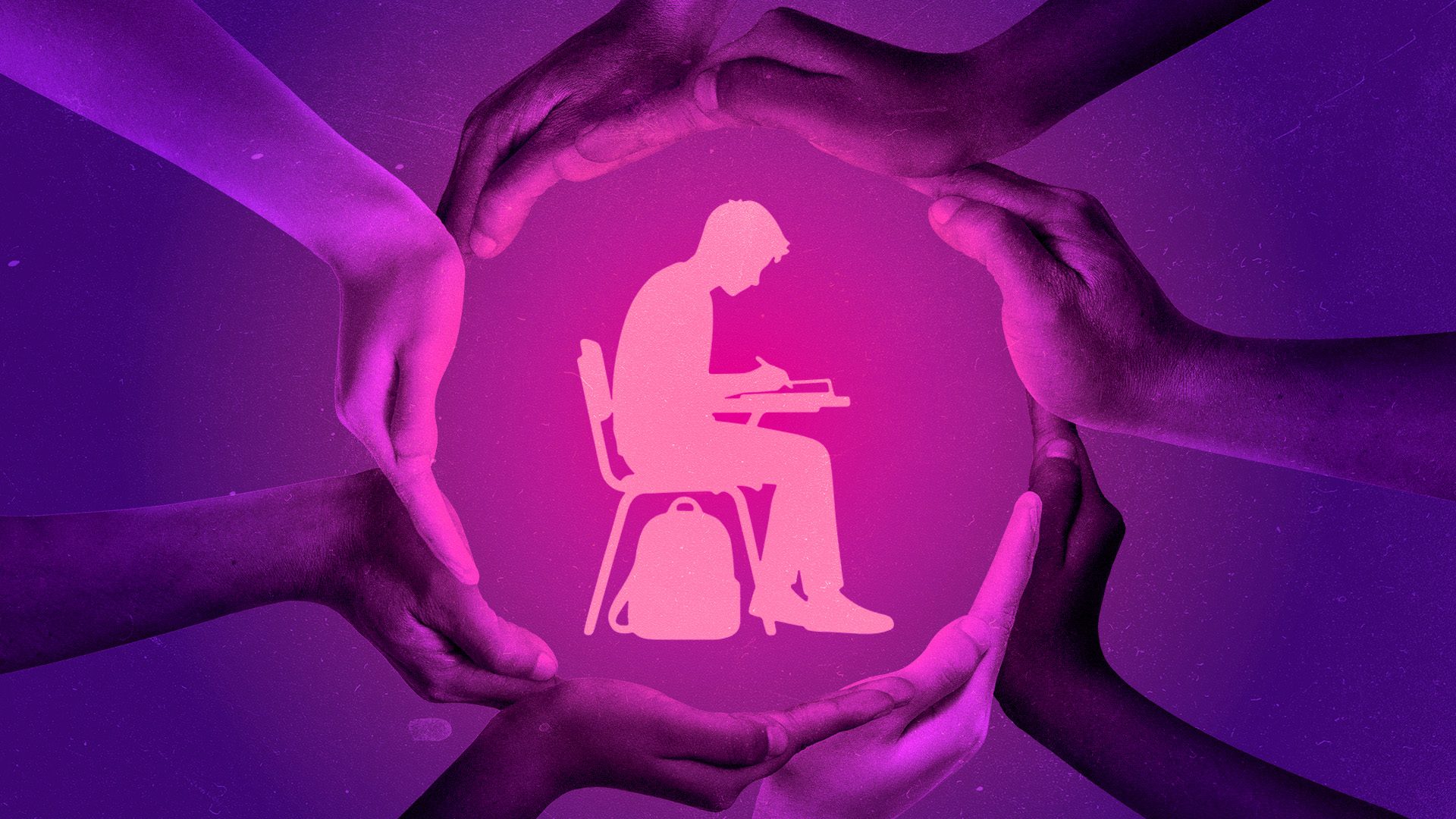
- Psychologists emphasize that school violence is a community issue, with parents, schools, and socioeconomic factors all playing a role in children's mental health.
- There is a need for safe spaces for children to express vulnerability and receive support, as well as psychoeducation for families to better manage emotions and recognize mental health challenges.
- Addressing school violence requires thorough psychological evaluations and a community-wide commitment to understanding and supporting the mental health needs of children and their families.
This is AI-generated. Read the article for full context. Report any errors.
This is Part 2 of a two-part story. Read Part 1: Psychologists want us to rethink what we ask about school violence
When it comes to school violence, psychologist Jannah Trixie Cuevas said it’s the whole community that must be held responsible for what could’ve been done differently.
“When we talk about the whole community, it’s the schools for not having interventions about it. It could be the parents for not seeing the warning signs right away. It could be a lot of pressures that we don’t see, that are being put on the children.”
Hannah Pellejo Jara, CEO and founder of Sapphire Clinics East Inc.’s Aura Health Rehab, a Filipino-owned rehabilitation and psychological services network where Cuevas works, also points out that the issue isn’t always about negligence.
Jara, who has heard many different stories of troubled kids and distressed families, said socioeconomic factors affect not only the mental health of the child, but of entire families and communities, especially caregivers and breadwinners.
“I think a lot of the fatigue of the families is because [of financial issues, like they think], ‘I have to earn, I can’t take care of my child’…. So, their economic state is still a factor, them being stressed about money, and then affecting the child as well.”
The conflicts parents go through because of money, work, or relationship difficulties affect how much they’re able to be attentive to their kids. The questions then expand from asking how supported the children are within the family, to how supported the family is within their community.
“I think the more complex route that may take a longer time to address are the family dynamics, even the community dynamics,” Jara said. “How supported are the families?”
“When I say this, for example, here in the Philippines, if I can’t take care of my child, my neighbor is there, or my mother is there, my brother is there who can help me carry this emotional burden. But for example, for single parents, everything is a burden on you, right? So, we have cases of single parents here that we’ve seen that they cry after. They’re like, ‘No one is supporting me. I’m all alone. I can’t take care of my child.’ They already have guilt because they have to work.”
Bridging the gaps
Aside from factors preventing parents from being there for their children physically, generation gaps tend to create emotional gaps within families as well.
“Based on the patterns that I’m seeing, parents have been comparing what’s happening to the kids nowadays to the time that they were kids,” Cuevas said. “There was a disconnection emotionally. Physically, most of the time they’re present, but emotionally, they’re absent.”
Fellow psychologist Arnel Sarte Jr. observed that this distance isn’t exactly because of a lack of trying on the parents’ part. The good intentions are there, but their expression of support and concern to their children can sometimes get lost in translation.
“Sometimes the support system thinks that they’re being helpful, with most parents telling their kids, ‘You can do it, just keep going.’ On the surface, when the child is doing okay, it’s a good validation. But for those kids that don’t even have the energy to keep moving forward, not knowing how they can do it, for them, it feels more like a responsibility when they hear, ‘keep going.’”
Dealing with kids struggling with depression and mental health issues also challenges parents to change how they make their kids feel loved. “It really depends on the state of the kids. They can take those words properly if they aren’t severely depressed, if they don’t feel like they’re completely alone, they can take that,” Sarte said.
“But what if they’re so severely depressed that just thinking already takes a toll on them? So if they’re told, ‘Don’t give up,’ they’re going to think, ‘How can I not give up? I don’t have the energy.’ So instead, make them feel that, ‘I’m here. You can lean on me.’ Ask them, ‘What do you want to eat? Is there anything you’re craving? Let’s eat.’ Simple ways like that can make them feel like they aren’t alone.”
That is ultimately what psychologists say young Filipinos need: safe spaces to be vulnerable without judgement, as well as support through loneliness.
“If the safe space is not available, if they don’t have a home, if they cannot communicate at their school, at least they should have someone inside the school or maybe someone that they can talk to, another person that they won’t feel judged,” Cuevas said.
“Now, everyone’s going through a lot of things already. Maybe just providing a safe space for a person, just listening to them without judging what they feel.”
Hand in hand with safe spaces, both children and family members would benefit from receiving psychoeducation on how to manage and regulate emotions and recognize difficult feelings.
Both Sarte and Jara also acknowledge how much damage bullying can inflict on a child and call on schools to intervene. Jara adds that social media usage significantly magnifies the impact of bullying on victims, and suggests that the Philippines follows the example of other countries like Australia to restrict the access of children below 16.
“It’s true what they say that social media contributes to mental health problems. For example, bullying. Before, when you were bullied in school, it was just in school. At home, it’s like, no matter what, you’re peaceful. Now, you’re being bullied in group chats or you’re being bullied on social media,” Jara said.
“So, all the time, it’s like the bullying is non-stop, and your outlet is also social media. It’s like this vicious cycle. At least for the parents, I think a low-hanging fruit will also be to really control the social media exposure of the children.”
So many questions, where are the answers?
But with all the questions that psychologists ask to look after the mental well-being of young Filipinos, their most pressing question is: what really happened during those school violence incidents? Why, after so long, do we know so little about the perpetrators and what drove them to commit fatal acts?
“And especially for the Tacloban case, it has been months, but there are no clear answers about what really caused those behaviors,” Cuevas said. “I think there was a lot of speculation, but no psychological evaluation right away. It was more of, okay, being told that a psychological evaluation needs to be done. But what was the result of the evaluation? That’s why there was no proper intervention set in place.”
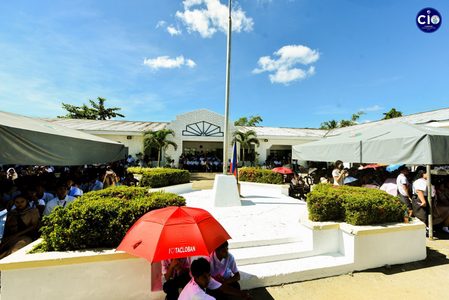
With so many questions, where are the answers? Why is no one answering them?
“It happened once already, but the only resolution was to hire more school counselors. But what really happened there? The next step would have been to prevent incidents like this, because if there really is a group of people really targeting teenagers in the Philippines about having that sense of violence, how can we prevent it if we haven’t pinpointed who or what organization that is?” added Cuevas.
To protect and save Filipino children from future fatal incidents, it is not enough for conversations around the recent school violence incidents to be centered around what should have been done in hindsight. It requires serious follow through of psychological evaluations, the effort to understand more deeply our country’s youth, and the urgency to be truly attentive to the needs of the children and their families within the communities.
It requires the entire community to acknowledge the shared responsibility we have towards the children, and to be willing to change our ways and ask better questions for the sake of their futures. – Rappler.com
Elise Suarez is a Rappler intern from Puerto Princesa City and a Humanities student of the University of Asia & the Pacific.
KioskNews shows a cleaned-up reading view extracted from the publisher’s page — the original always lives on their site, not ours.