The 10 Best Final Lines From Stephen King Books, Ranked

Jeremy has more than 2800 published articles on Collider to his name, and has been writing for the site since February 2022. He's an omnivore when it comes to his movie-watching diet, so will gladly watch and write about almost anything, from old Godzilla films to gangster flicks to samurai movies to classic musicals to the French New Wave to the MCU... well, maybe not the Disney+ shows.
His favorite directors include Martin Scorsese, Sergio Leone, Akira Kurosawa, Quentin Tarantino, Werner Herzog, John Woo, Bob Fosse, Fritz Lang, Guillermo del Toro, and Yoji Yamada. He's also very proud of the fact that he's seen every single Nicolas Cage movie released before 2022, even though doing so often felt like a tremendous waste of time. He's plagued by the question of whether or not The Room is genuinely terrible or some kind of accidental masterpiece, and has been for more than 12 years (and a similar number of viewings).
When he's not writing lists - and the occasional feature article - for Collider, he also likes to upload film reviews to his Letterboxd profile (username: Jeremy Urquhart) and Instagram account.
He has achieved his 2025 goal of reading all 13,467 novels written by Stephen King, and plans to spend the next year or two getting through the author's 82,756 short stories and 105,433 novellas.
Sign in to your Collider account
Yeah, yeah, “Stephen King can’t write endings” is something you'll hear thrown around quite a bit, either as genuine criticism or as a joke, or maybe a bit of both at the same time. It’s not entirely fair, because even if he might be a little better at hooking you into a story than concluding that same story (at least on average), he’s still written plenty of strong endings alongside the more controversial ones (like The Tommyknockers, Under the Dome, and The Colorado Kid).
What follows is focused on the very end parts of some of those genuinely good endings, as in the literal closing lines. These are the Stephen King books that have the best final lines, with some spoilers obviously being necessary when breaking down why they work, and how they relate to the preceding story they’ve been attached to.
10 'The Dark Tower: The Gunslinger' (1982)
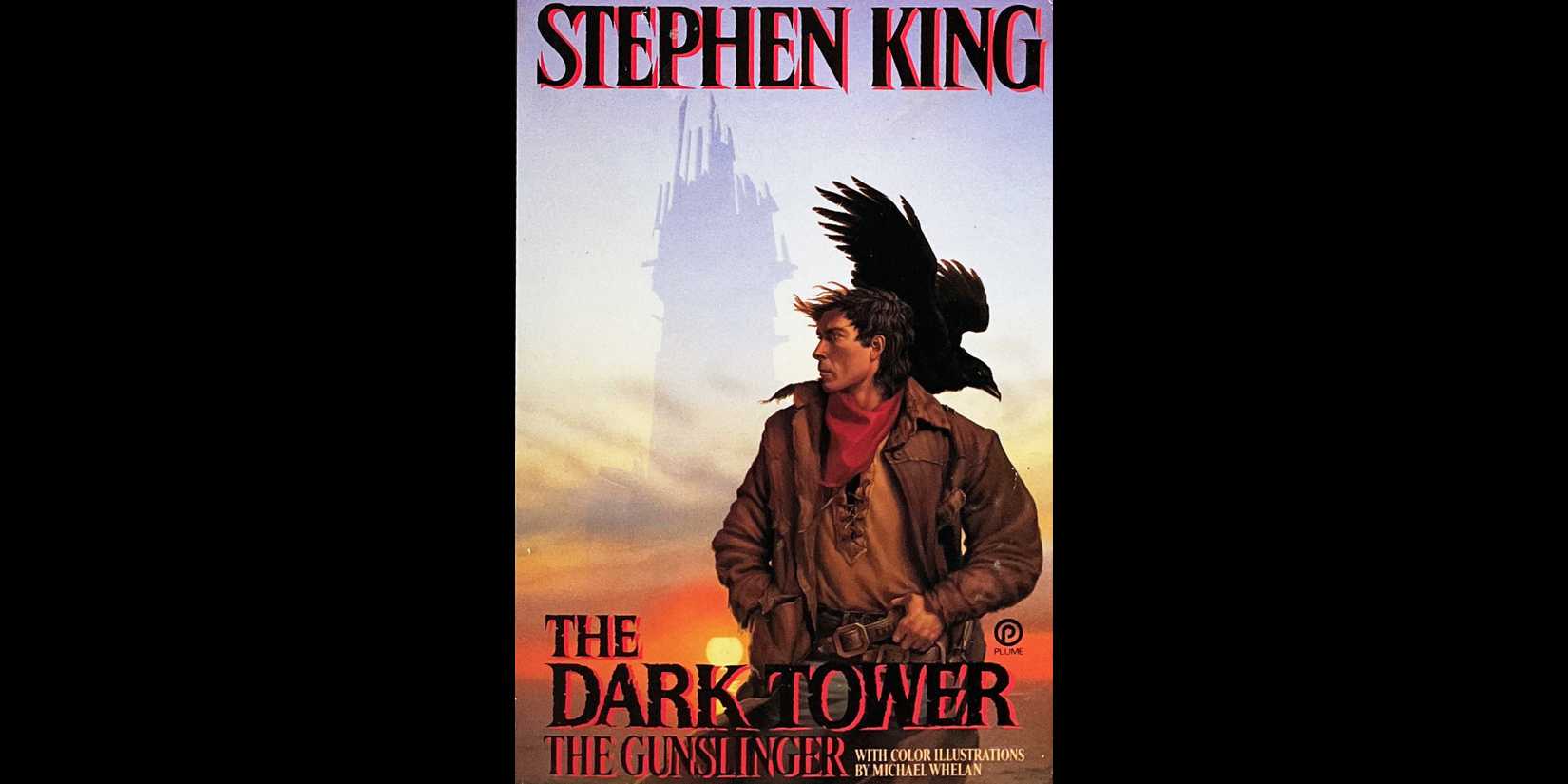
The opening line of The Gunslinger, which is the first The Dark Tower book, is more iconic than the final line, but that doesn’t mean that the final line should be overlooked. It comes at the end of a rather quick read and hints at bigger things to come, as you'd expect from an entry in a series that ended up being seven main books long.
“The gunslinger waited for the time of the drawing and dreamed his long dreams of the Dark Tower, to which he would some day come at dusk and approach, winding his horn, to do some unimaginable final battle.”
As for that final line, it's: “The gunslinger waited for the time of the drawing and dreamed his long dreams of the Dark Tower, to which he would some day come at dusk and approach, winding his horn, to do some unimaginable final battle.” The drawing is mentioned, which leads right into book #2, The Drawing of the Three, and then if you have read until the end of the series, the other parts of that line are also undeniably interesting. The whole series is interesting, really, being King’s longest single story and one that undeniably ties into so many other books of his in some increasingly mind-blowing ways.
9 'Cujo' (1981)
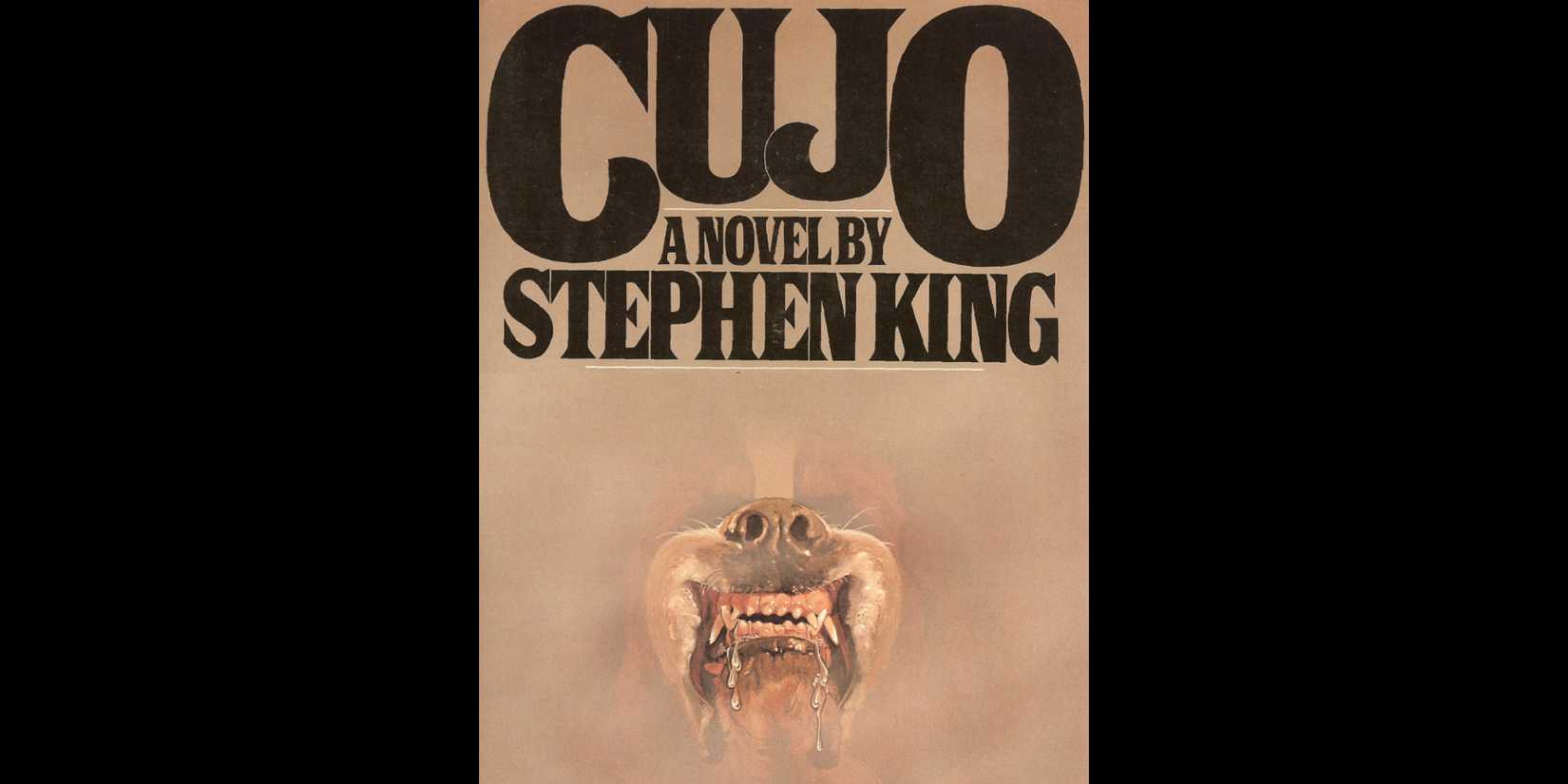
Cujo has a B-movie sort of premise, because it’s kind of a creature feature, but not a feature. So a creature novel? That doesn’t sound as good. And also, it’s not a typical creature feature or monster romp(?), owing to it being more emotional than expected because the threat here is something you feel very sorry for, as the titular Cujo is a victim, infected with rabies, which makes him turn violent and pose a threat to a handful of people in the town of Castle Rock.
It’s a sad read in the end, since Cujo kind of has to die, but didn’t deserve what happened to him, and then as a result of the rabies and the rampage, some other people die, including the youngest and most vulnerable character in the whole book. The final line, as a result, drives home the sadness of it all, talking about the rabbit who Cujo chased at the start of the novel, resulting in Cujo being bitten by a bat (“Its bones, so far as I know, still remain there with the bones of those small animals unlucky enough to have tumbled into that place before it”). It’s an undeniably poignant way to drive home all the death and sadness intrinsic to this particular Stephen King novel.
8 'Misery' (1987)
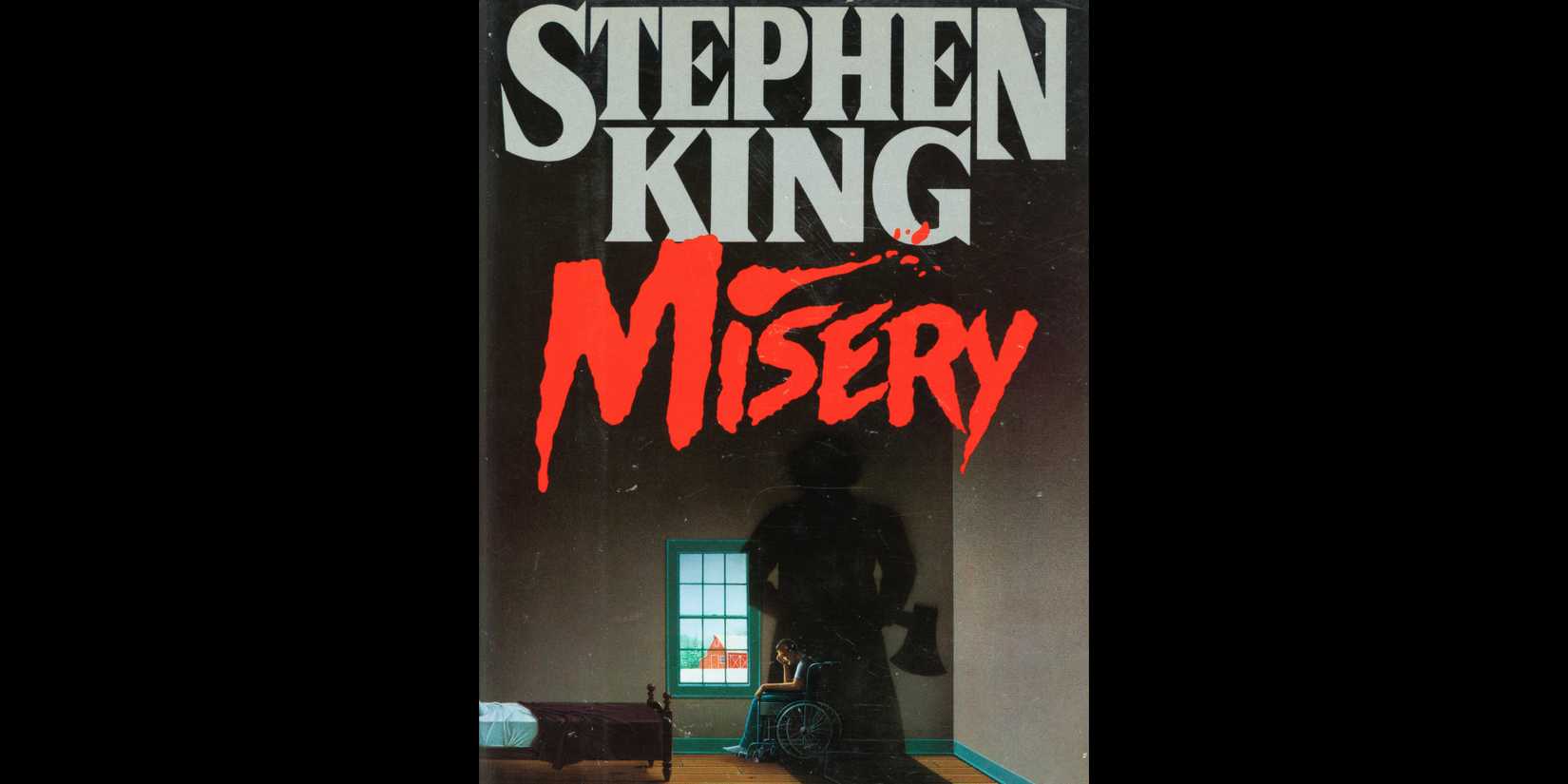
You’ve got a great opening line in Misery, and then a whole bunch of incredible lines throughout the whole thing, owing to how well it’s written and paced, and then it ends strong, too. Paul Sheldon does escape from Annie Wilkes, but is understandably traumatized by the whole event, and struggles to get back into writing until the very end of the novel.
It’s expressed by an appropriately long line, which drives home the flow state Paul’s entered into quite cleverly, since it’s: “The hole opened and Paul stared through at what was there, unaware that his fingers were picking up speed, unaware that his aching legs were in the same city, but fifty blocks away, unaware that he was weeping as he wrote.” It certainly makes for a cathartic ending, and contrasts well with the blunt and unusually short (not to mention confusing) opening line of the novel.
7 'The Long Walk' (1979)

Naturally, The Long Walk has to end on a bleak note, since the whole book’s incredibly bleak and concerned with an extreme competition of endurance where only one person can be alive at the end of it all, since the competition involves people walking until they can’t anymore, at which point they're shot. The novel ends with one winner, as expected, but he sees a dark figure in front of him, and then you get the following line: “And when the hand touched his shoulder again, he somehow found the strength to run.”
He’s psychologically broken, of course, and possibly has hallucinated the dark figure and/or the feeling of being touched, or if it’s something actually supernatural (Randall Flagg, maybe, if you really want to go there, since he’s sometimes known as the Dark Man), then sure, if that makes it more horrifying. Also horrifying: the idea that he doesn’t just keep walking, but starts running, which might mean he’ll collapse – and possibly die – from exhaustion within the next few moments, of which the reader can’t know for sure (making the ending somehow even more unsettling).
6 'The Stand: The Complete and Uncut Edition' (1990)

Oh hey, on the topic of Randall Flagg, here’s The Stand, but specifically the version from 1990. Flagg’s the main villain either way, but he makes a bit more of an impression in the uncut version of The Stand (as do many characters), and especially at the end of the novel. There is an epilogue here that shows Randall Flagg persevering in some form, whereas the original ending of The Stand concludes with two more heroic characters just kind of being like “Well, what now?”
You still get that final scene with them before the epilogue in the uncut version, but the closing words in that epilogue being “Life was such a wheel that no man could stand upon it for long. And it always, at the end, came round to the same place again” makes for a stronger ending. It ties into The Dark Tower as well, the whole cyclical nature of things, and also speaks to the persevering forces of evil found throughout various Stephen King books, or his whole shared universe worth of fiction, really.
5 'Rita Hayworth and Shawshank Redemption' (1982)

While the reunion isn't shown the way it is in the film adaptation, the final words of the original novella, Rita Hayworth and Shawshank Redemption, are very similar, and there is still catharsis with Red finally feeling hope. The final line (well, final few lines) speaks for itself: “I hope Andy is down there. I hope I can make it across the border. I hope to see my friend and shake his hand. I hope the Pacific is as blue as it has been in my dreams. I hope.”
It’s obviously a moving way to conclude what might well be Stephen King’s single greatest novella, but those final lines hit harder because of how hopeless the situation Red and Andy had been in throughout the entire years-long story. To call it a well-earned happy ending would be a massive understatement, and it’s as perfect a closing passage as the rest of this very much perfect novella.
4 'IT' (1986)
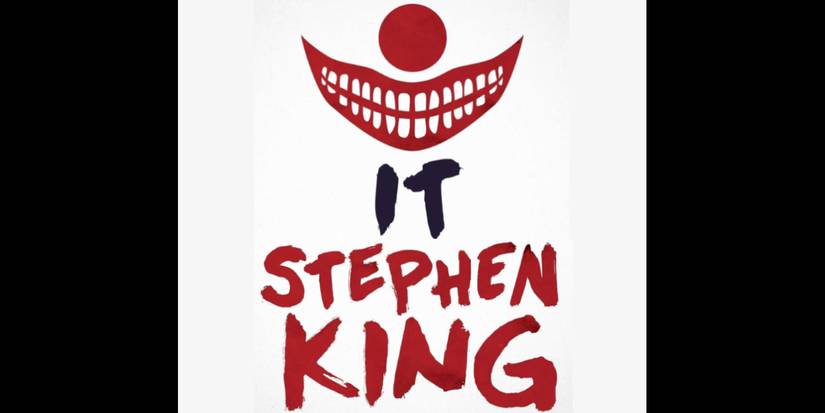
The ending to IT is very drawn out, though the whole novel is massive in length, so it’s understandable. Structurally, IT plays out in two main timelines, and the final battle (so to speak) for each of them gets flipped between throughout the novel’s whole finale, which brings the past and present together and all, and succeeds in making the ending to such a massive novel feel sufficiently grand.
Bill has lost memories of what he went through, to some degree, but not entirely, because the final line of the novel is: “To think that what has looked forward must also look back, and that each life makes its own imitation of immortality: a wheel. Or so Bill Denbrough sometimes thinks on those early mornings after dreaming, when he almost remembers his childhood, and the friends with whom he shared it.” Also, there’s another mention of that wheel, like the ending of The Stand, and referencing the phrase from The Dark Tower: “Ka is like a wheel.”
3 '11/22/63' (2011)

Another Stephen King epic, though this time one that was more of a sci-fi thing rather than fantasy and/or horror, 11/22/63 once more has an ending that could be described as bittersweet. Time travel is ultimately used to thwart the assassination of John F. Kennedy, but that doesn’t end up making the future better, and instead makes it worse. So, there’s one more trip back in time to ensure history isn't rewritten.
This does mean the relationship the protagonist/narrator got into while in the past could never happen, but also, the love of his life (in the past) was killed during the thwarting of the assassination. So, she’s saved, and then 11/22/63 ends with him not telling her about what had happened in an alternate timeline, but meeting her as an elderly woman, and getting some closure from knowing she lived a fruitful life. It’s driven home incredibly well, with King writing: “Then the music takes us, the music rolls away the years, and we dance,” and catharsis for both the protagonist and the reader being undeniably achieved.
2 'Pet Sematary' (1983)

Breaking from the nice or bittersweet endings for a bit, here’s Pet Sematary, which is famously (or infamously) one of Stephen King’s bleakest books. It’s a book about a cemetery that brings the dead back to life, but not right, with it happening to a family’s pet cat, and then their young son after he’s killed by a truck, and then that young son (back from the dead) eventually kills his mother, the main character’s wife.
He’s so broken by the end of it all, having had to kill his resurrected son, that he tries to bring back his wife by burying her as quickly as possible, leading to the end of the novel being: “A cold hand fell on Louis's shoulder. Rachel's voice was grating, full of dirt. ‘Darling,’ it said.” It ends the whole unsettling book on an excruciatingly unsettling note, and really is a rather perfect ending to something this dark and emotionally harrowing.
1 'The Dark Tower VII: The Dark Tower' (2004)

It’s easy to point out how the ending of the seventh book in The Dark Tower series is the same as the opening line of the first book in that same series: “The man in black fled across the desert, and the gunslinger followed.” There’s a cycle, and it’s been repeated, after Roland finally reached the top of the Tower, and how many times he’s done it before, and how many times he has to do the whole journey again, who knows?
There is a little hope here, though, and it ties to the way the first book in the series ended, because the final line there mentions a horn, and in The Dark Tower VII’s ending, Roland finds himself back at the start of the journey but now equipped with the Horn of Eld, signifying that hopefully this next journey will result in that also-mentioned “final battle.” It’s the best way such a long story could've ended, and without a doubt thematically right for a series like The Dark Tower.

The Dark Tower
- Release Date
- August 3, 2017
- Runtime
- 95 minutes
- Director
- Nikolaj Arcel
- Writers
- Anders Thomas Jensen, Akiva Goldsman, Jeff Pinkner, Nikolaj Arcel
KioskNews shows a cleaned-up reading view extracted from the publisher’s page — the original always lives on their site, not ours.