5 Agatha Christie Books You Can Finish in a Weekend


At any given moment, Scott Simone has at least three books jockeying for his attention. He’ll never turn down a campus novel with a literary bent, nor will he hesitate to add yet another mystery to his Leaning Tower of Pisa-inspired to-be-read pile — which is built upon the bedrocks of too many short story collections, how-are-these-real true crime books, and classics waiting to be cracked open again. Topics that have him ripping through pages the fastest include closed-circle murders, unhappy professors, life-questioning philosophical deep dives, so long as they feature sharp sentences, a dark sense of humor, and at least a little malice.
He’s spent so much time in book shops over the years he is, to his wife’s chagrin, continuing to build a library that doesn’t quite respect the dimensions of the apartment meant to contain it.
Sign in to your Collider account
There's a curious crowd mingling about your nightstand. There's a philandering painter in one corner, working at his easel. An elderly woman floats around, talking everyone's ear off about the murder she witnessed from a train window. There's another woman perched in the other corner, casually letting whispers slip of her brother's murder. And then there's the young aristocrat who's secretly scheming to stage a car accident.
Those are just a few of the cast of characters Agatha Christie has immortalized on the page. Whoever you decide to spend your weekend with, you'll not be left wanting. Because no matter the situation or the locale in which she collected them, Christie had a way of making you feel as though you'd joined their company. And then there's, of course, the intrigue, which glues you to the page, has you become so engrossed in their affairs that you've forgotten your own. By the time Christie finally reveals which of them has been lying, you've sacrificed most of your weekend to the investigation.
'Five Little Pigs' (1942)
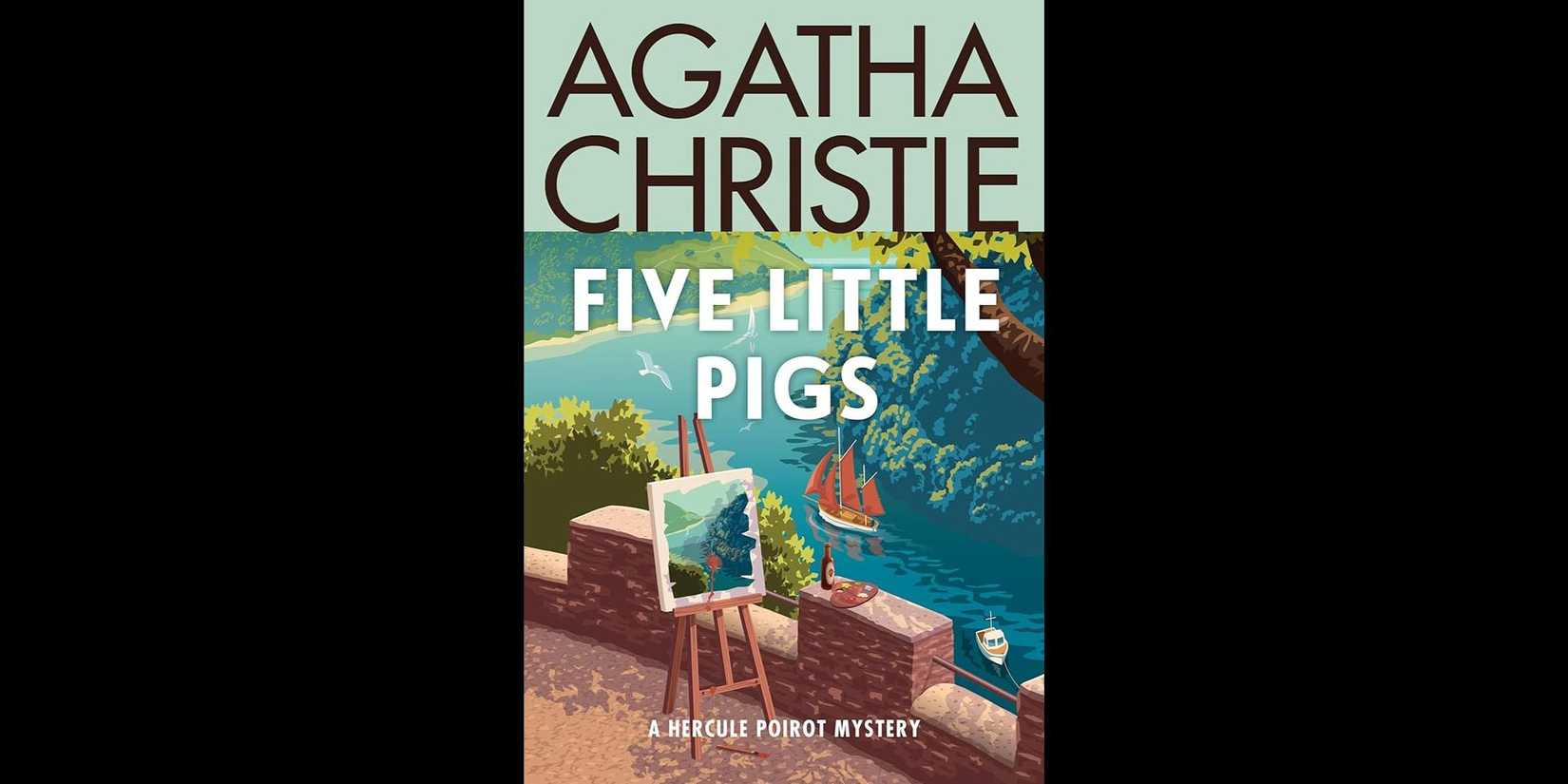
There's something paradoxical about Five Little Pigs. On the surface, it's about a cold case, a wife who supposedly poisoned her artist husband, was convicted, and died in prison. It's all a faint mist in the memory. But as Christie's famed Hercule Poirot begins to poke around, asking the five witnesses questions before having them write accounts of the day of the murder, the days, the people, and the place surrounding the poisoning become visceral.
That's what draws the reader in. You walk along the paths to the garden, almost as if you can reach out and skim your hand along the flowers. But it's also the characters, which arguably may be Christie's strongest. There's the brooding wife, contending with sharing her home with her husband's young mistress, who herself alternates between youthfully arrogant and vulnerable. A lovelorn herbalist whose mind is in the clouds as often as it’s in his room of potions. They never become caricatures, though, each grounded in their own yearnings and fully formed with oddities that make them unique. It's a place — and company — from which you never want to pull yourself away.
'4:50 From Paddington' (1957)

4:50 From Paddington is rightfully lauded for its opening, a quick, gripping account of a murder witnessed from a passing train. What gives this novel such staying power is the way Christie plays with society's perception of women. Take Elspeth McGillicuddy, an elderly woman who witnesses the murder, but is written off as hysterical when no body is found. Or Miss Marple herself, who's all too used to being underestimated because of age. Perhaps the best example is Lucy Eyelesbarrow, an Oxford-educated mathematician who now runs wealthy households to earn a better living, and whom Marple employs to help investigate.
It's a Marple mystery, but it's arguably Lucy who makes the novel so hard to put down. She gets a job at Rutherford Hall, the home of the eccentric Crackenthorpe family where Miss Marple suspects the body may have ended up. Lucy makes herself indispensable. The Crackenthorpes appreciate her talents in the kitchen, sure, but would never stop to imagine she's capable of much more than her domestic duties. That, of course, allows Lucy to nose around, to listen in on conversations, and to poke into the family's affairs without much attention paid to her. She's the perfect personification of the agency Christie gives these women through the very traits that attract underestimation from others. And there's something wholeheartedly satisfying about watching Lucy run circles around the unsuspecting family.
'After the Funeral' (1953)
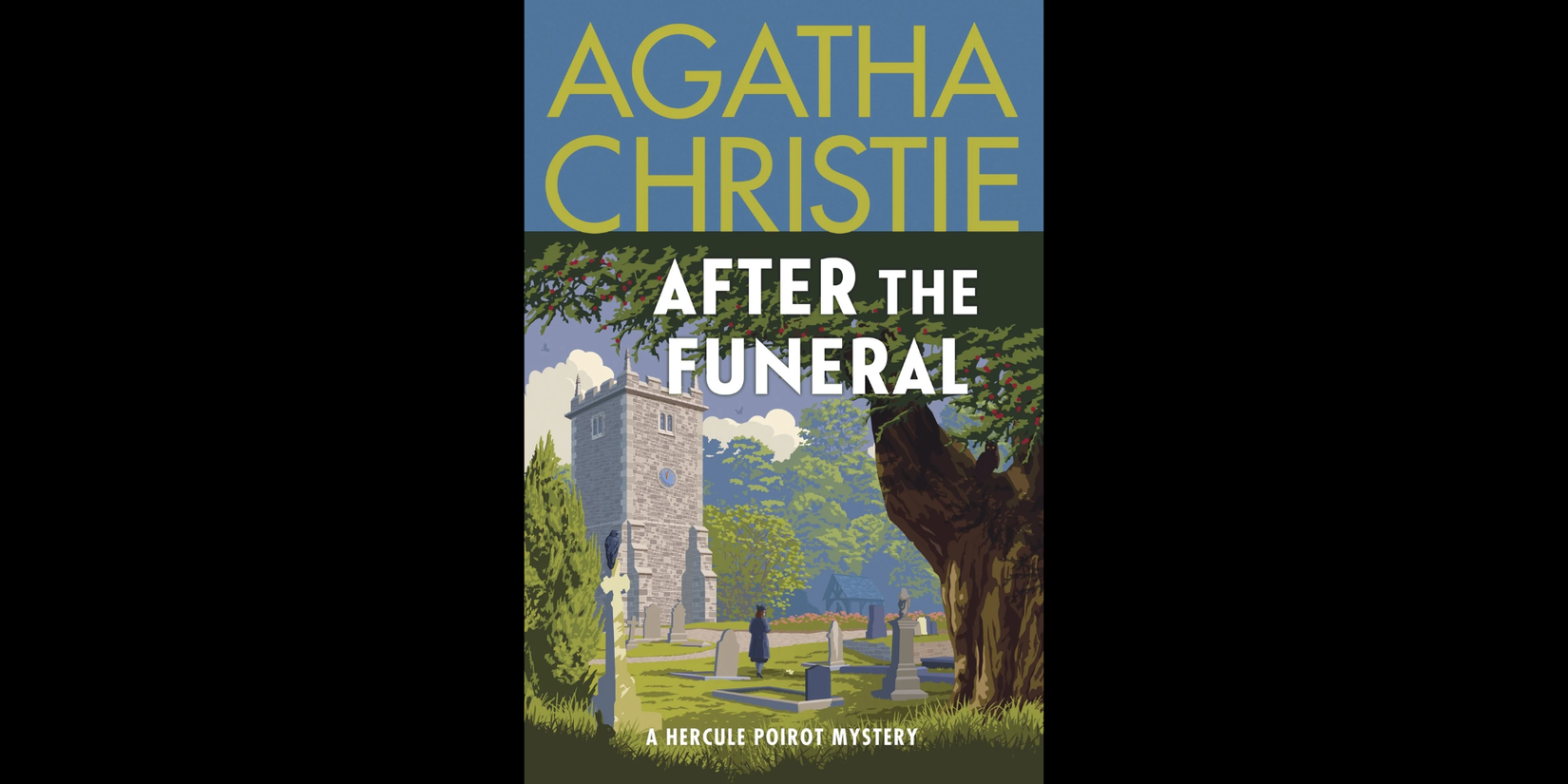
Christie takes a knife to the notion of a family's blood bond, showing that it's not even water running through that connective vein. It's pomp, and she uses the Abernethies to make that point. They come across at the outset as a respectable family, in deep mourning. But it becomes quickly obvious that each family member is more interested in the reading of the will than the man himself. Even when his sister claims somebody murdered him, the family is more aghast at her lack of tact than they are alarmed. When Cora herself is murdered, the family facade fully crumbles.
Christie makes that foundational fracture all too entertaining with each character portrayal. The perpetually ailing Timothy somehow makes every family misfortune about his own health. And Rosamund's mental math, calculating whether or not her inheritance will finance her husband's theatrical dreams, occupies most of her time. The book is replete with old resentments and speculation, so much so that murder almost becomes the subplot. The real story lies within the family spectacle. It's an early predecessor to Knives Out, an unflinching exposé on how success begets greed and self-interest.
Collider Exclusive · Villain Personality Quiz Which Criminal Mastermind Would Be Your Nemesis? Lecter · Joker · Moriarty · Chigurh
Four of the finest criminal minds ever put on screen. One of them would look at you and see something worth their time. Eight questions decide which one comes for you, why they picked you, and what they would want when they arrived.
🍷Lecter
🃏Joker
♟️Moriarty
🪙Chigurh
01
What would a criminal mastermind notice about you first? Great villains choose their opponents carefully. Something about you got their attention.
02
How do they make first contact? The introduction tells you everything about what is coming next.
03
What do you actually believe about right and wrong? Every nemesis is really an argument about the thing you believe most.
04
What finally gets under your skin? Everybody has a pressure point. Finding yours is the whole plan.
05
They have made their move. How do you fight back? This is the part of the film where the audience finds out who you are.
06
What would they use against you? A good villain never brings a weapon you have not already handed them.
07
What do they actually want from you? The money is never the point. Something else always is.
08
How does it end between the two of you? Eight questions in, this is the one that decides who comes for you.
The Case File Is Complete Your Nemesis Is…
Four criminal masterminds. One of them was always going to be yours. Here is who comes for you, why they picked you out of everyone available, and what they want from the encounter.
Hannibal Lecter
Your nemesis does not want to beat you. He wants to know you completely, and he is patient enough to wait for it. The frightening part is how good the conversation is.
- Lecter is the most dangerous kind of opponent: the one who finds you interesting. He never raises his voice, because he has never needed to.
- You keep a great deal to yourself and you are careful about what you show. That reserve is exactly the door he would knock on.
- The films understood something other thrillers missed. The horror is not the violence. It is being perfectly understood by the wrong person.
- He would be unfailingly polite about all of it. That is the worst part.
The Joker
Your nemesis is not after money, territory or revenge. He is after a demonstration, and you are the person he has chosen to prove his point on.
- The Joker only picks opponents who believe in something. Your decency is not a defence against him. It is the entire reason he showed up.
- He has no plan you can predict and nothing you can take away, which removes every tool you would normally reach for.
- His whole argument is that you are one bad day away from being him, and you would spend the rest of your life proving him wrong.
- He would call it a magic trick. You would call it the worst night of your life.
Moriarty
Your nemesis respects you, which sounds flattering until you work out what it means. He chose you because nobody else was worth his time.
- Moriarty is the original criminal mastermind, the template every later one borrows from: a mind the equal of the hero's, pointed the wrong way.
- You enjoy being the cleverest person in the room. He is counting on exactly that, and he has already built the room.
- This is the rare nemesis who would be genuinely disappointed if you lost badly. He needs the game to be worth playing.
- It ends the way these things always end. Two people, one problem, and only one way down.
Anton Chigurh
Your nemesis has no personal interest in you whatsoever, and that is precisely what makes him unsurvivable. You are not a rival. You are a stop on the way.
- Chigurh does not negotiate, gloat or explain. He arrives, he asks one question, and the answer was decided long before you opened your mouth.
- You trust yourself to handle things. He is the one problem in the world that has no interest in how capable you are.
- No Country for Old Men rewrote the screen villain by removing the thing audiences quietly rely on: the sense that talking might work.
- Call it. He will wait.
'Why Didn't They Ask Evans?' (1934)

There's Hercule Poirot and there's Miss Marple: two of detective fiction's most ingenious minds. Poirot with his powers of deduction and Marple with her extraordinary understanding of human nature. But Christie doesn't rely on either here, instead giving us one of her most memorable amateur sleuthing novels in Why Didn't They Ask Evans? This is the story of Bobby Jones and Lady Frances "Frankie" Derwent, neither of whom knows much about detective work. Bobby is a rather hopeless golfer who stumbles upon a dying man beneath a cliff; Frankie, his childhood friend, is an aristocrat with an appetite for adventure. Neither lets their inexperience stop them.
In a way, this is almost an anti-Christie mystery. There's none of the usual methodical detective work. It's more of a bumbling adventure, with Frankie bluffing her way through situations that leave Bobby completely flummoxed. Their dialogue, a buzzing back-and-forth, is more akin to a screwball comedy than a hard-boiled detective noir. And that's what makes the novel so fun — and such a quick read. You're not trying to play catch-up or outwit the detective who's always a couple of steps ahead. No, you're in the company of two friends making things up as they go, occasionally landing themselves in genuine danger. So it's more akin to watching The Other Guys than Sherlock Holmes.
'Murder Is Easy' (1939)

Christie is saying a lot more in the title Murder Is Easy than one would suspect. And that’s the point, as she turns idle village gossip into a sinister act in and of itself. Everyone knows everyone else's business in Wychwood under Ashe. The more scandalous, the better. They love to tell a story, waxing poetic about the maid who accidentally drank hat dye or the drunken publican stumbling his way off a bridge. In a way, all the residents care about is showmanship, one-upping each other with a good story. For all their apparent interest in everyone's business, they have little concern for one another.
It's that troubling portrayal of sleepy Wychwood that's the beating heart of the novel. As retired policeman Luke Fitzwilliam begins investigating, the villagers eagerly recount the deaths, each supplying a sordid detail they know adds a bit of spice to their own rendition. But they're so used to treating their neighbors' misfortunes as entertainment that nobody has bothered looking for a connection. And there's something chilling about realizing that a murderer can operate in a village where practically everyone knows everyone else's business, simply because nobody cares enough to look beyond it.

Murder Is Easy
- Release Date
- 2023 - 2023-00-00
- Network
- BBC One
- Directors
- Meenu Gaur
-

Douglas Henshall
Major Horton
-

Bridget
-
Nimra Bucha
Mrs Humbleby
-

David Jonsson
Fitzwilliam
- Seasons
- 1
- Producers
- Damien Timmer, James Gandhi, James Prichard
KioskNews shows a cleaned-up reading view extracted from the publisher’s page — the original always lives on their site, not ours.