West in ‘big trouble’, don’t expect massive climate aid: Steven Koonin at HT Leadership Summit
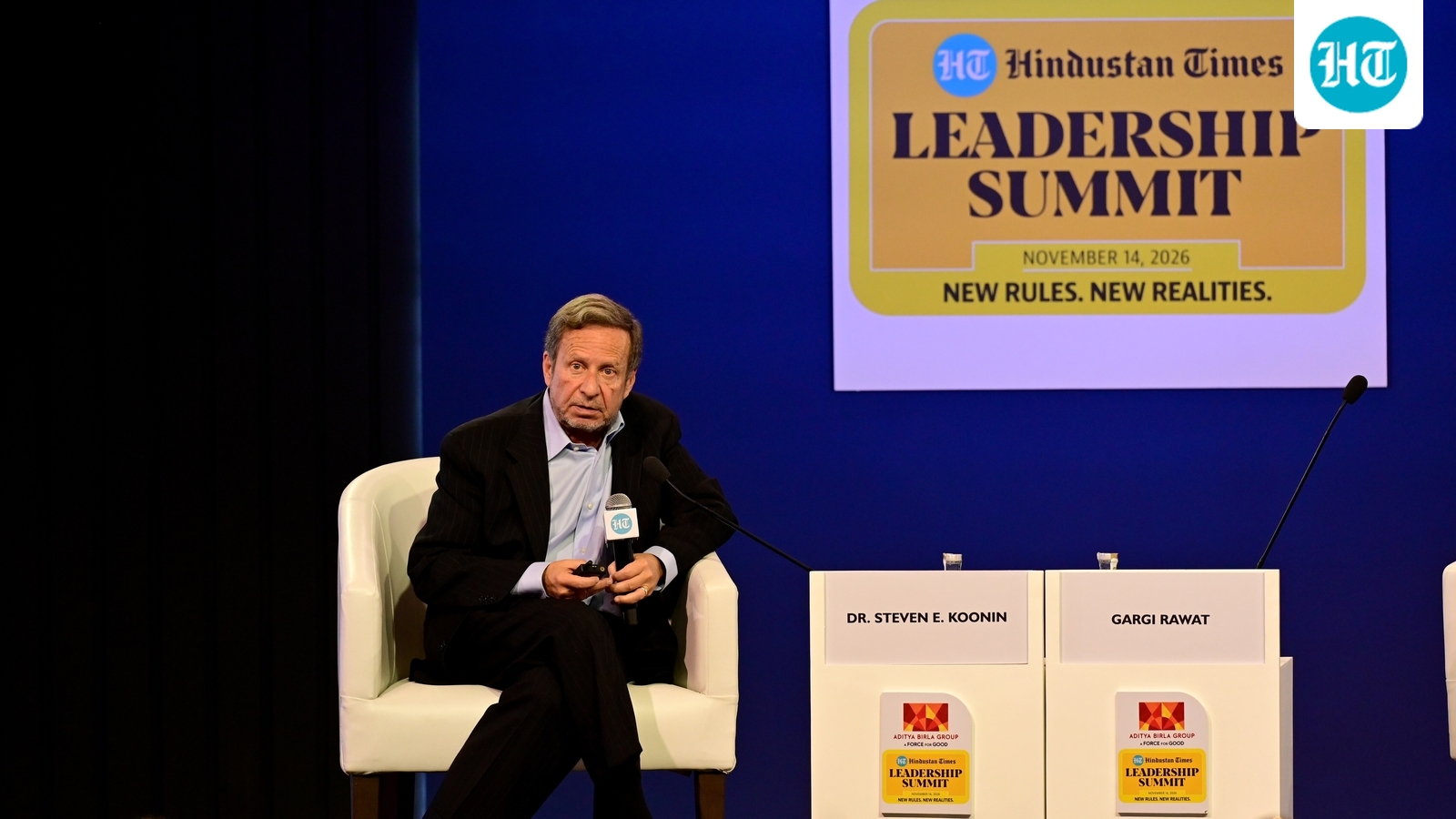
Global emissions are soaring, and the finance promised to developing countries from the developed world has not arrived, physicist Steven Koonin said, as he questioned the achievements of the ongoing 31st Conference of the Parties (COP) to the United Nations Framework Convention on Climate Change in Türkiye.
The 74-year-old Edward Teller Fellow at Stanford University’s Hoover Institution also argued that it is time to rethink how the world responds to climate change. He made the remarks during a conversation with NDTV consulting editor Gargi Rawat at the Hindustan Times Leadership Summit on November 14.
Asked about his views on the climate negotiations at COP31 that is scheduled to conclude on Friday, Koonin said: “This is the 31st Conference of the Parties that started about a week ago in Turkey. What have they accomplished? Global emissions continue to go up. They are soaring. The promises of financial help from the developed world to the developing world have not materialised. I think it’s time to think about doing the response in a different way than what we have done.”
He also said he doesn’t expect large-scale aid from the West, given the financial strain caused by ongoing global conflicts.
Also Read | India can keep growing at 7% if it curbs inequality, boosts demand: Stiglitz at HTLS 2026
“The Western nations – I know the US best, but I also know Europe – are in big trouble. And to think that there’s going to be massive amounts of aid coming from the West, given the financial problems that we have – overextension on social security, trade issues, many of the things that we’ve been discussing — I don’t think that’s going to happen,” he said.
As the moderator said, “so, this is a mirage that we’re chasing…”, Koonin said: “I think so. The history of the COPs has shown that.”
During the 2024 climate conference, rich countries agreed to triple climate funding for developing countries to $300 billion per year by 2035, up from the previous goal of $100 billion annually. It also decided to secure the efforts of all actors to work together to scale up finance for developing countries, from public and private sources, to $1.3 trillion per year by 2035.
According to Reuters, the rich countries met their 2020 target two years later. Since then, climate action has slipped down the political agenda for Western governments as US President Donald Trump withdrew international funding, while wars in Ukraine and the Middle East added to inflationary pressures and the need to spend on security.
The latest negotiating draft at COP31 has kept the call to triple adaptation finance by 2035 but leaves out key details around setting a starting point, milestones and a system for tracking progress to next year’s summit in Ethiopia, Bloomberg reported. The negotiations are continuing, meaning the omitted target and other provisions may yet return before a final agreement is adopted.
Fiji climate minister Lynda Tabuya alleged rich nations have closed ranks against putting a dollar figure on adaptation finance at COP31. He described a harder and more coordinated pushback than at previous summits. “It used to be fragmented. Now, it seems to be more of a collective ambition to oppose it,” he said.
Decarbonisation in India
Koonin, during the summit, also spoke on decarbonisation in India, saying the country should get the energy it needs in the most convenient way that it can and must only worry about cutting carbon when “it gets rich enough”.
“Look, India needs energy. If you look at countries that develop, they need more and more energy as they develop, until they get to a certain point, which is far away for India. For every dollar of GDP you increase, you need about 5 megajoules of energy per year. And India should be getting that energy in the most convenient way that it can,” he said.
“Once it (India) gets rich enough, I would think then it can start to worry about decarbonisation. But the energy needs are immediate. They are soluble, whereas the climate threat is distant, vague and uncertain. So I think the pragmatic thing to do is to get that energy. Look, only 15% of Indian households have air conditioning. You should fix that,” he added.
KioskNews shows a cleaned-up reading view extracted from the publisher’s page — the original always lives on their site, not ours.