How a heated argument turned fatal for Kolkata techie; partner, her mom arrested
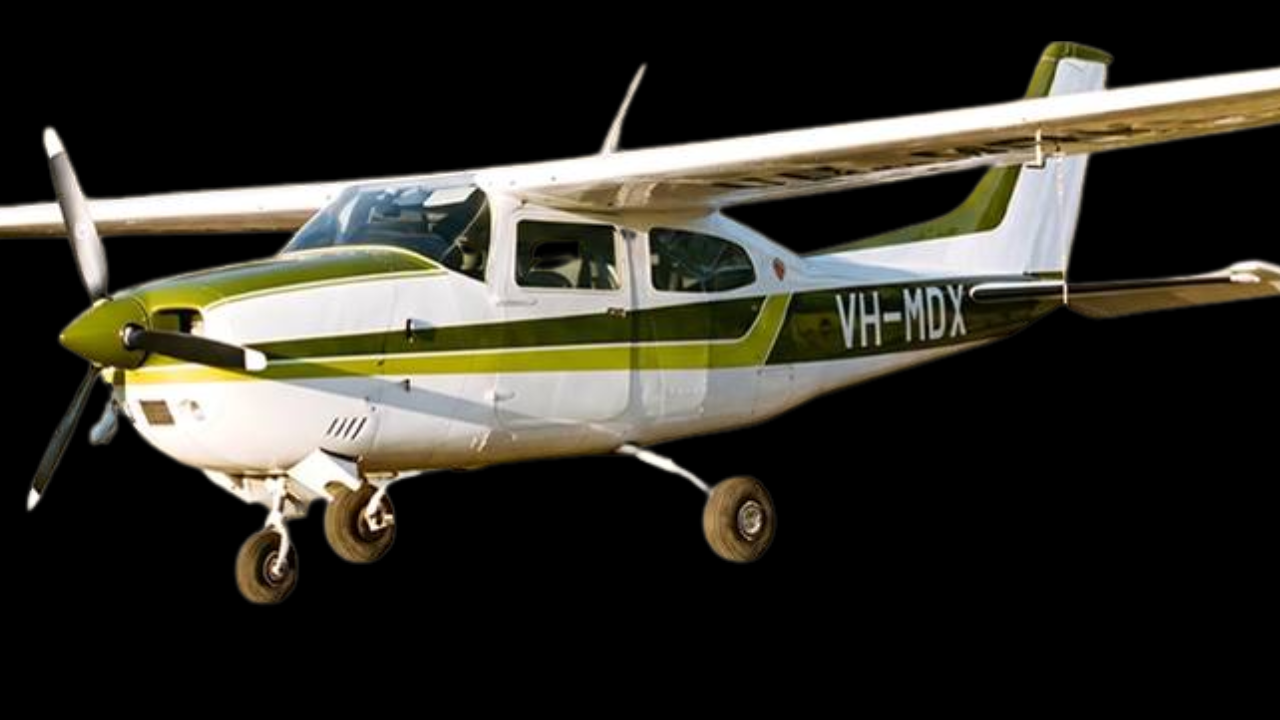
On a freezing winter night in August 1981, a small aircraft was battling violent turbulence above a forest in Australia's Barrington Tops. Inside the cockpit, the pilot was struggling to keep the plane under control as ice accumulated on its wings and crucial flight instruments began failing.
Then came a chilling radio transmission: "We're losing a hell of a lot … we're down to six and a half." Moments later, the pilot shouted, "Five thousand!" before the aircraft disappeared from radar. There was no distress beacon, no confirmed crash site and no wreckage. Forty-five years later, the disappearance of the Cessna 210M, registered VH-MDX, remains one of Australia's most baffling aviation mysteries.The aircraft was carrying five men from Queensland to Sydney when it vanished over the rugged Barrington Tops region in New South Wales on August 9, 1981.
Despite extensive searches involving police, military personnel, rescue teams and volunteers, neither the plane nor the bodies of its occupants have ever been found. According to the Australian Broadcasting Corporation (ABC), it remains the only civilian aircraft to have crashed on mainland Australia without a trace.
A flight that took a terrifying turn
The journey began in Proserpine, in Queensland's Whitsundays, where four passengers had spent a week sailing a yacht north for a friend.
They were returning to Sydney aboard the six-seater Cessna, piloted by 52-year-old Michael "Mike" Hutchins. The passengers were Ken Price, 54, Rhett Bosler, 33, Noel Wildash, 40, and Philip Pembroke, 43.The aircraft stopped at Coolangatta to refuel before continuing south towards Bankstown. As it approached the area near Newcastle, Hutchins planned to avoid restricted military airspace around the Williamtown Air Force base by turning inland.
That route took the aircraft towards the Barrington Tops, a mountainous region known for its unpredictable weather and difficult flying conditions.At around 7:18 pm, Hutchins reported considerable turbulence and strong downdrafts to air traffic controllers. Within minutes, the aircraft entered cloud. At 7:24 pm, the pilot reported that two important flight instruments, the artificial horizon and the gyroscopically controlled direction indicator, had failed.
Another instrument stopped working shortly afterwards.The situation continued to deteriorate. Radar picked up the aircraft at 7:28 pm, showing that it had drifted considerably from its intended route. Hutchins struggled to climb and later reported that ice was accumulating on the aircraft. At 7:34 pm, he said the plane had collected a considerable amount of ice, which was affecting its ability to remain airborne.Less than a minute later, the pilot reported another frightening development: a possible cockpit fire. Although he said the problem appeared to have been resolved, the aircraft was already in serious trouble. At approximately 7:38 pm, Hutchins transmitted the words that would become synonymous with the disappearance: "We're losing a hell of a lot … we're down to six and a half." A flight services officer warned him that the lowest safe altitude in the area was 6,000 feet.
Hutchins then called out, "Five thousand!" That was the last recorded transmission. Radar contact was also lost around 7:39 pm.
A massive search yielded nothing
The Australian Transport Safety Bureau's predecessor investigated the disappearance and identified severe turbulence, icing and the failure of the aircraft's primary flight instruments as probable contributing factors. The aircraft was not equipped to fly in known or forecast icing conditions, according to the investigation summary.
An extensive air and ground search began almost immediately. For nine days, rescue personnel, police, bushwalkers, national parks staff and other volunteers combed the mountainous terrain.
Around a dozen aircraft flew over the search area each day, while ground teams navigated slippery rocks, dense vegetation and dangerous gullies.However, the searchers had little certainty about where to look. Their investigation was based largely on the aircraft's final radar positions and conflicting eyewitness accounts.
Although several wrecks were discovered during the operation, none belonged to VH-MDX.On August 18, nine days after the disappearance, police suspended the search. They planned to return when weather conditions improved, this time focusing on recovering bodies and wreckage. Subsequent searches also failed to locate the aircraft. The difficult terrain remains a major obstacle. Barrington Tops National Park covers approximately 125,000 hectares and contains ancient rainforests, subalpine woodlands and steep mountain ranges.
Thick vegetation can conceal wreckage from aerial searches, while poor visibility and rapidly changing weather make ground operations challenging.
Five men, five families and decades without answers
Behind the aviation mystery were five families whose lives changed in a matter of minutes. One of the most heartbreaking stories belonged to Philip Pembroke, who had recently become engaged to Yvonne Pembroke. The couple had discovered that they were expecting a child shortly before his trip to Queensland.
Yvonne later recalled how Philip had told her before leaving: "Don't you have that baby without me." On the night the aircraft disappeared, she was at a neighbour's house.
The neighbour, Gail Bosler, was also waiting for her husband Rhett, who was aboard the plane.Close to midnight, Yvonne received a call informing her that the aircraft had gone down after a fire was reported in the cockpit. The two women, who had been waiting for their partners to return, were suddenly confronted with the possibility that neither man would come home.
Philip's eldest son, Andrew Pembroke, was 18 when his father disappeared. He joined the search but soon realised how difficult it would be to locate anything beneath the enormous forest canopy.
Speaking to ABC, he described the uncertainty as a form of "slow water torture".The disappearance also sparked numerous conspiracy theories over the years. Some suggested that the men had faked their deaths and escaped overseas, while others alleged drug or gold smuggling, secret military missions and even alien involvement.
However, investigations into these claims have found no credible evidence to support them. A coronial inquest held in Sydney in 1982 concluded that the occupants had died when the aircraft crashed in the Barrington Tops area.
The coroner also noted that the cause of the accident would probably remain unknown until the wreckage was discovered.
The search continues after 45 years
The mystery has continued to attract amateur investigators and volunteer search groups.
Among those still looking are Glenn Horrocks and Glenn Strkalj, who have spent years studying the disappearance and searching different sections of the mountainous region. Their research and computer modelling have helped establish an outer boundary beyond which they believe the aircraft was unlikely to have travelled.
However, the area within that boundary still covers approximately 9,000 square kilometres of dense wilderness.The most recent search by the volunteers took place in June 2026. They are also monitoring newer technologies that could help identify wreckage hidden beneath thick vegetation.For the families, however, the search has never been just about solving an aviation puzzle. Yvonne Pembroke, who raised her son without Philip, told ABC that she still thinks about her fiancé every day. His disappearance, she said, shaped the rest of her life. Even after four and a half decades, the final radio call remains the only recorded glimpse into what happened aboard VH-MDX.
KioskNews shows a cleaned-up reading view extracted from the publisher’s page — the original always lives on their site, not ours.