Microplastics are raining down on Everest- how does this affect us?
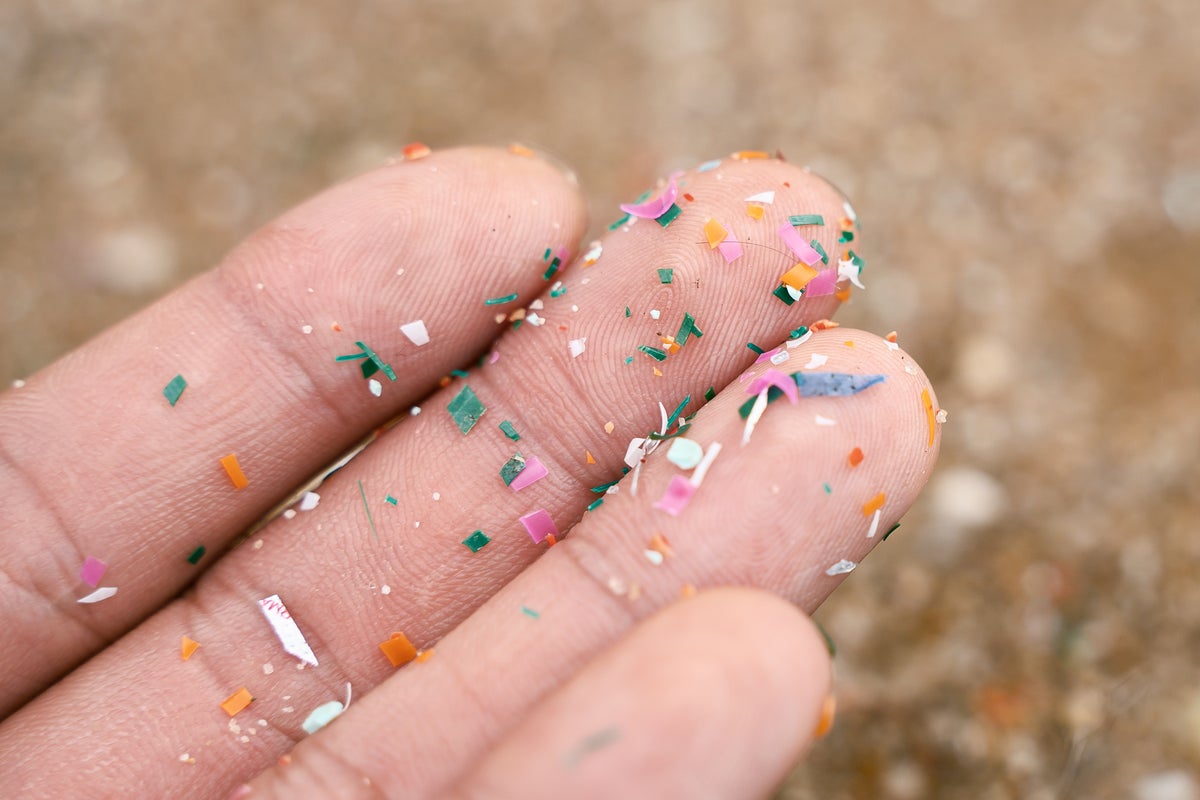
Toxic microplastic particles could be raining down on Mount Everest year-round, according to scientists.
These tiny plastic fragments are less than 5mm in length and found everywhere from the depths of our oceans, to our soil, water supply and the fish we eat.
A Chinese study involving months of monitoring on the mountain’s northern slope found that Everest receives a year-round supply of airborne microplastics and nanoplastics.
These microplastics have also been found in human arteries, lungs and placental tissue and studies warn the particles may pose a threat to not only the environment but public health.
Research has suggested microplastics can induce inflammation, DNA damage, hormone disruptions and possibly increase the risk of heart attacks.
How do we absorb microplastics?
Humans are surrounded by microplastics, the tiny particles are ingested through our food, the water and juices we drink and even from the air we breathe. From there they can enter the bowel, liver and other major organs.
“We are exposed to micro and nanoplastics by eating and drinking them and through breathing in fibres and inhaling particles from indoor dust,” Dr Maria Knobel, medical director at Medical Cert UK told the Independent.
“There may also be a minor exposure route through contact with our skin,” she added.
What damage can microplastics do to the human body?
Microplastics have been linked to DNA damage, dementia, heart attacks and liver damage.
One study, published in the New England Journal of Medicine, by Italian researchers in 2024, found microplastics in plaques in the carotid arteries — a pair of major vessels which deliver blood to the brain — of people with early-stage cardiovascular disease.
Over three years, those who had the microplastics in their plaques had a 4.5-fold greater risk of stroke, heart attack or sudden death.
Another study said microplastics were linked to dementia. The 2025 study published in the journal Nature, identified microplastics in the brains of human cadavers. Those who had been diagnosed with dementia prior to their death had up to 10 times as much plastic in their brains compared to those without the condition.
The bowels are one of the first place microplastics might go after eating them, explained Stephen Patrick, Associate Professor in Medical Imaging, UCL.
Those with healthy bowels will most likely stop microplastics from damaging the rest of their body, but for people with bowel diseases microplastics can simply worsen their symptoms.
Prof Patrick told the Independent: “If you’ve got a really healthy bowel and gut there's not very big gaps between the soft of cells in the wall for the microplastics to get through, but as soon as you start having a condition that causes inflammation, such as inflammatory bowel syndrome or alcohol consumption which can make your bowels more permeable, the increased permeability of the bowels lets more microplastics through.”
Animal studies have shown microplastics can cause some inflammation in the gut, Prof Patrick explained.
But this can cause a “vicious cycle” where having a bowel condition increases the microplastic absorption and then microplastics in turn promote the symptoms of the disease.

One study on liver fibrosis in its later stage cirrhosis, where the liver is severely damaged, looked at the microplastic content of livers and found increased amounts of microplastics in cirrhotic livers or cirrhotic areas of livers and fewer microplastics in healthy areas.
“It’s not known if there was more microplastics there to start with that caused it or whether it was the unhealthy area that promoted the uptake, but there is a strong association between the two,” Prof Patrick said.
Research has also suggested microplastics can disrupt hormones, but Prof Patrick explained the plastic particles act as a sponge for other chemicals that later leak out into the body.
“While microplastics are in water sources they can soak up lots of other chemicals because plastic’s quite hydrophobic,” he said.
Drugs, such as antibiotics and metabolic products go out down the toilets as wastewater chemicals and become soaked up and concentrated in the microplastics.
Once these microplastics are ingested through the water system then those chemicals are also consumed.
He also warned there will be microplastics still out there yet to decompose that contain banned chemicals such as BPA, which has been associated with altered reproductive hormone levels.
How can we reduce our exposure?
Completely avoiding microplastics would be an impossible task, but experts say avoiding microwaving food in plastic containers is one step closer to reducing exposure.
Dr Knobel said: “If you only made one change to reduce your exposure to micro- and nanoplastics, I’d encourage you to stop microwaving or reheating food in plastic containers. Try to use glass or ceramic containers for reheating food instead.”
She explained one 2023 lab study found microwaving plastic baby-food containers caused the greatest release of micro- and nanoplastics, as much as 4.22 million microplastics and 2.11 billion nanoplastics being released for every square centimetre of plastic after three minutes in the microwave.
Although it is unclear how many of these particles a person may actually swallow, or what health effects that may have.
Prof Patrick also highlighted one study that found people who ate more ready meals and takeaways, which often come in plastic containers, had more microplastics in their stool.
KioskNews shows a cleaned-up reading view extracted from the publisher’s page — the original always lives on their site, not ours.