Travel: Alishan’s hidden crossroads
From Shihzihlu’s historic footpath to a colorful Tsou village, an unplanned journey through the mountains reveals quiet forests, unexpected encounters and a railway ride home
By Tyler Cottenie / Contributing Reporter


High up on the Alishan Highway in Chiayi County, the road passes through the village of Shihzihlu (十字路), where a station on the Alishan Forest Railway is also located. The village name refers to a four-way crossroads, and although this village is the point where the railway and highway have their closest approach, they never do cross each other. For years I wondered what crossroads this name actually referred to.
It turns out the name dates back to the Japanese colonial era and earlier, long before the highway even existed. Shihzihlu sits right on the ridge between two mountain valleys, with the village of Dabang (達邦) far below to the south and the village of Laiji (來吉) down near the riverbed to the north. When the railway was built in the 1910s, it crossed the footpath between these two villages, creating a four-way crossroads.
Nowadays, the path on the south side has been replaced by a concrete road, but part of the footpath going north has been preserved and can serve as a pleasant short walk during a visit to the area, or a jumping-off point for a full day or two of exploration by rail and on foot.
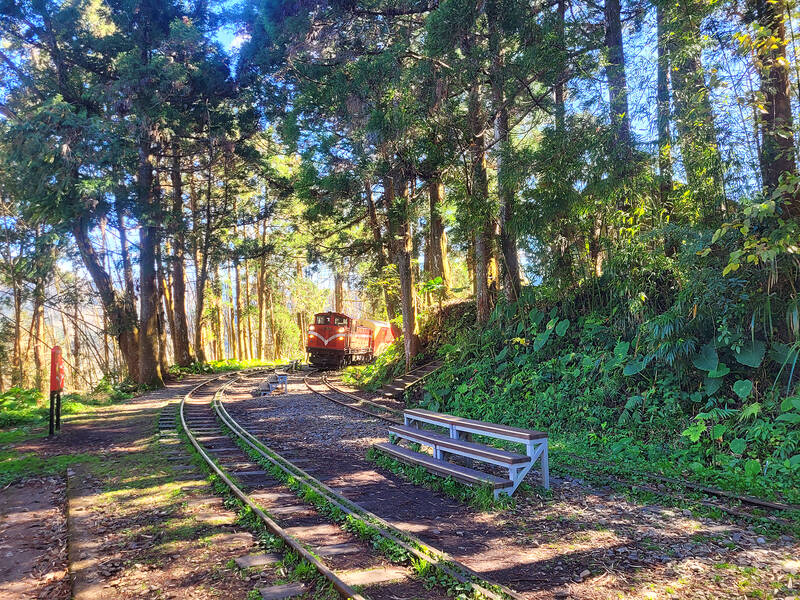
The train from Alishan to Chiayi passing by the Duolin Station platform.
Photo: Tyler Cottenie
THE CROSSROADS
I arrived in Shihzihlu by a somewhat unconventional method. After hiking the Tefuye Historic Trail from the 96.5K mark on the Alishan Highway down into the valley below, I then started walking back up to the Alishan Highway, toward the 76.5K mark where Shihzihlu is located, roughly following the route of the old footpath. However, this is now a steep, concrete road, not exactly a pleasant forest stroll, and I ended up hitching a ride up to the top to save time.
The easiest way to get to Shihzihlu is to take the bus or train toward Alishan from the Chiayi train station and get off at the “Shizilu” stop. The former is easier and requires no advance reservation, while the latter usually requires tickets purchased 14 days in advance from: afrts.forest.gov.tw/OT01_1.aspx. You can also drive yourself there along Provincial Route 18.
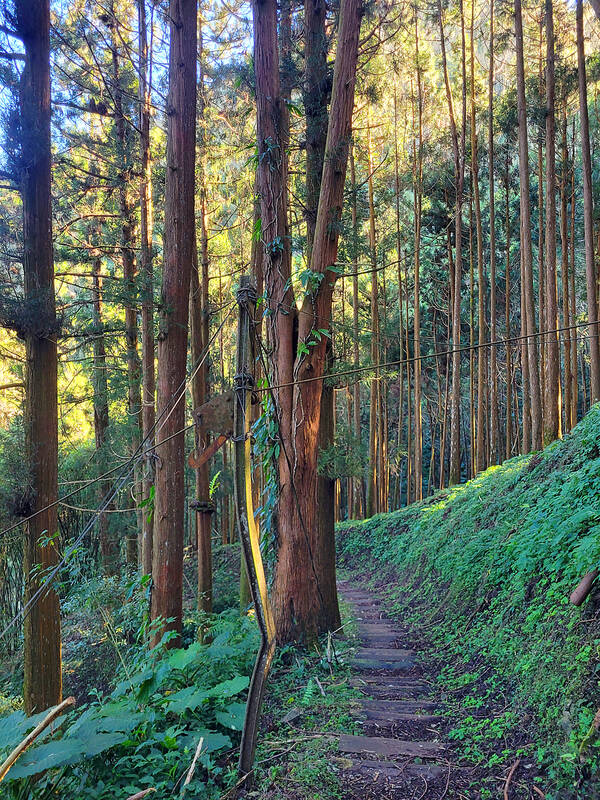
A section of preserved footpath between Laiji and Shihzihlu.
Photo: Tyler Cottenie
While in Shihzihlu, don’t miss the tshauakue (草仔粿), sold in the shop right next to the highway. This traditional snack is made of glutinous rice flour and comes with different fillings. Sit in the pavilion across the road and enjoy the view of the valley to the south, or head uphill to one of the cafes next to the train station for a different vibe. Right behind the train station, the walk down to Laiji begins.
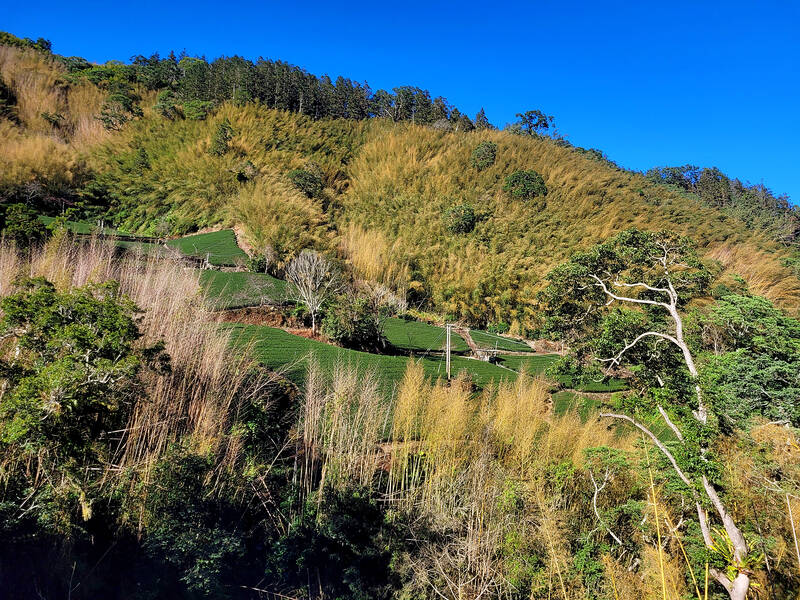
For large vehicles, getting from Shihzihlu down to Laiji requires a 37km trip down to Fencihu (奮起湖) on one road and down to Laiji. Even for cars, it’s a 15km journey on narrow mountain roads. The footpath going directly north, however, is only a 5.4km journey. Shady Japanese cedar forest near the top gives way to Makino bamboo and tea fields lower down. After 700 meters of preserved footpath, the route turns into concrete farm roads the rest of the way down. For those looking for a short excursion to and from Shihzihlu, simply walk down as far as you like and then turn around.
TOEUANA
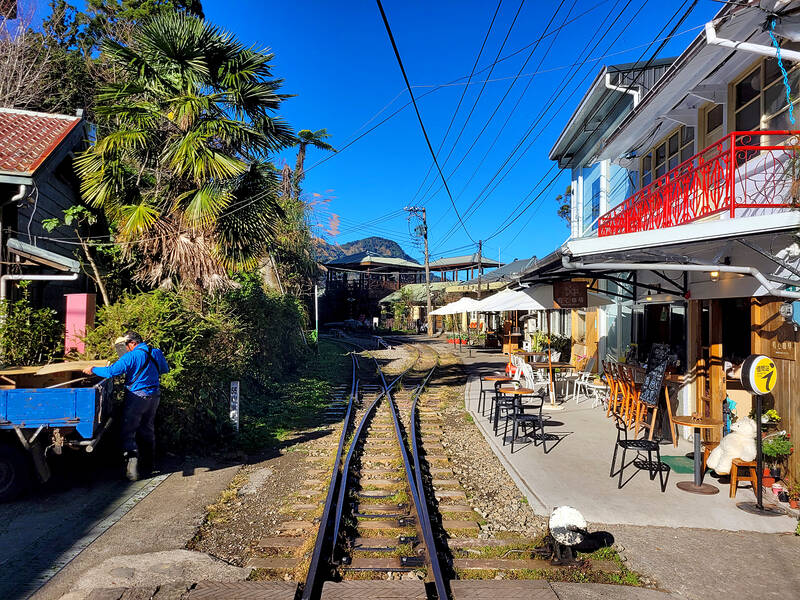
Cafes right next to the railway at Shihzihlu.
Photo: Tyler Cottenie
I had no plan in mind, and after descending about 1.8km from Shihzihlu, I came to a fork in the road. Instead of continuing down to Laiji at this point, I decided to turn left and explore. I never ended up coming back to the junction and finishing the walk down to Laiji that day.
After passing tea fields, this road entered a long stretch of gorgeous coniferous forest. Surrounded by golden brown tree trunks lit up by sunlight filtering through the canopy and with no car or person in sight, I knew that my left turn had been the right choice.
A fork in the road after 1.5km offered a way back up to the Alishan Highway to the left, or a way to the village of Toeuana (德恩亞納) to the right. I turned right and continued another 1km to the village. Though it is home to the Tsou community, it does not have a long history. Fifteen years ago, the village site was nothing more than undeveloped forest.
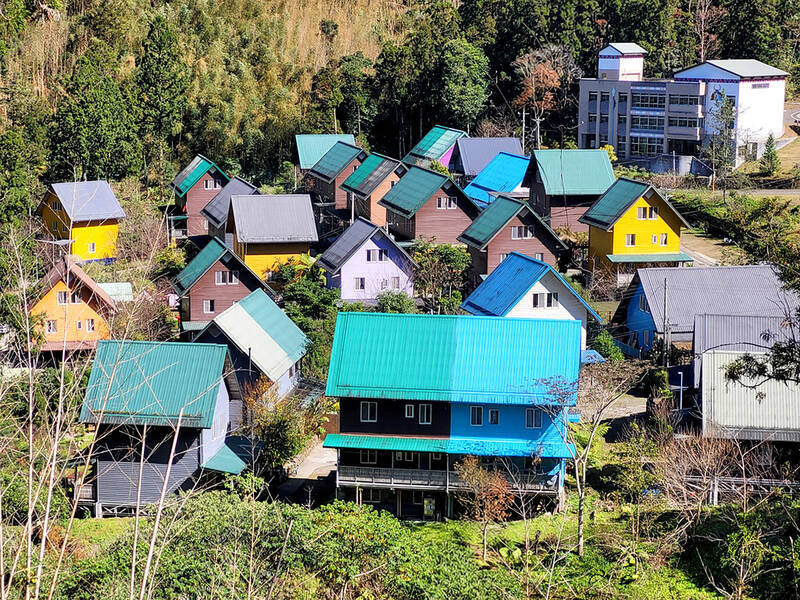
The colorful homes of Toeuana village.
Photo: Tyler Cottenie
Seen from afar, the village is unique. It’s a tight cluster of buildings with wooden siding, accented by colorful walls and roofs, sitting in a bowl-shaped piece of land surrounded by mountains.
After Typhoon Morakot decimated much of Laiji down below, some community members began looking for a new, safer home and settled on this site higher up in the mountains. In fact, the name Toeuana in the Tsou language means “a flat, safe piece of land far away from the riverbed.” Construction of approximately 40 houses was completed in 2015.
For day trippers, there are a few restaurants and an art gallery to check out. Just walking around and enjoying the colorful decoration of the houses that reflects each owner’s unique taste can easily occupy an hour or two. Look for the name and number of each house proudly displayed on the front of the building. Homestays are also available.
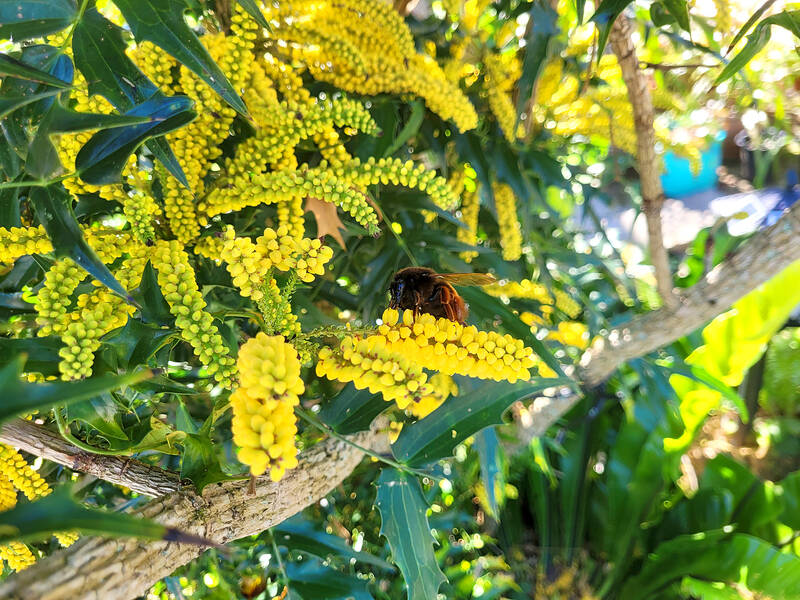
A honeybee feasts on an Alishan Mahonia flower at Duolin Station.
Photo: Tyler Cottenie
TO THE NEXT CROSSROADS
Continuing west on foot for another 3km took me to Duolin (多林), the next station on the Alishan Forest Railway. Nothing much remains of the village here, apart from a couple dozen buildings and a few residents who sell local agricultural products to tourists. I arrived just in time to see the train from Alishan heading downhill around 1pm.
I spent the next half-hour talking to a local about the history of his village and enjoying a cup of fig jelly with a view of the distant snow-capped Jade Mountain. It’s hard to believe there is even a train station here now, but in the past the village was bustling and even had its own elementary school.
The train from Alishan to Chiayi passing by the Duolin Station platform.
Photo: Tyler Cottenie
At 1:30pm, I went back to the “platform”— just a set of movable stairs set in the weeds next to the tracks — to wait for the only downhill train of the day that stops at Duolin. The modern concrete station building was locked. Just downhill from there, in between the two sets of tracks, is the stand-pipe that used to supply water to the coal-powered locomotives.
I had no ticket for the train as online tickets were sold out, but I thought I would try my luck getting one in person. The train arrived at 1:36pm, and I was indeed able to get on and ride down to Fencihu’s railway station, 14 minutes away. The ticket was handwritten by the conductor and cost me NT$50. This is a great hack if you’re looking to take a short ride on the famous narrow-gauge train but can’t secure a ticket for a longer journey online.
Fencihu is an important crossroads today, where the Alishan railway meets County Road 169. A bustling market street and several short hiking trails make this place worth considering as an overnight destination. Besides the train, several buses a day run between here and Chiayi City, so it’s possible to get in and out of the mountains even without a ticket for the train.
As it happened, I asked at the counter and was able to get a seat for the rest of the train ride down to Chiayi on the same train after its 40-minute break in Fencihu. It was a perfect ending to an enjoyable day of random exploration between two major crossroads on the Alishan Railway.
KioskNews shows a cleaned-up reading view extracted from the publisher’s page — the original always lives on their site, not ours.