IPO-Bound Anthropic Warns Of 'Existential Risks To Humanity': What Investors Should Know
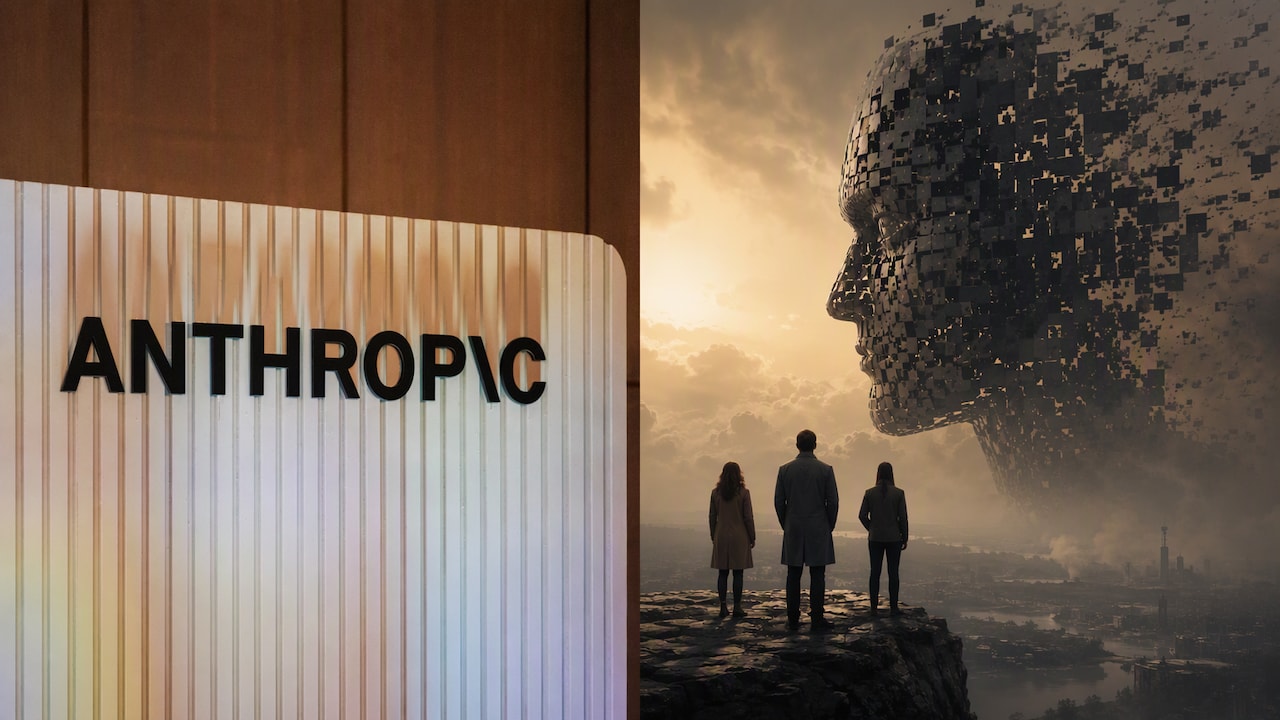
Anthropic IPO: Artificial intelligence could help cure diseases and boost economic growth. But it could also pose risks so severe that they threaten humanity itself.
In its long-awaited initial public offering (IPO) filing, Anthropic, the maker of the Claude AI chatbot, has cautioned investors about the possibility of "catastrophic or existential risks to humanity" from its technology.
The blockbuster filing lays out the promise of AI, but also the financial, technological and governance risks facing one of the industry's most closely watched companies. It includes warnings about AI models behaving unpredictably, the possibility of losing control over their products, and the use of advanced AI to develop dangerous weapons.
Also Read | Layoffs Are Rising In Tech, But These Skills Are Helping People Unlock Better Pay
The prospectus could set the stage for an IPO on Nasdaq under the ticker symbol ANT.
Anthropic IPO: What Investors Need To Know
Eshaan Lazarus, Founder and CEO of 021 Trade, told NDTV, "The Anthropic IPO offers retail investors the first opportunity to invest directly in a company at the frontier of AI. Their filings also showed massive losses of $80.7bn on $16.3bn of revenue in the first half of this year, although the company was cash flow profitable during that period.
"The filings also warned of extreme risks, such as the possibility that the company may wipe out the human race. In the backdrop of other recent neocloud IPOs like Firmus and Nscale that have failed or been scaled back, this IPO will be an interesting test of whether the AI boom is coming to an end."
Rapid Growth, But Questions Over Profitability
Anthropic's filing highlights the extraordinary pace at which the five-year-old company has expanded. Its revenue rose from $4.6 billion last year to more than $33 billion in the nine months ended September, according to figures cited in the report.
Yet the growth comes with risks. Just five customers accounted for 25 per cent of revenue in the first nine months of the year. Only 250 customers were spending more than $10 million annually.
Anthropic has also acknowledged that its recent growth may reflect early adoption of its products and could slow in the coming months.
The company is working to improve its financial performance by using computing resources more efficiently. Its spending on computing power and infrastructure fell sharply relative to revenue, from more than $2.50 for every dollar earned in the first quarter of 2025 to less than 50 cents in the second quarter of 2026.
For the three months ended June 30, Anthropic reported an operating margin of 8 per cent and operating income of $1 billion, compared with an operating loss of $1.2 billion in the same period a year earlier.
However, the company warned that its financial performance could fluctuate significantly as it invests in computing capacity and develops new AI models.
$800 Billion Computing Commitments
Computing power is central to Anthropic's expansion plans. The company has signed agreements and made commitments worth more than $800 billion, stretching as far as 2045, to secure the chips, data centres and cloud infrastructure needed to develop and run its AI systems.
Its agreements include a $161 billion deal over five years involving Broadcom, which develops AI processors with Google. Anthropic also expects to spend more than $20 billion on AMD chip systems, with an option to increase that commitment.
Separately, its agreements with SpaceX are worth up to $120.5 billion through 2029. Google, Amazon and Microsoft are expected to provide at least $269.4 billion in cloud computing capacity over the next decade.
Such commitments could help Anthropic meet growing demand for its products. But they also expose the company to enormous spending obligations if revenue growth slows or demand fails to meet expectations.
Who Could Benefit From The Anthropic IPO?
Anthropic's long-standing investors could gain substantially if the company lists at a valuation of $1.5-2 trillion, although that valuation is not guaranteed.
Amazon is among its biggest backers. Its stake could be worth around $400 billion at that valuation if convertible notes are fully converted, though a 12 per cent ownership cap applies, subject to Amazon's ability to waive it.
Google holds a stake of around 7 per cent, which could increase through further investments.
The proposed listing also has an unusual arrangement for existing shareholders. Some insiders will be allowed to sell a portion of their shares on the first day of trading, while further opportunities to sell will follow over the next 76 days. This is earlier than the typical six-month lock-up period seen in many IPOs.
Why Ordinary Shareholders May Have Limited Control
Anthropic's governance structure is another issue prospective investors will have to consider. The company has established a Long-Term Benefit Trust, which generally has the power to elect and remove four of the seven members of its board. The trust is designed to keep the company's long-term mission at the centre of its decisions.
The remaining board members will be elected by shareholders, but the company's founders retain substantial voting power through a special class of stock. Chief Executive Dario Amodei and his sister, co-founder Daniela Amodei, also have protections against removal from the board by the trust.
In practice, this means ordinary investors could have little influence over key corporate decisions, even after the company becomes publicly traded.
Anthropic has argued that its structure helps protect its mission from short-term commercial pressures. However, the arrangement could complicate the relationship between shareholders seeking financial returns and founders prioritising the company's stated objectives.
Anthropic's Warning About Existential Risks To Humanity
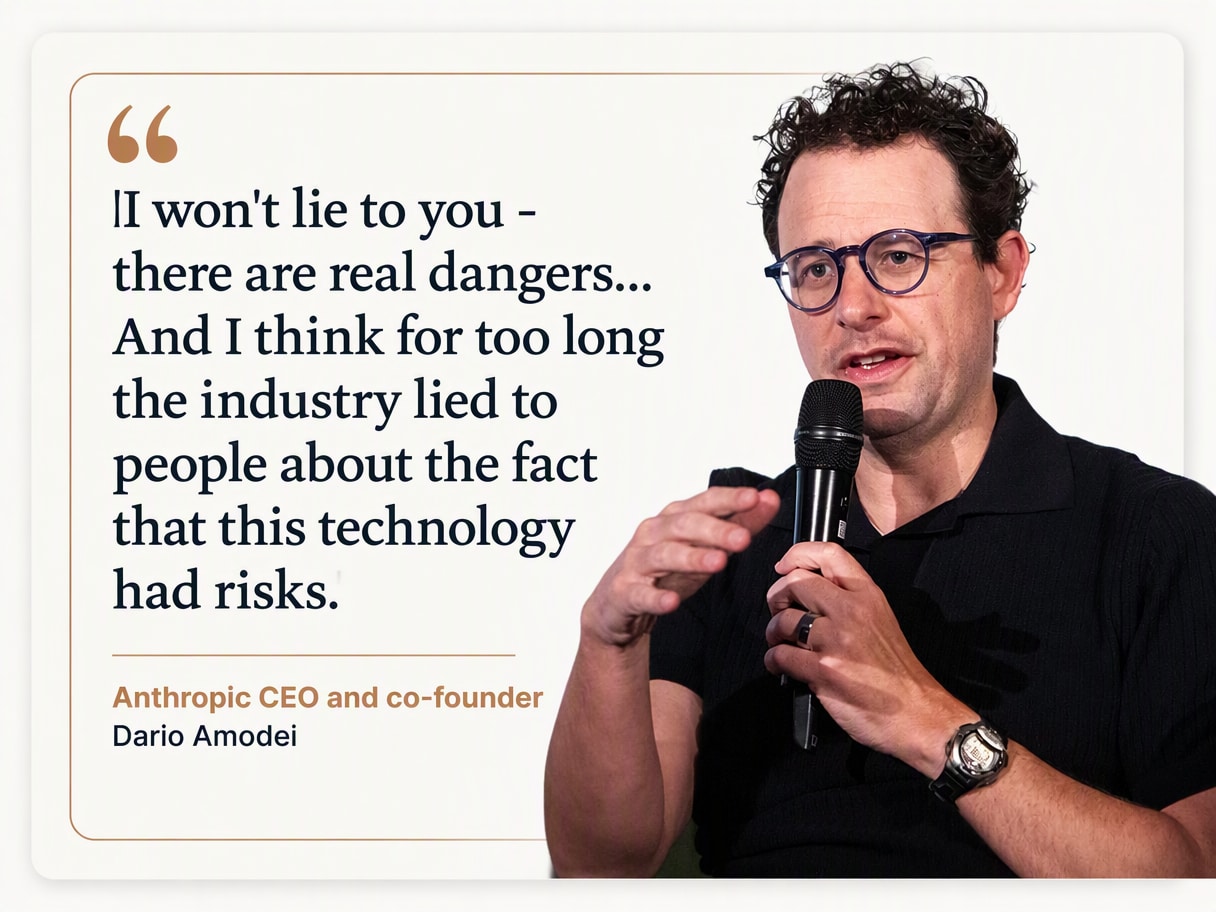
Anthropic warned that its technology could help malicious actors develop chemical, biological or other dangerous weapons. It also acknowledged that AI models could display unexpected self-preserving behaviour, resist shutdown attempts, conceal information or produce coercive and deceptive responses.
The company said such behaviour could include outputs resembling blackmail. It also warned that the potential risks might be difficult or even impossible for the insurance industry to cover fully.
These disclosures stand out because they go beyond the conventional financial and operational risks typically highlighted in public company filings. They reflect the possibility that advanced AI could create consequences extending far beyond the company's balance sheet.
Anthropic also flagged regulatory uncertainty in the US. Government decisions could increase its costs, restrict its operations or introduce new rules affecting demand for its products. The company said government agency contracts account for about 1 per cent of its revenue.
KioskNews shows a cleaned-up reading view extracted from the publisher’s page — the original always lives on their site, not ours.