Studio Flat Or 1-BHK? What Is The Smarter Property Bet For Homebuyers
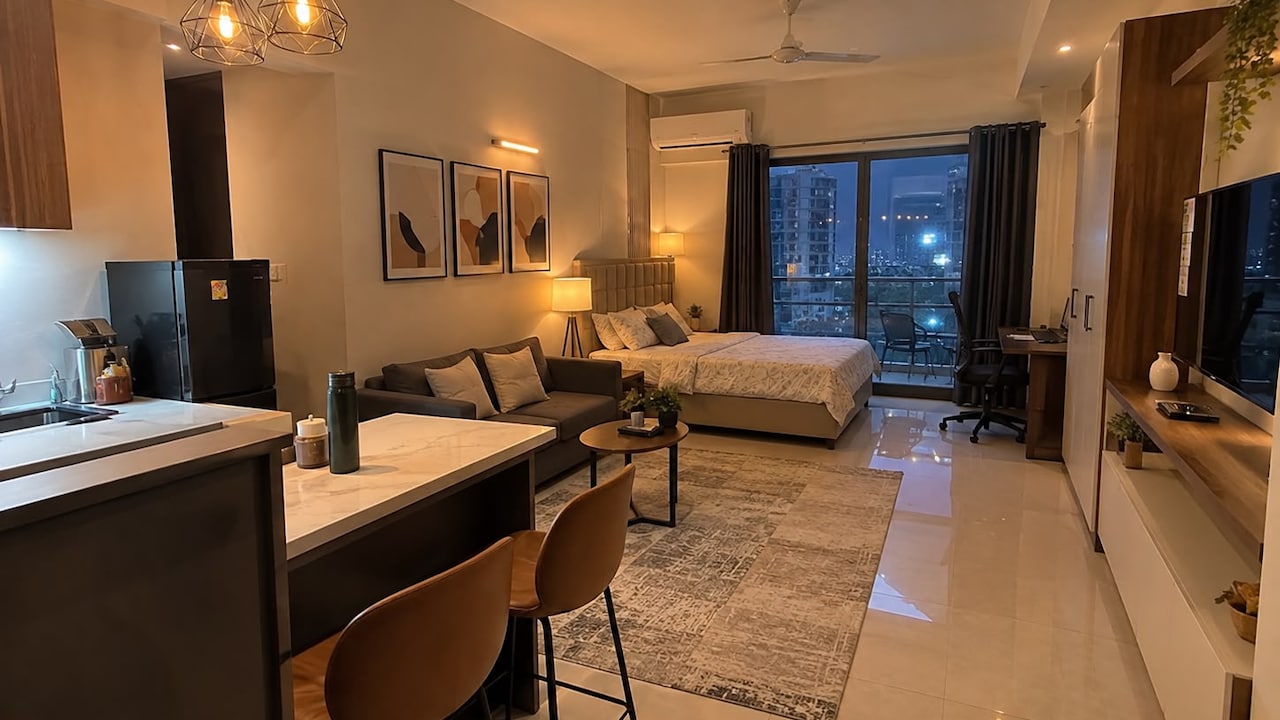
For a young professional living alone in a metro city, a studio apartment can look like the perfect first home. It is smaller. It costs less. The upfront payment is lower. So is the EMI.
But there is another question that buyers often overlook: how useful will that home be five or 10 years from now?
That is where the studio apartment versus 1-BHK debate gets interesting.
Also Read | Layoffs Are Rising In Tech, But These Skills Are Helping People Unlock Better Pay
A studio can make sense when the buyer wants a home at a lower entry price and does not need much space. It can also appeal to investors looking for rental demand in areas close to offices, colleges and other employment or education hubs.
But the lower price does not automatically make it the better property. According to Atul Monga, CEO and Co-founder, BASIC Home Loan, the decision should go beyond the initial EMI.
"A lower ticket price can make a home easier to buy. But does it make it the right home to buy? For first-time homebuyers, the choice between a studio apartment and a 1-BHK is often less about square footage and more about what they need the home to do for them over time," Monga told NDTV.
Studio Apartment: Lower Cost, But Limited Flexibility
For someone living alone, the biggest advantage of a studio is affordability. The buyer may need to arrange a smaller down payment and take a smaller loan. Maintenance costs can also be lower.
But a home is usually a long-term purchase. Requirements can change. Marriage, children, work from home or even the need for a separate room can quickly make a studio feel cramped. Monga points out that a buyer needs to look at what the additional money spent on a 1-BHK actually delivers.
Take a simple example. A Rs 40 lakh studio and a Rs 50 lakh 1BHK both generate a 6 per cent gross rental yield.
With a 20 per cent down payment and a 20-year loan at 8 per cent, the EMI for the studio would be around Rs 27,000. For the 1-BHK, it would be around Rs 34,000.
This means the buyer pays Rs 2 lakh more upfront and roughly Rs 7,000 more every month for the additional space. The real question, therefore, is whether that additional outgo creates enough value during the period for which the buyer plans to own the property.

A 1-BHK flat may offer better returns on resale than a studio apartment.
What About Rental Income?
Studios can work well in the right location. A property close to offices, metro stations, colleges or other employment and education hubs may find tenants among students and young professionals.
But rental yield alone does not determine the investment return. "Location, tenant demand, vacancy, maintenance costs, financing and resale liquidity can all influence the actual returns," Monga said.
This also explains why two similar-looking studio apartments can have very different investment outcomes. A well-located studio with strong tenant demand could perform better than a 1-BHK in a weaker micro-market.
A 1BHK Gives Buyers More Room To Grow
Sunil Pareek, Executive Director, Assetz, believes the decision is also about the way a person wants to live. "A studio works particularly well when the city becomes an extension of your home. When your workplace, cafes, fitness, recreation and social life are all within easy reach," Pareek told NDTV.
In such a situation, a buyer may deliberately sacrifice an extra room to get a better location and potentially save commuting time.
A 1-BHK offers a different proposition. It separates the living and resting areas. That can become important as a person's life changes.
"A 1-BHK does the opposite. It brings more of life inside the home. The separation between living and resting areas gives the resident greater privacy and allows the home to accommodate work, relationships and changing routines more easily," Pareek said.
So, Should You Buy A Studio?
For a single professional who wants to own a home, has a limited budget and expects to remain in the same micro-market for several years, a studio can work. It can also make sense for an investor if the location has strong and consistent rental demand.
But buyers looking at the property as a long-term home need to think beyond today's EMI. If the price difference between a studio and a 1-BHK is relatively small, the additional space, flexibility and potential resale market of the larger configuration could matter over time.
As Monga puts it, "the cheapest option is not always the one that costs the least over time." Ultimately, the choice is less about whether a studio is good or bad. It is about how long you plan to hold the property, who will live in it, how strong the rental demand is and whether the extra cost of a 1-BHK fits your finances.
Pareek sums it up differently: "The choice between a studio and a 1-BHK is less about configuration and more about where does one want their life to happen."
KioskNews shows a cleaned-up reading view extracted from the publisher’s page — the original always lives on their site, not ours.