NDTV World Summit: Shashi Tharoor On What's Working And What's Not In India's Foreign Policy
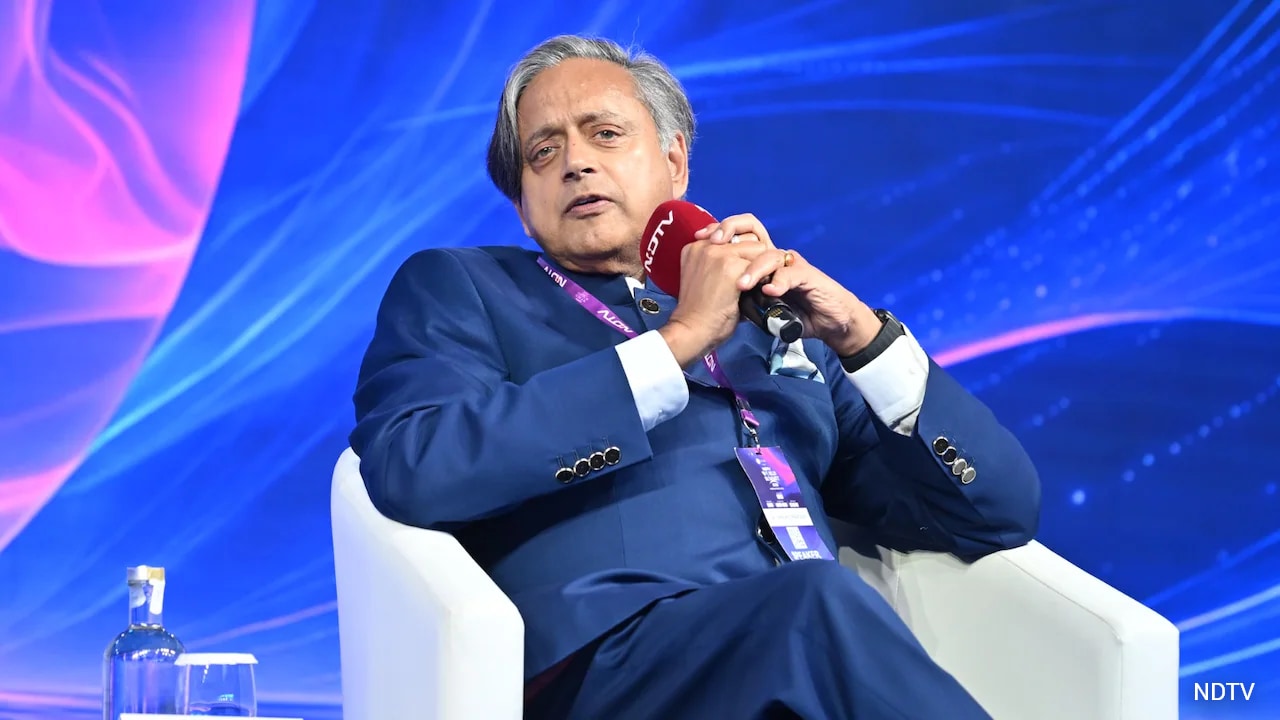
The international community sees India's growth over the last few decades but the country's strategic and economic vulnerabilities have simultaneously become exposed on the global stage, Congress MP Shashi Tharoor has said at the NDTV World Summit.
In response to a question on where India stands diplomatically as global events threaten to change the world order, he said the rest of the world wants to engage with India.
"I think what's working well for us is that we are recognised for all that we've grown to be in the last few decades," Tharoor said.
"I think there is a sense that we matter far more than we did, let's say, in the '80s or '90s and that we have. There are good reasons why the rest of the world wants to engage with us," he added.
But India's larger global profile has coincided with the exposure of some weaknesses, Tharoor, who is the chairman of the parliamentary standing committee on foreign affairs, said.
"What is not working so well is that our vulnerabilities have also become exposed in the process," he said, citing India's relationship with China as a "classic instance".
"We have many frustrations with China for good reason. The way in which China has behaved on our borders, the way in which they've nibbled away at our territory and their overt support for Pakistan during the brief conflict between our two countries last year," Tharoor said.
He said Beijing supplied a vast amount of weapons to Pakistan after India launched Operation Sindoor. "In that conflict China not only supplied a vast amount of weapons, which is their legal right to do, but also supplied real-time data while the conflict was going on from their satellites parked above our territory, which was actually a hostile act," Tharoor said, adding these are developments India has to "really worry about."
Yet throughout the period of these border and security provocations, India's reliance on Chinese imports has continued to climb, he said.
"In these circumstances we have created a dependency upon a country which is not particularly well disposed to our interests," Tharoor said, calling the trade deficit an area where Indian vulnerabilities have become apparent.
India's diplomatic positioning in other areas has also run into turbulence, Tharoor said, adding India may have taken certain bilateral relationships too much for granted, only for those partnerships to turn out to be unpredictable.
He cited the decision by US President Donald Trump to suddenly impose 50 per cent tariffs last year as an example of such diplomatic unpredictability. And by allowing itself to become very friendly with certain nations, India may have lost the trust of certain other countries in the international arena, Tharoor said.
He acknowledged that nothing in world affairs is ever completely predictable or smooth, but warned against assuming that India's current growth guarantees success as the global order shifts.
"With all of these challenges out there it's not going to be necessarily a given that we will come out of this transition from one order to the next as great triumphant victors, as it were, of this change," Tharoor said. "It may not happen quite that way."
KioskNews shows a cleaned-up reading view extracted from the publisher’s page — the original always lives on their site, not ours.