Edward Colston’s remains likely to stay at Bristol church that could become community space
Bones of the enslaver Edward Colston are likely to remain interred in a church in Bristol if and when the currently unused building is given a new lease of life as a community resource, it has emerged.
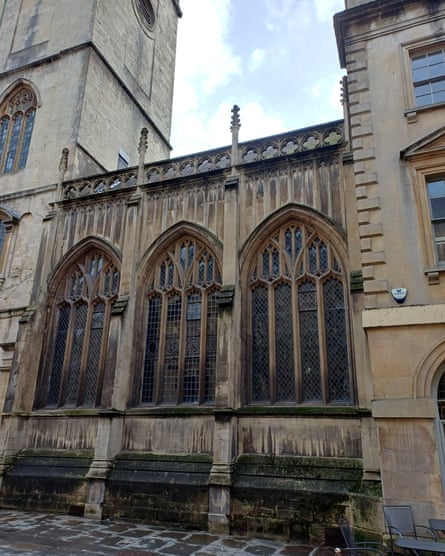
The dean of Bristol, the Very Rev Mandy Ford, said Colston’s remains would probably stay where they were in All Saints church on one of Bristol’s busiest streets.
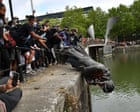
Colston, who died in 1721, made headlines around the world in 2020 when his statue in the city centre was toppled during a Black Lives Matter protest and thrown into the harbour.
The diocese of Bristol has been consulting with Bristolians over what to do with All Saints on Corn Street, which has been closed since 1984.
While no final decision has yet been made, it seems likely it will be used as a space to reflect on the port’s connections with the slave trade – and Colston’s remains will stay where they are.
Ford said: “There is very, very clear guidance which assumes that you don’t disturb remains that have been given Christian burial, except in exceptional circumstances and so the presumption is that they will stay where they are.”
The dean said that if there was to be a radical rebuilding of the space there could be an argument to inter the remains elsewhere. “Otherwise the assumption is that Christian burial is permanent and that’s where they stay.”
Ford brings deep expertise to the job of helping decide what happens to Colston’s bones, as when she worked in Leicester she was closely involved in the reinterment of Richard III’s remains after they were found in a car park there.
She acknowledged people had different understandings of the theological or spiritual significance of human remains. “But it’s a Christian place of burial and we are a Christian church trying to do the right thing. This is the burial place of a human being who was involved in a practice which we recognise to be utterly sinful and wrong.”
The question of what to do about sites connected to Colston in Bristol is a thorny one.
After the Colston statue was thrown into the harbour, windows celebrating him were removed from two Bristol churches as the diocese declared the fall of the statue was a “signal” for it to take action. In the same year, Bristol’s concert hall was renamed Bristol Beacon, having previously been called Colston Hall.
It is likely to be many months before a final decision is made over the fate of All Saints.
But the dean said: “I think people do see that it has potential as a place of learning and also a place of reconciliation. From the work that we’ve been doing in the cathedral and the relationships and the conversations that we have, I think there’s a strong sense that there’s huge potential in Bristol to have difficult conversations and to build a better future on the basis of truth-telling about the past.”
She added that work carried out at a new All Saints had the potential to sit alongside projects on Bristol’s history being done by institutions including the University of Bristol and Bristol Old Vic.
Ford said: “I think one can see it as part of a much bigger picture, which I think is really important if Bristol’s going to have a peaceful and flourishing future as a civic space and as a city.”
The Rev Anjali Kanagaratnam, who is leading the All Saints consultation, has been taking groups into the church.
She said there had been a huge range of views. “Each extreme was covered from: ‘I never want to come back into this building’ to ‘Why haven’t I been told that this building is here? I need to bring my children.’ Some people find it a hard space to be in. Some were annoyed by the fact that they didn’t know it was there.”
Kanagaratnam said it had been vital to hear the voices of people in Bristol that had been affected by transatlantic slavery but the church had also made sure it heard what people from other communities, such as white working-class areas in south Bristol.
Kanagaratnam said there was great potential for All Saints to be a place of “truth-telling”. She added: “I think people do see that it has potential as a place of learning and also a place of reconciliation.”
KioskNews shows a cleaned-up reading view extracted from the publisher’s page — the original always lives on their site, not ours.