PV Sindhu, Vinesh Phogat, Neeraj Chopra: Thank Facebook for their Man Friday
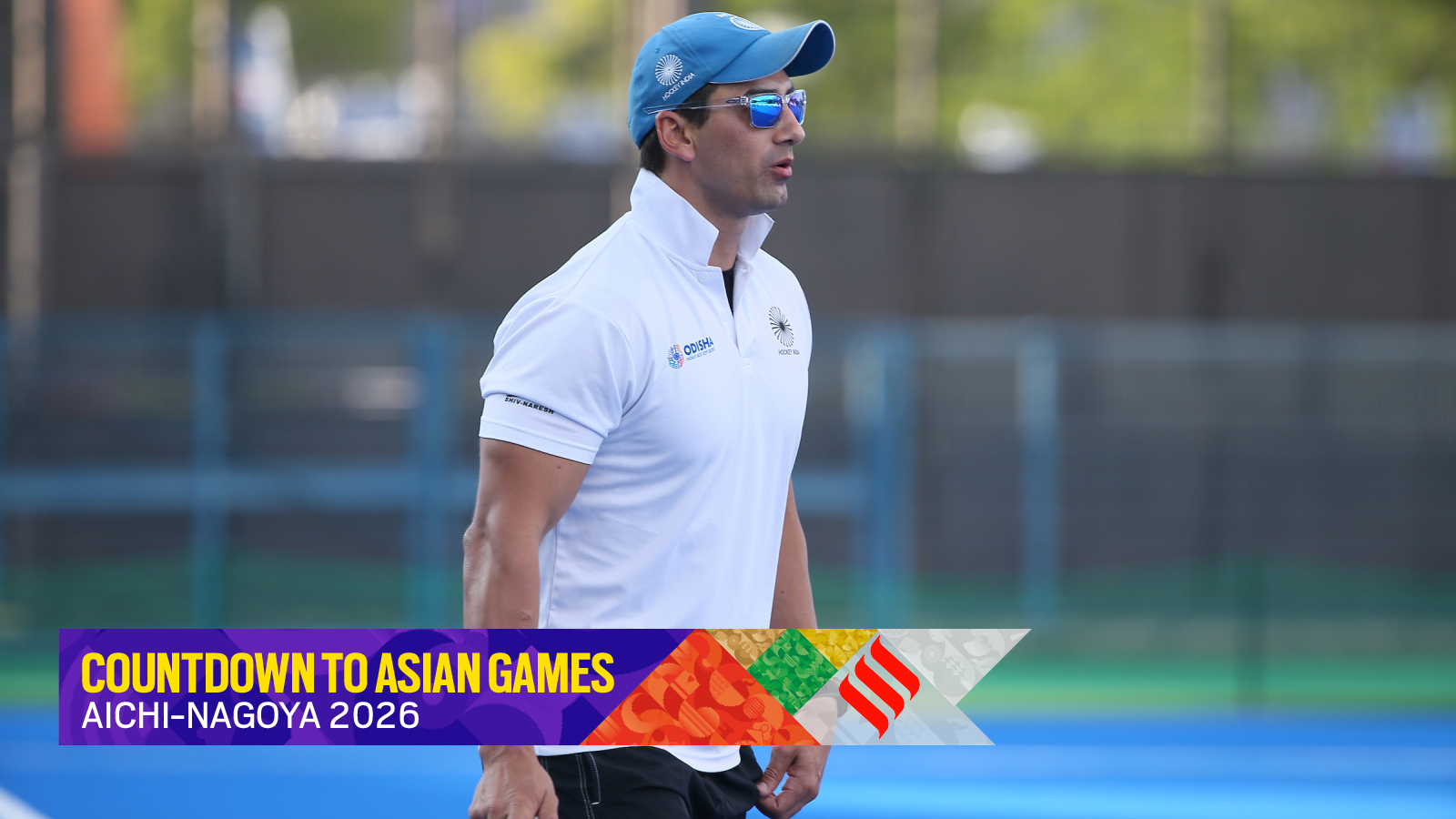
The day Tejaswin Shankar’s knee flared up at the 2026 Commonwealth Games, his first instinct wasn’t to call his coach. It was to find Wayne Lombard.
Shankar had just pulled out of the high jump, terrified that a familiar patellar tendon problem had suddenly become something much worse. That night, his mind went to dark places. The next morning, he reached out to Lombard.
Shankar eventually completed the decathlon, won a bronze and made history as the first Indian to win a CWG medal in the event. But the episode offered a glimpse into the peculiar position Lombard occupies in Indian sport. He isn’t just the strength and conditioning coach who prescribes exercises or the sports scientist who studies numbers. He is the person athletes call when they are frightened by what their bodies might be telling them.
On the eve of day 1 of the #decathlon at #AsianGames2023, a small behind the scenes look at the work put in during the “unseen” hrs by TJ. Go do your thing ji! @TejaswinShankar#buildingbetterathletes #athlete #teamindia #multisport #apatrainingsystems #thebeastneverstops pic.twitter.com/s7PmO1hmWj
— Wayne Lombard, Ph.D. (@waynelombard) October 1, 2023
https://platform.x.com/widgets.js
PV Sindhu has worked with him across Olympic cycles and, after another injury-hit spell, brought him back on her team last year. Murali Sreeshankar credits Lombard’s programmes for playing ‘a massive role’ in his comeback from a career-threatening knee injury. And when Sjoerd Marijne returned as head coach of the women’s hockey team this year, one of his conditions before accepting the offer was to have Lombard on his team.
Around 30 elite Indian athletes, according to Lombard’s count, now train under or work closely with the South African. The list is a who’s who. The trust behind it is even more extraordinary. Because Lombard did not arrive in India as some grand high-performance visionary with a masterplan to transform Indian sport.
He arrived because he checked Facebook.
The story before India is surprisingly short.
Lombard was a cricketer in South Africa, good enough to play a couple of first-class matches but realistic enough to know where his game was taking him. “I wasn’t good enough to take the next step,” he says.
So, he began studying sports management at an academy in Durban. Then sports science took hold. A three-year undergraduate degree became an honours year in biokinetics — rehabilitation, return-to-play and the mechanics of getting injured bodies back to competition. Then came the apprenticeship that gave him the foundations for everything that followed: an internship at the High Performance Centre associated with the Sports Science Institute of South Africa. “That’s where my journey really started,” he says.
Story continues below this ad
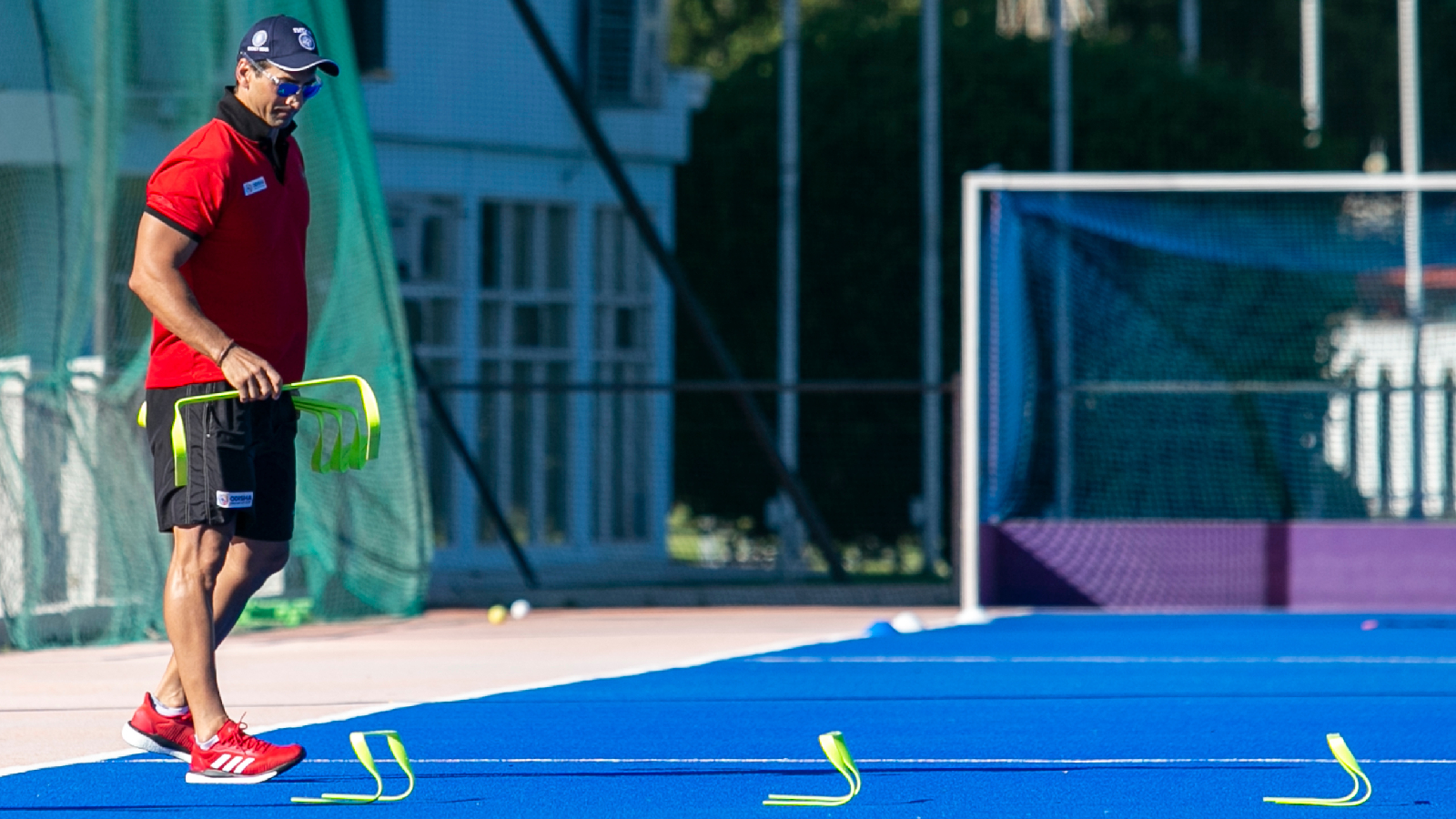 In 2016, when Wayne Lombard first landed in India, he started working with three young athletes about to become some of the most recognisable names in Indian sport: Neeraj Chopra, Vinesh Phogat and Tejaswin Shankar. (Photo: Hockey India)
Lombard got his PhD. He went to China and returned to South Africa. And then, while looking for his next opportunity, a Facebook message appeared from Donovan Pillay, then head of science at JSW Sport. Would he be interested in coming to India to work at the Inspire Institute of Sport? There was a decent chance Lombard never saw the message. “I never check it.”
But this one caught his eye. “Ten years later, I’m still here.”
The year is 2016. Lombard has just landed in India and encounters three young athletes about to become some of the most recognisable names in Indian sport.
Neeraj Chopra had just then broken the world under-20 javelin record and was dealing with an elbow problem. Tejaswin was beginning to emerge in the high jump. Vinesh Phogat was attempting to rebuild herself after the injury that had ended her Rio Olympics bid.
Story continues below this ad
With Vinesh, Lombard worked alongside another South African physio, Sandhya Silal. It was not an easy introduction.
Vinesh was coming off a devastating injury. She had every reason to be suspicious of anyone telling her how to rebuild her body. “For us to get the buy-in was not easy initially,” Lombard says.
Then the work started producing results. “She just bought in, and it was really easy from there.”
The relationship stuck.
Years later, it is telling that Lombard speaks about Vinesh not in the language of protocols and exercises, but in the language of trust. That, increasingly, has become his currency.
Story continues below this ad
There is a temptation to make Lombard’s story about the machinery of modern sport – force plates, blood profiles, load monitoring and biomechanics. Those things matter. But they are not why athletes keep coming back.
“You have to understand the emotions,” Lombard says. “They’re just human beings in the end. You can’t just treat them as these robots that can go and perform. You need to be good at your job. But if you are going to be an a*******, no one’s going to want to listen to you.”
ALSO READ | Faster, smarter, tinier: How gizmos smaller than your palm are powering Asian Games stars
Over a decade, he has learnt that the body arriving at an elite programme often carries a much longer history. Many Indian athletes come from modest backgrounds, some with nutritional deficiencies accumulated while growing up.
Story continues below this ad
“The malnutrition that happens at a young age is quite a problem,” Lombard says. “If we could address that at a very young age, I think that would set these athletes up at the national level a lot better. And a lot of our overuse-type injuries will change if we change the nutrition profile at a very young age.”
There is also no standard Lombard programme.
Hockey demands repeated high-speed running. Badminton is built around violent acceleration, deceleration and changes of direction. And then there is Tejaswin, the Asiad gold prospect for whom Lombard has to prepare one body for 10 events.
“He needs to have a really strong upper body. He needs to be fit because he needs to run the 1,500. He needs to be able to sprint,” Lombard says.
The method changes with the sport. So does the athlete. What remains constant is the relationship.
Story continues below this ad
With Sindhu, for instance, the work is increasingly data-driven, measuring movement, jumping and training loads. But Lombard says she remains central to the process – asking questions, trying things and speaking up when something does not work.
That may be Lombard’s greatest strength. He knows the science, builds the programme and collects the numbers. Then he listens.
And perhaps none of it would have happened had he not checked his Facebook a decade ago.
KioskNews shows a cleaned-up reading view extracted from the publisher’s page — the original always lives on their site, not ours.