Real Canadians: Alberta high school teachers set up fashion boutique for underprivileged students
For many teenagers, fashion is more than clothing. It’s a way to express identity, fit in with peers and boost confidence. But for some families, buying clothes — let alone keeping up with the latest trends — is difficult when money is needed for essentials.
Sign In or Create an Account
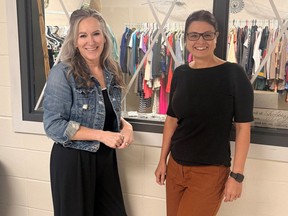
At École Secondaire Lacombe Composite High School (LCHS) in Lacombe, Alta., two teachers are helping their students by establishing an inexpensive fashion boutique stocked with gently used clothing at their school. It’s making a difference for students and the community.
“Growing up, I was a tomboy by necessity,” says Darcie Davis, a social studies and cosmetology teacher at the school. “I wore my brother’s hand-me-downs because I didn’t have anything else. I know what it feels like not to fit in because of the clothes you wear.”
Davis sometimes felt ostracized as a teenager, and when she became a teacher, she noticed some of her students facing similar struggles. She approached school administrators about creating a boutique stocked with gently used clothing, but the school was full to capacity and there was no space for it.
A couple of years later, another teacher, Julia Brotea, approached administration with the same idea. While affordability was a concern, Brotea was also motivated by environmental issues. She wanted to encourage students to choose second-hand clothing over fast fashion.
“Honestly, I love second-hand stores,” says Brotea. “As a high school student, I used to shop at Value Village.”
This time, the school had an empty office available, and the principal suggested Brotea connect with Davis. Together, the pair created the LCHS Boutique.
Fashion with a Purpose
The teachers transformed the office into a small clothing shop, filling it with donations from staff, students and community members. For a while, a local thrift store also contributed gently used name-brand clothing, shoes and accessories and now a nearby university is running a clothing drive for the venture.
Students volunteer to sort, wash, fold and arrange the clothing. Each item costs just $2, and all proceeds go to charity. In the past, proceeds were used to support a community program providing food assistance to families during the holiday season. This year the plan is to use the funds to support microgrants for students who need financial assistance with course supplies, athletic fees, art materials and other needs.
But the boutique’s greatest impact may be the sense of normalcy it provides.
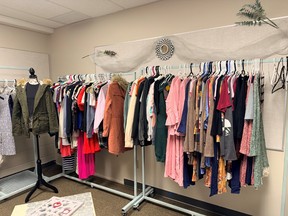
“The great thing about this is there’s no stigma for students or staff who choose to shop at the boutique,” says Brotea. “It’s something fun they can do on their lunch break and another way to socialize. It’s normalizing the idea of purchasing and wearing second-hand clothing.”
Sometimes You Just Don’t Have a Toonie
Even two dollars can be too much for some students, so Davis and Brotea have found ways to ensure money isn’t a barrier.
“One student who couldn’t afford the cost of purchasing at the boutique and refused to accept clothing for free asked if she could work to earn her purchases,” Davis recalls. The student volunteered in the boutique, sorting, washing, folding and displaying clothes. “She went above and beyond helping in the boutique,” says Davis. “She got four outfits. We wanted to give her more, but she said that four outfits were enough.”
The boutique also provides clothing for important occasions. Both male and female students have found outfits for job interviews and prom, proving that a two dollar purchase can have an impact far beyond its price tag.
Fashion as Confidence
High school is a transformative time when young people are figuring out who they are and where they belong. Clothing can be a form of armour — something that helps a teenager feel comfortable and confident.
For some students, shopping at the LCHS Boutique is simply a fun way to spend lunch with friends. For others, it provides clothing they would otherwise go without.
“I am so grateful for the boutique because I am able to buy clothes that I normally would never be able to buy, like Lululemon,” said one student.
“(It’s) better than a thrift store,” said another.
Two teachers saw different problems — one rooted in affordability and inclusion, the other in sustainability — and discovered that one simple idea could address both issues.
By giving clothing a second life, making fashion affordable and turning proceeds into community support, the LCHS Boutique is doing much more than selling two dollar clothes. It’s building confidence, reducing stigma and proving that meaningful change can begin with something as simple as opening a closet.
If you have an idea for a story that could be featured in Real Canadians, email realcanadians@wanderwoman.ca. Share your experiences taking action to make a difference in the world by visiting wanderwoman.ca/real-canadians.
Debbie Olsen is an award-winning Métis writer and a national bestselling author.
Join the Conversation
This website uses cookies to personalize your content (including ads), and allows us to analyze our traffic. Read more about cookies here. By continuing to use our site, you agree to our Terms of Use and Privacy Policy.
KioskNews shows a cleaned-up reading view extracted from the publisher’s page — the original always lives on their site, not ours.