The ‘world of resistance’ that almost stopped Nick Cave’s extraordinary Melbourne homecoming
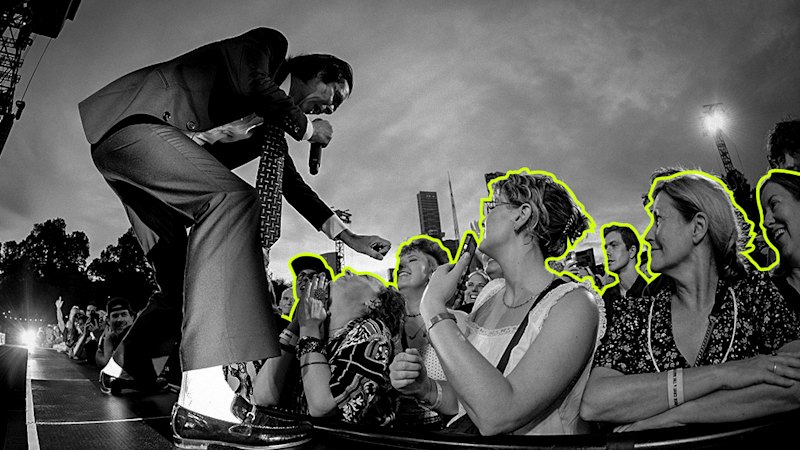
As dusk fell over Melbourne on a balmy, fragrant night, Nick Cave commanded a surge of people like a receding tide to the banks of the Yarra River.
His striking figure stood alongside the city’s glowing skyline as bats flew overhead, the sharp edges of the Bad Seeds frontman’s raw menace tempered by the loss and longing of age.
More than four decades before, Cave strode like a preacher under the chandelier of St Kilda’s former Crystal Ballroom for the Bad Seeds’ first show.
This, the Wild God tour in 2026 at Alexandra Gardens, was his spiritual homecoming. But it almost didn’t happen here, says the band’s promoter and tour producer Paul Sloan.
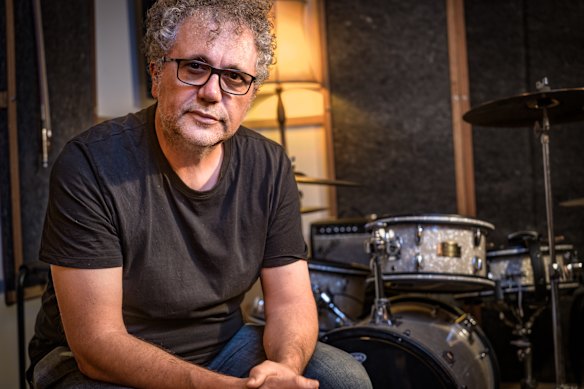
“I would have tried a dozen places before, because Alexandra Gardens said ‘no’ to me for months,” says Sloan, elbows resting on a leather armchair in a Melbourne hotel lobby.
“I ended up convincing them to let me do it.”
He lists off the rejections with his fingers – among them, ovals gate-kept for sport and a heritage venue hamstrung by bureaucracy.
Through all of it, there were people who shared Sloan’s vision for a “quintessentially Melbourne” Cave experience, outside traditional black box venues such as The Forum, arenas such as Rod Laver, or Flemington Racecourse.
“We can’t put Nick out on the horse tracks. His audience won’t want to be there, and he won’t want to be there,” Sloan says.
But in pursuing the ambitious and creative in Melbourne, “you enter a world of resistance”. It’s an experience the city’s arts community is doggedly trying to shake.
The future of the arts – and sport – is a key pillar of The Age’s Melbourne Assembly civic forum later this month, bringing together industry leaders, key decision-makers and the community.
“If I was in government in Melbourne in the curation of that tour, I would have said, ‘OK, we’ll give you that site for this show because it’s a Melbourne artist, but we want lead announcement’,” Sloan says.
“The narrative is stronger then because it means interstate travellers and international travellers are coming into the show because it feels more meaningful.
“It’s a moment.”
Melbourne claims to be the arts capital of Australia, and you can feel the weight of the city’s cultural discernment, Sloan says.
But without the people at its core – the artists, performers and millions of fans supporting them – the city’s cultural identity disappears.
Supporting the artists
Fiona Duncan scanned the details of the election announcements. A live music desk, tick. Entertainment precincts, tick. Regional support, tick. Changes to noise regulations, tick.
But there is a gaping hole in Victorian Labor’s package to protect and support the state’s music industry, the Music Victoria chief executive says. “The question for all of us was, ‘This is great – where are the artists?’”
“It’s great to support the venues,” Duncan tells The Age. ”But if the artists who are meant to play in them can’t afford to keep making the music and can’t afford to perform, you’re not covering and supporting the whole story.”
As news of the reforms went public this month – earmarking $2.5 million to help venues stage gigs, and designating entertainment precincts in Collingwood, Fitzroy, Geelong and Ballarat – Duncan was en route back from the Reeperbahn Festival Conference in Hamburg, Germany, where she met international industry counterparts who have instituted a ticket levy.
This, she says, is the key to shoring up artists’ future in Melbourne – and avoiding a mass exodus.
The proposed 1 per cent levy would apply to major concerts at stadiums and arenas, pooling into a trust of at least $4.4 million a year to help musicians build and sustain viable careers.
“We have the most arena ticket sales in the country, we have the most industry in this state, but we have the lowest per capita funding for industry out of all the other states other than the ACT and Tasmania,” Duncan says.
“We want to keep that money in Victoria.”
In the last financial year, Victoria invested some $3.37 million in contemporary music (48 cents per resident), to NSW’s $26.4 million ($3.10 per resident) and South Australia’s $2.75 million ($1.46 per head), according to Music Victoria’s analysis.
The state government is delivering one of Australia’s biggest cultural infrastructure projects through the $1.7 billion Melbourne Arts Precinct transformation, and has a strong track record of backing Victoria’s creative venues, a spokesman said.
The project includes the latest iteration of the National Gallery of Victoria, which was visited by more than 3 million people across its two existing locations in 2025 (making it the most visited art museum in Australia).
Overall, more than 11.6 million people visited Victoria’s state-owned arts and cultural institutions in 2024-25. The Melbourne Arts Precinct in 2025 contributed $591 million to Victoria, according to an SGS Economics and Planning report.
In 2023-24, creative industries in Victoria brought some $41.1 billion into the state, representing some 8 per cent of its total economy.
Victoria also has more music venues than any other state (although they have dwindled), and state Labor’s proposed reforms also include $1.5 million to transform underutilised spaces into live music and arts venues.
But the industry remains at the mercy of “boom and bust” funding, Duncan says. In a poll on ideas to improve Melbourne, three-quarters of The Age’s readers supported Music Victoria’s ticket levy proposal, for which the organisation is yet to secure state government backing.
“Our plan with the levy is that there is that consistent, reliable funding mechanism that exists beyond an individual budget or election cycle,” Duncan says.
Opposition creative industries spokesman David Davis points to the Liberals and Nationals’ 10-year plan to retain, support and attract more live music events, and rebuild Victoria’s festival calendar.
The plan lays out support for business and tax relief, and backs onto Opposition Leader Jess Wilson’s promise for a one-point contact for pubs and clubs, along with fewer regulations, he says.
“Last election, Labor talked a big talk and promised the world to the live music sector, but the support, planning and regulatory reform have not eventuated,” Davis says.
But Rising chief executive Hannah Fox argues the city should be asking a bigger question: instead of a sole focus on government funding, why don’t bureaucrats give artistic communities agency to help themselves?
The Rising festival covers all artistic genres – this year’s program showcased dancing Furbies, a stage transformed into a care home and covered in brown poo-goo, and a Barkindji artist’s immersive field of murnong.
“So many spaces we think of as public or civic spaces have essentially been privatised through exclusive contracts with catering companies, production companies, and ticketing big tech,” Fox tells The Age.
“If you look at, say, Melbourne Town Hall for example, that’s not a space that you can put on an event in without an absolute minimum of $50,000 behind you, and that should be a community space.
“The trifecta of high cost of operation, unpredictable and extreme regulation and the cost of living crisis creates the conditions for events to collapse.
“And from an artist perspective, we’re building a system right now where only people who can afford to be poor can play.”
The paradox applies to visual arts, with the Australian Print Workshop and the Public Galleries Association of Victoria among organisations the state government suddenly defunded.
Fox imagines a Melbourne that follows in New York’s stead under Mayor Zohran Mamdani, embedding artists in residence across all kinds of public spaces (including education, transport and health settings).
“That’s actually been trialled in Victoria a few years ago, and it was really successful,” she says.
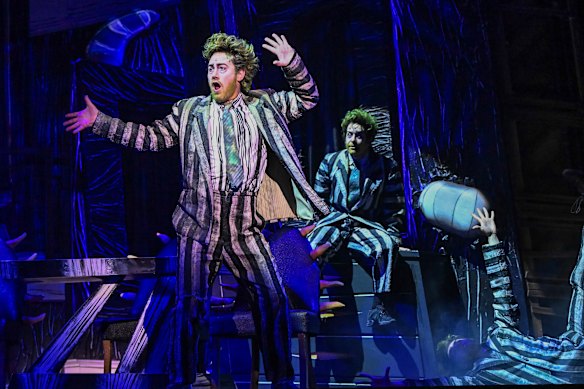
A confluence of funding cuts and soaring touring costs has markedly disrupted big stage shows, too. Although Beetlejuice sold 190,000-odd tickets in Melbourne, its national tour was cancelled, as was Waitress (which opened in Melbourne) and the opera AIDA.
Audiences no longer book well ahead, a post-COVID trend that has persisted, with many theatregoers often waiting until a few days before an opening to book. Leading Australian theatre producer Michael Cassel confirms this is true both locally and internationally.
And, despite common perceptions of the music industry as fundamentally commercial, it is now barely so, Fox says.
The disconnect is laid bare when venue operators treat concerts, like the Bad Seeds’, as though they are private functions – without any recognition of cultural value they bring to Melbourne, Sloan says.
The promoter points to European cities, where businesses can earn official recognition for their cultural significance. He suggests the same could be done in Melbourne.
“So, if you’ve been there for 20 years, and you’ve been offering performances more than three days a week or something, you can apply and then get the badge, which gives you a little bit more leeway,” Sloan says.
“Then it also gives you a register of that, so you can audit it. If it starts to drop off, you can see that, ‘Oh, shit, we’re doing something wrong. We need some financial support.’
“No one is really across that.”
In August, musicians clad in denim and leather filed into Melbourne Town Hall, to collectively fight for their industry.
Robert Baxter took the stage. Beige suit. Long hair in loose curls. Every bit the bona fide pop star. And just as financially fatigued.
“Recently, I supported a giant act at an arena, and that sounds like I would make money, right? No. The fee of that gig is less than the cost of one good sound engineer,” Baxter told their peers.
“It’s not like the movies. I don’t stay in five-star hotels. I don’t do drugs – I can’t afford that. I buy food and pay bills, and put every additional cent into my music.”
The bowl’s next chapter
On the empty grass hill of Sidney Myer Music Bowl, Frontier Touring chief executive Dion Brant surveys Melbourne’s skyline above the venue’s great steel masts.
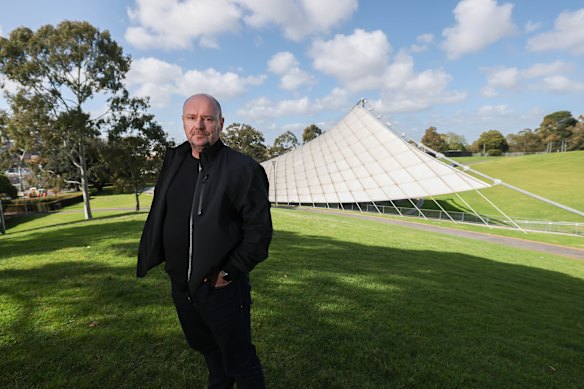
Swathes of aluminium-sheeted plywood are draped atop them – the sculptural roof of this place, last upgraded some 25 years ago.
The Arts Centre Melbourne manages the bowl, and during the coronavirus pandemic unveiled architectural plans for its future – a concept for an “all-weather” venue with a huge, translucent sunroof over the lawn amphitheatre, and two new stages.
Five years on, the plans remain unconfirmed and unfunded.
“It would be great for Melbourne to keep the essence of what has made the music bowl such a great beacon for live events for so long now, but to make it more modern, more accessible, more easy to work in as an artist, allow for bigger productions,” Brant says.
Modernising the bowl could go some way to solving the venue gap in the city’s summer music calendar, when the Australian Open takes Melbourne Park out of the equation, Brant suggests.
There are few alternatives for artists who require the production capability of somewhere like Rod Laver Arena – which has seven times the bowl’s fixed seating capacity.
The doors to the grey stage are little more than three metres wide, allowing limited access from the back dock. Pigeons perch on top of the low, thin roof, which can’t handle anywhere near the same hefty screens as a major arena stage.
Brant envisions doubling the bowl’s seating, adding premium ticket areas, rebuilding the roof for better coverage and rigging capacity, and opening up the back of the stage for easier access.
“It’s a fantastic place to bring people together,” he says. “But, it’s also tired and old, right?”
Despite the draft masterplan remaining unfunded, Arts Centre chief executive Karen Quinlan says the government-owned complex continues to see “enormous potential in the Sidney Myer Music Bowl’s next chapter”.
Creatives envision an ambitious future for Melbourne’s art sector – not one defined by struggle or even sustainability, but by the true, bold nature of art.
They only need permission to foster and protect their love of the craft, or else, risk the city becoming “homogenous and sterile”, Sloan says.
He reflects on his fight to put on the Bad Seeds at Alexandra Gardens – something he would have understood if it were a giant wedding or private function.
“Because [then], I’m not benefiting the cultural fabric of Melbourne in any way,” Sloan says.
“If you’re going to have 10,000, 20,000, [or] 30,000 people coming and going from a space and having potentially a really strong memory of an experience they had that they really loved – it’s a different request.”
Before Cave took to the stage by the banks of the Yarra – an almost-full moon and Melbourne’s skyline luminous behind him – Sloan secured eleventh-hour backing from local authorities for the Bad Seeds to play the venue.
He did so in part, he says, by sending bureaucrats the link to their own website, which boasts of the city’s cultural credentials.
Melbourne Assembly will be held from October 19 to 21. More information is available on the Melbourne Assembly website.
KioskNews shows a cleaned-up reading view extracted from the publisher’s page — the original always lives on their site, not ours.