Germany news: Merz in Asia warns against weaponizing trade, calls for 'rules based' order
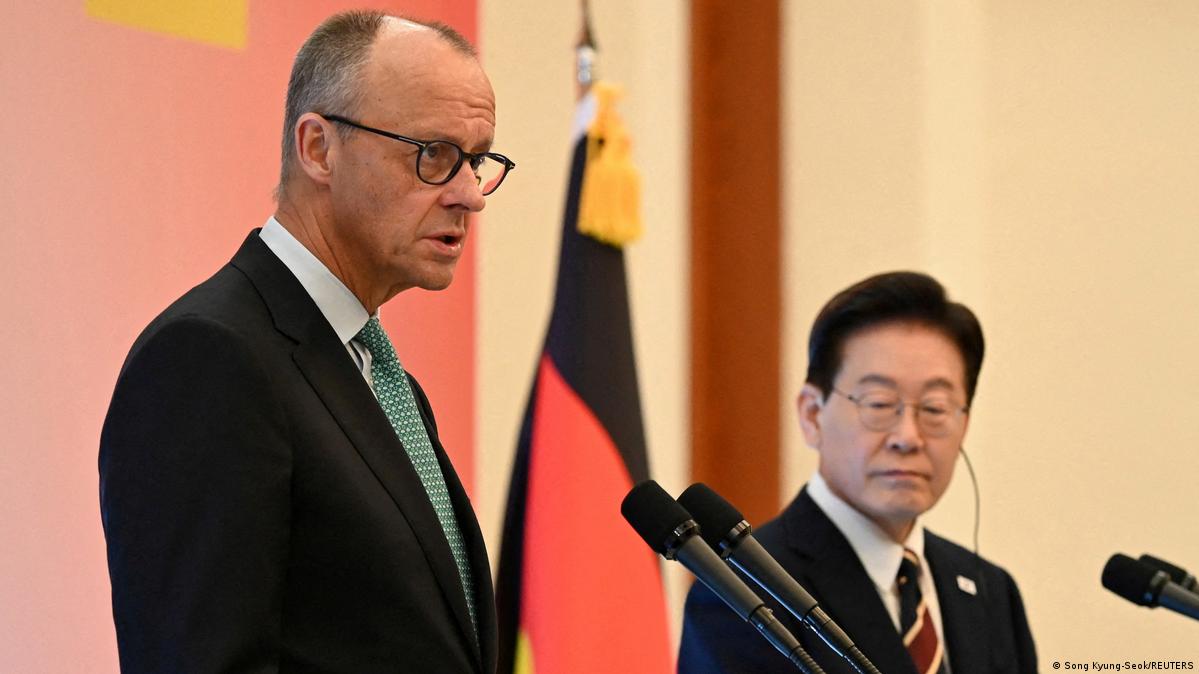
What you need to know
- Chancellor Friedrich Merz is in South Korea on the last stop of a three-country Asia tour
- President Frank-Walter Steinmeier is set to meet with Chinese President Xi Jinping
Here are the leading headlines from and about Germany on Friday, October 30:
Skip next section Merz in Seoul calls for new trade order, says supply chains cannot become 'political pawns'October 30, 2026
Merz in Seoul calls for new trade order, says supply chains cannot become 'political pawns'

During his final day of a whirlwind Asia tour this week, German Chancellor Friedrich Merz told the Asia-Pacific Conference of German Business in Seoul on Friday that Germany and Europe are ready to cooperate with Asian economies to foster a rules-based economic order.
Merz said the European Union is ready to take the lead in shaping a better deal for countries in Asia feeling the pressure of a destabilized rules-based trade order.
"Competition between the US and China is ramping up. Tariffs, technological decoupling strategies and a tough race for critical raw materials and new technologies are fundamentally changing the rules of our global economy," Merz said.
"These conflicts and systemic shifts in power pattern concern us all. They particularly concern economically aspiring partners in the Indo-Pacific, as well as in Germany and in Europe."
During stops in Singapore and Japan this week, Merz has pushed for free trade partnerships and greater European cooperation with Asian economies.
In Singapore on Wednesday, Merz called for a free trade agreement between the EU and the Comprehensive and Progressive Agreement for Trans-Pacific Partnership (CPTPP), a sweeping multilateral free trade agreement connecting the Asia Pacific and the Americas.
The UK is the single European signatory, albeit outside of the EU bloc. The US pulled out during the first administration President Donald Trump in 2017, scuttling the original version, the Trans-Pacific Partnership (TPP).
"We want to offer opportunities beyond bilateral agreements,"he said in Seoul on Friday.
"We are resolutely joining forces against unilateralism, autocratic power politics and violations of international law," Merz added.
"When supply chains become political pawns, when access to key technologies is obstructed or when efforts to secure raw materials resemble displays of power rather than fair partnerships, this jeopardizes growth, prosperity and ultimately the security of entire regions."
Citing Germany as an example, South Korean Prime Minister Han Seong Sook told the conference "German companies are using Korea as a central hub to expand their presence in the Asia-Pacific region."
Additional reporting by Nina Haase
Can Germany's pivot to Asia end its reliance on...China?
Edited by:Sean Sinico
https://p.dw.com/p/5OqWg
Skip next section IN DEPTH: Germany seeks new head of stateOctober 30, 2026
IN DEPTH: Germany seeks new head of state

The question of who should become Germany's new president is becoming pressing.
Many want to see Germany's first female head of state. Chancellor Friedrich Merz is keeping his cards close to his chest.
Read DW's full report on who may be the next German president.
Edited by:Sean Sinico
https://p.dw.com/p/5OqXI
Skip next section Welcome to our coverageOctober 30, 2026
Welcome to our coverage
Good morning from the DW newsroom in Bonn.
Germany's chancellor and president were both in Asia this week, with Chancellor Friedrich Merz calling for more robust trade ties with middle powers and President Frank-Walter Steinmeier focusing on diplomacy during a multi-day visit to China.
On Friday, Merz spoke at a German-South Korean business conference in Seoul, while Steinmeier is set to meet with Chinese President Xi Jinping.
KioskNews shows a cleaned-up reading view extracted from the publisher’s page — the original always lives on their site, not ours.