6 Best Movies Set in Space Released Since 2020, Ranked

Diego Pineda has been a devout storyteller his whole life. He has self-published a fantasy novel and a book of short stories, and is actively working on publishing his second novel.
A lifelong fan of watching movies and talking about them endlessly, he writes reviews and analyses on his Instagram page dedicated to cinema, and occasionally on his blog. His favorite filmmakers are Andrei Tarkovsky and Charlie Chaplin. He loves modern Mexican cinema and thinks it's tragically underappreciated.
Other interests of Diego's include reading, gaming, roller coasters, writing reviews on his Letterboxd account (username: DPP_reviews), and going down rabbit holes of whatever topic he's interested in at any given point.
Sign in to your Collider account
Ever since the start of the 2020s, the world has been treated to some exceptional movies belonging to one of the most exquisitely entertaining categories of science fiction out there: Space sci-fi. Whether we're talking about space operas like Project Hail Mary or space-faring superhero blockbusters like Guardians of the Galaxy Vol. 3, several of the greatest science fiction movies of the last six years have happened to find their settings in outer space.
It's rather unsurprising, of course, considering that space has been the setting of many of history's greatest sci-fi movies. Different people may have different standards for what counts as a movie set in space, but as long as the film spends a substantial portion of its runtime between the stars, or as long as space travel plays a crucial role in its narrative, it counts for the purposes of this list. The best part of it all is that there are many ways for a film to take advantage of its space setting, whether that's emphasizing its vast and terrifying nature, exploring the wonders of its infinite size, or simply using it as a springboard to tell a particularly engaging story on a planet other than Earth.
6 'Space Sweepers' (2021)

Space Westerns are often some of the most irresistibly entertaining sci-fi movies that can possibly be set in space, and as far as this subgenre goes, the 2020s hasn't had much better to offer than Jo Sung-hee's South Korean gem Space Sweepers. It's one of those forgotten Netflix action movies that are perfect from start to finish, regarded as the first true major South Korean space sci-fi blockbuster. It's a space opera set in the year 2092, where Earth has become an uninhabitable wasteland. The dysfunctional, debt-ridden crew of a junk-collecting ship finds Dorothy, a young girl rumored to be a humanoid weapon of mass destruction. What ensues is a hich-octane space adventure unlike any other that the last six years have offered.
Space Sweepers isn't perfect. There are many a familiar sci-fi cliché, and the story is somewhat bogged down by some exposition dumps and logical leaps. For the most part, however, this is about as charming, fresh, action-packed, and entertaining as space sci-fi movies get. The world-building is delectably vibrant, the emotional core provided by the characters and their dynamics is awfully effective from start to finish, and Jo's direction sharply tackles timely issues like corporate greed, class divides, and environmental decay. There may not be very many narrative surprises here, but it's all so wonderfully produced that it's hard not to have a fantastic time with it all.
5 'Last and First Men' (2020)

Last and First Men is an odd example of a sci-fi film that's technically set in space, even if some may find its inclusion to be a bit of cheating. Based on the 1930 novel of the same name by English author Olaf Stapledon, it's the only feature film that legendary composer Jóhann Jóhannsson ever directed, released two years after his untimely death from a drug overdose. Accompanied by one of the most rousing scores Jóhannsson ever composed, Last and First Men's visuals consist entirely of shots of World War II monuments and memorials in former Yugoslavia, while the real story is a tale narrated by Tilda Swinton about the final generation of humanity facing total extinction in the far future.
A movie that consists of 70 minutes of a disembodied narrator telling an epic multi-million-year history is, needless to say, not for everyone; but those interested in such a concept will quickly find that Last and First Men is not only great, but one of the most perfect sci-fi movies of the 21st century. It's a beautifully surreal and experimental meditation on the passage of time and the fragility of human civilization, one where space is not necessarily seen as an exciting frontier of exploration, but rather as an eerily indifferent and ultimately fatal cosmos.
4 'Alien: Romulus' (2024)

Back in 1979, Ridley Scott completely revolutionized sci-fi horror with Alien, kicking off a franchise that, while undeniably uneven, has nevertheless produced some truly exceptional movies throughout the years. The most recent Alien outing is Alien: Romulus, where a group of young blue-collar space colonists scavenging an abandoned space station suddenly find themselves attacked by unwanted visitors. Impeccably directed by Fede Álvarez, it may not be the best Alien installment of the bunch, but it probably is the best of the 21st century so far.
All superlatives aside, one thing is certain: the Alien franchise has always excelled at making space seem like the coldest, most isolated, most terrifying place to be, and Alien: Romulus continues that tradition with the utmost glee. Returning the franchise to its tensely claustrophobic roots while still offering plenty of narrative and thematic sauce all of its own, it has some of the most stunning practical effects and one of the most gripping atmospheres that the survival horror genre has seen in many years. There's no shortage of sci-fi movies which understand that space can be an inherently scary place, and as far as the 2020s go, no film has conveyed that better than Romulus.
Collider Exclusive · Sci-Fi Survival Quiz Which Sci-Fi World Would You Survive? The Matrix · Mad Max · Blade Runner · Dune · Star Wars
Five universes. Five completely different ways the future went wrong — or sideways, or up in flames. Only one of them is the world your instincts were built for. Eight questions will figure out which dystopia, galaxy, or desert wasteland you'd actually make it out of alive.
💊The Matrix
🔥Mad Max
🌧️Blade Runner
🏜️Dune
🚀Star Wars
01
You sense something is deeply wrong with the world around you. What do you do? The first instinct is often the truest one.
02
In a world of scarcity, what resource do you guard most fiercely? What we protect reveals what we believe survival actually requires.
03
What kind of threat keeps you up at night? Fear is useful data — if you're honest about what you're actually afraid of.
04
How do you deal with authority you don't trust? Every dystopia has a power structure. Your approach to it determines everything.
05
Which environment could you actually endure long-term? Survival isn't just tactical — it's physical, psychological, and very much about where you are.
06
Who do you want in your corner when things fall apart? The company you keep is the clearest signal of who you actually are.
07
Where do you draw the line — if you draw one at all? Every survivor eventually faces a moment that tests what they're actually made of.
08
What would actually make survival worth it? Staying alive is one thing. Having a reason to is another.
Your Fate Has Been Calculated You'd Survive In…
Your answers point to the world your instincts were built for. This is the universe your temperament, your survival instincts, and your particular brand of stubbornness were made for.
The Matrix
You took the red pill a long time ago — probably before anyone offered it to you. You're a systems thinker who can't help but notice the seams in things.
- You're drawn to understanding how the system works before figuring out how to break it.
- You'd find the Resistance, or it would find you — your instinct for spotting constructed realities is the machines' worst nightmare.
- You function best when you have access to information and the freedom to act on it.
- The Matrix built an airtight prison. You'd be the one probing the walls for the door.
Mad Max
The wasteland doesn't reward the clever or the well-connected — it rewards those who are hard to kill and harder to break. That's you.
- You don't need comfort, community, or a cause larger than the next horizon.
- You need a vehicle, a clear threat, and enough fuel to outrun it — and you're good at all three.
- You are unsentimental enough to survive that world, and decent enough — just barely — to be something more than another raider.
- In the wasteland, that distinction is everything.
Blade Runner
You'd survive here because you know how to exist in moral grey areas without losing yourself completely.
- You read people accurately, keep your circle small, and ask the questions others prefer not to answer.
- In a city where humanity is a legal designation rather than a feeling, you hold onto something that keeps you functional.
- You're not a hero. But you're not lost, either.
- In Blade Runner's world, that distinction is everything.
Dune
Arrakis is the most hostile environment in the known universe — and you are precisely the kind of person it rewards.
- Patience, discipline, and political awareness are your core strengths — and on Arrakis, they're survival tools.
- You understand that the long game matters more than any single victory.
- Others come to Dune and are consumed by it. You'd learn its logic and earn its respect.
- In time, you wouldn't just survive Arrakis — you'd begin to reshape it.
Star Wars
The galaxy far, far away is vast, loud, and in a constant state of violent political upheaval — and you wouldn't have it any other way.
- You find meaning in being part of something larger than yourself — a cause, a crew, a rebellion.
- You'd gravitate toward the Rebellion, or the fringes, or whatever pocket of the galaxy still believes the Empire's grip can be broken.
- You fight — not because you have to, but because standing aside isn't something you're capable of.
- In Star Wars, that willingness is what makes all the difference.
3 'Guardians of the Galaxy Vol. 3' (2023)
Before the release of James Gunn's Guardians of the Galaxy in 2014, the eponymous team was hardly a D-lister superhero lineup in the Marvel universe. With the unprecedented success of Gunn's film, not only was it proven that the MCU was capable of taking virtually any character and making bona fide movie stars out of them; on top of that, one of the most iconic sets of characters in the entire MCU was also established. All of it culminated with Guardians of the Galaxy Vol. 3, one of the most expensive MCU movies to date, where every single cent was entirely worth it.
It's many a fan's favorite MCU film from the last six years, and for good reason. Anchored by a deeply emotional and genuinely tragic story, it's a true character-driven finale that gives both the characters and the audience a wonderful sense of cathartic closure. Blending high stakes with profound character arcs, thrilling action, and top-tier craftsmanship, the film at times even feels more like a delectably unique space opera than a typical cookie-cutter franchise entry. Regardless of where the Guardians go next, one thing is certain, and that's that Guardians Vol. 3 was a perfect conclusion to what may very well be the franchise's best trilogy.
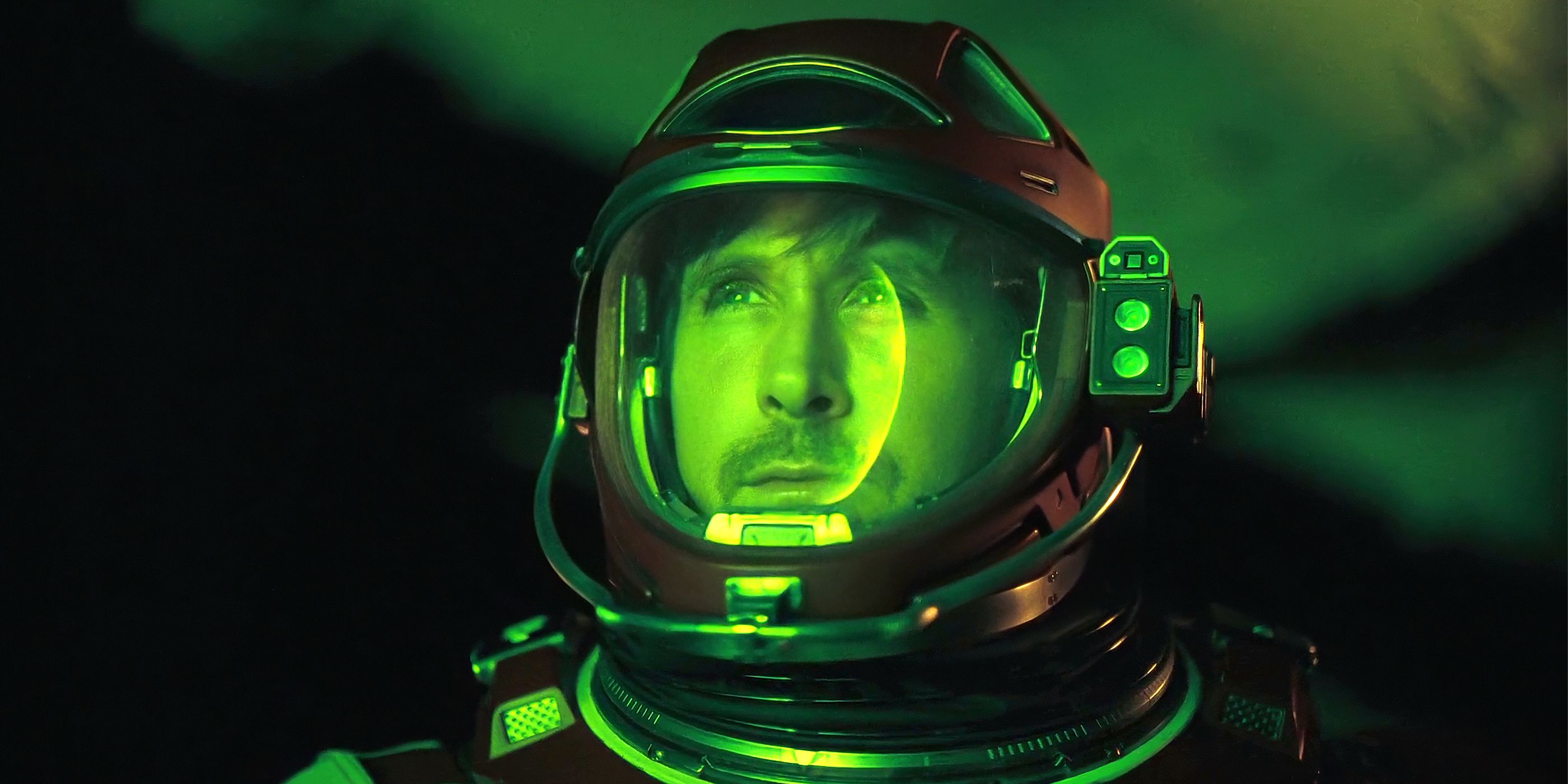
2 'Project Hail Mary' (2026)

Andy Weir has thus far only published three full-length novels, yet he has already cemented himself as one of the contemporary kings of hard science fiction literature. His latest is Project Hail Mary, about an amnesiac man who wakes up aboard a spaceship on a desperate mission to save the universe, as his memory gradually returns to him. Directed by Phil Lord and Christopher Miller, the film adaptation of the same name is not only easily the greatest hard sci-fi film of the 2020s so far, but also easily one of the most unique space operas that the big screen has seen in decades.
Project Hail Mary was a sleeper hit at the box office and a critical darling through and through, and for good reason. It's one of those sci-fi movies featuring aliens that are total masterpieces, this one particularly standing out for having one of the most endearing character dynamics that any first-contact movie has had to offer since E.T. Add to that a phenomenal performance by Ryan Gosling at the top of his game, some of the most eye-popping visual effects of any major Hollywood blockbuster in recent memory, and Lord and Miller's crowd-pleasing yet undeniably bold direction, and it should be no surprise why Project Hail Mary is among the highest-rated films in history on both Letterboxd and IMDb.
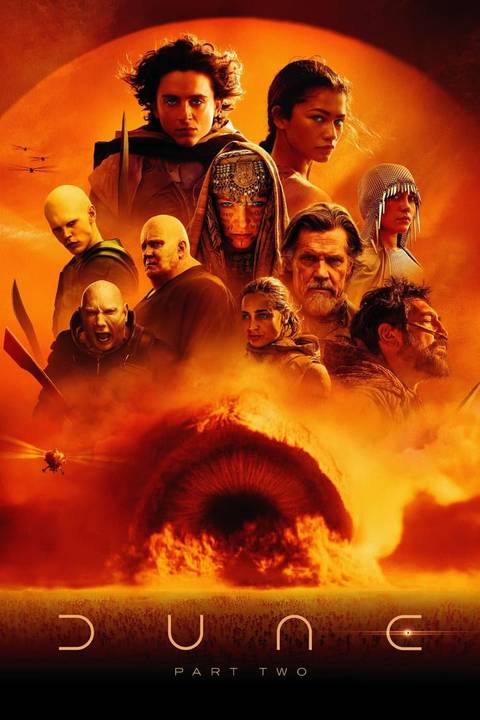
1 'Dune: Part Two' (2024)

Considering that Frank Herbert's Dune is not only one of the most universally beloved science fiction novels of all time, but perhaps even the single most important sci-fi book of the 20th century, it isn't hard to understand why many people used to think it was impossible to make a movie adaptation worthy of the source material's legacy. That was until Denis Villeneuve came along. As great as 2021's Dune was, it's Dune: Part Two that continues to be remembered as one of the best genre films of the 2020s so far, and will likely go down in history as one of the greatest sci-fi films of this era.
Of course, most of Dune: Part Two's narrative is actually set squarely within the planet of Arrakis, but space travel plays such a pivotal role in the story that it's quite reasonable to consider this a piece of space sci-fi. As it happens, it's also one of the best blockbusters of the 2020s so far, a thematically layered, emotionally riveting, and absolutely epic masterpiece with some of the greatest production values, character arcs, and direction that the sci-fi genre has seen in years. It will take something very special to top it.
Dune: Part Two
8 10
- Release Date
- February 27, 2024
- Runtime
- 167 minutes
- Director
- Denis Villeneuve
- Writers
- Denis Villeneuve, Jon Spaihts, Frank Herbert
KioskNews shows a cleaned-up reading view extracted from the publisher’s page — the original always lives on their site, not ours.