Senyocue: Highlife will dominate global music in the next 20 years
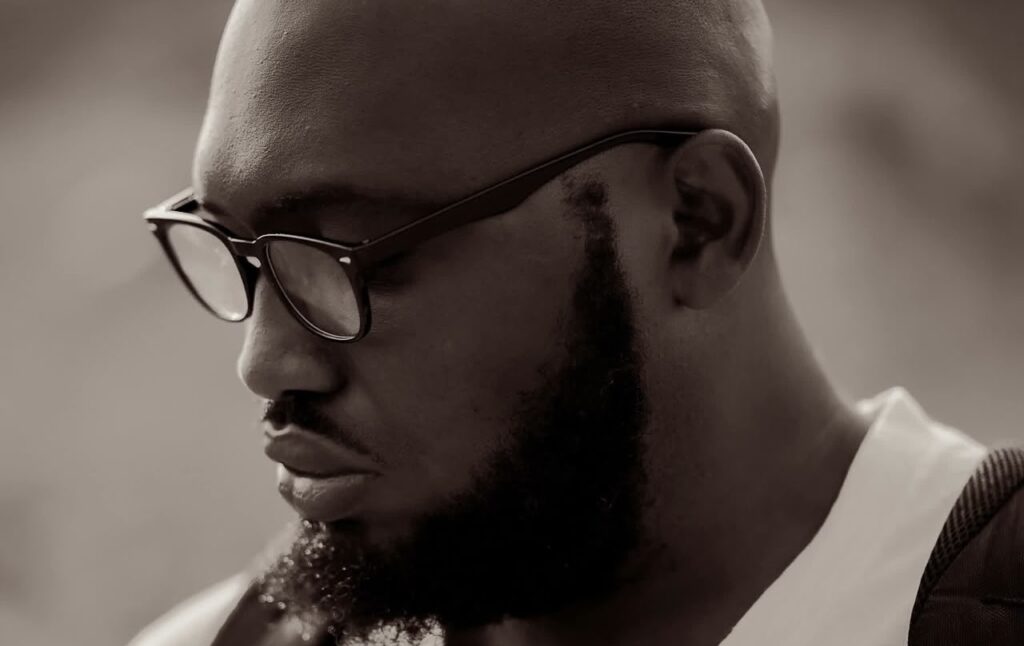
If Highlife could evolve once, why should we stop it from evolving again? We need to have a conversation about Ghanaian music.
For many years, Highlife has been spoken about as though it belongs to another era, something our parents and grandparents listened to. Something associated with old guitars, traditional rhythms, brass bands, palm wine, and songs from another generation.
But that way of thinking has a problem. Highlife was never meant to stand still. Highlife itself was born from musical evolution. Its history is not the story of one fixed sound.
Its foundations can be traced through Ghanaian traditional music, palm-wine music, military and police bands, brass bands, masquerade music and concert-party traditions.
Academic research places important stages of its emergence between the late 19th century and the 20th century, with early recorded Ghanaian Highlife appearing in 1928 through the Kumasi Trio, led by Jacob Sam. And then it kept changing.
Electric instruments changed the way Highlife was played. New bands brought different arrangements and instrumentation.
Ghanaian musicians living abroad developed new approaches, including what became known as Burger Highlife.
George Darko’s “Akoo Te Brɔfo” is widely associated with the emergence of that style. Then came another major transformation.
In the 1990s, Ghanaian musicians began combining the rhythms and cultural vocabulary of Highlife with the attitude, flow and production language of American Hip-Hop.
The movement that became known as Hiplife helped introduce Ghanaian musical ideas to a younger generation in a completely different form.
Reggie Rockstone became one of its most important pioneers and popularisers, although the exact origins of Hiplife remain debated because several musicians and producers were experimenting in similar directions around the same period.
And that is the point. Nobody had to ask permission to evolve Highlife. They simply experimented. They changed the rhythm, instrumentation, delivery and language, brought in influences from somewhere else, and made them Ghanaian.
Highlife is not a sound. It is a possibility. This is where I believe we need to change our thinking.
If someone hears a Highlife rhythm and says, “That’s not Highlife because it doesn’t sound like the old records,” perhaps we are looking at the genre from the wrong direction.
Music is not architecture. You don’t build it once and declare the building complete. Music is a living language. And like every living language, it changes when people speak it.
What happens when a traditional Highlife rhythm is played by a synthesiser instead of a guitar, or a drum pattern becomes a bass melody?
What happens when the guitar disappears completely, but the rhythmic and melodic ideas remain?
What happens when Highlife meets R&B, Jazz, Latin music, Electronic music, Rock or contemporary Pop?
What happens when a producer takes something traditionally played by percussion and gives it to a synthesiser?
Is it still Highlife? Maybe that is the wrong question. Perhaps the better question is: How much can Highlife change before we stop recognising its DNA? That is where the real creative conversation begins.
We have done this before. Ghanaian music has never been afraid of outside influences. The very history of Highlife demonstrates that musical cultures interact, absorb, transform and create something new.
Ghanaian musicians didn’t simply preserve one musical formula forever. They kept responding to their environment and to the sounds around them.
Hiplife is one of the clearest examples. A younger generation heard Hip-Hop and didn’t simply say, “That’s American music; we shouldn’t touch it.” They asked:
“What happens if we make this ours?”
And something new emerged. That same spirit should apply to Highlife today.
Highlife Is The Future
I believe Highlife has something incredibly powerful going for it: it has room. Room for rhythm, melody, harmony, storytelling, experimentation, cultures, technology, room for the old and the new, and perhaps most importantly, room for interpretation.
We should not be trying to recreate the Highlife of yesterday forever. We should be asking what Ghanaian Highlife sounds like in 2026. And then asking what it can sound like in 2030.
Because if the musicians who created Highlife had never experimented, we would not have Highlife in the first place. So why should our generation be the generation that stops experimenting?
Not because we should reject Hip-Hop, Dancehall, Afrobeats, R&B, Pop, Jazz, Latin music or anything else. Quite the opposite.
The future of Highlife may be found in what happens when Highlife meets all of them. The mission is not to preserve Highlife in a glass case. The mission is to keep it alive. And keeping something alive means allowing it to grow.
I believe that within the next two decades, Highlife will take over the world. Not by remaining the same, but by continuing to evolve, merge, adapt and influence.
We’ve already seen Ghanaian musical ideas travel across genres and borders. Even contemporary sounds can carry elements that connect back to Highlife.
The next generation will take those elements even further. Highlife will not just survive the future. It will shape it.
Highlife is the future.
DISCLAIMER: The Views, Comments, Opinions, Contributions and Statements made by Readers and Contributors on this platform do not necessarily represent the views or policy of Multimedia Group Limited.
Tags:
DISCLAIMER: The Views, Comments, Opinions, Contributions and Statements made by Readers and Contributors on this platform do not necessarily represent the views or policy of Multimedia Group Limited.
KioskNews shows a cleaned-up reading view extracted from the publisher’s page — the original always lives on their site, not ours.