Filipino teens among least physically active in the world -- study
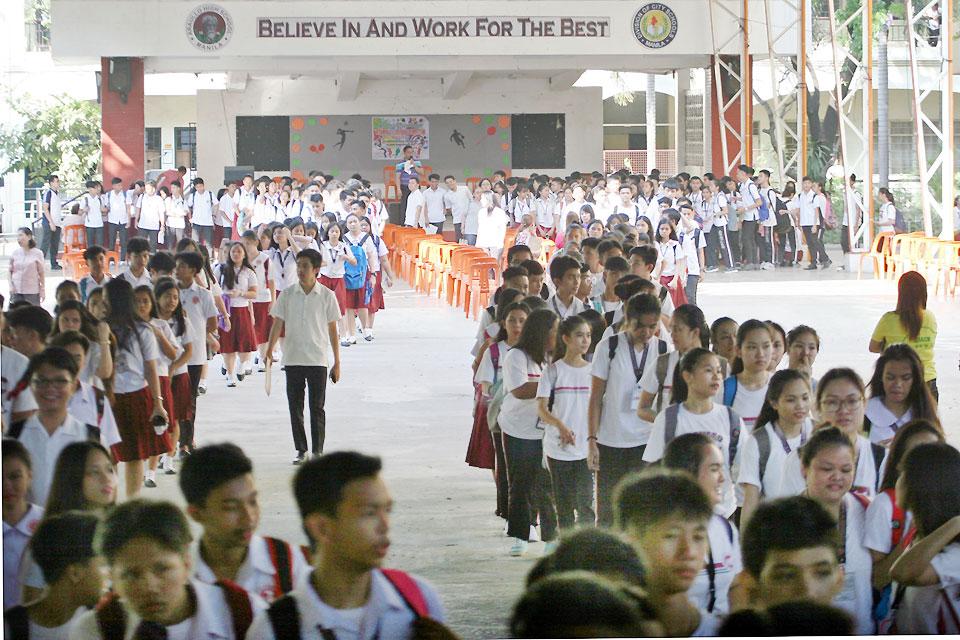
Filipino adolescents are among the least physically active in the world, ranking seventh among all countries and topping the ranks in Southeast Asia, according to a study published Wednesday in The Lancet medical journal.
The study examined surveys on the active days of adolescents aged 11 to 17 years across 195 countries from 2010 to 2025. An active day is defined as reporting at least 60 minutes of moderate-to-vigorous physical activity a day.
Among all countries, the Philippines ranked seventh with 40.32% of Filipino adolescents having zero active days. More Filipino girls (42.7%) reported this compared to Filipino boys (38.0%).
Nepal topped the global list, followed by Zimbabwe, Nauru, Mauritania, Tuvalu, Namibia, and the Philippines.
Countries with the lowest mean active days were five nations in South and Southeast Asia.
"Those with the lowest mean active days were five countries in South and Southeast Asia (Cambodia, Philippines, Timor-Leste, Viet Nam, and Nepal), four in sub-Saharan Africa (Gabon, Liberia, Madagascar, and Mauritania), and Jordan," it said.
This contrasts with countries reporting the highest mean active days, located in Central and Eastern Europe, Central Asia, and high-income Western regions, including Serbia, Canada, Ireland, Kazakhstan, and Finland.
Overall, the study revealed that one in five adolescents globally, or 24.9%, reported zero active days per week. Meanwhile, only one in seven adolescents, or 13.9%, recorded active days all seven days of the week.
In 2018, World Health Organization (WHO) member-states adopted a global target of a 15% relative reduction in physical inactivity by 2030—a goal the report says cannot be met if current trends continue.
"If the 2010–25 trends continue until 2030, the global target will not be met," the report said.
Girls left behind
By sex, female teens reported fewer active days and a higher prevalence of zero active days than males globally.
Globally, 21.7% of boys reported zero active days, compared to 28.4% of girls.
Consequently, a higher proportion of boys recorded active days in all seven days of the week compared to girls, at 16.7% and 11%, respectively.
"Physical activity also declined across adolescence among girls, further widening disparities," the study noted.
Physical activity vs. nation's wealth
A country's income level was among the key factors discussed in the study, which identified patterns in the active days of adolescents based on economic setting.
High-income countries generally showed a higher proportion of adolescents who had active days three or more times a week.
"We identified two distinct patterns of active days that are broadly aligned with country income. In most low-income and middle-income settings, patterns were characterised by high prevalence of 0 active days and low mean active days," the study said.
"By contrast, high-income western, central and eastern Europe and central Asia, and east Asia and the Pacific regions showed a more favourable distribution, with fewer adolescents reporting 0–2 active days and more reporting 3 or more active days," it added.
This finding is likely influenced by disparities in access to opportunities and supportive environments, such as those provided "through school, community programmes, infrastructure (eg, public open spaces), and safe walking and cycling networks."
"Wealthier countries might dedicate resources to ensure quality implementation of relevant policies, increasing opportunities for adolescents to be active," the study said.
Implications
The high level of physical inactivity among adolescents carries critical implications for national policies and practices. The report underscored that a high prevalence of zero active days indicates that existing interventions are failing to reach a significant portion of the adolescent population.
The report also emphasized the importance of tailoring policies to local environments and sociocultural contexts. For instance, areas with high levels of non-participation are recommended to focus on creating environments that support physical activity across everyday settings.
With regard to gender and age disparities, the study explained that the sharp decline in active days among girls highlights the need for more gender-responsive policies and programs.
"Programmes and policies focused solely on individual behaviour change are unlikely to be sufficient without parallel action to address barriers to girls' activity, including restrictive gender norms, safety concerns, and lack of opportunities that meet girls' needs and preferences," the study added.
It also highlighted the critical role of schools, which serve as the primary setting for adolescents and the place where they should be given more opportunities to stay active.
"Schools are often a central setting for intervention, but evidence of effectiveness is mixed, possibly due to implementation challenges in complex school systems. Where impact has been demonstrated, programmes have typically been multicomponent," the report said.
"Engaging young people in co-creation of strategies might strengthen ownership, acceptability, and Sustainability," it added.
Creating the environment
For its part, the WHO stressed the importance of creating environments where physical activity becomes a normal and effortless part of daily life.
The organization emphasized the need for more effective national policies and stronger policy implementation in schools.
The WHO called for urgent, coordinated action across the education, transport, urban planning, sport, and health sectors, alongside targeted efforts to address the multiple barriers faced by girls.
"The challenge is not simply to persuade adolescents to move more. It is to create environments that make being active a normal and easy part of growing up," WHO said.
"Countries need policies that make physical activity an easy, safe and accessible part of everyday life. Promoting physical activity in schools, investing in safe walking and cycling routes, and creating more active communities can give young people more opportunities to move, play and be active in their everyday lives," it added. — VDV, GMA News
KioskNews shows a cleaned-up reading view extracted from the publisher’s page — the original always lives on their site, not ours.