Inside the undersea kingdom: the secret, sinister battle to control what lies beneath the waves

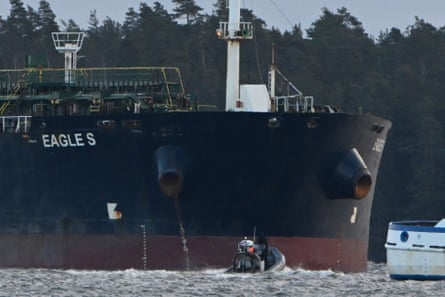
On Christmas Day 2024, six weeks before Estonia, Latvia and Lithuania were due to disconnect themselves from Russia’s power grid, a Finnish engineer was just about to sit down to lunch when his phone rang. He was responsible for the Finnish side of the undersea cables that keep Finland and the Baltic states supplied with electricity, and one was malfunctioning. Within a couple of hours, authorities knew that a Cook Islands-registered tanker called the Eagle S, part of the shadow fleet carrying sanctioned Russian oil, in this case to Egypt, had sailed over the cable at the moment and location at which it had stopped working. The coastguard hailed the Eagle S. Were their anchors up? Yes, they replied – though they did not seem to check – and sailed on.
Three hours later the ship hit another four cables in quick succession, nearly hobbling internet provision in Finland and Estonia – and was minutes away from a major electricity cable and the Balticconnector, which supplies the two countries with gas. Finland scrambled the border guard, which pulled up alongside the tanker and demanded the crew take up its anchor. But the Eagle S was not in Finnish territorial waters: the authorities could not force the captain to comply, and they did not know who or what might come to his aid.
“It makes no sense,” says Swedish security expert Elisabeth Braw, leaning over a table in a well-upholstered corner of a private members’ club steps away from the Bank of England. She has spent the last couple of years talking to undersea engineers and coastguards about this and other similar incidents, rootling through accident investigation documents and court transcripts and Zoom-calling the small, specialised crews who have to go out and repair the damaged cables, often under extremely challenging conditions, asking them to show her what they are doing out there at sea. Now she has written it all up into a book bristling with enough incident to supply several action movies. “It makes no sense that you would drag your anchor across five cables, dozens of kilometres. No trained seafarer would do that. And they can say, ‘Well, I had no idea. We didn’t notice a thing.’ And how can you prove that that’s not the case?”
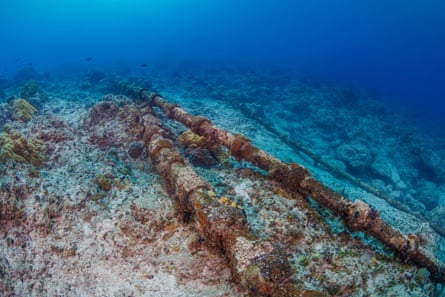
The Undersea War paints an extraordinary picture of the bottom of the ocean, of fish and plant life threading through shipwrecks and junk thrown overboard – and especially of the “undersea spaghetti bowl” made of miles and miles of gas and oil pipes and electricity, telegraph and fibreoptic cables, the longest of which is 45,000km long and some of which are so delicate “even an inquisitive fish could damage them”. Vast amounts of electricity and oil, 95-99% of global internet traffic and $10tn (£7.75tn) of financial transactions travel through this system every day. “We assume the cloud is in the sky,” Braw writes, “but it’s underwater.” It is a system both incredibly fragile – take out a few cables off the coast of New York and New Jersey, and “Wall Street could become kneecapped in very short order”, as a Republican senator told her – and a source of great power, not least to anyone inclined to sabotage.
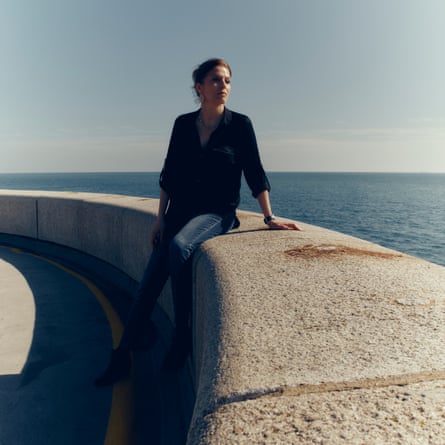
Braw, who has a direct, unfussy confidence and a dry sense of humour, began as a journalist before retraining in national security and specifically in so-called “grey zone” or sub-threshold threats (disinformation, election interference, cyber-attacks, cable sabotage). A government adviser (she won’t say which governments, only that they’re in Nato), and senior fellow at the Atlantic Council, she traces her interest back to watching Polish lorries loitering with intent around a cold war airbase near her childhood home in southern Sweden. The first newspaper article she remembers – she had just learned to read – was about a Soviet submarine that ran aground off the nearby city of Karlskrona in 1981, “the Soviet captain standing on top of the submarine” – she raises her arms as if in surrender.
A couple of years ago she was called as an expert witness to a House of Commons Defence Committee inquiry into grey-zone threats and was struck that while the parliamentarians were serious, and knowledgable about the subject, they were “taken aback by the realisation that it’s very hard to protect undersea infrastructure. It’s not like you can say, ‘Oh, well, here’s what we should do. It’s expensive, but it’s going to happen.’ That solution doesn’t exist.” The thing that still amazes her is that “behind every email, credit card payment, and Zoom call is an ocean worker” – and just how few of them there are.
Talking to Braw, it’s impossible not to be struck by how oblivious most people are to what she calls the “undersea kingdom”. “Well, it’s out of sight, out of mind, right? And undersea cables and pipelines are really out of sight.” Even the most sophisticated organisations in the world seem to have based everything on blind trust that everything will be OK, that everyone will behave.
“We don’t have a global government and the entire structure is based on countries committing to doing something and then following through, abiding by the rules they’ve agreed to follow” – ie the 1994 United Nations Convention on the Law of the Sea (Unclos). “We don’t have a higher authority that can force them to follow the rules. And it’s extraordinary that it has worked so well, that we’ve been able to build the entire modern economy on that assumption.”
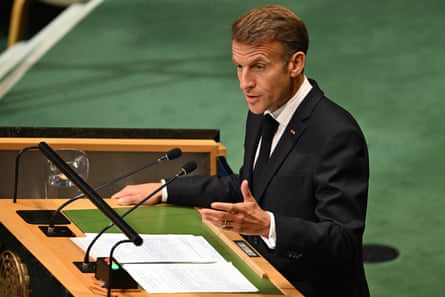
All that trust is quite touching, really. Except, increasingly, powerful people and states are seemingly choosing what Emmanuel Macron, addressing the UN in New York last week, called “the new order of impunity”. In an ideal world, or even the world of 15 years ago, you might say, “Well, we are going to set up a global flotilla led by the United States, with Russia, China, Germany, the UK, France, to make sure these pirates, whoever they are, who are harming cables, don’t do it,” says Braw. But that, clearly, is a pipe dream, one that is now further complicated by big tech laying its own cables. “Since the very first cable [in 1858] it has been, you know, one road for everybody. We’ve all travelled, our traffic has travelled, on those communal roads.” But now Google, Meta, Microsoft and Amazon are planning about 60 of their own; Meta’s Waterworth cable will be the longest ever, at 50,000km, and wrap around the world.
There was an interesting moment in the parliamentary hearing, says Braw, when Mike Martin MP worried about the “absolute insanity that a key piece of critical national infrastructure is going to be delivered and owned by tech giants, over which we have no control”.
“On one hand, it’s business,” Braw says now. “If they can create these cables, then more power to them. On the other hand, in this environment of geopolitical tension, it does feel like an incredible potential vulnerability. What if Trump got mad at Spain, which he often does, and told Google to disconnect Spain? Because Google has this super-duper cable between Spain and the US East Coast. Or what if Google thought that the way to please Trump on some other matter would be to suspend traffic?” There has already, she writes, been a kind of precedent, when in 2023 Elon Musk momentarily blocked Starlink access to Crimea.
Then there are all the pinch points: off the east coast of the US, for instance, off Japan, off Ireland. About 75% of transatlantic cable traffic goes through Irish waters, in which Russian vessels have recently been seen lurking – while the Irish navy is tiny.
“They are so defenceless,” says Braw. “Ireland is the original cable junction and it’s still a cable junction because of its location. It has bet the house on globalisation, and peace” – and headquartering big tech. “And now that can no longer be taken for granted, Ireland is so exposed.” What if something happened? They’d probably have to turn to the Royal Navy, Braw replies, bluntly. Which would “obviously be hugely humiliating”. Iran has recently opened a whole new front by suggesting it might impose tolls on cables traversing the strait of Hormuz.
And underneath all this is the question of what, exactly, constitutes an act of war. Because defining what is going on is the first step in working out how to respond. Suppose, Braw says, that a cable company reports an issue. Then the coastguard sails out to the approximate site. They might identify a suspect, but then they have to decide, while that is happening, whether it’s just an accident, or “whether it’s the first step towards something much bigger” – which would involve the navy, and thus a military response, and who knows what after that.
In the case of the Eagle S, Finnish authorities ordered the boat in towards their coast and abseiled on to it – knowing, all the while, that as it was carrying Russian oil, they could be setting something far bigger in motion. (Thankfully, this did not happen. The crew were arrested and although eventually found guilty of criminal damage, Finnish law could not be applied and no sentence enforced because the incident had happened outside their territorial waters.) And in fact, the interception, some months later, of a tanker called the Jaguar, which was sailing under no flag at all, prompted a Russian fighter jet to enter Estonian airspace.
There has been, in recent weeks, an increase in chatter about a possible imminent attack by Russia on European soil. Braw largely dismisses this – not least because she can’t see why Russia, already overstretched in Ukraine, would do something so expensive when all it takes is an errant anchor and plausible deniability. And “if you engage in sabotage, disinformation, election interference, arson, using drones, then what is the target country supposed to do?” There is a kind of very dark humour in the fact that the only people properly intent on defining what exactly counts as war at the moment seem to be “insurers, the companies they insure – and district judges. It is extraordinary.”
There is another type of sabotage to contend with, too. It has been known for decades that the ocean contains treasure – specifically, potato-shaped nodules containing elements such as manganese, iron, aluminium, nickel, copper, cobalt, potassium, titanium, barium and rare earths – that can, in theory, simply be picked off the ocean floor. Some of them, the larger ones, have been there for up to 15m years. Especially attractive are the nodules in the Clarion-Clipperton Zone, an abyssal (deep and flat) plain between Hawaii and Mexico in the Pacific, which contains vast amounts of minerals, and over which no country has jurisdiction. But when the Law of the Sea came into force in 1994, the International Seabed Authority was also created: any mining has to be agreed to by all members (170 countries plus the EU). The US never ratified the law of the sea, but this has until recently been largely a technicality, because the American navy has sailed the world enforcing it, and the US government, understanding the importance of the ISA, has attended its meetings.
Thirty-one licences for exploration have been issued, but no one has mined – in fact, a bloc of 40 countries, including the UK, think there should be a moratorium on any commercial mining, not least because it is such a complex and fragile ecosystem, poorly understood, and no one has any idea what damage would be done. (A position underlined when, earlier this year, scientists announced the discovery of a whole new family of crustacean species in the Clarion-Clipperton.)
But last April Donald Trump signed an executive order allowing mining in international waters, including outside US jurisdiction. Five days later they received their first application, a request to mine the Clarion-Clipperton zone. Braw believes the main impetus is the Trump administration’s wish to reduce their dependence on China, especially for the rare earths used in digital devices. The trouble is, “processing will still have to happen in China unless America wants to set up processing plants, and it’s very dirty, which is why China specialises in it. Nobody wants to have processing plants in their community, in their backyard.”
An even larger risk is the precedent it sets. “The thing about America launching unilateral deep-sea mining is that China can say, ‘Since this arrangement clearly doesn’t work, we’ll start mining unilaterally as well.’ And how do you then figure out who gets what? It’s completely outside an international legal framework. It’s the wild west. You can have two companies backed by two different countries fighting for the same pile of nodules.” Or, as Braw puts it in her book: “A battle for commercial domination of the undersea realm could turn into a surface war between the world’s most powerful fleets.” Instead, she argues, we could just recycle our tech and aim to use no new rare earths at all: “That’s what the European Union is focusing on.”
“The undersea kingdom has everything,” says Braw. “It is such a combination of mystery and hi-tech. And the hi-tech that sits there, it functions, it works well, it doesn’t harm anybody. But I think if we start messing with this undersea kingdom, either for hostile purposes or for selfish reasons, then we risk upsetting it, and it’s to the detriment of the maritime environment but also to the detriment of our modern life, because the balance is so delicate.”
Surely we can stop this happening? With deep-sea mining specifically, says Braw, you would need to “plead with the next US president to reverse the executive order, since it’s based on an executive order, not legislation”. And is the international law simply no longer fit for purpose? Given that the US cannot be trusted, what should happen next?
“Well, the first thing that needs to happen is the world needs to realise who the heroes are. It’s the cable crews that go out defying the elements, but now also having to worry that when they go to cable repair sites they themselves could become some sort of target.”
As for the larger picture, the sea has been called the “blue commons”; it belongs to all of us, and we need, Braw argues, “the countries of the world that believe in maritime order to get together and show that we are the majority. Yes, you big countries may decide to violate rules that don’t suit you, but we are the majority, and we will stick together, even though we are very different – not because we are more virtuous than everybody else, but because it’s in everybody’s interest that there be rules, which is why countries have wanted to establish rules of governance of the oceans going back to the ancient Greeks. And we managed to do it with Unclos. How can it be that we’re letting this slip now? The cables are just an extremely dramatic illustration of what can happen if we let it slip.”
KioskNews shows a cleaned-up reading view extracted from the publisher’s page — the original always lives on their site, not ours.