‘The Legend of Korra’ Recap: What To Remember Before ‘Avatar: Seven Havens’ Premieres

Julio is a Senior Author for Collider. He studied History and International Relations at university, but found his calling in cultural journalism. When he isn't writing, Julio also teaches English at a nearby school. He has lived in São Paulo most of his life, where he covers CCXP and other big events. Having loved movies, music, and TV from an early age, he prides himself in knowing every minute detail about the things he loves. When he is older, he dreams of owning a movie theater in a small countryside town.
Sign in to your Collider account
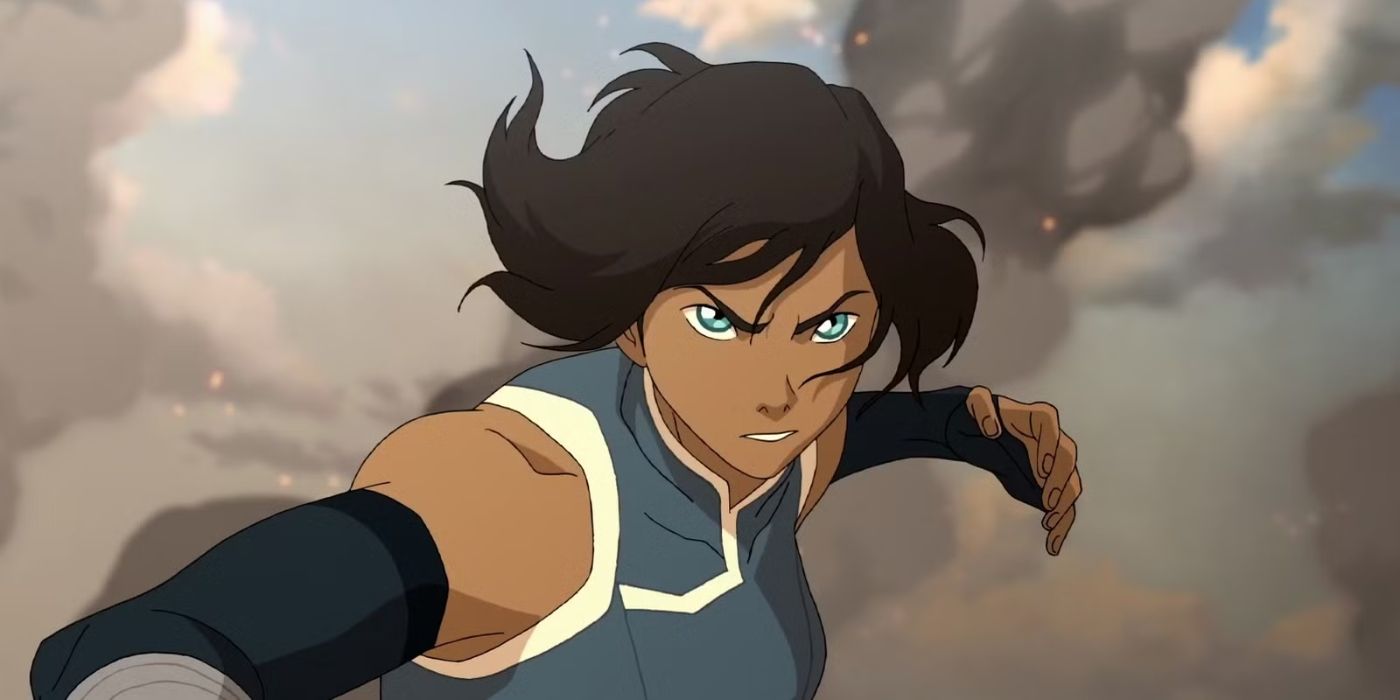
We are days away from returning to one of the most beloved fictional worlds with the upcoming release of Avatar: Seven Havens. The new series follows the adventures of young Avatar Pavi (Saheli Khan) in a world that has grown to fear and hate the Avatar, believing that the previous one, Avatar Korra (Janet Varney), supposedly caused a world-ending cataclysm 225 years earlier. Her having such a prominent role in Seven Havens' premise, then, begs a rewatch of her own series, The Legend of Korra, to fully make sense of Korra as a character, as well as try to understand why she would doom the world like this — if it really is her doing, that is.
‘The Legend of Korra’ Follows Korra’s Journey as the New Waterbending Avatar
Set 70 years after Avatar: The Last Airbender, The Legend of Korra begins with the title character moving to Republic City to study Airbending with Aang's (D.B. Sweeney) son, Tenzin (J.K. Simmons). Korra was protected by the Order of the White Lotus all her life, but faces her first real challenge when Equalist leader Amon (Steve Blum) starts a non-bender revolution and even takes away many benders' powers, including Korra's. Her new Airbending saves the day, defeating Amon and connecting her to her past lives as the Avatar, with Aang giving her Waterbending, Earthbending, and Firebending back.
Collider Exclusive · 8 Questions · 2 Minutes Which Iconic Fandom Should You Join? Harry Potter · Lord of the Rings · Star Wars · Star Trek
Eight honest questions about how you actually are: what you put on when you need cheering up, how deep you go into the things you love, what you argue about, what you keep on your shelf. Answer them and we will tell you where you belong. Four of the biggest fandoms on earth are taking new members, and they could not be more different from one another.
⚡Harry Potter(Wizarding World)
💍Lord of the Rings(Middle-earth)
⚔️Star Wars(A Galaxy Far Away)
🖖Star Trek(The Final Frontier)
01
What do you put on when you need cheering up? Nobody is brave about this one.
02
How deep do you go into something you love? There is no shallow end here, only different deep ends.
03
What do you and your friends actually argue about? Every fandom has one argument it has been having for years.
04
How do you feel about a room full of strangers? Every one of these comes with a very big room.
05
Where would you rather spend a week? Pick on instinct rather than on budget.
06
What do you believe about people, mostly? All four of these stories have an answer, and they disagree.
07
What is actually on your shelf? Look over at it before you answer.
08
What do you actually want from a story? Eight questions in, this is the one that picks your fandom.
Membership Confirmed Your Fandom Is…
Four of the largest communities on the planet, and four completely different reasons to belong to one. Here is yours, what it would give you, and the argument you would be having within a week.
Harry Potter
You belong to the fandom that is really about comfort. Hogwarts works on people because it is a place rather than a plot, and the pull is not the wizard war so much as the corridors, the food, the weather and the sense that somebody is expecting you.
- You are drawn to belonging, which is why this fandom sorted itself into houses within about five minutes and has never stopped.
- This is the most social of the four, and the one most likely to know which type every single person in your life would be.
- The books are built to be reread rather than analysed, and rereading is exactly what you do with things you love.
- The new HBO series is bringing the whole thing back one book at a time, which means the arguments are about to start all over again.
Lord of the Rings
You belong to the deepest fandom on this list, the one where somebody has always read further than you and is quietly delighted to say so. Middle-earth rewards patience more than any other world in popular culture.
- You like the sense that the story you are reading is only the visible part of something enormous, which is precisely how Tolkien built it.
- This fandom takes adaptation seriously to a degree that other fandoms find slightly alarming, and it has good reasons for that.
- Your favourite thing about the books is probably the bit that is not action at all, which is the walking, the songs and the long goodbyes.
- Nobody here thinks heroism belongs to the powerful, and the whole story exists to make that argument.
Star Wars
You belong to the loudest and largest tent of the four, the one where three generations are all watching the same thing and none of them agree about any of it. That disagreement is not a flaw in this fandom, it is the main activity.
- You want something you can share with absolutely everybody, from a six year old to a grandparent, and this is the only one on the list that really does that.
- Nobody argues like Star Wars fans argue, and the argument has been running since roughly 1980 with no sign of resolution.
- The pull here is sensory before it is narrative, since it is the sound design, the score and the look of a used and dented galaxy.
- You would be first in the queue, in costume, with strong opinions and a genuinely good time.
Star Trek
You belong to the thinking fandom, the one that turns up for the argument rather than the explosion. Trek has always been a series of ethical problems in space, and the people who love it love being asked what they would have done.
- You are an optimist in a way that is currently unfashionable, and this is the only major franchise still willing to say the future might be better.
- The best episodes are the ones where nobody fires anything, which is a sentence that makes perfect sense to this fandom and to nobody else.
- Starfleet Academy brought the franchise back to a classroom in 2026, which is appropriate, because Trek has always been a bit of a seminar.
- You would want the conversation afterwards more than the episode itself, and here you will always find somebody willing to have it.
In Season 2, Korra strengthens her ties to the Spirit World in a confrontation against her uncle, Unalaq (Adrian LaTourelle), who intends to merge with the dark spirit Vaatu to become a Dark Avatar and conquer the world. To stop him, Korra has to go 10,000 years back and learn about the first Avatar, Wan (Steven Yeun), and fully understand the Avatar's role as the bridge between the Spirit and material worlds. Unfortunately, she loses her connection to her past lives when Raava, the spirit of light, is severed from her, but she manages to defeat Unalaq and stop a war between the Northern and Southern Water Tribes.
Instead of closing the bridge between the Spirit and the material worlds, though, Korra decides to leave them open. This causes countless non-benders around the world to suddenly gain Airbending abilities in Season 3, thus restoring the balance between the elements for the first time in centuries, and that's where Zaheer (Henry Rollins), the leader of the anarchist Red Lotus society, enters. Hellbent on killing Korra and ending the Avatar cycle, Zaheer destroys much of the world's geopolitical order and almost kills Korra, who can only stop him thanks to Tenzin's new Airbender apprentices.
In the final season, Korra struggles not only against the rise of a fascist regime in the Earth Kingdom led by Kuvira (Zelda Williams), but mainly against herself. Traumatized by everything she has been through, she wanders the world aimlessly for a while, until Toph Beifong (Philece Sampler) helps her regain most of her confidence and strength. It all comes to a head when Kuvira and her army attack Republic City with a giant mecha, which Korra and her friends are finally able to destroy. With Kuvira defeated and the world at peace, Korra finally goes on vacation with Asami (Seychelle Gabriel), now implied to be her girlfriend.
Korra Is a Powerful, Yet Highly Contested Avatar
When her series begins, Korra is just 17 and has lived close to her parents and mentors all her life. Hers is a very different origin story from her predecessor, Aang, who, at 10, bears the burden of being the last Airbender and having to end a hundred-year war. This is enough for some to view her as weak and whiny instead of a teenager who has to deal not only with the natural pains of coming of age, but also the added responsibility of being the Avatar. It's way more than anyone could handle, so judging her by Aang's standards isn't really fair — she is her own person, after all.
Aang certainly had his own struggles to overcome, and those stakes might seem higher at first glance. Korra's own journey is arguably the most difficult and traumatizing among the Avatars we know. At the hands of her enemies, she is tortured, abused, and betrayed, which more than justifies her struggle to figure out who she is both as a person and Avatar. As a child, she was definitely hyped up about being the Avatar, but this excitement is gradually beaten out of her season after season, as she sacrifices more and more of her own self to protect the world and the people she loves.
Nevertheless, Korra persisted, always showing up whenever needed and finding it within herself to be the best Avatar she can be. Her enemies and adversaries (and some fans) mistakenly judge her as immature, unstable, and underpowered, but she is actually the Avatar who changes the world the most and for the better by bridging both the spiritual and material realms. Deep down, her battles are also always about the Avatar's role itself and everything it entails, so her suffering and every decision she makes is bound to resonate for centuries as the Avatar cycle continues after her and have deeper consequences than anything Aang ever did.
Could Korra Really Have Caused the End of the World in ‘Avatar: Seven Havens?’
Right off the bat, Seven Havens being set 225 years after The Legend of Korra is alarming. The Avatar cycle is supposed to immediately restart with a new Avatar being born as soon as the old one dies, so Korra's successor shouldn't have taken that long to show up. It raises many questions. First and foremost, how long after The Legend of Korra does the cataclysm take place? The huge time jump between the two series and the nature of the Avatar cycle could imply that Korra might not have died in the cataclysm, so could she have been in some sort of stasis until eventually succumbing nine years before Seven Havens?
Korra also had a much bigger support network than Aang, for example, with her own "Team Avatar" and countless other allies, so where are all these people when she causes the cataclysm? The Seven Havens trailers show her rampaging and mindlessly destroying everything around her while in the Avatar state, even smirking mischievously while doing so, but it's impossible to imagine her actively and purposefully causing any sort of catastrophe. She has lost control before as a consequence of Zaheer's torture, with some speculating that she might be undergoing something similar, like being possessed by a resurgent Vaatu, for example.
Finally, one of the defining traits of the Avatar cycle is one being able to access their past lives — Aang (Zach Tyler Eisen) communes with Roku (James Garrett) in The Last Airbender, like Korra herself talks to Aang in The Legend of Korra until her connection is severed in Season 2. The main question for Seven Havens, now, is whether Pavi will be able to contact Korra, or if this connection remains severed in perpetuity in the Avatar cycle. Right now, this seems like the only way to get some clarity on Korra's role in the cataclysm, as well as the most important guidance Pavi could have as a nine-year-old Avatar after so long without the world seeing one.
The Legend of Korra is available to stream on Paramount+. Avatar: Seven Havens premieres on October 9.

The Legend of Korra
- Release Date
- 2012 - 2014-00-00
- Network
- Nickelodeon
- Showrunner
- Bryan Konietzko, Michael Dante DiMartino
KioskNews shows a cleaned-up reading view extracted from the publisher’s page — the original always lives on their site, not ours.