The 8 Best Fantasy Book Authors of All Time, Ranked


Diego Pineda has been a devout storyteller his whole life. He has self-published a fantasy novel and a book of short stories, and is actively working on publishing his second novel.
A lifelong fan of watching movies and talking about them endlessly, he writes reviews and analyses on his Instagram page dedicated to cinema, and occasionally on his blog. His favorite filmmakers are Andrei Tarkovsky and Charlie Chaplin. He loves modern Mexican cinema and thinks it's tragically underappreciated.
Other interests of Diego's include reading, gaming, roller coasters, writing reviews on his Letterboxd account (username: DPP_reviews), and going down rabbit holes of whatever topic he's interested in at any given point.
Sign in to your Collider account
Fantasy has been present in stories for just about as long as human storytelling has been a thing, but it didn't become an actual marketing label for the publishing industry until around the 19th century. Since then, we have gotten thousands of authors who can be called full-on fantasy authors, and there is many an element that makes up a great one. Without boundless imagination, deep technical craft, a purposeful eye for world-building, and the ability to write grounded characters, no fantasy author can be truly great.
But even though there have been hundreds upon hundreds of great fantasy writers over the years, there are eight in particular who can be considered the very best to ever grace the genre. These are authors who aren't just phenomenal from a technical or artistic standpoint, they are also of vital historical importance to the genre, still influencing countless fantasy authors the world over to this day. Their work is as foundational as it is essential, and their names belong on the bookshelf of all fantasy fans.
8 Guy Gavriel Kay

After graduating with a Bachelor's degree in Philosophy from the University of Manitoba, Canadian author Guy Gavriel Kay began writing poetry before turning to prose. Soon enough, he became one of the greatest—and most underrated—fantasy authors of his generation, penning many forgotten books that have aged like fine wine. His work has been particularly important in revolutionizing the mixture between fantasy and settings strongly resembling real historical places and periods, even though Kay himself rejects the label of historical fantasy.
Kay was hired by Christopher Tolkien to help assemble and edit J. R. R. Tolkien's chaotic mass of posthumous manuscripts into the legendary The Silmarillion.
Before he published a single novel of his own, Kay was hired by Christopher Tolkien to help assemble and edit J. R. R. Tolkien's chaotic mass of posthumous manuscripts into the legendary The Silmarillion, and that alone should already be proof enough of his quality. After that, he became a true pioneer of inserting historical elements into the high fantasy genre, delivering masterpieces of the caliber of Tigana and The Lions of Al-Rassan.
7 Robin Hobb

Robin Hobb is the pen name of Margaret Astrid Lindholm Ogden, who's undoubtedly best known for her iconic Realm of the Elderlings megaseries. It wasn't until she turned 30 that she published her first book under the name of Megan Lindholm, proving that it's never too late to join the pantheon of history's greatest fantasy authors. She began writing as Robin Hobb 12 years later, and her debut under that legendary pen name was Assassin's Apprentice, the first book in the Farseer trilogy from the Realm of the Elderings series.
Exploring themes like otherness, gender, and queerness across her incredible work, Hobb has crafted some of the fantasy books with the best world-building and the best character writing in history. Shifting the genre's focus from earth-shattering spectacle to deep psychological intimacy and philosophical complexity, she proved just how character- and theme-driven the genre could be when written by a gifted enough author.
6 Brandon Sanderson
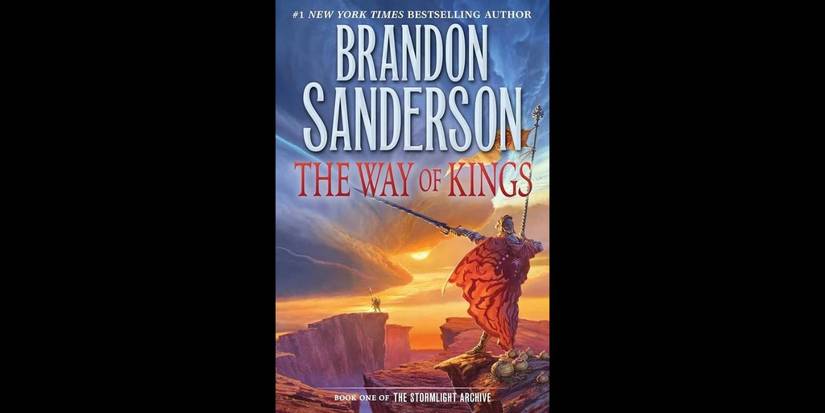
If there's any one author worthy of being called the most prolific and widely celebrated fantasy writer currently working, it's almost undeniably Brandon Sanderson. His debut novel, Elantris, was published in 2005, by the time Sanderson had already written about a dozen unpublished books. He has been nothing but a writing machine since then, best known for his iconic Cosmere universe. Composed of multiple subseries and standalones, it's one of the best ongoing fantasy book series.
From the Mistborn series to the Stormlight Archive, Sanderson has written several of the most ambitious high fantasy books of all time, all the while building the biggest multi-decade meta-narrative that fantasy literature has thus far seen. Off the page, he has also trained and influenced countless authors over the years, and coined the distinction between hard magic and soft magic systems, being the undisputed master of the former.
5 C.S. Lewis
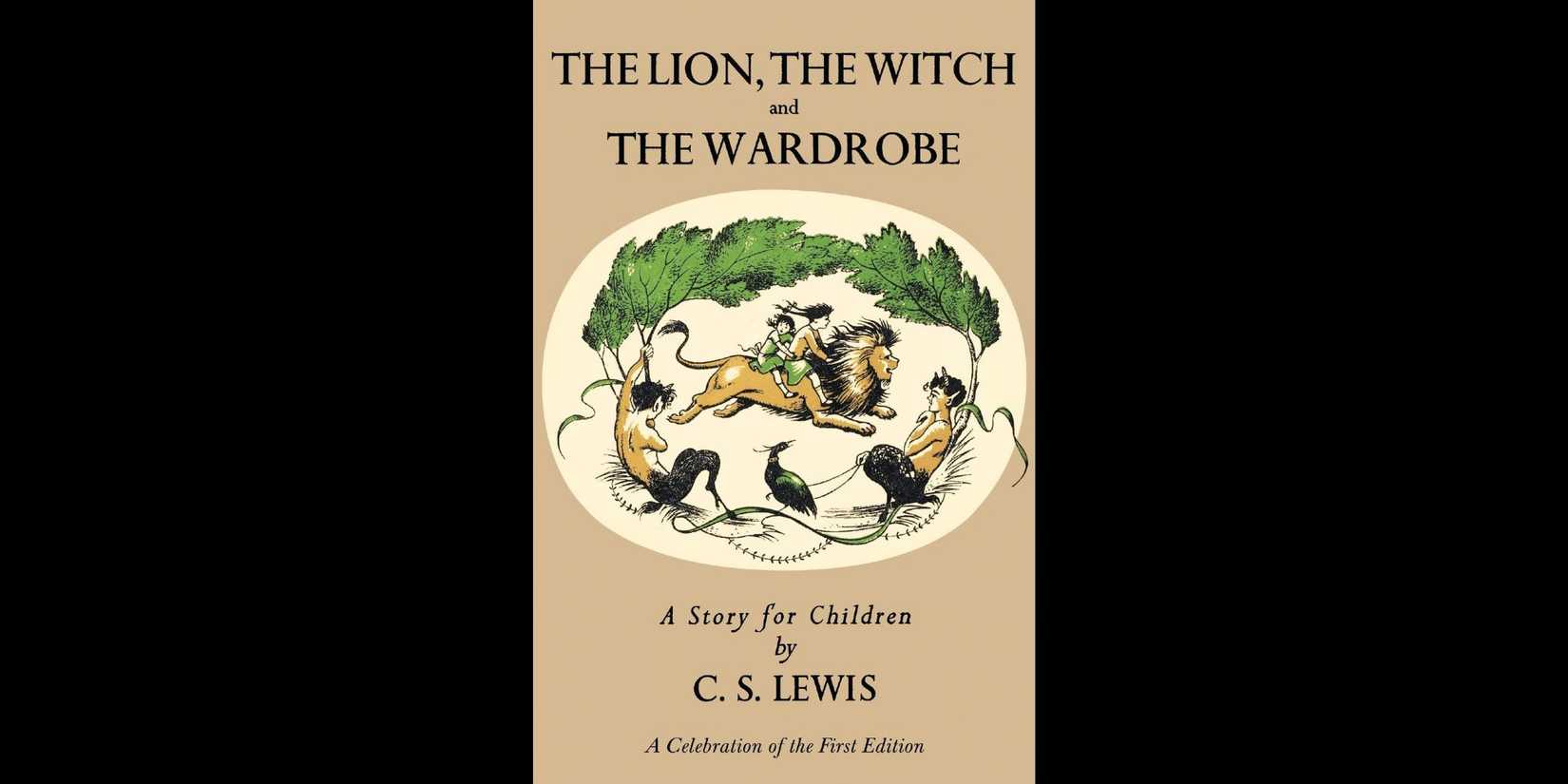
British author, literary scholar, and Anglican lay theologian C. S. Lewis also wrote some incredible science fiction, but he's obviously better known for his fantasy work, particularly The Chronicles of Narnia, one of those fantasy series where every book's a masterpiece. He began writing fiction as a child, inventing stories with his brother and fellow author, Warren Lewis; and soon enough became one of the most important English writers of his generation.
Alongside his good friend Tolkien, Lewis still stands as one of the major pillars of modern fantasy. His work not only revolutionized and popularized portal fantasy, it also made fantasy as a whole more widely accessible, more culturally ubiquitous, and more deeply rooted in Western mythology and philosophy than ever before. Without authors like him, who's to say whether fantasy would have ever been fully legitimized as a genre worthy of being taken seriously?
4 Robert Jordan
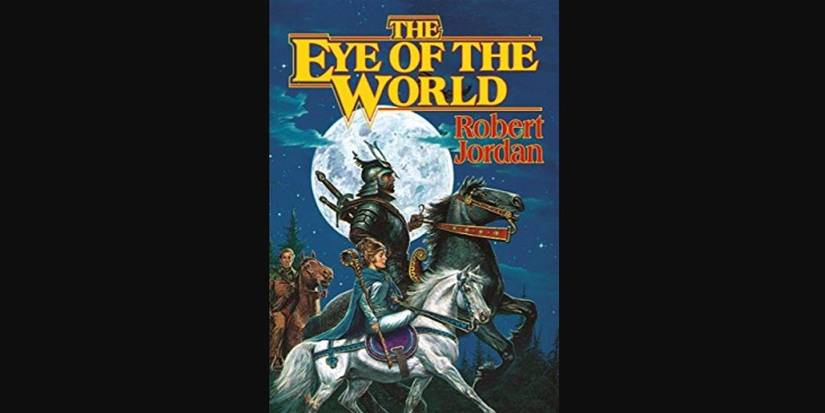
Another instance of a fantasy literature legend who's best known for one particular series, but whose contributions to the genre extend far beyond that, Robert Jordan is the must-read author of some of the most perfectly-written fantasy books in history. He decided that he wanted to write books while recovering from his time as a Vietnam War veteran, and began writing while working as a nuclear engineer for the US Navy.
High fantasy had been very heavily inspired by Tolkien (or directly aiming to imitate him) for decades before Jordan came about.
The most prominent work of such an iconic career is The Stormlight Archive, far and away one of the greatest and most influential fantasy book series since the '90s. High fantasy had been very heavily inspired by Tolkien (or directly aiming to imitate him) for decades before Jordan came about, and it was authors like him who proved that the genre could start doing things differently. Darker, more mature, and more complex than most other fantasy novels from his time, Jordan's work broke the mold and has continued aging like fine wine.
3 Sir Terry Pratchett

Dramatic fantasy is of vital importance, and it's always a delight to read an author who actually takes the genre seriously and builds something deeply compelling out of it. However, comedic fantasy is arguably every bit as important, and as far as that subgenre goes, you don't get any authors more foundational than Sir Terry Pratchett, fantasy's most beloved satirist. He's best known for his Discworld series, composed of a whopping 41 fantasy comedies.
What makes Pratchett's work so brilliant is that even though his satirical fantasy works are undeniably hilarious, they're also surprisingly profound. On top of providing one of the best soft magic systems in history, Discworld proved that even comedic fantasy could be legitimately serious in its own way. Thematically complex and richly human, Pratchett's work interrogates human nature, institutions, and morality in all sorts of enrapturing ways. His books are brilliantly meta and quite diverse, making Discworld a must-read series for anyone who thinks that fantasy can't be hilarious and profound at the same time.
2 Ursula K. Le Guin
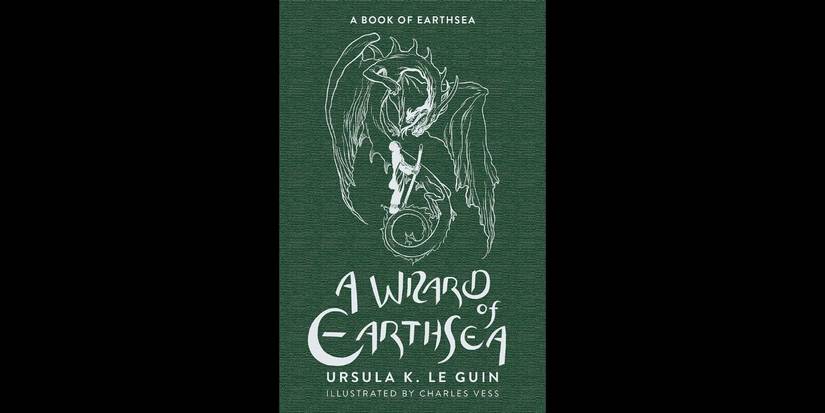
In the entire history of speculative fiction, few authors have ever been quite as important as Ursula K. Le Guin. Indeed, the American master could also very reasonably be counted among the eight most important and essential sci-fi authors of all time, but there are many who prefer her work in fantasy. Le Guin wrote her first fantasy story at age nine and submitted her first sci-fi story to a magazine at age 11, and from there, there was nowhere for her to go but up.
The daughter of an anthropologist and with a deep academic interest in mythology, Le Guin wrote masterpieces like Lavinia and the Earthsea Cycle, many of them among those books that are a masterclass in high fantasy writing. By introducing elements of Taoist philosophy, psychological realism, and non-Eurocentric anthropological and cultural depth to her work, Le Guin completely rejected many of the tropes and traditions that had ruled fantasy literature for years. She genuinely revolutionized fantasy, pioneering many new tropes of her own in the process.
1 J. R. R. Tolkien

You'd be hard-pressed to find anyone unwilling to call J. R. R. Tolkien the single greatest and most influential fantasy author of modern times, and that's for good reason. Never has the history of speculative fiction seen anybody quite like Tolkien, and it likely never will again. Sparked by the Professor's love for philology, ancient mythologies, and original myth-making, the world was treated to an authorial career that completely revolutionized fantasy. Indeed, many would divide the genre's modern history between the pre-Tolkien and the post-Tolkien eras.
Yes, Tolkien wrote The Hobbit and The Lord of the Rings, his most celebrated works and perhaps the most influential fantasy novels of the 20th century. However, his contributions to the genre extend far beyond. He wrote several masterworks outside Middle-earth, he contributed to the academic study of fantasy, and he completely laid down the blueprint for modern high, epic, and heroic fantasies. Author of some of the most memorable characters, the most fascinating lore, and the best battles in the history of fantasy books, Tolkien was the greatest of all fantasy writers. It will take someone so special that he's truly out of this world to ever dethrone Tolkien.
Collider Exclusive · 8 Questions · 2 Minutes What Fantasy World Do You Belong To? Middle-earth · Grand Line · The Continent · Camp Half-Blood
Pick your magic, your crew, where you want to wake up and who you would rather be fighting, and we will tell you which world you actually belong in. Four are open to you: an ancient kingdom living through its last good age, an endless sea full of pirates, a continent that pays people to kill monsters, and a summer camp where the Greek gods are extremely real and mostly a nuisance.
💍Middle-earth(Rings of Power)
👒Grand Line(One Piece)
🐺The Continent(The Witcher)
🔱Camp Half-Blood(Percy Jackson)
01
What kind of power do you want? Every one of these worlds runs on a completely different sort of magic.
02
Who is travelling with you? Nobody gets through any of these stories entirely on their own.
03
Where do you want to wake up tomorrow? The best fantasy is usually just somewhere you would genuinely like to live.
04
How are you making a living out there? Even in fantasy somebody has to pay for the horse.
05
There is something in the woods. What do you do about it? All four of these worlds keep something unpleasant out there in the dark.
06
Who is the villain of your story? The enemy tells you far more about a world than the hero ever does.
07
What do you actually believe in out there? Every world hands its heroes one rule and asks them to hold onto it.
08
A thousand years from now, how are you remembered? Eight questions in, this is the one that decides your world.
The Map Is Drawn Your World Is…
Four worlds and four completely different ideas of what a good life looks like. This is where you belong, what it would ask of you, and what you would get back in return.
Middle-earth
You belong somewhere old enough that the mountains have names and somebody can still tell you who gave them. Middle-earth is for people who think the right thing is worth doing even when it will not be finished in their lifetime.
- This is the only world on the list where doing good is understood as a very long defeat, fought anyway, by people who will never see how it ends.
- You are drawn to grandeur, to white cities and deep forges and the sense that almost everything you touch is older than your entire family line.
- The Rings of Power is set in the last good age before it all goes wrong, which gives every quiet scene in it a slightly unbearable weight.
- You would take the hard road, and you would take it on foot.
The Grand Line
You want the sea, a crew, and absolutely nobody telling you where you are allowed to go. The Grand Line is the world for people whose main ambition in life is finding out what is over there.
- One Piece has run for decades on one very simple engine, which is a group of people who each want something impossible and have decided to go and get it together.
- You collect people. Your ideal crew is a set of misfits who were each written off somewhere else before you turned up and offered them a better idea.
- The world is enormous and deliberately ridiculous, and the emotional gut punches land harder because of that rather than in spite of it.
- You would set sail knowing the map runs out, which is more or less the entire point of it.
The Continent
You would rather be feared and useful than liked and useless. The Continent is a world where the monsters are the straightforward part of the job and the people are where it all gets complicated.
- Witchers get paid to do what nobody else will and resented for existing at all, which is a trade most people would refuse and you would probably accept.
- You have no real illusions about which side is the good one, largely because on the Continent that question tends to have a disappointing answer.
- The best of these stories are not about the fighting. They are about somebody with a rigid code being repeatedly cornered into caring about people.
- You would take the coin, finish the job properly, and be out of town before the story got told wrong.
Camp Half-Blood
You want the myths to be real and loose in the actual world, and you want to find out at about thirteen that you were never anywhere near as ordinary as everybody kept telling you.
- Percy Jackson takes the oldest stories we have and drops them into car parks and diners, which makes the gods considerably funnier and a great deal worse.
- You would be the kid every school gave up on, who turns out to have been built for something nobody thought to test for.
- The series is genuinely about friendship rather than destiny, and it says so out loud every time a prophecy tries to get in the way.
- Camp Half-Blood is the real fantasy here: a place where the thing that made you difficult everywhere else is the thing that makes you belong.
KioskNews shows a cleaned-up reading view extracted from the publisher’s page — the original always lives on their site, not ours.