An ‘onslaught of punches’: is this week the cost-of-living tipping point for many Australian households?
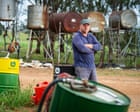
When Justin Everitt heard that the Reserve Bank had increased the cash rate to 4.6% this week – the highest it’s been since 2011 – his first thought was: “Oh shit, another kick in the guts.”
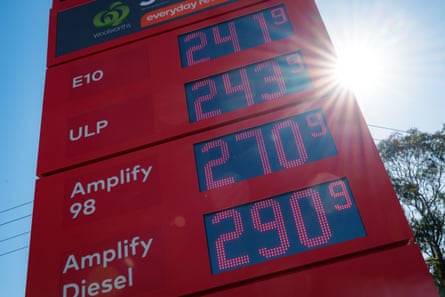
The third-generation southern New South Wales grains farmer and vice-president of NSW Farmers was already feeling the pressure of the cost-of-living crisis, compounded by soaring fuel costs that make it harder for him to do his job. For Everitt, who produces wheat, canola, barley, beef and lamb on his farm in Brocklesby, the rate rise couldn’t have come at a worse time.
At this point, it’s hard for the father of two to “see the light at the end of the tunnel”.
“You’re already pushing the boundaries of anything you can do,” he says of working longer and harder. “It’s unsustainable.”
Have we reached the tipping point for Australian households? According to last week’s Household, Income and Labour Dynamics in Australia survey, more Australians are reporting housing stress, a decline in financial wellbeing and food insecurity. Launched in 2001, the Hilda survey follows the lives of more than 17,000 Australians each year. It found that there has been a general worsening in people’s perceptions of their financial future since 2020; that average financial wellbeing has worsened for 24.1% of females and 20.8% of males; and that the number of people who feel “on top of everyday finances” is down.
Housing stress surged and food insecurity – described as a “highly persistent” inability to afford adequate food – increased from 13.7% in 2020 to 17.9% in 2024. It’s worth bearing in mind that this data was collected before this year’s succession of rate rises and fuel price hikes.
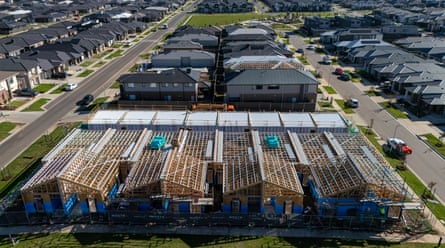
Elsewhere a Lowy Institute poll revealed that, for the first time, more people are pessimistic about Australia’s economic performance than optimistic; insights from the Scanlon Institute linked increasing emotional distress to experiences of financial difficulty; and the General Social Survey showed a rise in financial stress, with one in four households having at least one cashflow problem in the past year, a figure that almost doubled for single parents.
‘It’s affected my sleep the most’
Taylor* who rents in Sydney’s Parramatta suburb with her husband, was squeezed out of her umpteenth rental three years ago. Although they have since secured a long-term lease that minimises the stress associated with the city’s “shocking” rental market, she still struggles with the mental toll of how expensive life has become.
“I feel hopeless about it,” she says. “It’s affected my sleep the most, especially when my credit card payment is due. [I keep thinking] am I going to be able to pay it? What does it look like for the month ahead?”
As a therapist, she’s seeing the stress in her patients too: their sleep is compromised and many feel there’s no reprieve from the pressures of everyday bills.
Dr Lay San Too and Dr Yamna Taouk, senior research fellows at the University of Melbourne’s school of population and global health and co-authors of a new paper that examines how financial hardship is affecting Australians’ mental health, say the situation is a matter of public health.
“When people feel that everything is becoming more expensive, and that working harder still isn’t enough to get ahead, it can create ongoing stress and a sense of loss of control,” Taouk says, adding: “Over time, persistent hardship can undermine a person’s sense of control and security and may increase the risk of more enduring mental-health problems, including depression and anxiety.
“When households lose their financial buffers and cannot see a credible path back to security, the effects can accumulate psychologically.”
Too says their study did not include Hilda data from this year and last year but the “implications are concerning” given the “additional and persistent increases in interest rates, and fuel and energy prices”.
Crucially, the study captured hardship through people’s actual experiences of not meeting essential expenses, including housing, in-home heating, meals and utility bills, which Taouk says are “concrete signs” that people are struggling. The tipping point comes after financial buffers including savings and offset accounts are exhausted.
“Financial hardship was associated with poorer mental health before the crisis, but that association became significantly stronger during 2022-24,” Taouk says. “In other words, the same experience of hardship appears to have been more damaging to mental health in the cost-of-living crisis than it was previously.”
Taylor and her husband have drastically altered the way they live: for starters they shop late at night to only buy discounted meat and ready meals. “We know which shopping centres to go to on which days to get the best prices, and I don’t think we’ve paid full price for anything in the last 12 months,” she says.
She socialises with friends on walks instead of evenings out and the couple have started asking family for supermarket gift cards for their birthday presents because they “need groceries more than other items”. She also takes her medication every second day, to stretch out time between having her prescriptions refilled.
Taylor had long ago given up hope of buying a house but had hoped to buy an apartment. Facing up to the reality that that isn’t going to happen, even though she is on a “very good salary”, has been a “reckoning”.
‘We have given up so much’
It’s a hard pill to swallow when salaries look good on paper, and when the percentage of Australians working at least two jobs has hit an all-time high. But, as a single mother, Lauren Bennett, reveals, traditional markers including a stable job and a good salary no longer cut it.
after newsletter promotion
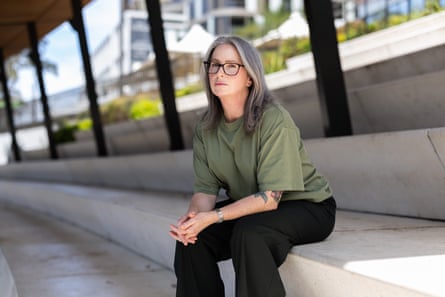
“I have a full-time government job and jump from pay to pay,” she says. “My salary is enough for us to ‘get by’ but we have given up so much. This city isn’t made for single salary households, especially single parents.”
Bennett used the single parent loan scheme to buy a “modest” apartment in Sydney’s inner west in 2021. A fixed-rate loan for the first two years enabled her to save a lot but the rate rises since then have eaten into her savings and she now feels “numb”.
She has cancelled her gym membership and streaming services, rarely buys meals or coffee and often takes public transport. Like King, she has cut from her medical needs, reducing her own appointments to prioritise her eight-year-old’s specialist fees. She has also stopped taking her child out on weekends and hasn’t been dating, because in this economy, time with her child “always wins above paying for a babysitter and my share of a date”.
“I really miss the ability to fund experiences that make important memories and it clearly affects my child,” she says. “These last couple of years I have had to take away or reduce things more and more.”
She adds: “There is not much more to cut. Plus, everything keeps going up so a cut back here is quickly absorbed somewhere else …
“I always say ‘we can do hard things’ but like most people I’d really appreciate less hard things.”
‘You feel powerless’
It’s such situations that have prompted people to re-evaluate how they feel about having a family. Erin Richardson, 31, has delayed starting a family with her partner even though she says she has been mentally ready for more than five years. She has now reached an age where she must make a call about it and it feels “daunting”.
“I’ve heard having kids tanks your borrowing capacity,” she says. “Everyone says that you manage, and I want to believe that you just survive and you just get by. That might have been the case previously, [but] I don’t think anyone’s going to step out and pay my mortgage or daycare costs.”
Richardson, who lived with family until she was able to buy her Newcastle home, says maternity leave and the cost of groceries do not help.
“It’s scary,” she says. “It feels like uncharted waters because it’s such a different climate to what it has ever been. We’re in this state of affairs where prices jump frequently and that just feels so unfair. There’s no end to it and you feel powerless.”
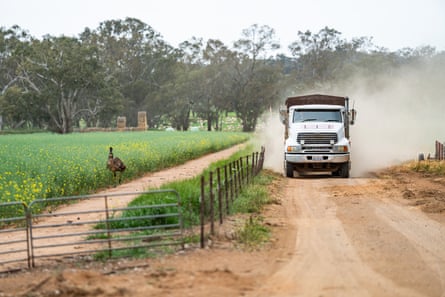
For Everitt, that powerlessness is literal: petrol affects “every aspect” of farming: it’s necessary for the machinery used in harvest but also for distribution, and there’s a flow-on effect for consumers.
“If we can’t harvest in the right time, there’s no wheat for bread or barley for beer,” he says. “It’ll come at a cost to us but if freight doesn’t move then the food doesn’t get into the markets.”
He thinks the tipping point has been and gone.
“This is the onslaught of the punches after you’ve been knocked out,” he says. “You [are not] able to turn off from it. You can’t shut down from the cost-of-living crisis.”
KioskNews shows a cleaned-up reading view extracted from the publisher’s page — the original always lives on their site, not ours.