She defied prime ministers and party orthodoxy. In death, Sharman Stone stayed true to her convictions
For much of her political life, Sharman Stone fought to give Australians greater control over their own bodies. In the end, confronting an incurable brain cancer, the former Liberal minister made the most personal choice of all – ending her life through voluntary assisted dying.
“I’ve always believed that any individual has the right to decide whether they must leave their life or not. It’s their choice,” she said in her final days. “I’ve had almost two years. So many people only get six months. I’ve been lucky. Others are not, especially children. It is incredibly cruel in that way.”
Stone’s death on Wednesday, at 75, marked a characteristically defiant final chapter for one of the Howard government’s most independently minded parliamentarians – a woman who challenged conservative orthodoxy on abortion, championed contentious medical research and advocated for the right of terminally ill Australians to choose how they die.
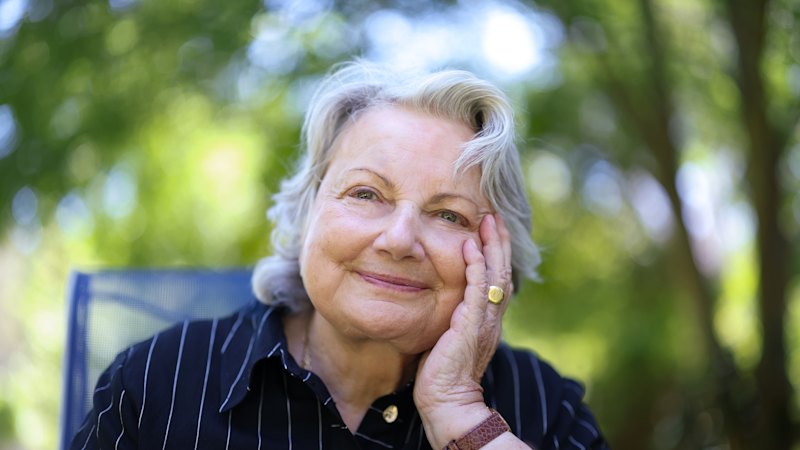
Sitting beneath the native trees in her back garden near Shepparton last week, eating biscuits and watching Opal, her Jack Russell, dig a hole at her feet, Stone remained animated and engaged, even as the effects of her illness became painfully apparent.
Diagnosed in December 2024 with frontal-lobe glioblastoma – the same aggressive brain cancer that killed former Australian of the Year Professor Richard Scolyer in June – Stone had endured the progressive effects of a disease that can impair speech, judgement and independence.
Words and names that once came effortlessly were increasingly elusive. She searched for them mid-sentence, knowing what she wanted to say, but not always able to summon it. For a woman defined by intellectual curiosity, fierce argument and an unwillingness to surrender control, the implications were confronting.
During two decades in federal parliament, Stone built a reputation for stubborn independence that, at times, exasperated her Coalition colleagues and even some constituents – while making her a formidable advocate for regional Australians.
Former prime minister Tony Abbott, with whom she clashed over some of the most divisive moral questions of the Howard years, remembered a colleague whose candour made her respected even by those who disagreed with her.
“Sharman and I disagreed on ‘life’ issues … but she was always upfront about what she thought and always handled disagreement well,” Abbott said. “That actually made her a good colleague because being straight with people is just about the most important quality anyone can have.”
The clearest insight into Stone’s political philosophy came in 2006, shortly after her promotion to minister for workforce participation. She publicly challenged the then health minister over access to the abortion drug RU486, arguing approval belonged with medical experts rather than a minister imposing personal moral authority.
Her conviction was rooted in a rural reality. Women in her electorate, she said, faced a seven-hour drive to Melbourne for surgical abortions, sometimes sleeping in their cars and running a gauntlet of protesters. Working with Liberal MP and doctor Mal Washer, Stone persuaded John Howard to allow a conscience vote and won.
“There should never be a minority view imposed on the majority, simply because that minority is better organised or noisier,” she said at the time.
That commitment to medical choice carried into her December 2006 decision to again break with conservative colleagues and back regulated embryonic stem-cell research. Speaking of three grandchildren who required intensive medical intervention to survive, Stone said any individual had the right to a pain-free, dignified life.
“I have met hundreds more of my constituents, sadly many of whom suffer daily from injury or disease,” she said. “They have often cruel and unrelenting conditions that leave them in a state where life is a living hell.”
Howard, travelling in Britain, recalled Stone as a passionate advocate: “Although we often disagreed, I found her lively spirit something I respected.”
Former Labor prime minister Julia Gillard said Stone’s advocacy for women as all the more significant because she was prepared to challenge the wishes of her own party.
“Sharman Stone believed strongly in gender equality and advocated for women,” Gillard said. “Even when members of her own political party wanted her to be silent, she made sure her voice was heard. That courage will be long remembered with admiration.”
Her commitment to reducing suffering extended to campaigning for medicinal cannabis and leading the push for a national diagnostic framework for fetal alcohol spectrum disorder (FASD), a lifelong condition caused by prenatal alcohol exposure that can affect learning, behaviour and development.
Professor Elizabeth Elliott, one of Australia’s leading authorities on FASD, said Stone’s contribution to public health had been under recognised, despite her advocacy changing the lives of thousands of Australian families.
Stone was among the first federal parliamentarians to raise the condition, instigating a national inquiry whose recommendations attracted bipartisan support and led to funding for clinical services, diagnostic guidelines and prevention programs.
“It has enabled new clinical services. It enabled guidelines for diagnosis. It’s enabled prevention programs,” Elliott said. “She’s really been a champion for women”.
She said Stone had pushed for a national awareness campaign more than a decade before governments funded one, but remained remarkably modest about her achievements.
Malcolm Turnbull recalled a passionate fighter for her Victorian irrigation communities and an “eloquent and persuasive feminist”.
“In a very conservative political environment, [Stone] called out sanctimonious men who wanted to tell women what to do with their bodies,” he said. “In this sense Sharman was very much a liberal; she believed in the autonomy and dignity of every person, their freedom and their right to choose.”
Julie Bishop, the long-serving Liberal foreign minister, who appointed her as Australia’s Ambassador for Women and Girls in 2017, said Stone was a “courageous and principled” advocate and never afraid to speak her mind or challenge convention.
“Her contribution to public life and to advancing the interests of women in our nation and across our region has been significant and enduring,” she said.
By 2013, Stone was co-chairing the Dying with Dignity Commonwealth Parliamentary Forum with Greens senator Richard Di Natale at a time when voluntary assisted dying remained illegal nationwide. In her May 2016 valedictory speech, she noted the campaign remained “unfinished business”. Victoria legalised the practice the following year, with the other states and the ACT subsequently introducing their own schemes.
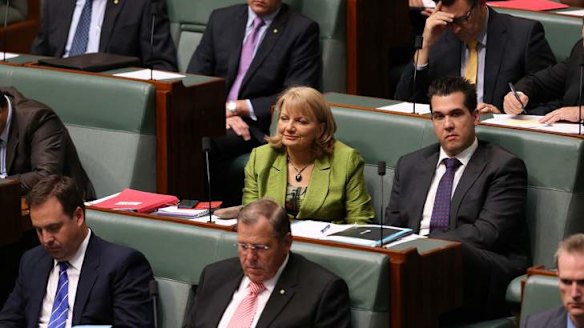
She was also vocal while in parliament about the lack of women alongside her, calling on the Liberals to introduce quotas for women and ditch the “blokey culture” of question time. As she reflected on her career, she lamented the status of women had gone backwards within her party.
“We are no longer, I think, getting hardworking, serious women and men … particularly women. I feel really serious about this particular issue,” she says. “Party politics has failed on this count.”
Born Sharman Nancy Bawden, into a farming family outside the tiny northern Victorian town of Pyramid Hill, Stone met her future husband at 16, married at 19 and was a mother by her early 20s. A Commonwealth scholarship helped an academic career that took her from researching the social devastation caused by salinity to writing a history of Aboriginal dispossession.
She later developed a year 12 course on Australian race relations, taught Aboriginal prisoners at Melbourne’s Pentridge Prison and became one of the first women to hold senior roles in Victoria’s corrections, water and agricultural bureaucracies.
She arrived in Canberra in 1996 by wresting the safe rural seat of Murray (now Nicholls) from the Nationals to become its first Liberal and first female representative. She had about nine weeks to campaign, less than a dozen paid-up Liberal members across 20,000 square kilometres, and about $7000 for how-to-vote cards. She won against all odds.
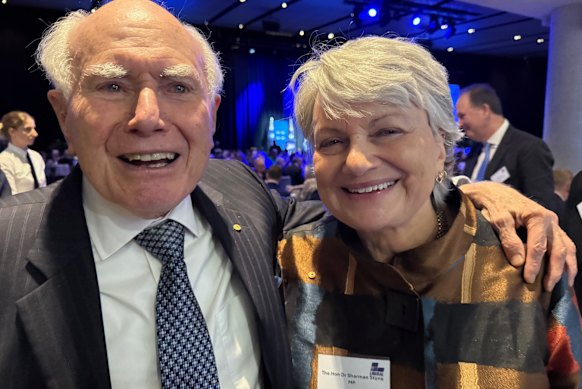
Stone’s politics were never easily categorised. She remained a committed Liberal – believing it best to work inside the tent. She was a fierce defender of farmers and regional communities, whose conservative instincts on some issues coexisted with progressive positions on others.
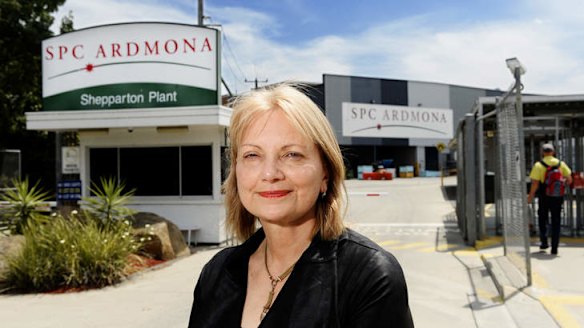
She mobilised orchardists against New Zealand apple imports, fought plans to divert northern Victorian irrigation water to Melbourne during the millennium drought, crossed the floor on a vote against the Murray-Darling Basin scheme and publicly challenged Abbott – branding him a liar – in 2014 over Shepparton’s SPC cannery. It helped secure a $25 million Victorian government rescue package.
She helped establish a medical school in Shepparton and championed the resettlement of Congolese refugees in the Goulburn Valley.
“I have had the best doctors here in Sheppy,” she said. “They have treated me well. [But] there’s a hole dug at Pyramid Hill ready for me. Four generations there. I wanted to die in Shepparton but be buried there.”
Her eyes lit up when she recalled walking across the Sydney Harbour Bridge in 2000 searching for Indigenous reconciliation – another cause she’d championed in public life.
“It was terribly important to me, reconciliation,” she says. She remembers the atmosphere on the bridge as joyous and electric.
“It was brilliant, I said to someone: this is marvellous.” That contrasted with the disappointment she felt returning to parliament afterward, where the momentum stalled.
In her final months, sitting in the garden and searching for words that no longer came easily, Stone confronted an illness she could not control. One by one she said her final goodbyes to her 12 grandchildren and spent precious time with her family.
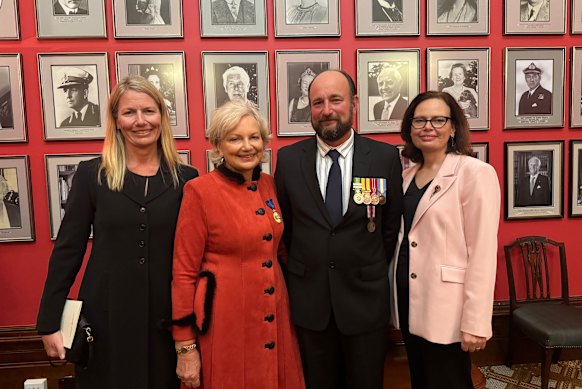
In a statement, her children Georgia, Kirk and Nadia said their mum had been taken from them too soon.
“She was stoic to the end,” they said. “A determined advocate for her communities, here and around the world. She was a huge support to her family and will be with us always.”
Twenty years earlier, Stone had stood in parliament to defend an individual’s right to a dignified, good life. In her final act, she claimed the right to a dignified end.
Cut through the noise of federal politics with news, views and expert analysis. Subscribers can sign up to our weekly Inside Politics newsletter.
KioskNews shows a cleaned-up reading view extracted from the publisher’s page — the original always lives on their site, not ours.