Can an algorithm plan a better holiday than you? I found out
I’m a type-A travel planner. My idea of pre-holiday hype involves hours of research. Multi-tabbed spreadsheets. Dinner reservations secured 90 days out at midnight. I produce detailed itineraries and claim I’m open to something better or spontaneous arising, but deep down, my friends and family know the truth: my itineraries are flawless and we will be following them to the letter.
This is why finding myself speeding down US Interstate 95 in New England without a hotel booking for the night feels akin to an identity crisis.
My husband and I had booked this road trip months earlier, when we realised that flying home from Boston after a friend’s wedding in New York would cost no more than a return from JFK. It would be autumn (or fall), when the region’s foliage turns spectacular shades of red, orange and gold, and we’d spend our days exploring pretty coastal towns and eating our way through picturesque seafood shacks. The Great New England Lobster Roll Tour, as we called it.
Then we both started demanding new jobs, and the planning never happened. For the first time in my travelling life, I left home without even having booked our accommodation. There was no time for my usual deep-dives, no list of options, or options for the options. This trip would require a new approach.
Enter TikTok.
Sign up for the Traveller Deals newsletter
Get exclusive travel deals delivered straight to your inbox. Sign up now.
If you’re over a certain age, you might still think of TikTok as the place where teenagers perform elaborate dances and mime to soundbites that make no sense to anyone over 25. But the demographic line is blurring fast – according to the company itself, 38 per cent of its users are now over 30 – and while the rest of us were still Googling our way around the world, the app has become something of a formidable travel search engine.
TikTok reports billions of searches on the platform every day, growing more than 40 per cent year on year. According to the company’s own research, 84 per cent of users watch travel content at least once a month, while 66 per cent consider it their most helpful source of travel inspiration.
I don’t use TikTok a lot, but I’ve dabbled enough to know how quickly its famed algorithm gets to know a person. So when TikTok invited me to put its travel-planning credentials to the test on a New England road trip, I was intrigued. Could the same technology – which rapidly learns what catches our attention to keep us engaged – plan a last-minute holiday better than I could myself?
Unlike traditional review sites or an itinerary built by AI, TikTok offers an immediate visual impression of a place: not just what the hotel room looks like in professional photographs, but what it looks like when someone checks in; not just whether a restaurant has five stars, but what the dishes look like on a plate. And so I agreed to surrender our New England road trip to the algorithm.

THE FIRST TEST
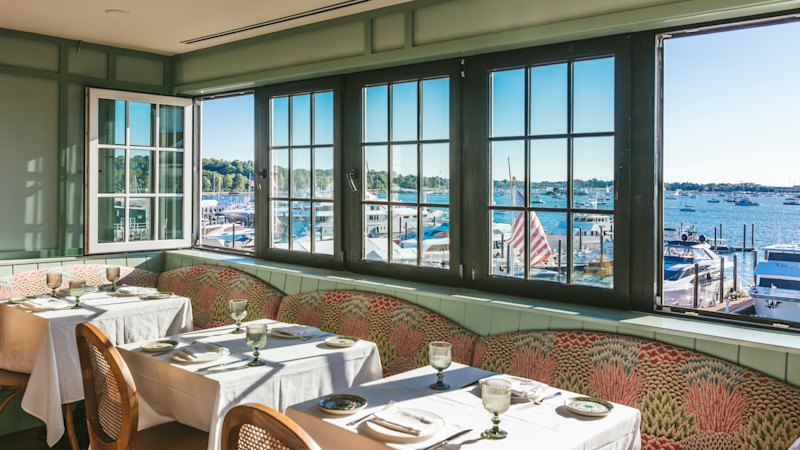
Our first destination is Newport, Rhode Island, the genteel seaside town once favoured by some of America’s richest families. The app relentlessly pushes me towards Gardiner House, a boutique hotel styled like a very chic (and very wealthy) seaside home. I’m all in. However, it’s fully booked.
Unlike Google, the limitation with TravelTok (as the kids call it) is that it can show you what a hotel looks like, but it can’t yet tell you whether there’s a room available. The platform has introduced TikTok GO, which allows users in certain markets, including the US, to book accommodation and experiences through the app, but the functionality hasn’t been launched for Australian users.
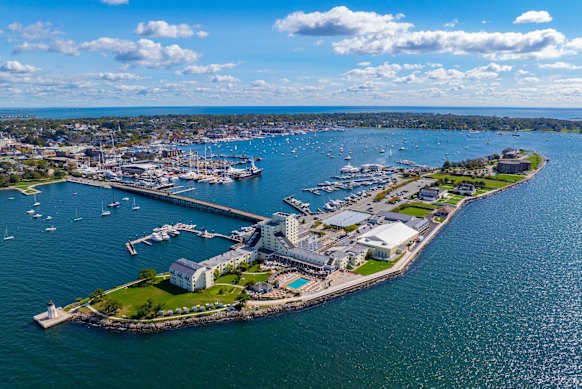
The next most frequently appearing option is Newport Harbor Island Resort, a sprawling waterfront property with a big pool and a pumpkin patch (we’re travelling just before Halloween). It’s not exactly the sophisticated, child-free escape I had in mind, but I’m not here to question the algorithm. Nor am I completely disappointed by our room, right on the water, with boats bobbing outside that make it feel as though we’re aboard a ship. Anyway, on this trip, I’m less preoccupied with where I stay than where I eat.
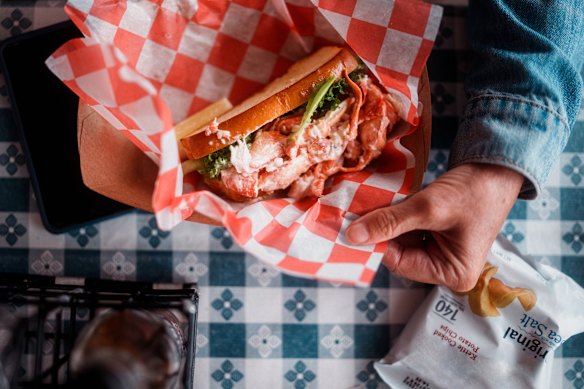
In Newport restaurants, lobster rolls are as essential an offering as salt and pepper. I diligently scroll through all the many contenders, zooming in to compare claw counts, toastiness levels and the relative merits of mayonnaise-based versus butter-dressed fillings. I’ve always considered a wasted meal while travelling a crime, so this is the part of TikTok travel research I find the most useful. If you’ve ever wondered how much time a person can spend watching strangers eat lobster rolls and remain captivated, I’m here to tell you: a lot.
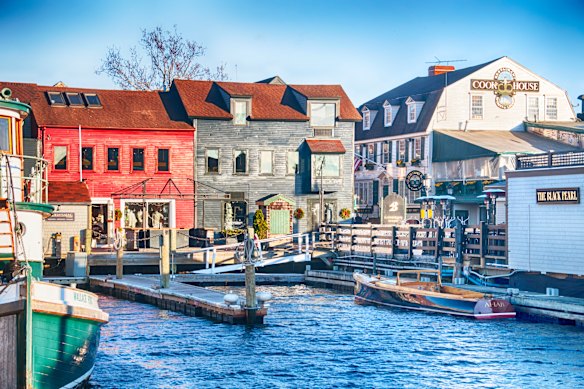
The app leads us first to Clarke Cooke House, an institution tucked into the historic wharves, part 18th-century nautical tavern, part old-school Newport elegance. Their lobster roll is generous and classic, and we instantly declare it the best thing we’ve ever eaten. (We will say this multiple times on the trip.)
The videos also insist we order the restaurant’s famed Snowball in Hell, a decadent sphere of vanilla ice cream rolled in toasted coconut, resting in a dark chocolate goblet filled with hot fudge. I’m usually resistant to anything that seems popular simply because it photographs well and has a catchy name, but one spoon in, I decide that cultural snobbery is a curse and some things go viral for a reason.
With limited time between crustaceans, sightseeing has to be precise. Newport’s famous Gilded Age mansions are non-negotiable. I can’t decide which one to visit, and watch so many video tours of my shortlist that I almost convince myself I’ve already seen everything there is to see and skip the visit. I learn how much marble was used, which ones have walls covered in 22-carat gold leaf and which have hot and cold running seawater in the bathrooms in an early nod to wellness culture.
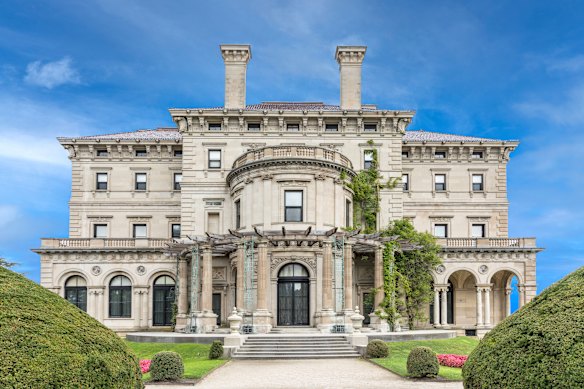
Eventually, I snap out of this screen-induced delusion and we head to The Breakers, the Vanderbilt’s 70-room Italian renaissance-style summer home, where the scale of the entrance hall alone blows my mind in a way a video could never. But the app has done its job: it helped me decide which mansion deserved our limited time, and left the real thing to deliver the awe.
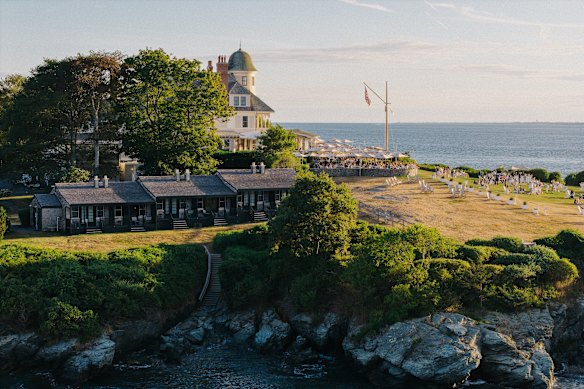
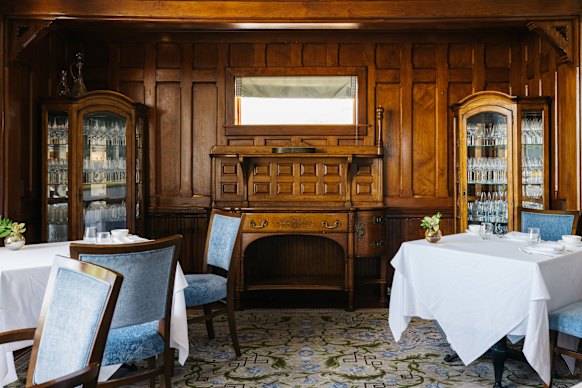
The Castle Hill Inn gets a run in every “where I ate in Newport” post, but it’s a drive out of town, and with more lovely restaurants and bars within walking distance of our hotel than we’ll have time to visit, I probably would have skipped it had so many TikTokers not used it as the opening shot of their videos. This lobster roll comes with tarragon dressing and fried onion strings, and in hindsight gets my vote for the roll of the trip.
We eat it in the dining room overlooking Narragansett Bay before collapsing, chablis in hand, into Adirondack chairs on the inn’s famous grassy lawn, where we watch sailing boats moving across the water, the great mansions of Newport looming large on the opposite shore. It’s a quintessential, unskippable New England moment.
Roaming the app’s top recommendations, we stop for local oysters and a martini at Midtown Oyster Bar, then throw in a butter-poached lobster roll just because we can. The TikTok-famous cinnamon rolls at Co-Dough are tempting, but the queue is long. That is, of course, the most common concern about letting an algorithm influence your decisions: when a place has been recommended to thousands of people, a significant proportion of them may already be standing in front of you. Instead, we grab an elephant ear pastry (like a giant palmier) from Newport Fudgery.
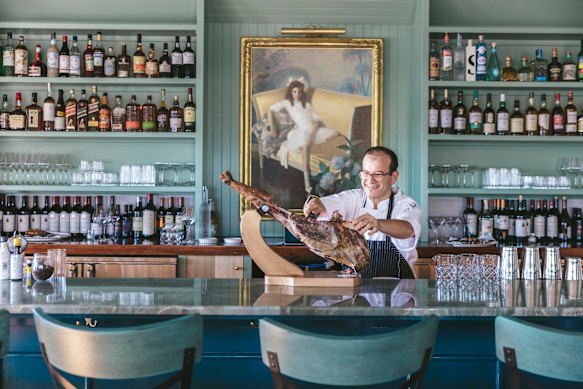
By dinner, I’m still thinking about Gardiner House – the one that got away – so we head back and secure the last seats at the bar of its buzzy restaurant, Flora. The dining room is old-money pretty and seemingly populated by Newport’s entire who’s who.
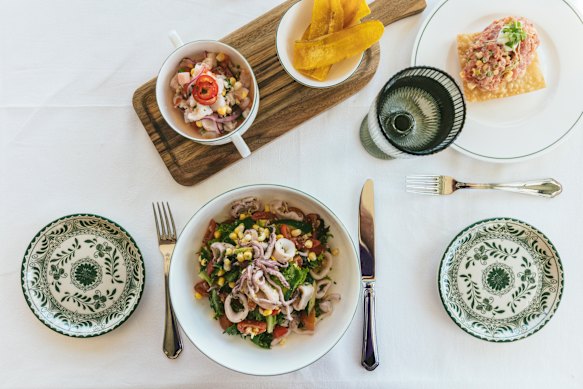
On his way back from the bathroom, my husband befriends head chef Miguel Somoza, whose CV includes cooking for Britain’s royal family and working as the private chef on Sir Richard Branson’s Necker Island. He sends out a selection of dishes to try: crunchy mushroom croquetas, ridiculously fresh ceviche, moreish gambones al ajillo. It’s the meal of the trip, despite nary a lobster roll in sight, and it’s an ideal result for this experiment: the algorithm led us to the restaurant everyone wants to be at, but then the restaurant delivered a spontaneous, memorable encounter that was all our own.
THE ROAD LESS GOOGLED
Early the next morning, we strike out for Portland, Maine, a destination selected after a midnight deep-dive into “New England best autumnal towns”. (Being here is an excuse to use the word autumnal much more than is strictly necessary.)
As my husband drives, I scroll for worthwhile stops along the way. We pull into Don’s Diner in Plainville, Massachusetts, a family-run roadside establishment dating to 1936, for breakfast. Both the fit-out and the prices feel like they’ve been frozen for decades. It’s not fashionable, but it’s an authentic Americana experience that my usual research style probably wouldn’t have unearthed: everyone around us appears to be a regular, the bacon is crispy as hell, the coffee is refilled constantly, and the waitress is just the right amount of cranky. I’m in heaven.
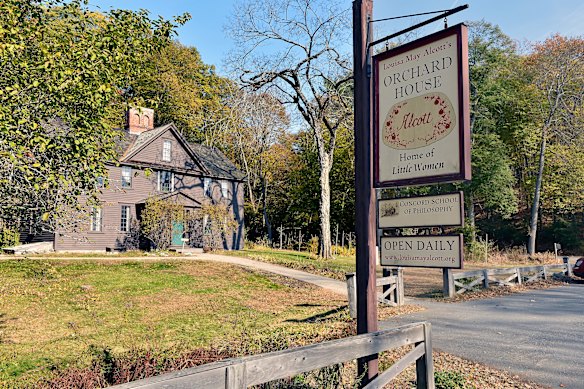
Later in Massachusetts, the algorithm really comes through with the goods. At some point, my feed is suddenly full of clips of young women in Civil War-era costume (I hope) visiting Orchard House, the home in Concord where Louisa May Alcott wrote Little Women, the inspiration for the March family home in the novel. Little Women was my favourite childhood book. I had no idea we would be anywhere near the place where it was written.
Out of curiosity, I check Massachusetts travel content on my husband’s TikTok feed for comparison. His is all golf courses, clam chowder and the Patriots. Not a Jo March-stan in sight. This is where TravelTok wins out over, say, Tripadvisor: once it gets to know you, the recommendations are uncannily personal.
Concord is a detour from our route to Maine, but within an hour, we’re at Orchard House, joining the procession of visitors paying homage to Alcott. (Unlike the TikTokers, I wear my regular clothes, having left my crinoline at home on this occasion.) Afterwards, we make a pilgrimage to Alcott’s grave at Author’s Ridge in the enchanting Sleepy Hollow Cemetery, where I leave a pen on her tombstone, as countless female writers have done before me. (The grave looks something like a woodland Officeworks pop-up.) My husband waits patiently, if somewhat befuddled by my outpouring of emotion, on a stone slab that I can only assume is the original boyfriend bench.
To reward his patience, we pivot to his algorithm for a while. A detour to The Rusty Can in Byfield delivers a roadside barbecue joint serving Southern-style food transplanted to the northeast. We eat our weight in smoked brisket, pork ribs and mac and cheese, then continue towards Portland, where our app has us at the Portland Harbor Hotel, conveniently located in the city’s historic Old Port, another tick.
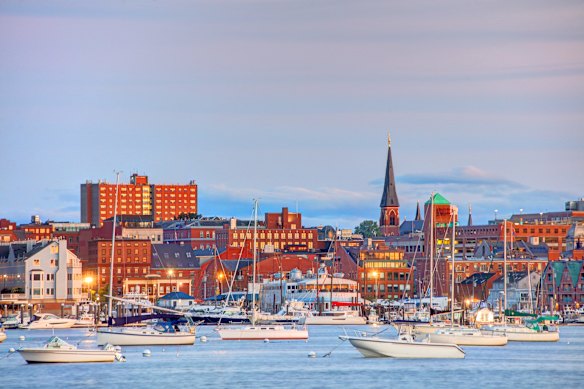
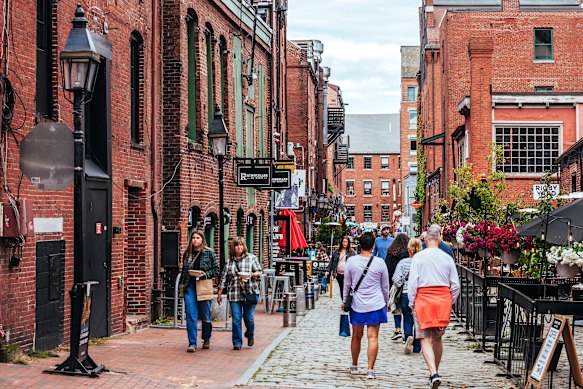
Unlike Newport’s manicured, storybook glamour, Portland is a working seaport, its fishing boats, brick warehouses and cobbled streets now sharing space with independent shops, cocktail bars and a lively restaurant scene.
TikTok directs us to a bar called Blyth & Burrows, where there’s a queue outside. Fortunately, I’ve just watched a post about The Broken Dram, a hidden speakeasy around the back, accessed through a bookcase. We make our way in and spend the evening drinking martinis, playing cards and giving our stomachs a much-needed break from the near-constant digestion of the trip thus far.
There’s an advantage in a travel guide that shows rather than tells. It’s one thing to read about a bar that has a secret entrance. It’s another to watch someone actually find it. It’s also helpful to be able to get a sense of the person making the recommendation. Does their taste look like it would align with yours? Does their idea of a cool bar involve 200 other people and EDM music on blast? Someone on Google Reviews can gush all they want about the great vibes in a place, but if you can’t see the MAGA hat they’re wearing while writing it, that’s a big part of the story you’re missing.
Of course, a video can be edited as selectively as any glossy hotel brochure, and creators don’t always disclose whether they’ve been paid or otherwise rewarded for a recommendation. Like with anything online these days, one needs to be discerning.
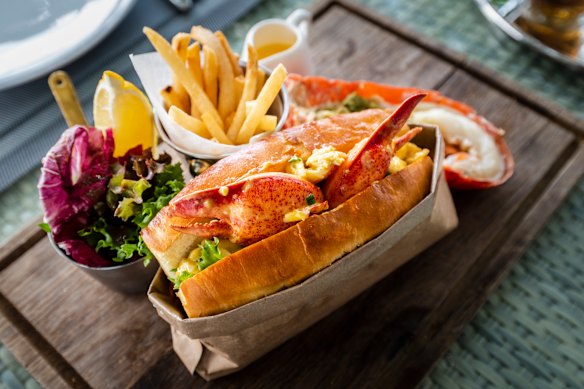
THE LOBSTER ROLL PROBLEM
Portland is a city that takes its food seriously. This will be our last day in New England, and experience tells us that our eyes will be bigger than our bellies, so careful selection is paramount. After an unreasonable amount of research – ie scrolling – I narrow the field to two contenders.
The first is controversial. At Eventide Oyster Co, a modern seafood joint whose queue is a permanent fixture, the roll is untraditional: warm lobster dressed in brown butter, served in a soft steamed Japanese milk bun rather than the familiar toasted split-top roll. Purists on TikTok have strong opinions about this, but it also has many admirers. Forewarned by the app, we arrive early and secure a place near the front of the queue, although we still wait 45 minutes.
My husband declares this his favourite roll of the trip. Better still, the smaller, softer bun makes our planned second lunch easier to accommodate.
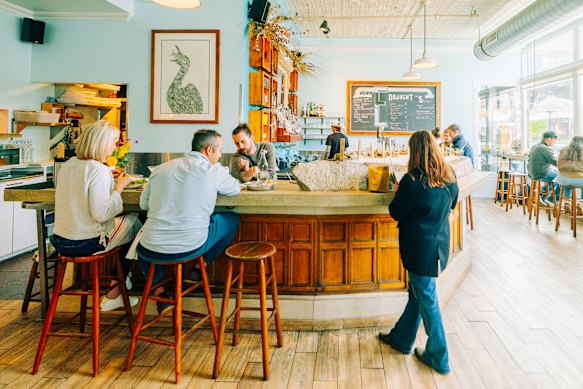
J’s Oyster is a no-frills seafood bar right on Portland’s waterfront, full of character. Most seating is around the bar, and it has the sense of things being done in much the same way for decades.
The lobster rolls are perfectly good, but I’ve discovered that there’s a limit to how many a person can eat in half a week, and I have hit mine. Instead, I order the TikTok-recommended bucket of steamers: soft-shell clams you prise open with your fingers and dip into melted butter. I regret nothing.
Later, over dinner at Via Vecchia, a chic Italian restaurant with plush midnight-blue velvet booths that appears on every “best eats in Portland” round-up video I’ve watched, we tell the barman where we’ve been eating. He gives Eventide an indifferent shrug, while J’s and the Rusty Can get a more approving response. Those, he tells us, are places locals go, which makes me feel less basic for letting a social media platform dictate our choices.
TikTok is a visual medium, great at showing you the spots that look nice on camera, sometimes less great at showing the places that are as good, or better, but just not as aesthetic. What I discovered was that the right places will eventually emerge if you just look hard enough.
And that’s the point, of course. TikTok, like every social media app, is designed to keep you scrolling. After a few great steers, I found myself checking compulsively, reluctant to make even the smallest decision about where to go or what to order without consulting my screen. Some of the most mentioned places disappoint. Nitro, a Newport coffee bar that my feed suggests will change my life, serves a perfectly decent coffee with a delicious salted maple foam on top.
The platform is a window onto other people’s tastes, and by and large, those people are still relatively young and inexplicably obsessed with novelty beverages. It can also confuse popularity with quality. That’s a problem of the entire internet, not just TikTok – although the platform’s ability to turn a single dish or venue into a phenomenon can make the distinction particularly difficult. Post-Nitro, my life remains unchanged.
But it is a fast learner. A few searches in, it knew where my travel tastes leaned: less matcha, more butter; more seafood shacks, fewer slick restaurants and places that are aesthetics-only. The hordes might be using it to tell them just what’s viral or popular, but as with my experience of Orchard House, it can also show you something you’ll love that you might otherwise have missed.
THE VERDICT
Four days and an inadvisable number of lobster rolls later, I’ll admit that TikTok was a surprisingly good travel companion. To properly plan a trip, you’ll still need to use some traditional forms of research as the app doesn’t tend to be much help with up-to-date macro-logistics (costs, opening hours, transport info), but it excels at the micro (exactly what to order, what the crowd looks like), which is invaluable when you don’t want to waste time or money while travelling on a bad decision.
My fear was that TikTok would replace the pleasure of deep research. Instead, at its best, it introduced me to things I didn’t know I needed to discover. And it led me to some very good lobster rolls while it was at it.
KioskNews shows a cleaned-up reading view extracted from the publisher’s page — the original always lives on their site, not ours.