AFC Wimbledon, a failed £87m investment bid and the challenge for fan ownership

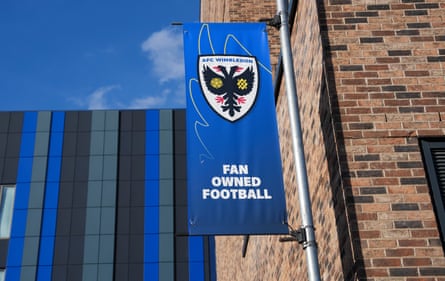
When you walk up from Haydons Road train station to Plough Lane there is a blue AFC Wimbledon billboard that reads “Fan owned football”, directly opposite the site of the old Plough Lane stadium where there are now blocks of flats. There is a memorial to the old Wimbledon FC – a reminder that supporters can often have little say in the running of their club – on the same corner, just up the road from the new Cherry Red Records Stadium.
AFC Wimbledon are one of only two majority fan-owned clubs in the EFL – along with Exeter City – but that makes running a loss-making operation, as 94% of teams in England’s top five tiers are doing according to the State of the Game report, even more challenging. “In other clubs, the owner just puts their hand in their pocket, produces cash,” said Hannah Kitcher, who has been a member of the Dons Trust Board (DTB), which runs AFC Wimbledon, for seven years. “It’s harder when the owners are fans – you can only go to them so many times.”
Kitcher was speaking before kick-off in Saturday’s League One game at home to a Blackpool side dealing with a suspected norovirus outbreak in their squad. A superb arrowed strike from Alistair Smith and some vital late saves from Nathan Bishop ended Wimbledon’s winless run of 10 matches in all competitions. The 1-0 victory moved Johnnie Jackson’s side four points clear of the relegation zone and put a positive spin on a week that started with the fallout from the withdrawal of £87m of proposed investment, leaving the club’s finances even tighter.

Wimbledon made a £2.6m loss in the 2024-25 season – a figure expected to increase by £500,000 when they publish their accounts next month – which, as Kitcher pointed out, is not as loss-making as a number of other clubs in League One. Those clubs voted in the summer to reduce spending limits from 60% to 50% of turnover but now many want to go further to curb the spiralling losses at this level. “It’s an ugly way of running a sport,” said Terry Hunt, a supporter who has been attending matches with his son Billy since AFC Wimbledon were founded in 2002 following the move to Milton Keynes.
Wimbledon returned home to Plough Lane in 2020 but had to create a bond to complete the move and the club still owe £7.5m in debts. In November 2025, the DTB warned that competing in the EFL at their new stadium was “not currently sustainable” under their structure at the time.
The makeup of the club has since changed. Last April, supporters voted in favour of reducing their voting rights from 75% to 50.01% – the same 50+1 model that gives fans the final say on decisions at German clubs – and Wimbledon sought a cash injection. An £87m investment proposal from Sloane Street Capital (SSC), a venture including the sole funder, Omar Mir, and the former Chelsea and England defender Ryan Bertrand, was already being voted on by fans when Mir suddenly walked away last Sunday, citing a change in his investment priorities.
Mir passed Wimbledon’s due diligence tests, but the tech businessman was not a unifying figure. A Josimar report has detailed his “various connections to some of the most influential and controversial figures in football, technology and global security”. The 44-year-old did not attend either of the information evenings at Plough Lane after the proposal was first made in October, instead sending a two-minute video message, which meant fans could not directly ask him about his intention to purchase 90% of the economic rights of a fan-owned football club.
“We really wanted to have some kind of knight in shining armour,” said Niall Couper, a former member of the DTB and author of three books on Wimbledon. “In this case, I personally wasn’t sure how shiny that armour was.” Couper, who raised questions about Mir’s background before his withdrawal, chose not attend the Blackpool game owing to anger from some supporters at the deal collapsing.
after newsletter promotion
But the SSC deal is not completely dead. Bertrand and his remaining SSC partners Stuart Fiertz, Oliver Ward and Hugh Rosen – who would have owned 1.25% each of Wimbledon’s economic rights in the original proposal – have renamed themselves Sloane Street Football and are talking to other potential investors.
In the meantime, the board will seek approval from fans about taking out a loan of up to £3m to “manage the club’s cash position”, but they believe they are currently able to manage it through to the end of this season and into the next. Which division Wimbledon end up in next season remains to be seen – Jackson’s side survived relegation by four points last April and the manager will probably have his hands tied in January.
“I think we’ll probably go down, but bouncing between League Two and League One is absolutely fine by me,” said Billy Hunt. “The main goal is security and making sure we have a football club.”
KioskNews shows a cleaned-up reading view extracted from the publisher’s page — the original always lives on their site, not ours.