6 Essential Classic Sci-Fi Books You Must Read at Least Once

Linda Chavers is a writer, cultural critic, and longtime consumer of stories in just about every form they come in. Her essays have appeared in The Boston Globe Magazine, The LA Times, The Independent, Elle, and
(the now sadly defunct) Gawker Media.
Linda can turn almost anything—from a novel to a reality TV reunion—into an argument. That's because she's opinionated about anything she gets to stay in pajamas for. It's also because she holds a Ph.D. in African and African American Studies from Harvard University, where she specialized in modern literature. She has taught at Harvard University and Temple University.
Her tastes are wide-ranging. She loves literary fiction, popular culture, reality television, and Law and Order marathons.
When she's not writing, or avoiding writing by thinking very seriously about writing, Linda is usually reading a novel or trying to remember which show she watched on which streaming app she's still subscribed to.
Sign in to your Collider account
Science fiction can sometimes be intimidating because where exactly do you start? There's at least two centuries' worth of tales about aliens, robots, dystopias, spaceships, time travel, artificial intelligence, and societal collapse to mine through. Fortunately, just in case you don't have two hundred years to spare, here's a quick list of essential texts to get you started.
These classic books are my sci-fi 101 reading list because, together, they show how much territory the genre can cover. One asks what happens when scientific ambition outruns human responsibility, another treats history as a predictable science, and two use speculative worlds to disrupt what we think we know about gender and race. Read them once, and you'll start seeing their fingerprints everywhere.
'The Left Hand of Darkness' (1969)

This is one of my absolute favorite books, mostly because Ursula K. Le Guin takes something traditionally considered fixed and asks: but what if it wasn't? Genly Ai arrives on the planet Gethen, where people are largely genderless except during kemmer, when they temporarily develop sexual characteristics. Genly spends much of the novel trying to understand Gethenians through his own assumptions about men, women, masculinity, and femininity. Eventually, you start realizing Genly may actually be the weird one.
That reversal is what I love about The Left Hand of Darkness. Le Guin treats gender like a speculative variable, no differently than another science-fiction writer might alter gravity, biology, or time. Suddenly, the reader has to confront just how much supposedly "normal" human behavior is organized around categories we rarely think to question. Science fiction doesn't always need to predict a new technology; sometimes it just needs to change one rule and see what happens to everything else.
'1984' (1949)
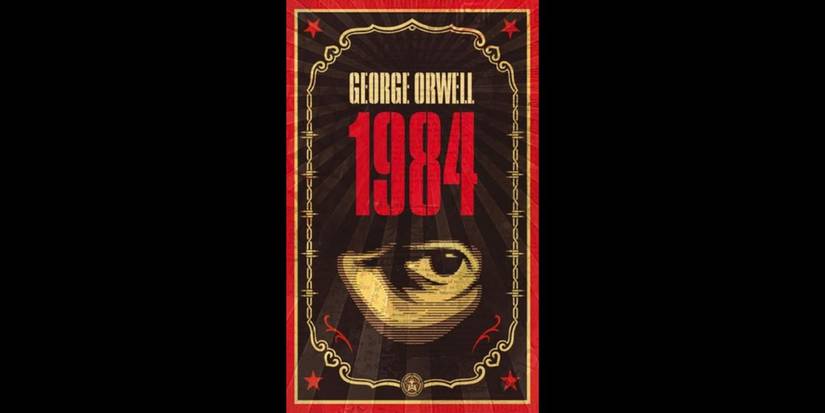
This is the book we associate with "Big Brother," but surveillance is actually one of the lesser terrifying things happening in George Orwell's 1984. Winston Smith lives in a society where the government doesn't just watch what people do; it controls the information people receive. That means historical records are changed, and language itself is steadily reduced through the program, Newspeak. If you can control what people know, remember, and are even capable of saying, how exactly can they ask any critical question?
That's what makes 1984 such an essential dystopian novel. Orwell shows how controlling reality can be much more powerful than controlling behavior, because eventually, people will lose the very language and evidence they need to challenge the lies. The book gave us Big Brother, thought crime, doublethink, and Newspeak, concepts that lived beyond the novel and became part of our everyday language. There are plenty of bleak fictional dystopias, but very few have given us this much vocabulary for talking about the real world.
'Kindred' (1979)

There's no complicated time machine in Octavia Butler's Kindred. Dana, a Black writer living in 1970s California, gets yanked into antebellum Maryland whenever the life of her white ancestor Rufus is in danger. She eventually realizes she has to keep him alive long enough for him to father the child who will continue her own family line, even though she knows exactly what he will do to the Black woman who becomes that child's mother.
That is the horrifying simplicity of Kindred. Butler turns time travel into a confrontation with slavery, forcing Dana to experience history physically rather than observe it safely from the future. She doesn't even get to return to the present physically intact; the past literally takes part of her body with it. The FX adaptation in 2022 starring Mallori Johnson changed some significant pieces of Butler's story, but the book's central idea remains devastatingly elementary: History does not stop affecting us just because time moves on.
'Foundation' (1951)
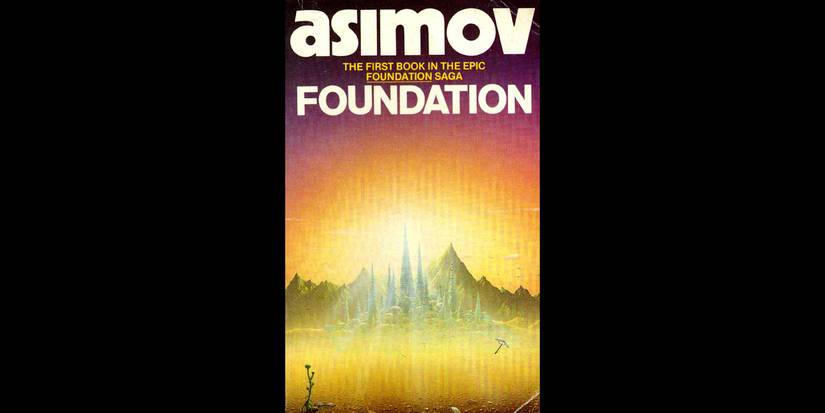
The central concept in Isaac Asimov's Foundation, psychohistory, is ridiculous and kind of brilliant. What if you could predict the future—not what one person will do tomorrow, but what billions of people will collectively do over hundreds or thousands of years? Mathematician Hari Seldon does exactly that and discovers that the Galactic Empire is going to collapse, followed by 30,000 years of chaos. His solution is to create the Foundation in hopes of shortening that dark age to a mere thousand years, which somehow counts as good news.
What got me about Foundation is the sheer scale of it. Human civilization itself becomes the protagonist, while individual people, governments, and empires begin to look almost hilariously small against the timeline of billions. Asimov asks us to think about history not as a collection of important individuals but as patterns produced by billions of people moving together over time. There's a reason Apple TV looked at this sprawling story about predicting the collapse of civilization and gave it the television treatment; it's easily one of the streamer's best sci-fi shows.
Collider Exclusive · Sci-Fi Personality Quiz Which Sci-Fi Hero Are You Most Like? Paul Atreides · Captain Kirk · Princess Leia · Ellen Ripley · Max Rockatansky
Five iconic heroes. Five completely different ways of facing an impossible universe. One of them shares your instincts, your values, and your particular way of refusing to back down. Eight questions will tell you which one.
🏜️Paul Atreides
🖖Capt. Kirk
✊Princess Leia
🔦Ellen Ripley
🔥Max Rockatansky
01
How do you lead when the stakes couldn't be higher? The way you lead under pressure is the most honest thing about you.
02
What is your greatest strength in a crisis? The quality that keeps you alive when everything else fails.
03
What is the thing you'd sacrifice everything else for? Your deepest motivation is your truest compass.
04
How do you relate to the people around you? Who you are to others under pressure is who you really are.
05
You're facing a threat that no one else believes is real. What do you do? How you respond when you're the only one who sees it defines everything.
06
What has your heroism cost you personally? Every hero pays. The question is what — and whether they'd pay it again.
07
How do you feel about the rules of the world you're in? Every hero has a relationship with the system. What's yours?
08
When everything is on the line, what keeps you going? The answer is the most honest thing about you.
Your Hero Has Been Identified Your Sci-Fi Hero Is…
Your answers point to the iconic sci-fi hero who shares your instincts, your values, and your particular way of facing the impossible.
Paul Atreides
You carry a weight most people would crumble under — the knowledge of what you're capable of, and the burden of what you might have to become.
- You see further ahead than others and you plan accordingly, even when the vision frightens you.
- You are driven by loyalty to your people and a sense of destiny you didn't ask for but can't escape.
- Paul Atreides is not simply a hero — he is someone who understands the cost of power and chooses to bear it anyway.
- That gravity, that willingness to carry what others won't, is exactly you.
Captain Kirk
You lead with instinct, warmth, and an absolute refusal to accept a no-win scenario — because you've always believed there's a third option nobody else has thought of yet.
- You take the mission seriously without ever taking yourself too seriously.
- Your crew would follow you anywhere, not because you demand it, but because you've earned it.
- Kirk's genius isn't tactical — it's human. He reads people, bends rules with purpose, and wills outcomes into existence through sheer conviction.
- That combination of warmth, audacity, and relentless optimism is unmistakably yours.
Princess Leia
You are the kind of person who holds the line when everyone else is losing faith — not because you're fearless, but because giving up simply isn't something you're capable of.
- You lead through conviction. Your voice carries because your belief is unshakeable.
- You gave up everything ordinary the moment you chose the cause, and you've never looked back.
- Leia is not a supporting character in her own story — she is the moral centre of the entire rebellion.
- That same fierce, principled, unbreakable core is what defines you.
Ellen Ripley
You are not reckless, not grandiose, and not particularly interested in being anyone's hero — you just refuse to stop when it matters.
- You see threats clearly, you document the truth even when no one listens, and when the time comes you handle it yourself.
- Ripley's heroism is earned, not performed. She doesn't have a speech — she has a flamethrower and a plan.
- You share her composure under the worst possible pressure, and her refusal to pretend the monster isn't there.
- When it counts, you don't flinch. That's everything.
Max Rockatansky
You have been through fire that would break most people — and what came out the other side is something the world underestimates at its peril.
- You don't ask for help, don't need validation, and don't wait for anyone to tell you the rules no longer apply.
- Your loyalty, when it finally arrives, is absolute — but it's earned in silence and tested in action, not in words.
- Max is not a nihilist. He is someone who lost everything and found, against his will, that he still has something worth protecting.
- That bruised, stubborn, ultimately human core is exactly yours.
'Dune' (1965)

Frank Herbert's Dune is doing a lot, and it would be a great injustice to reduce it to a book about empire, even if empire is the thing holding the whole machine together. On Arrakis, everything comes back to spice, or melange, the rare substance that makes interstellar travel possible, fuels enormous wealth, and exists only on one brutally hostile desert planet everyone else wants to control. Ecology, religion, economics, and politics are not separate pieces of worldbuilding here because everyone is fighting over the same resource. The Fremen live with the consequences, while empires, noble houses, and religious institutions decide what Arrakis is worth and who should control it. That is what makes Dune essential science fiction: Whoever controls the resource controls everything built around it.
That question has only gotten more uncomfortable with time. Dune understands you can't build a believable future without asking who owns the land, who profits from it, who gets displaced, and who is expected to survive the choices made. It's also why the book still feels so modern despite being published in 1965, as well as continuing to have a very successful life on screen this decade. (We're counting down the days until Dune: Part Three) Herbert made ecology inseparable from politics long before climate fiction became its own familiar genre. And while the giant sandworms are cool, everyone should read Dune at least once to experience how an entire civilization can feel like the logical outcome of one question: What happens when everybody wants the same thing from the same place?
'Frankenstein' (1818)

People are always dressing up as "Frankenstein" when what they actually mean is Frankenstein's Creature. Which is funny, because after two centuries we are still accidentally making Mary Shelley's point for her. Victor Frankenstein creates life and then decides he wants absolutely nothing to do with the life he created. The Creature may literally look like a monster, but it's Victor who did something extraordinary and then refused any responsibility for what comes with the extraordinary.
That's why Frankenstein is still such a great introduction to science fiction. The whole "scary scientific experiment" isn't the truly scary part. What becomes truly terrifying is watching a human being act brutally inhuman to another living thing. Every new technology that makes us ask some variation of "Okay, but should we actually be doing this?" is the same argument Shelley started all the way back in 1818. And after more than two centuries of cinematic versions of Frankenstein, we're apparently still working on an answer.

Frankenstein
7 10
- Release Date
- October 17, 2025
- Runtime
- 149 Minutes
- Director
- Guillermo del Toro
- Writers
- Guillermo del Toro, Mary Shelley
-

Dr. Victor Frankenstein
-

The Monster
Dr. Pretorius attempts to find Frankenstein's monster, long believed dead, to further the scientific work started by Dr. Victor Frankenstein decades before.
KioskNews shows a cleaned-up reading view extracted from the publisher’s page — the original always lives on their site, not ours.