City Hall working on new master drainage plan for Bangkok
Partners with Japanese agency, target capacity huge 100mm rainfall per hour
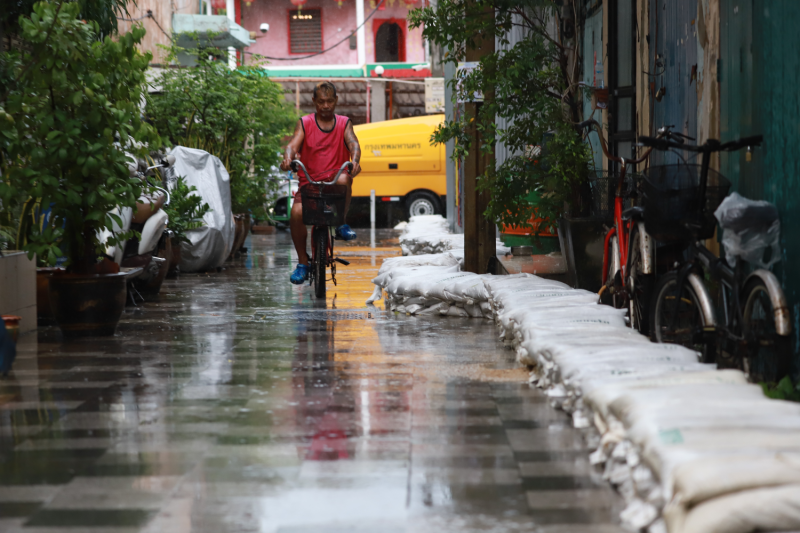
Bangkok's City Hall has partnered with a Japanese government agency in designing a long-term urban drainage master plan to prepare the capital for heavier rainfall, with a target of coping with 100 millimetres of rain per hour.
The Bangkok Metropolitan Administration (BMA) team is led by deputy governor Wisanu Sapsompon, and he chaired the first meeting of the steering committee for the Thai-Japanese cooperation project on Monday.
Its partner, the Japan International Cooperation Agency (Jica), was represented by executive member Shunsuke Sakudo. The meeting was at the city's drainage and sewerage department.
In addition to expanding the drainage system and pumping capacity, the BMA said the new “Urban Drainage Grand Design” would seek to improve drainage efficiency, diversify drainage routes, control runoff, preserve and expand water-retention areas and improve coordination between the various agencies, particularly the Royal Irrigation Department and the Office of National Water Resources.
One key focus is “new-era rainfall”, the deputy governor said.
The current design capacity was about 76mm rainfall per hour. However, studies suggested rainfall could increase to 80-97mm per hour, a rise of 5.4-27%, between 2046 and 2065, according to climate change scenarios, Mr Wisanu said.
A target of 100mm per hour would therefore be used for future planning.
The plan would also include greater use of urban areas to retain rainwater - roads, pavements, public parks, schools and public buildings. They could be equipped with permeable surfaces, detention areas, rain gardens, underground storage and green spaces.
Officials also proposed setting runoff-control targets for individual drainage areas and measuring them in terms of the volume of water that can be reduced.
Under proposed land-use and building-control measures, at least 50% of open space would be designated as permeable areas, as required under the Open Space Ratio.
The BMA is also considering adjusting the Biotope Area Factor that requires a specific portion of a development plot to function as ecologically green to suit different types of land use.
Data on public parks and projects that have undergone environmental impact assessments would also be used in developing the plan. (continues below)
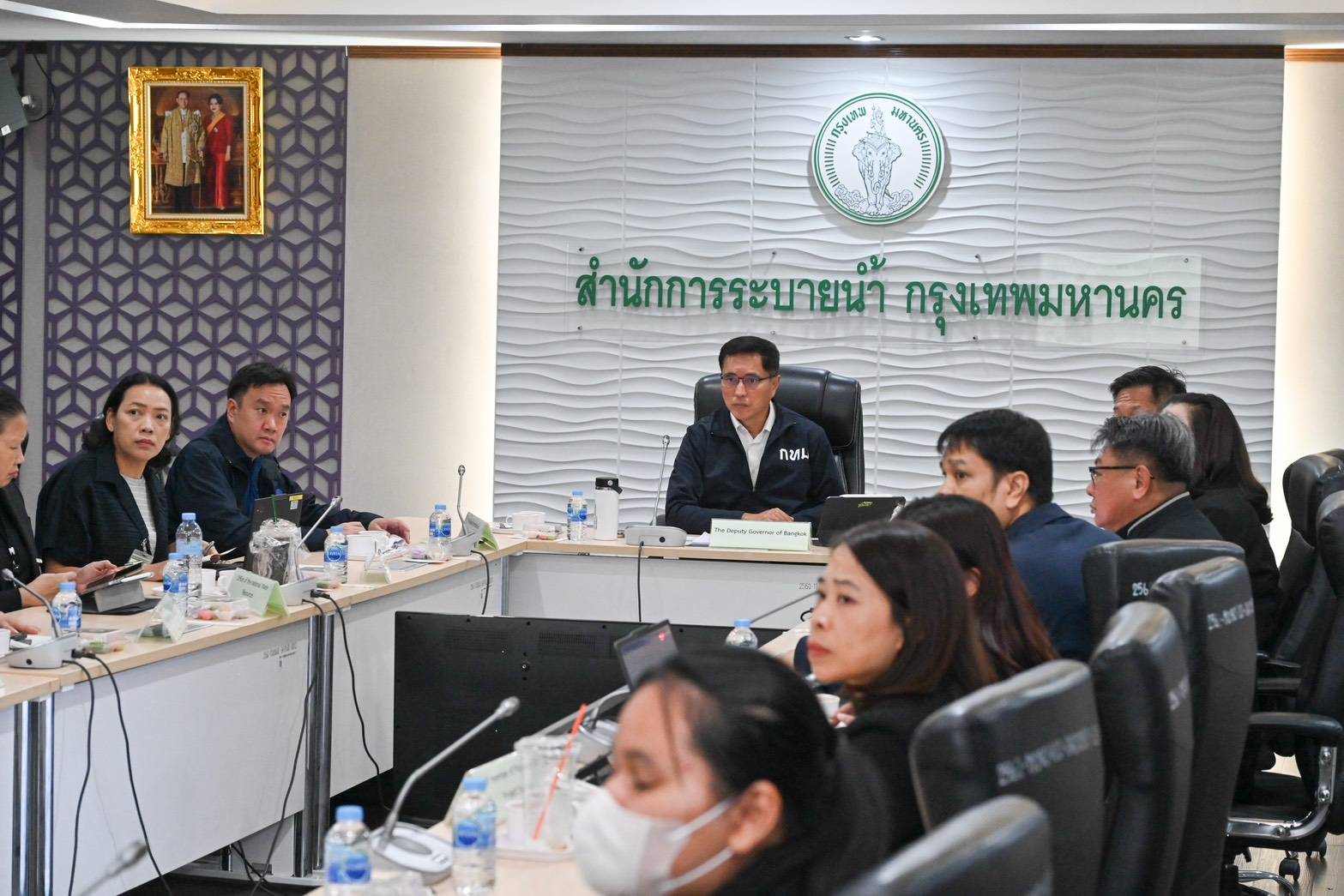
Bangkok deputy governor Wisanu Sapsompon chairs the meeting of the Thai-Japanese cooperation project at the drainage and sewerage department on Monday. (Photo: Bangkok Metropolitan Administration)
Another focus was on improving the management of pumping stations and floodgates, with several pre-rainfall water-level control measures under review, Mr Wisanu said.
One was dubbed the “Pink Plan”, which would lower canal water levels below an original measure at selected stations when heavy rain is forecast.
The flood reducing measure would be assessed alongside concerning factors, including water quality, sediment levels and odours.
The project would also analyse operation records, maintenance data and station checklists to develop clearer guidelines and manuals. They currently relied largely on the experience and judgement of local officials during floods.
Four working groups would be established under the project, covering the grand design, a facility plan, land-use and development controls and operational improvements.
Jica experts would provide technical advice throughout the project.
The cooperation project was proposed by the BMA’s drainage and sewerage department in May 2023. Jica approved it in February 2024, after which the two sides discussed its scope and conducted joint field surveys.
The five-year project is in two phases, the first lasting three years and the second two years, the deputy governor said.
KioskNews shows a cleaned-up reading view extracted from the publisher’s page — the original always lives on their site, not ours.