Expanded solar for households scheme for cabinet approval Tuesday
B50,000 subsidy, cheap loans for rooftop, ground or floating systems
The government’s proposed 50,000 baht subsidy to encourage up to one million households to install a solar power system will be presented to the cabinet on Tuesday for approval.
The proposed scheme also involves three state-owned banks which would provide low-interest loans, eliminating the need for upfront capital, Finance Minister Ekniti Nitithanprapas said on Monday.
The government would provide direct financial support of 50,000 baht per household, with one million eligible slots. The Metropolitan Electricity Authority (MEA) and the Provincial Electricity Authority (PEA), both under the interior ministry, would serve as one-stop-service centres assisting with the registration process.
If approved by cabinet, as expected, the subsidy registration process would open immediately, he said. (continues below)
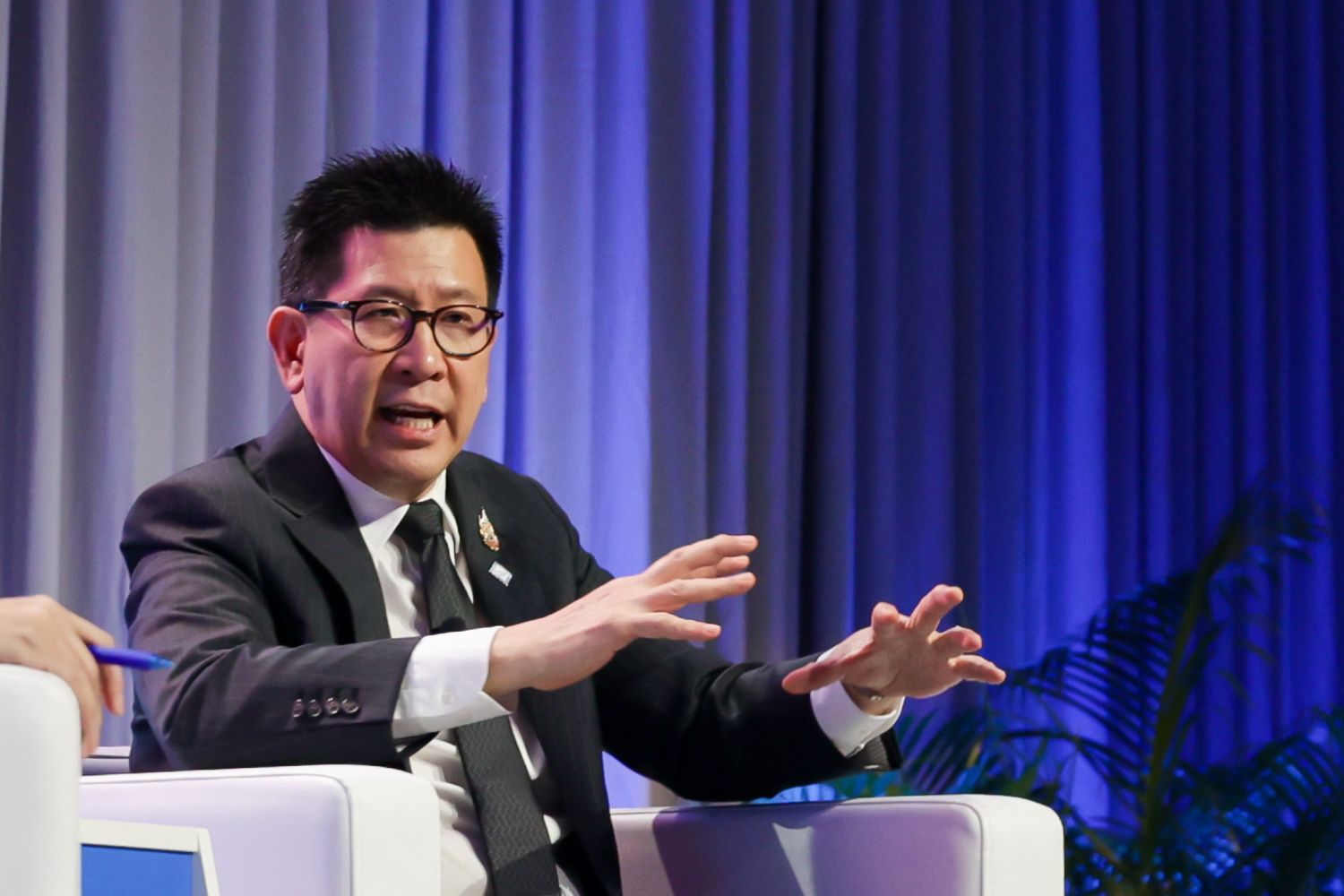
Finance Minister and deputy premier Ekniti Nitithanprapas.
The initiative seeks to encourage people to transition to solar energy, reduce energy costs and enable individual households to become electricity producers. They could sell any surplus power back to the national grid, generating additional income.
The plan has been expanded from its initial focus only on rooftop panels to include ground-mounted solar panels and solar systems floating on bodies of water on the recommendation of a screening committee, which pointed to physical constraints some residents may face.
The solar initiative is a key part of the government’s plan to accelerate the nation’s energy transition away from its heavy dependence on oil and natural gas. As Thailand is a net importer of energy, the nation is particularly vulnerable to fluctuations in global commodity markets.
Natural gas, in particular, is crucial for Thailand as it powers nearly half of the country’s electricity generation and industrial sector. About 50% of the country’s gas supply portfolio comes from domestic production in the Gulf of Thailand and 10-15% through pipeline imports from Myanmar. The remainder is from imported liquefied natural gas.
KioskNews shows a cleaned-up reading view extracted from the publisher’s page — the original always lives on their site, not ours.