Column | Beyond infrastructure: The constitutional test of true development
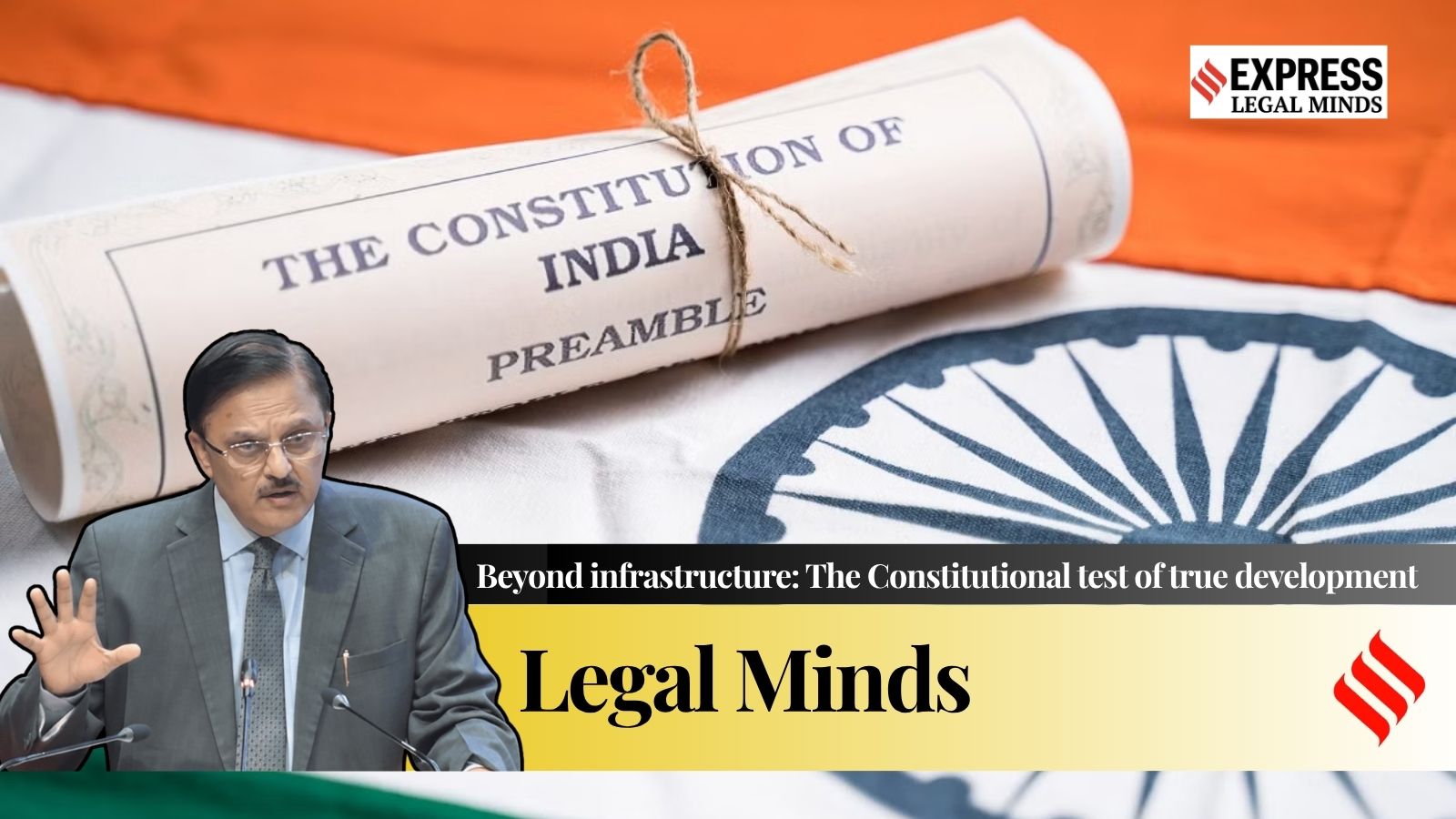
A few months ago, someone in the establishment alleged that court orders were obstructing the goal of “Viksit Bharat”. He may have been referring to court orders aimed at protecting the environment. It is often argued that environmental laws should be implemented in such a way that accommodates development needs. This debate makes it necessary to examine what “development” means from a constitutional perspective.
The Preamble to our Constitution guarantees Indian citizens justice — social, economic, and political. The Preamble incorporates the philosophy of our Constitution. Article 21 confers the fundamental right to lead a meaningful and dignified life, including the rights to health and shelter. It also includes a fundamental right to live in a pollution-free environment. Providing social justice to citizens is poassible only if they have affordable shelter and can lead a healthy, meaningful life. Any understanding of development must therefore be tested against these constitutional guarantees and the constitutional philosophy.
The Preamble’s promise of social and economic justice, read with Article 21, shows that development cannot be measured only by physical construction activities such as highways, metro railways, etc or economic activity. Unless the overall quality of human life improves, there is no true development in the constitutional sense. People must be able to live with dignity, receive affordable health care and education, enjoy a pollution-free atmosphere and improve their economic condition.
Article 21A guarantees free education to children between six and 14 years of age. Access to education is also essential to the meaningful life guaranteed by Article 21, including for those outside that age group. Similarly, the right to health must become a practical reality; without it, people cannot fully enjoy the broader guarantees of life and dignity.
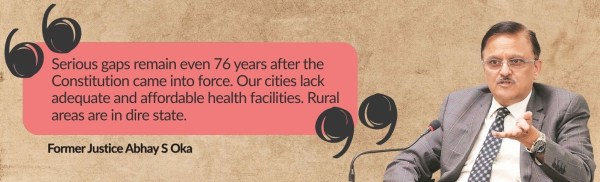
Serious gaps remain even 76 years after the Constitution came into force. Our cities lack adequate and affordable health facilities. Rural areas are in dire state. Many Primary Health Centres lack basic facilities. The doctors are not regularly available in these centres. There is always a shortage of life-saving drugs and equipment. In urban areas, medical services may be available but remain out of reach for ordinary people because of rising costs.
Government and local-authority-run schools and colleges that once offered affordable education have declined in numbers. In any case, these facilities have not grown in proportion to population growth; as a result, affordable, quality educational facilities are scarce.
Story continues below this ad
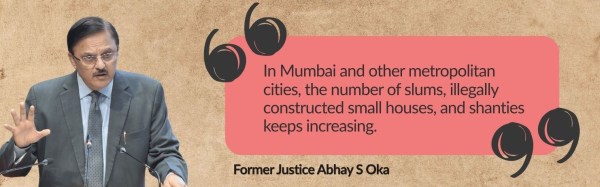
Unemployment continues to limit the possibility of a dignified life. In Mumbai and other metropolitan cities, the number of slums, illegally constructed small houses, and shanties keeps increasing. One main reason is that the poor and lower middle class cannot afford lawfully constructed housing in these cities because of high costs. Approximately a decade ago, I noted in one of my orders that about 25 per cent of Mumbai’s police constables are forced to live in slum areas.
Highways, roads, flyovers, metro railways, and airports are infrastructural projects. However, infrastructure alone does not constitute development. The concept of development, as understood in constitutional philosophy, must be judged only in the context of citizens’ ability to live a decent, healthy, meaningful, and secure life.
The right to live in a pollution-free environment under Article 21 requires clean air and water, as well as the protection of trees, forests, seas, rivers, creeks, lakes and other water bodies. The Air Act, the Water Act, and the Environment (Protection) Act were enacted primarily to give effect to this constitutional guarantee.
The Supreme Court of India has held that citizens’ fundamental duties become collective duties of the government. Protecting and improving the environment is also a collective duty of the state and its instrumentalities. The state’s failure to discharge these duties infringes Article 21, as failing to perform them leads to all kinds of pollution.
Story continues below this ad
Trees and forests are vital parts of our ecosystem and must be protected by both citizens and the state. Their destruction contributes to global warming, diminishes the quality of human life and deprives birds of their natural habitat. Pollution of seas, rivers and lakes also jeopardises the livelihood of fishing communities.
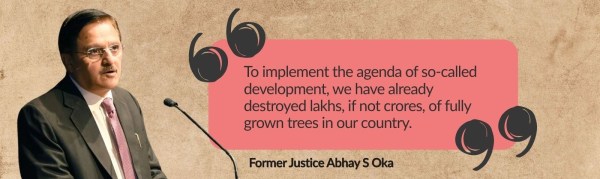
Various states have enacted local laws, particularly for urban areas, to protect and preserve trees. Large-scale tree felling harms human life, raises air temperatures, disrupts ecological balance, and destroys birds’ natural habitats. To implement the agenda of so-called development, we have already destroyed lakhs, if not crores, of fully grown trees in our country. This has damaged our environment beyond repair, despite compensatory tree planting. These new plantations will take decades to grow.
Noise pollution itself is a recognised health hazard. Yet, while celebrating festivals, we routinely cross prescribed decibel limits. We burst crackers to celebrate religious festivals and election victories, creating some of the worst sound and air pollution. Unfortunately, the political class supports such activities.
Environmental harm is not experienced equally. Rising temperatures and poor air quality particularly affect labourers, street vendors, and others who work outdoors. People living in slums and shanties in our cities are the worst affected by air pollution.
Story continues below this ad
Violating laws that protect the environment, trees, and forests violates Article 21. True development, therefore, permits no compromise in the firm and effective enforcement of laws intended to prevent air and water pollution and to conserve trees and forests.
Calls to dilute or relax environmental laws run counter to the Constitution’s ethos. Highways, flyovers, railways, plants and industries may be built, but such projects must proceed with zero tolerance for violations of environmental law and of the rights guaranteed by Article 21. Development is constitutional only when it improves human life while protecting the natural environment on which that life depends.
More than 76 years after the adoption of the Constitution, claims of development should be assessed by asking whether the basic, and fundamental constitutional rights have been translated into reality:
- Have we been able to improve air quality, enhance green cover, protect water bodies, and prevent water pollution?
- Have enough health-care facilities been created to provide affordable medical treatment?
- How many new schools and colleges have been established by governments and local bodies to provide primary, secondary and higher education at a reasonable cost?
- How many affordable homes have been built so that no one in our cities is compelled to live in slums, shanties or illegally constructed houses?
- Have we created enough employment opportunities?
- Has the so-called development really enhanced the quality of our lives?
Only when the answers to these questions are positive and encouraging can we claim that genuine development, as contemplated by the Constitution, has taken place. The concept of “development” ought to be consistent with our Constitutional philosophy.
Story continues below this ad
Retired Supreme Court judge Justice Abhay Shreeniwas Oka has presided over the Supreme Court bench monitoring the air pollution case in the National Capital Territory (NCT) of Delhi.
Written by eminent law professionals, the Legal Minds Column aims to break down complex statutory frameworks into insights, both for members of the fraternity and the general public.
For feedback and pitches, write to us at expresslegal@indianexpress.com
KioskNews shows a cleaned-up reading view extracted from the publisher’s page — the original always lives on their site, not ours.