Unlike anything I’ve seen: why this whale season has marine scientists puzzled
After nearly two decades of studying these majestic mammals, I’ve learnt every whale season is slightly different. Each migration along Australia’s east coast varies in its timing and the number of whale sightings.
But the 2026 whale season is unlike any other I’ve witnessed. Low humpback whale numbers and rare encounters with elusive false killer whales are just two reasons why.
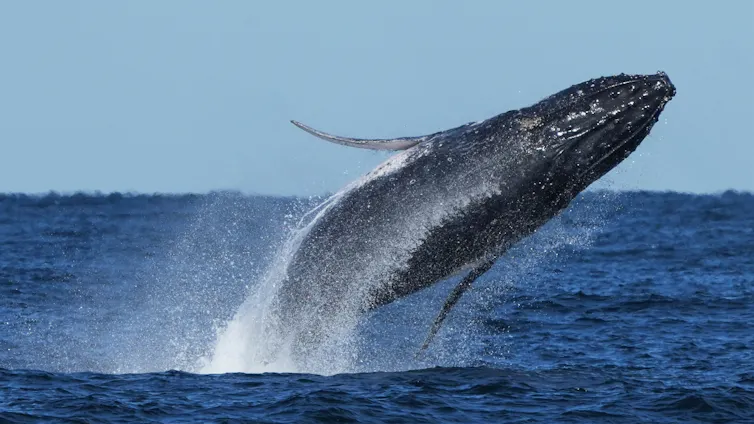
Humpbacks changing patterns
Every year, humpback whales embark on one of the longest migrations of any mammal. After feeding on Antarctic krill throughout the southern hemisphere summer, they start travelling north between April and May. By the end of November, most have returned south again.
During their journey, whales socialise, compete and even sing. They perform courtship and mating behaviours, with female whales giving birth to and nursing calves as they travel.
For Indigenous Australians, the humpback whale migration is an ever-evolving songline, a word Indigenous Australians use to describe cultural pathways that connect traditional sites. Through this songline, older, more experienced whales share knowledge with younger whales, helping the next generation adapt to changing ocean conditions, including warming sea temperatures and changes in sea ice.
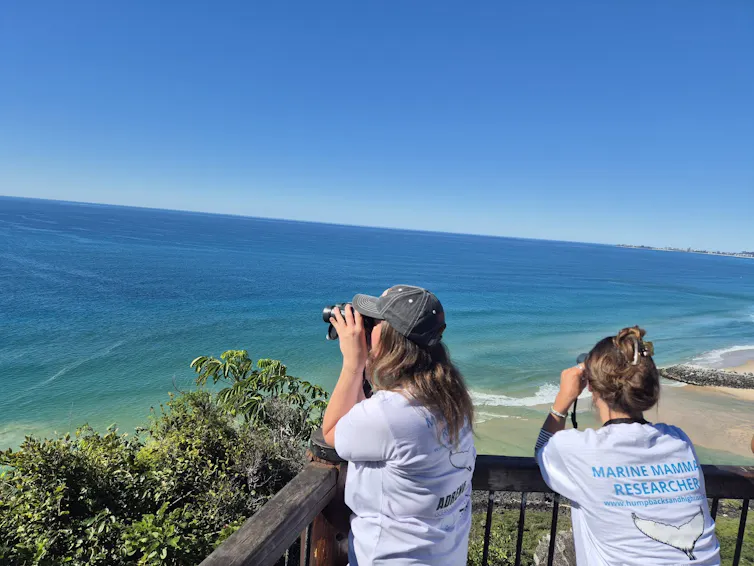
Read more: Sex, birth and whalesong: life on the humpback highway
Not a normal season
This whale season has been unusual for two main reasons.
Dwindling numbers
In the waters off eastern Australia, humpback whales have travelled much further away from the coast this year. On Queensland’s Sunshine Coast, whale-watching operators have observed distant offshore migrations and noticeably less surface activity. Similar reports have come from Coffs Harbour and the Whitsundays.
Operators have also seen fewer whales in Western Australia than previous years. The annual whale census, conducted each June at Cape Naturaliste in WA, indicated a sharp drop in whale numbers of up to 60% and high number of strandings.
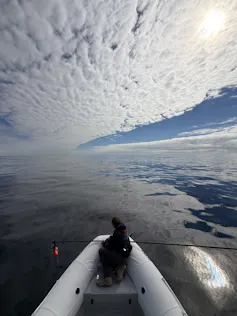
This seems to be the case among other humpback whale populations in the southern hemisphere. Researchers in northern Colombia recorded exceptionally low whale numbers outside the August peak, with mothers and calves particularly scarce later in the season. In French Polynesia, scientists observed fewer whales across multiple island populations.
One researcher from the Cook Islands reported remarkably low whale sightings, abnormal weather patterns and even an unusually early cyclone. She described 2026 as the most unusual season she’s experienced in her nearly three decade-long career.
These observations are largely anecdotal, recently shared among a group of about 100 whale researchers. But when scientists working across multiple ocean basins start reporting similar patterns, this is a sign of changing ocean conditions.
Record entanglements
The number of whale entanglements has risen by 20%, from about 50 in 2025 to nearly 60 this year. Whales can get entangled in man-made materials floating in the ocean, such as fishing gear and shark nets.
This problem isn’t unique to Australia. Along the eastern United States, 31 large whale entanglements have also been reported during 2026 so far.
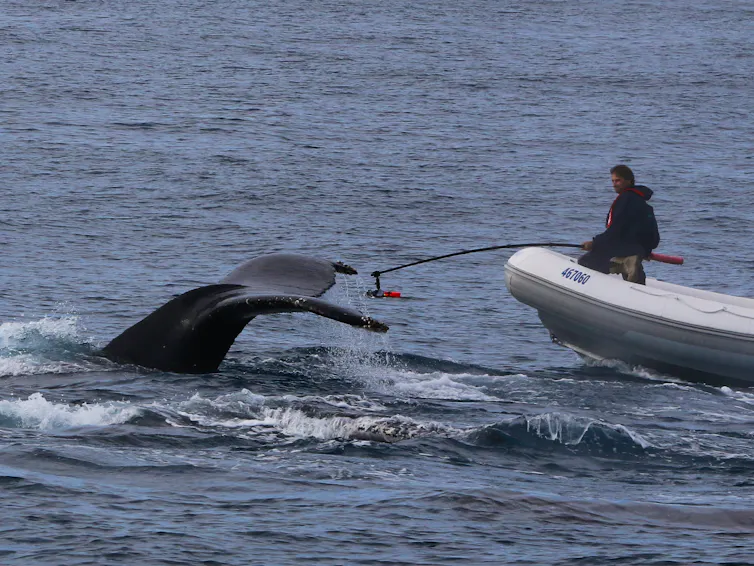
Some whales can free themselves or are lucky to be one of those disentangled by trained response teams, which often perform dangerous rescue operations.
However, many entangled whales are never relocated, leaving us wondering if they survived or died from long-term injuries. Improved tracking technology, including satellite tags, drones and acoustic monitoring, could help us assess the health and recovery of entangled whales.
Read more: More whales are getting tangled in fishing gear and shark nets. Here’s what we can do
Spotting false killer whales
Another observation is puzzling marine scientists.
In early August, our research team onboard a Sea World Foundation vessel was looking for humpback whales off Queensland’s Gold Coast. We noticed some large, dark dorsal fins in the distance and soon realised hundreds of false killer whales were heading our way. Just six weeks later, we encountered another group of about 50 false killer whales having a feeding frenzy near the same place.
False killer whales are an elusive toothed whale from the dolphin family, which mainly feeds on fish and squid. These whales are more closely related to pilot whales than killer whales, with their name coming from the fact their skulls and teeth look similar to those of orcas.
It’s extremely unusual to encounter two groups of false killer whales, particularly in such large numbers, within a few hundred metres of a major coastal city. This could indicate they are searching for different types of prey or in different places due to changing ocean conditions or broader ecosystem dynamics.
So, what can we do?
The strange 2026 season points to the need for a more collaborative, coordinated approach to monitoring whales across Australia’s coast and the southern hemisphere. Currently, most whale research relies on volunteer organisations and donations.
Practically, this involves combining whale sighting reports with data from acoustic monitoring, satellite tracking and oceanographic studies, as well as Indigenous knowledge. Together, this data will help us understand if these trends are short-term anomalies or signs of a more persistent shift in whale behaviour.
To prevent further whale entanglements, governments should improve reporting systems, expand rescue teams and invest in technologies that allow scientists to monitor whales after release. Historically, government agencies have offered scarce funding for whale research, but these captivating mammals are still in urgent need of protection.
Read more: Weeping whales: why one humpback whale mother stayed beside her dead newborn
KioskNews shows a cleaned-up reading view extracted from the publisher’s page — the original always lives on their site, not ours.