Ghana’s economy would have crashed in 2026 without tough decisions – Ato Forson
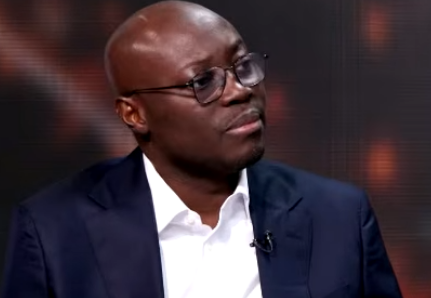
Finance Minister Dr Cassiel Ato Forson says Ghana’s economy would have crashed in 2026 if the government had not taken tough decisions to restrain spending and restore discipline in public finances.
Speaking in an interview on Thursday after presenting the 2027 Budget to Parliament, he defended the fiscal measures the government has taken since assuming office in 2025.
He said the administration inherited persistent inflation and an economic crisis that required an immediate change in direction.
“In 2025 we inherited a situation where inflation had become sticky, the economic crisis was still around,” he said.
According to Dr Forson, continuing with business as usual would have pushed the economy into a crash by 2026. He said the government responded by tightening fiscal policy and addressing disorder in public financial management.
“There was a lot of disorder; we brought order to the public financial management system,” he said.
He pointed to currency stabilisation and primary surpluses as evidence of the results.
Dr Forson cited a primary surplus of 2.5% of GDP in 2025 and 1.5% in 2026. He said the next step was to reduce the target to support the government’s economic programme.
“Now I need to reduce the primary surplus from 1.5% of GDP to 0.5%.”
The Finance Minister said restoring stability was only part of the task. The government now needed to restructure the economy to create sustainable employment.
He argued that Ghana’s economic foundations had not evolved sufficiently to meet the needs of its growing population.
“We are 35 million people and counting.”
Dr Forson said the country could not keep relying on an economic structure designed for a much smaller population.
He described temporary employment programmes as inadequate substitutes for the structural changes needed to generate decent jobs.
He explained that the New Economy policy would focus on modernising production and expanding the economy’s capacity to absorb workers.
“The focus of this new economic policy is to tackle the structure of the Ghanaian economy,” he said.
He framed the programme as a four-year effort to move beyond macroeconomic stabilisation while maintaining the discipline that had helped secure it.
DISCLAIMER: The Views, Comments, Opinions, Contributions and Statements made by Readers and Contributors on this platform do not necessarily represent the views or policy of Multimedia Group Limited.
Tags:
DISCLAIMER: The Views, Comments, Opinions, Contributions and Statements made by Readers and Contributors on this platform do not necessarily represent the views or policy of Multimedia Group Limited.
KioskNews shows a cleaned-up reading view extracted from the publisher’s page — the original always lives on their site, not ours.