Beijing blasts US ban on device testing in China, warns of supply chain disruptions
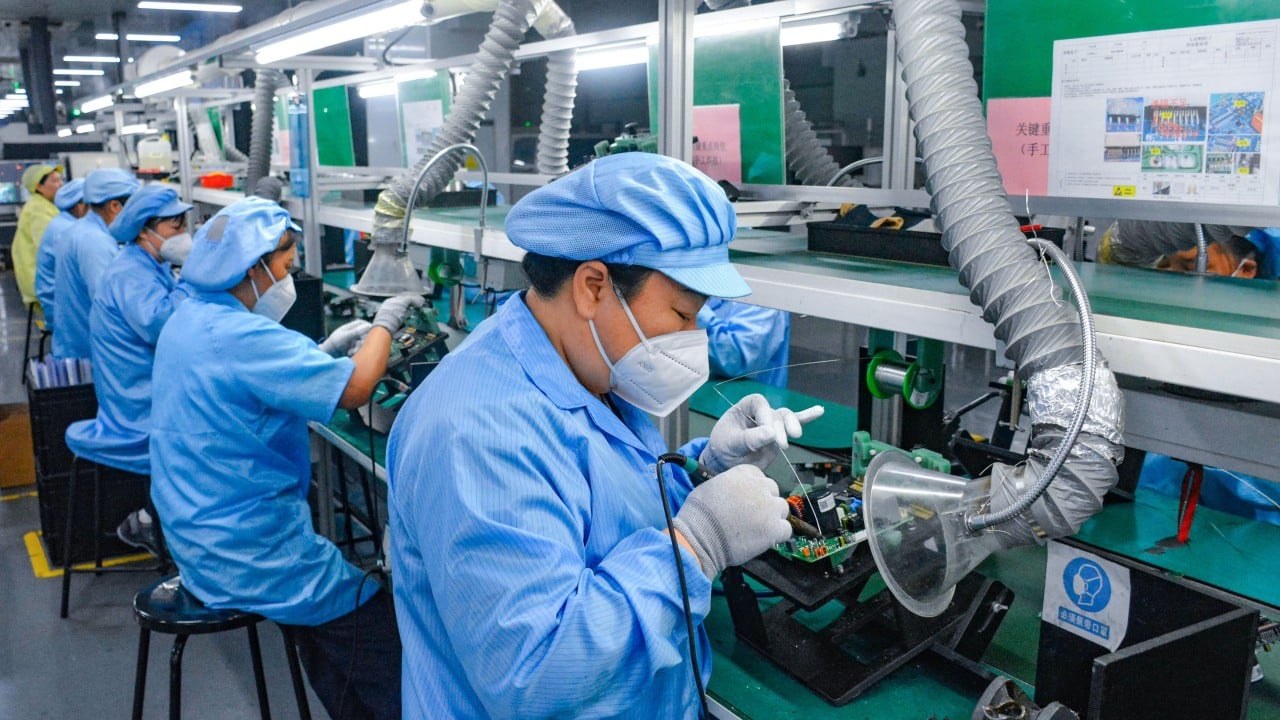
China’s Ministry of Commerce has voiced firm opposition to a decision by the US Federal Communications Commission (FCC) to bar device testing in China by 2028.
“This has seriously harmed the interests of China and other trading partners, seriously undermined the stability of China-US economic and trade relations, and seriously disrupted the stability of global industrial and supply chains,” it said in a statement on Friday night.
“[We] hope the United States will face the calls of the industry, respect market rules, meet China halfway and immediately revoke the measures,” it said.
The ministry expressed “strong dissatisfaction” and warned that Beijing would take necessary measures to safeguard its interests, but added that “China’s door to resolving issues through consultations is always open”.
It said it would only allow labs based in the US or in reciprocal economies to carry out testing required for US certification starting in December 2028.
FCC Chairman Brendan Carr said this was consistent with US President Donald Trump’s “broader effort to restore balance and fairness with respect to America’s dealings with foreign nations”.
Chinese facilities test and certify more than 80 per cent of US-bound electronics, according to the FCC.
Carr alleged that these labs could use their “privileged position” to allow “insecure gear into the US market, disrupt communications networks or even steal intellectual property”.
The FCC has emerged as one of the Trump administration’s most aggressive agencies targeting Chinese technology companies. It has also imposed broad bans on entire product categories and tightened supply-chain restrictions.
In response to the FCC’s decision, the Chinese Ministry of Commerce said the American agency “uses administrative means to intervene in market choices and forcibly pushes so-called testing backshoring, raising enterprises’ testing costs and prolonging product delivery and iteration cycles”.
“This will ultimately harm the interests of US companies and consumers,” it said, adding that the decision was “in violation of the important consensus reached by the two heads of state”.
The decision comes just weeks before US President Donald Trump is due to meet Chinese leader Xi Jinping on the sidelines of the Asia-Pacific Economic Cooperation (Apec) summit in Shenzhen next month.
SCMP Plus is a new premium news platform that gives you an
all-inclusive edge to stay ahead on China news.
To access our exclusive content you’ll need to subscribe.
Already a subscriber?
LOG IN
It will be the third face-to-face meeting of the leaders of the world’s two largest economies this year, following reciprocal state visits in May and September. They are expected to meet for a fourth time this year during the Group of 20 (G20) summit in Florida in December.
Xi’s visit to the White House underscored the growing personal rapport between the leaders, even as the meeting produced few concrete deliverables.
KioskNews shows a cleaned-up reading view extracted from the publisher’s page — the original always lives on their site, not ours.