Space robot legend Voyager 1 is now more than 1 light-day away
As the world is hit by IT snafu after IT snafu, Voyager sails on, almost half a century after launch
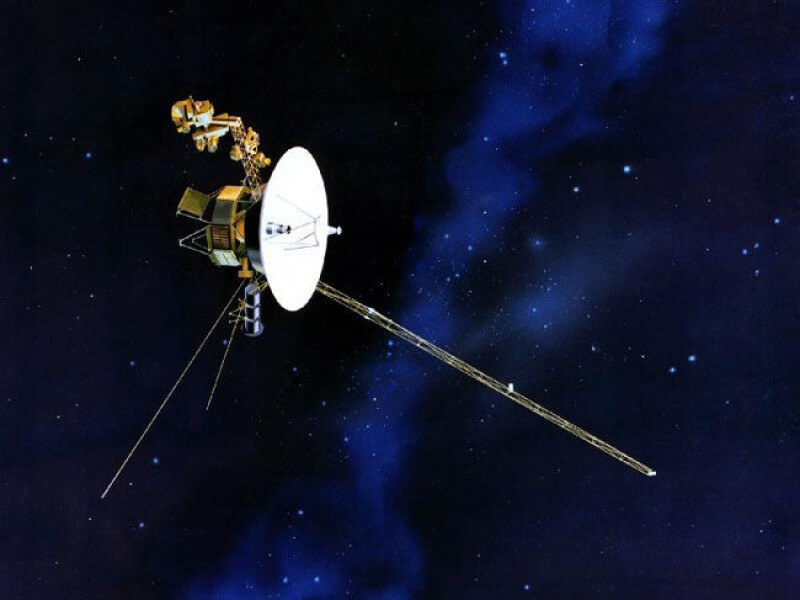
NASA's Voyager 1 probe is now more than one light-day from Earth – so distant that a radio signal takes 24 hours to reach it. The veteran spacecraft has spent almost 50 years getting there.
Voyager 1 was launched on September 5, 1977, from Cape Canaveral in Florida. Planning for the mission began in the 1960s, while NASA was working feverishly to put a man on the Moon ahead of the Soviet Union.
A rare alignment of the outer planets made a tour of Jupiter, Saturn, Uranus, and Neptune possible. Voyager 2 eventually visited all four; Voyager 1's route prioritized Saturn's moon Titan, ruling out a subsequent encounter with Pluto.
REG AD
Voyager 1 completed a flyby of Jupiter in 1979, and passed Saturn and Titan in 1980. Its final imaging sequence in 1990 produced the solar system "Family Portrait," including the famous Pale Blue Dot image of Earth. The cameras were then switched off for good.
REG AD
Thirty-six years after those final pictures, Voyager 1 remains in contact with Earth, with two science instruments still operating: the magnetometer and plasma wave subsystem. Others have been shut down over the decades to conserve the dwindling power supplied by its radioisotope thermoelectric generators (RTGs).
Dr Garry Hunt, a member of Voyager's original imaging team, told The Register: "Voyager's real success is the way it used reliable equipment. Well-tested Mariner equipment, and special new things that had come about for it.
"We had fault protection on board as well. If anything goes wrong, it automatically switches to a backup. So there was always a backup. There was always a safe mode. We had to have radiation protection on board … when we designed this, we didn't really know the magnetic environment around Jupiter, and to be told it was so strong, 1,000 times stronger than we anticipated, really threw everything up in the air, and so that had to be dealt with."
Hunt paid tribute to the succession of project managers and engineers who have kept the probe running over the years. "I think this was a really wonderful example of project management, of clever management of engineering, and interesting science coming out of it, which has made history books and gone to be a catalyst for other things in the future," he said.
Voyager 1 may now take two days to answer a call from Earth. After almost 50 years, the remarkable thing is that it still answers at all. ®
KioskNews shows a cleaned-up reading view extracted from the publisher’s page — the original always lives on their site, not ours.