US voters unleash blue wave, handing Congress to Democrats and rebuking Trump
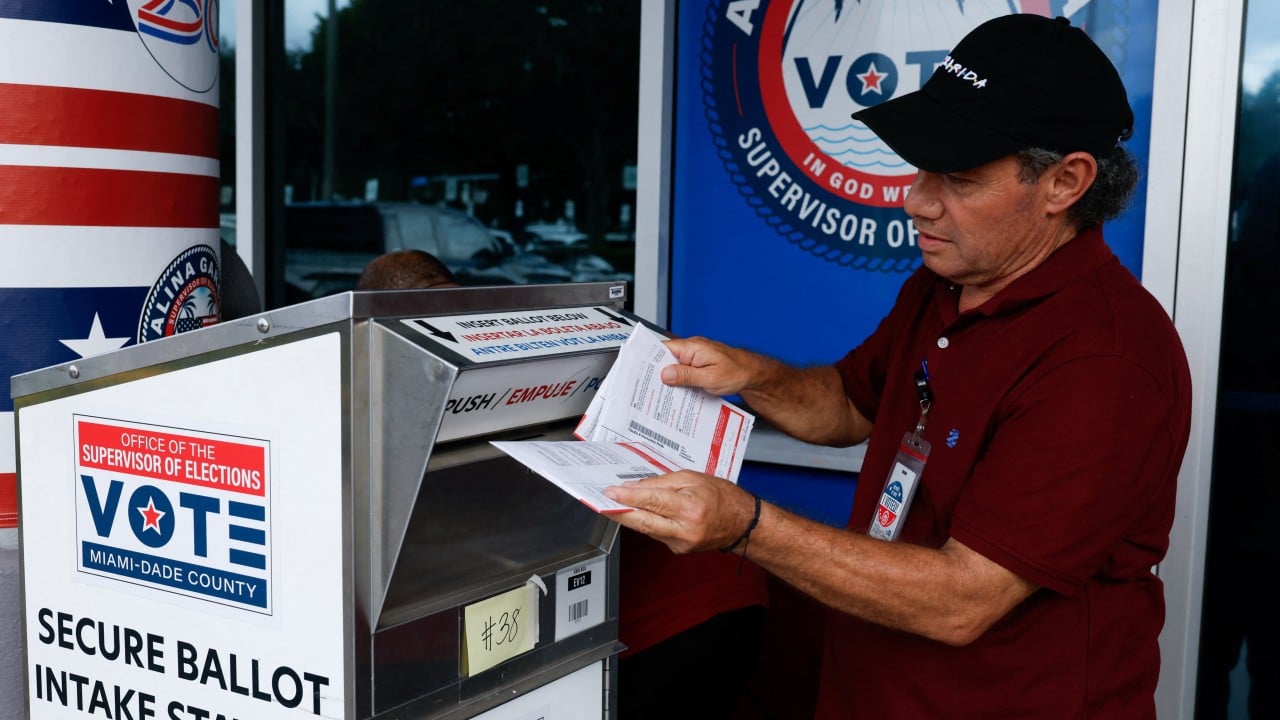
After weeks of insults, fearmongering and eye-popping spending on advertising, Americans settled down to vote on Tuesday, unleashing a blue wave that saw Democrats projected to take the House and the Senate, in a sharp rebuke to US President Donald Trump and his controversial governing style.
In a stunning development, the Associated Press also projected that Democrat James Talarico won the Texas US Senate election, defeating Republican nominee Ken Paxton and earning the first statewide win for a Democrat in 32 years. This came after billionaire Elon Musk threw over US$200 million of his own money into defeating Talarico.
Kansas’ Adam Hamilton chalked up another historic win, becoming the first Democrat to be elected senator in the state in nearly 100 years.
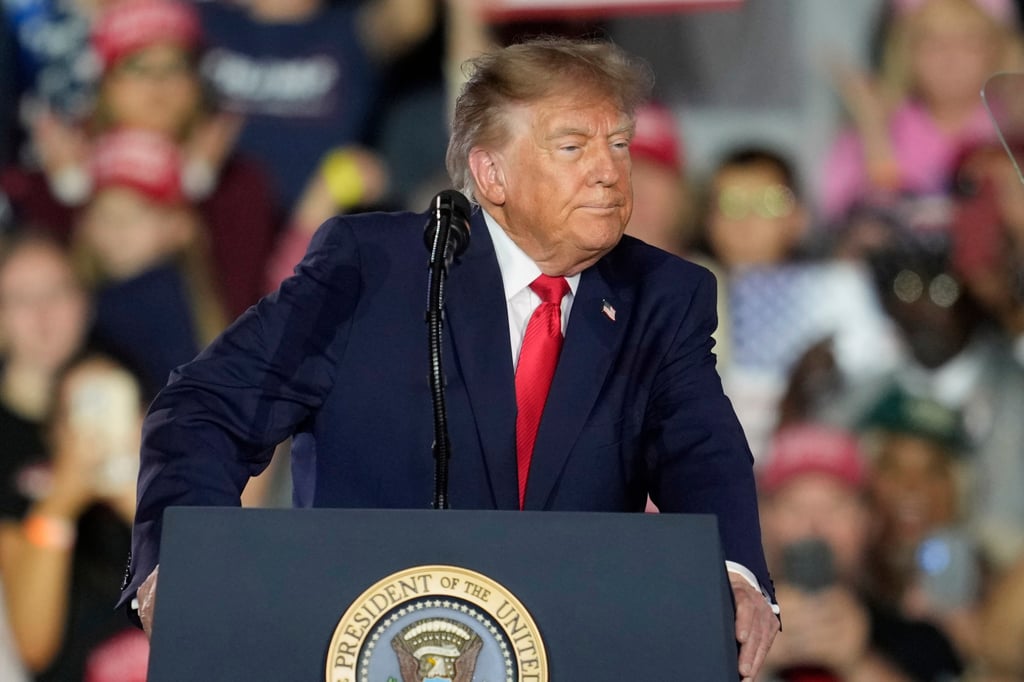
Despite urging voters to act as if he were on the ballot, Trump quickly pivoted to sidestep any blame as the electoral map turned increasingly blue.
“I wasn’t on the Ballot and if I was, we would have won IN A LANDSLIDE! Thank you for your attention to this matter. President DONALD J. TRUMP,” he posted after tearing into Fox News’ coverage a few hours earlier, complaining that the network was spending “too much time” covering Democrats – who he labelled “Trump Deranged Dumocrats”.
As the evening unfolded, seat after seat long considered safe Republican strongholds swung to increasingly competitive Democrats.
Exit polls suggested voters were strongly motivated by inflation – petrol prices hit a national average of US$4.14 per gallon, their highest ever, on election day – as well as the future of democracy, corruption and the Iran war, much of which was tied directly to Trump.
Democratic control of Congress will almost certainly result in more investigations into many of these issues, especially the war, tariffs and corruption.
It could also see lawmakers become more assertive on Taiwan policy, including required reports on delayed weapons deliveries, calls to notify Congress of new arms sales and demands that the administration explain any decision to pause them, according to Bonnie Glaser, managing director of the Indo-Pacific programme at the German Marshall Fund of the United States.
Atlantic Council economist Josh Lipsky also predicted that Democrats could reshape US-China tariff policy by seeking to restore congressional authority over trade, including by demanding that tariffs be approved by lawmakers. While Trump would almost certainly veto such bills, he said, that could set the policy agenda for 2028 and beyond.
Voter enthusiasm approached all-time highs for a midterm election. Early voting surpassed 59 million ballots nationwide, according to the University of Florida’s Election Lab, compared with 46 million ballots for 2022, a then-record fuelled by the pandemic and wariness over in-person voting.
A key group that appeared to make a big difference Tuesday was Hispanic voters who heavily supported Trump in 2024 but became increasingly disenchanted with his aggressive immigration crackdown.
Trump told The New York Times that he would accept the results, a shift in tone from his pre-election statements that indicated he would only accept them if they were “honest”. “We’ll work with the Democrats,” he reportedly said. “We’ll probably work something out.”
Because Trump has so effectively remade the Republican Party in his image and urged voters to “pretend I’m on the ballot, ’cause in a way I am”, the results are tied to him personally, analysts said. With Trump unable to run again, that could accelerate his descent into lame-duck status.
At times Trump’s efforts to support Republicans in recent weeks appeared almost designed to do the opposite. Two months before the election, he slapped 50 per cent tariffs on Canada, undercutting the economies of several important swing states along the border.
And while the 80-year-old has campaigned energetically, making some 30 appearances in 20 states over the past month, Trump often avoided swing states in favour of deep red districts where he could find a friendly audience. Yet as the election approached and the map turned more blue, even those traditional sure bets increasingly wobbled.
As his popularity fell, as the Iran war trundled on and as anger over his policies grew, some Republican candidates quietly dropped references to the president from their campaign websites and quietly suggested he not appear in their districts.
Where Trump did appear, he seemed at times to highlight party weaknesses rather than strengths and thumb his nose at voter concerns.
“They said, ‘President Trump is talking about all the money they’re making while people are suffering at the pump.’ That’ll be the headline,” he told a crowd in Georgia. “But I said, ‘I don’t give a damn, I’m gonna say it: We’re making a freaking fortune.’”
Tuesday’s results came amid record spending, especially by Republicans, which focused on key battleground states and now raises questions about the torrent of money in US elections and its effectiveness.
Texas saw overall spending of some US$635 million. Senate races in Ohio attracted an estimated US$450 million, Michigan’s some US$384 million, Iowa’s over US$220 million and Maine’s US$190 million.
Trump also doubled down on support for data centres as these became increasingly unpopular among voters in both parties. “The only reason that communities throughout the U.S.A. should not want Data Centers is if they want to end up being backwards and poor,” Trump wrote on social media.
Likely galling for Trump were races where he prominently staked his clout and prestige, not only with Paxton in Texas but giving his full backing in South Carolina to the late senator Lindsey Graham’s sister, Darline Graham, who was also defeated.
The results will almost immediately start the clock ticking on the race for president in 2028. The results are likely to seriously dent the outlook for perceived Republican front-runner Vice-President J.D. Vance, likely to be saddled with his boss’s legacy.
And it could complicate the prospects for the other early Republican front-runner, US Secretary of State Marco Rubio.
03:00
The global impact of the coming US midterm elections under Donald Trump
On the Democratic side, the midterm is expected to spur a host of announcements by wannabes in the next few months. These could include Pennsylvania Governor Josh Shapiro and Georgia Senator Jon Ossoff, both of whom won re-election handily on Tuesday, and California Governor Gavin Newsom and Kentucky Governor Andy Beshear, among others, who were not on the ballot this time.
But a strong Democratic performance Tuesday risks overconfidence, analysts said, and the chance that the party fails to develop a strategy beyond “not Trump” and fails to focus on a positive agenda.
In effect, the showing may be less of a “blue wave” or overwhelming vote of confidence for Democrats, political operatives warn, than a “red undertow” reflecting deep anger and disenchantment with Trump and Republicans.
As Republicans faltered, meanwhile, Trump’s rhetoric and accusations intensified, leading to his referring to Democrats as “Radical Left lunatics”, “extremists”, “Marxists”, “thugs” and “fascists”.
Even races that Republicans won or held Tuesday saw often double-digit erosion from the huge margins that they enjoyed in Trump’s historic 2024 win, highlighting his huge fall from grace.
“Character matters, and this president didn’t deliver it,” said former New Jersey governor Chris Christie, a Republican.
KioskNews shows a cleaned-up reading view extracted from the publisher’s page — the original always lives on their site, not ours.