Qatari PM says Netanyahu is ‘biggest obstacle’ to fulfilling Gaza peace plan
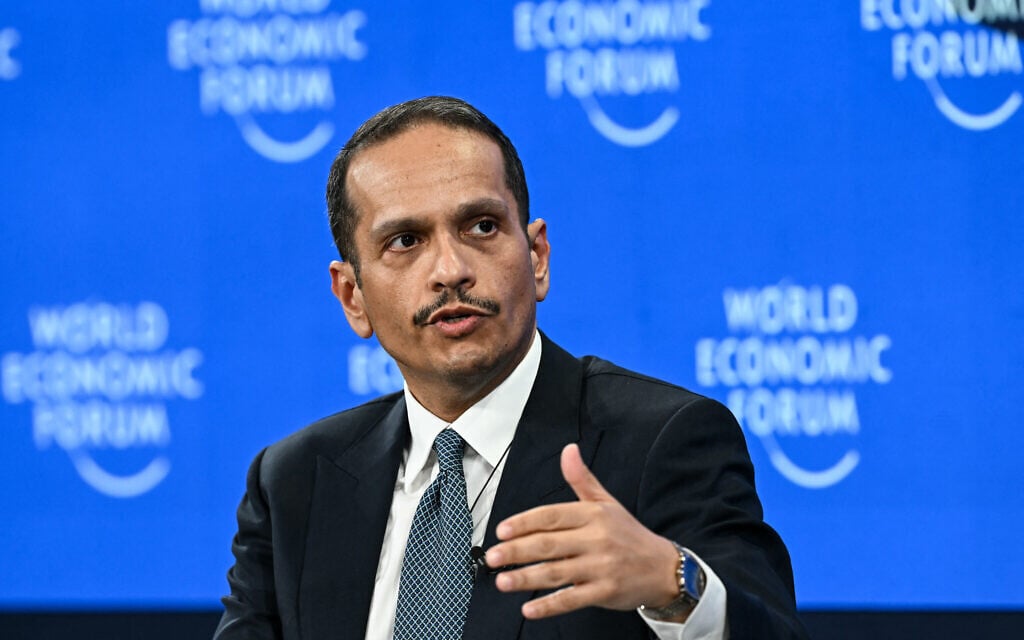
Qatar’s prime minister accused Prime Minister Benjamin Netanyahu and his government in a weekend interview of being the main impediment to the advancement of a US-backed peace plan in the Gaza Strip, which has made little progress since a ceasefire took effect last year.
In the interview, which aired Friday on CNN, Mohammed bin Abdulrahman Al-Thani also accused Netanyahu and his political rival, former prime minister Naftali Bennett, of using Qatar for political clout ahead of the upcoming Israeli election on October 27, and denied once again that Doha had funded the Hamas terror group’s military wing.
Asked about the sluggish pace of progress in the Gaza Strip, where Israeli forces have yet to withdraw to be replaced by an international security force, al-Thani placed the blame squarely on the shoulders of Israel.
0:00 / 0:00
Promoted: Nefesh B'Nefesh - Aliyah is Now

After months of negotiations, Hamas agreed to the US-led Board of Peace’s disarmament plan on July 30, but its implementation has stalled amid Israel’s rejection of the proposal. Prime Minister Benjamin Netanyahu has insisted that the IDF will only withdraw once Hamas has been completely disarmed, rejecting the gradual and reciprocal framework envisioned in the proposal.
“We have a long list of violations that, unfortunately, Netanyahu’s government are committing,” he said. “And basically, we have seen that he is the biggest obstacle right now in progressing this peace plan while everyone among the mediators [is] trying to work very hard to make sure that this agreement uphold.”
Get The Times of Israel's Daily Edition by email and never miss our top stories
By signing up, you agree to the terms
He accused Israel of moving “in the opposite direction” of every expectation and demand laid out in the US-brokered Gaza agreement “for the gain of the prime minister and his far-right government.”
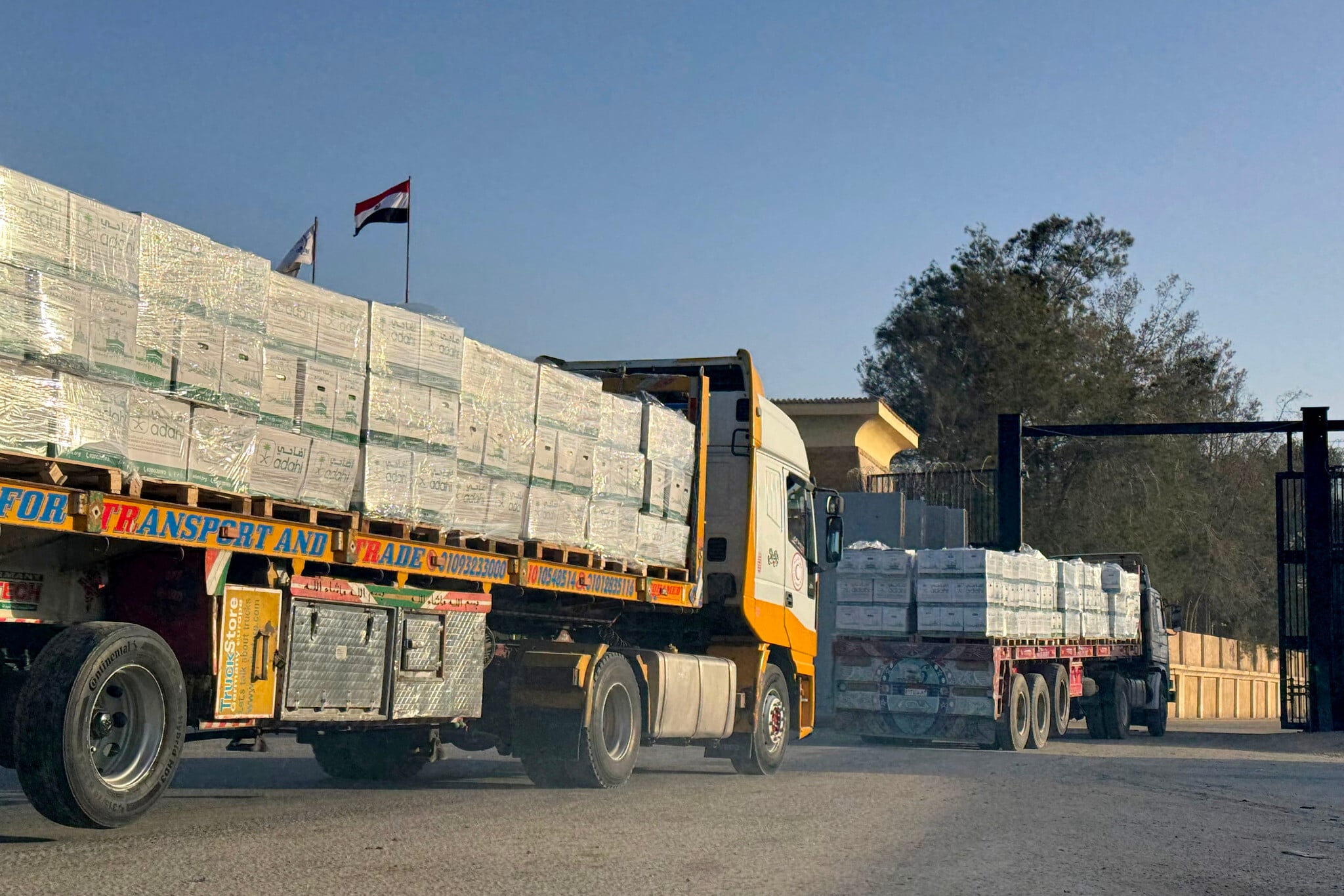
“They occupy now more than 70 percent of the Strip instead of withdrawing. They are continuing the killing,” he said of the IDF’s conduct inside the war-torn Palestinian enclave. He added that instead of 600 trucks of humanitarian aid entering the Strip each day, in line with the agreement, “the average number of trucks that goes [in] every day over there is 150.”
Al-Thani, asked both about the fact that Hamas is refusing to disarm and about renewed accusations that Doha has been funding Hamas’s military activities, chose to avoid the matter of disarmament in favor of defending Qatar’s financial activities.
“This is a baseless accusation,” he said of the allegations in a recent New Yorker article that Doha’s monthly cash payments to Gaza helped fund Hamas’s military wing prior to the terror group’s October 7, 2023, onslaught.
He said that Qatar always stressed to Israel that its monthly cash infusions into Gaza were “temporary” and a way to buy time to “agree on a long-term solution for the situation in Gaza.”
“That has been the conversation that we had since this financing has started, all the way until September 2023, just a month before October 7, when the Israeli officials were in Doha pushing for another round of funding,” al-Thani insisted.
The monthly cash payments to Gaza began in 2018 with Netanyahu’s approval, but his critics have said that they were used to fund Hamas’s terror capabilities. Netanyahu publicly described the payments, which, according to The New Yorker, ran up to $30 million per month, as a means to prevent a humanitarian disaster in the Strip and to maintain calm.
The Qatari prime minister also took the opportunity to once again push back against any involvement by the country in Israel’s so-called Qatargate affair, in which top officials in the Prime Minister’s Office are accused of taking money from Qatar to spearhead a public relations campaign to cast Doha in a positive light for over a year after October 7.
The accusation that Qatar was knowingly involved in any way “is absurd,” al-Thani said, adding that “this would be the worst investment Qatar have ever done.”
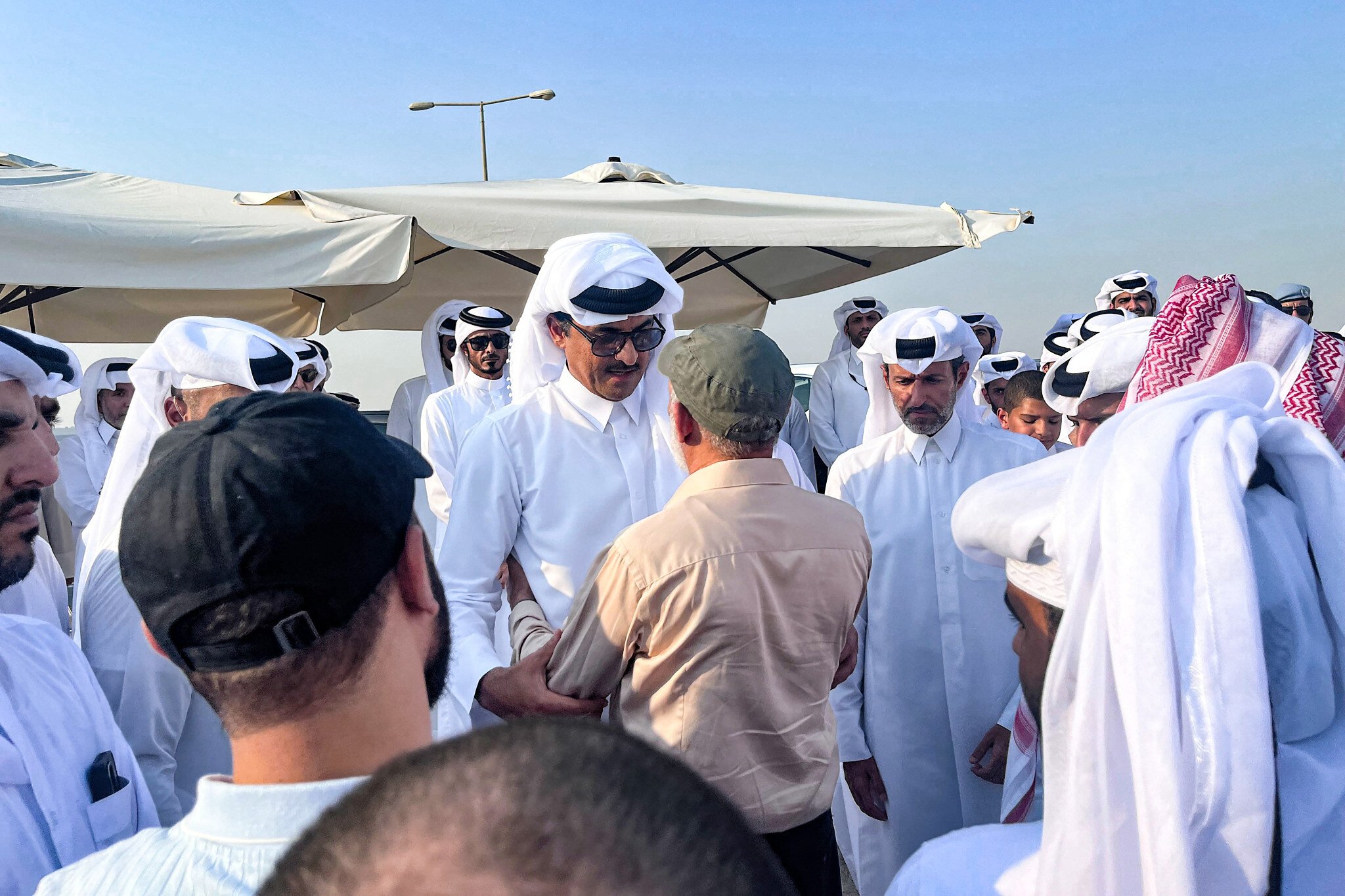
He accused both Netanyahu and his political rival, B’Yachad party chair Bennett, of using Qatar “as the scapegoat” while “trying to pick a fight among themselves for election reason[s] and just for their political and personal gain.”
Bennett has promised to declare Qatar an enemy of the State of Israel if elected.
In a separate line of questioning, al-Thani was also asked about Qatar’s role in mediation between the US and Iran, and took the opportunity to call for the reopening of the Strait of Hormuz, without explicitly denouncing Tehran for seeking to shutter the key waterway.
“Anyone who is using the waterways to block countries and to block the freedom of navigation — this is considered unacceptable. This is considered trying to strong-arm and we refuse any blockade or any blackmailing by any country or any party,” he said.
He also defended Qatar’s relationship with Tehran, despite being repeatedly targeted by Tehran since the US and Israel launched their joint war against the Islamic Republic in late February.
“We need to make sure that we do not represent any concern for the Iranians nor the Iranians represent a concern for us,” he said. “We are neighbors. This is a destiny. We’ve been maintaining a good relationship with them for decades now.”
Help us report truthfully on social media

As a multimedia journalist, my job is to take the quality, fact-based journalism produced by The Times of Israel newsroom and make it accessible across every platform — from Instagram posts to podcasts to short-form videos.
This is how many, especially young people, consume news these days. But misinformation is rampant on social media. Our team at ToI produces accurate, responsible short-form reporting on Israel and the Jewish world.
If you believe in the importance of factual social media journalism, please consider joining our reader support group, The Times of Israel Community. Your financial support is essential to sustain responsible multimedia reporting.
— Gabriella Jacobs, multimedia journalist
Support our work Support our work Already a member? Sign in to stop seeing this
KioskNews shows a cleaned-up reading view extracted from the publisher’s page — the original always lives on their site, not ours.