5 further glimpses into the oddities of the natural world
Sometimes the natural world announces itself spectacularly. At other times, its surprises emerge from a water sample, a cat’s meow, or a little bird with a remarkably versatile beak.
Here are five recent discoveries and conservation stories that offer intriguing glimpses into how animals communicate, shape ecosystems, and occasionally make scientists’ jobs more unusual.
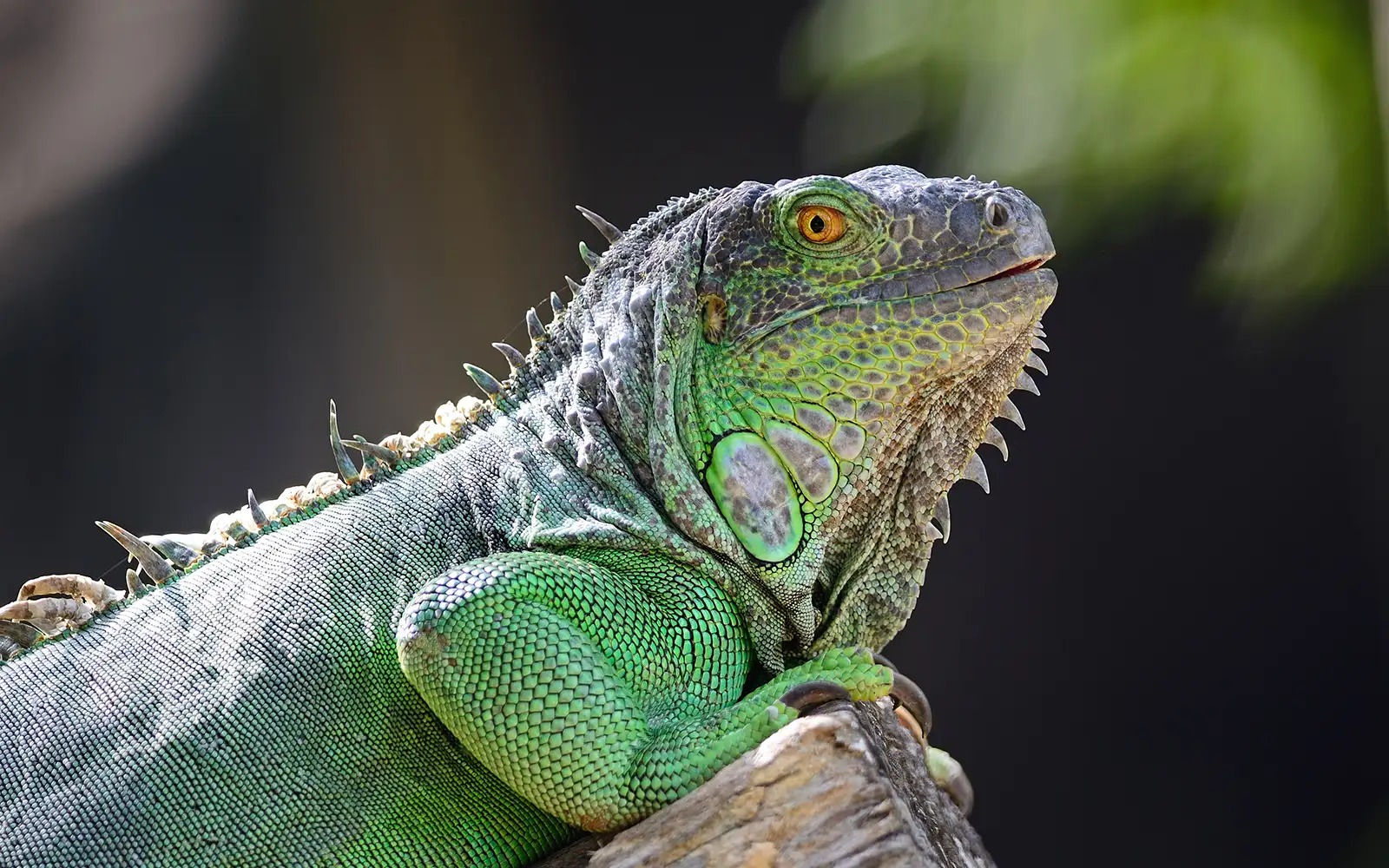
1. An iguana may have left a calling card in Sarawak
Nobody actually spotted the iguana; instead, evidence of one turned up in a sample of water collected at Curtin University Malaysia’s campus in Miri.
During the university’s first “BioBlitz”, researchers used environmental DNA (eDNA), a technique that searches for tiny traces of genetic material organisms leave behind in their surroundings without having to catch or even see the animal.
Among the DNA they detected was that of the common green iguana – a species that does not naturally occur in Malaysia.
The most plausible explanation is that the genetic material originated from an escaped or released pet, according to Curtin Malaysia. But the researchers are careful about what the discovery actually proves: DNA in one water sample cannot establish where it came from, or confirm that a living iguana is presently wandering around the Miri campus.
That ability to reveal an animal’s possible presence is partly what makes eDNA so useful: a genetic trace can flag something worth investigating long before conventional surveys find the animal itself.
Across Curtin campuses in Malaysia, Singapore and Australia, more than 100 students and researchers analysed 26,572 DNA sequences and identified 572 species. Other surprises included DNA from an invasive freshwater jellyfish in a Perth koi pond, and an Asian small-clawed otter in a Singapore campus pond.
2. Your cat may genuinely be meowing at you
Cats famously meow at humans far more than they do at other adult cats. But are they actually trying to communicate something, or simply making noise because they are excited, hungry or frustrated?
Researchers in Brazil devised a wonderfully simple test involving 38 pet cats and something they particularly wanted: their favourite food.
Each owner placed the food inside a transparent plastic container that the cat could see but could not open. During one one-minute trial, the owner stayed nearby, silently paying attention to the animal; during another, the owner left the room.
The odds of a cat meowing were about 16 times higher when its human was present. More than half of those meows occurred while the cat was looking directly at the owner, while some animals shifted their gaze back and forth between the person and the inaccessible food.

When left alone, however, the cats tended to spend more time standing still and looking towards the door.
That behaviour supports the idea that meowing can serve a specifically communicative function in cat-human relationships. Essentially, there is little point complaining about the closed lunchbox if the household servant isn’t there to fix it.
The researchers stop short of saying cats consciously formulate messages such as “open this immediately”. The sample was also small and involved cats already known to be vocal around feeding time.
Still, the next time your cat looks at you, looks pointedly at its empty bowl and lets out an indignant yowl, you may have slightly less justification for pretending not to understand.
3. A Labrador is hunting something called ‘sea vomit’
Six-year-old black Labrador Sgiath – pronounced roughly “Skee-ah” – once trained as a mountain-rescue dog in the Scottish Highlands. Her latest quarry is considerably less glamorous.
Sgiath works with marine ecologist Dr Texa Sim to detect an invasive colonial sea squirt better known by the memorable nicknames “sea vomit” and “sea snot”.
Despite the name, it isn’t actually vomit – or even a plant. Sea squirts are marine animals, and this species grows in pale, leathery sheets that can spread across rocks, pontoons, boat hulls, ropes and oyster-farming equipment.
Those colonies can smother native organisms and create serious problems for marine habitats and aquaculture. Once well established, they can also be expensive and difficult to remove.
But spotting small colonies among seaweed and other marine growth is not always easy. That’s where Sgiath’s nose comes in.

Working along the shoreline at low tide, she can pick out the sea squirt’s scent from fragments attached to fishing gear, ropes and other surfaces.
Instead of barking as she once did when finding a missing person, she has been taught a “passive indication” – becoming still and staring when she detects her target.
She has reportedly located hundreds of colonies, and another Labrador is now being trained in the same technique. Her unusual conservation job earned Sgiath the International Fund for Animal Welfare’s 2026 Animal of the Year award.
More importantly, she demonstrates how dogs’ remarkable sense of smell can play a significant part in marine conservation – particularly when finding an invasive species early could prevent a much bigger problem later on.
4. This bird comes with its own built-in toolkit
The ‘akiapōlāʻau, a Hawaiian honeycreeper, looks as though the upper and lower halves of its beak were designed for different birds. In practice, they work as two different tools: the short, sturdy lower half gouges holes in wood, while the long, curved upper half probes inside for insect larvae.
That arrangement has earned it the nickname “Swiss Army knife of the Hawaiian Islands”. With no native woodpeckers around, this little bird has evolved its own way of reaching food hidden inside branches.
Scientists already knew about its unusual feeding technique, but a new study in “Ornithology” examined the skeleton beneath the feathers to better understand how it manages the job.
Among the findings were adaptations in its legs and ankles that help power those blows. While woodpeckers rely mainly on their neck muscles when drilling, the honeycreeper brings its whole body into the action.

The researchers identified a proportionally large ankle tendon that helps it drive its body downwards, with lead author Alexander Clark likening the movement to a person swinging an axe: “They rear up and use their whole body.”
Its relatively short, sturdy thigh bone also helps keep its centre of mass close to its perch. As it turns out, obtaining lunch doesn’t just require an extraordinary beak, but the legs to back it up.
5. Penguin poo may be making Antarctic snow melt faster
Finally, here’s one of those findings that sounds like a joke until the science starts making perfect sense. Penguins and other seabirds deposit nutrient-rich guano on Antarctic snow, fertilising microscopic snow algae and allowing thick green blooms to flourish.
The colour matters: clean white snow reflects much of the sun’s energy, while darker algae-covered snow absorbs more of it.
Researchers found that red algal snow absorbed about 20% more solar energy than clean snow, while dense green snow absorbed around 40% more. That extra energy encourages melting.
As the American Geophysical Union explains, penguins are effectively fertilising the algae as they move across coastal snow, creating an unexpectedly direct connection between the marine food web and the frozen landscape.
The scientists say more work is needed before the biological effect can be incorporated into broader Antarctic snowmelt projections. Nevertheless, it just goes to show: in nature, even poo can have consequences on a surprisingly grand scale.
Read about other nature curiosities here.
Subscribe to our newsletter and get news delivered to your mailbox.
KioskNews shows a cleaned-up reading view extracted from the publisher’s page — the original always lives on their site, not ours.