UP village women turn water hyacinth into fashion for Lakmé Fashion Week
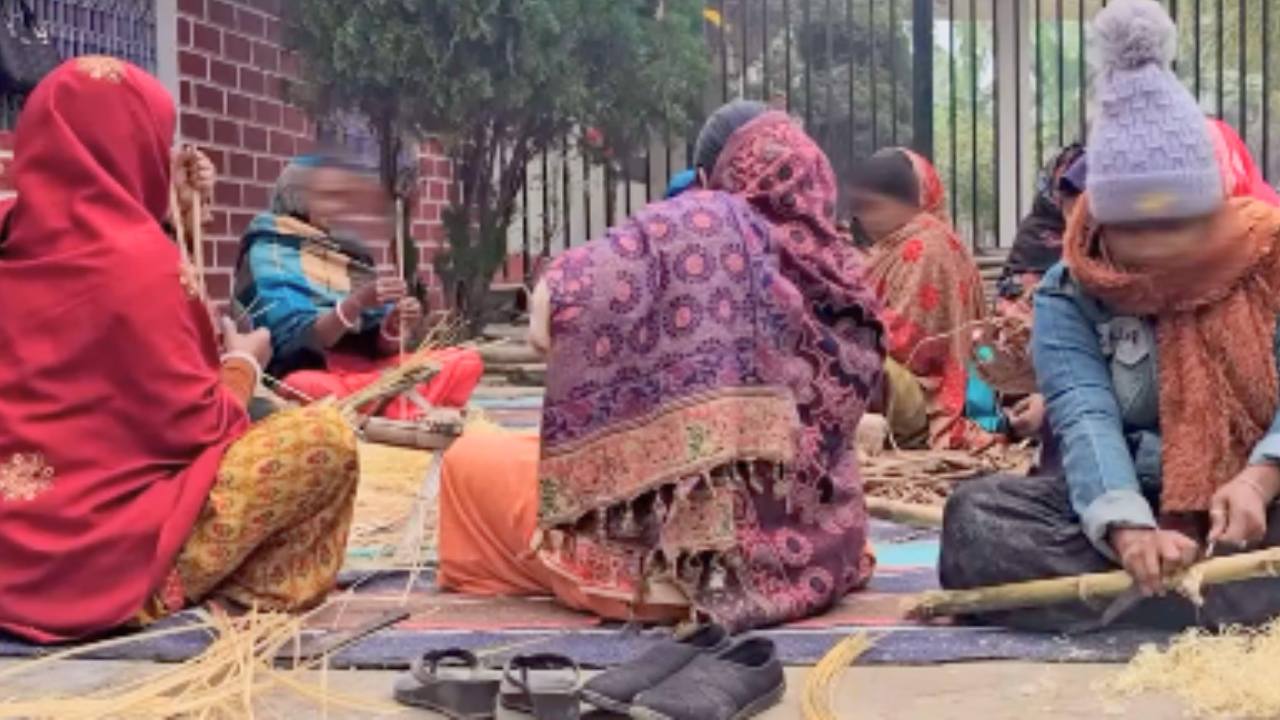
Women in Biskohar, Uttar Pradesh, are learning to turn an invasive aquatic plant into craft products.
A weed that clogs ponds and waterways has found an unlikely place in the world of fashion. In a village in Uttar Pradesh, women are learning to transform dried water hyacinth into handcrafted products, with their work now reaching the runway of Lakmé Fashion Week.For these women, the initiative is about more than making bags, baskets and other craft items. It offers a chance to develop a skill, earn through their work and build a livelihood without having to leave their village.
3 Oct 2026 | 10:50
What price have women been taught to pay for success?
Designer Anurag Gupta’s efforts to work with sex workers in Biskohar, a bazaar town in Siddharthnagar district, Uttar Pradesh aims to turn an overlooked plant into a source of income for women who have long faced social stigma and limited livelihood options.
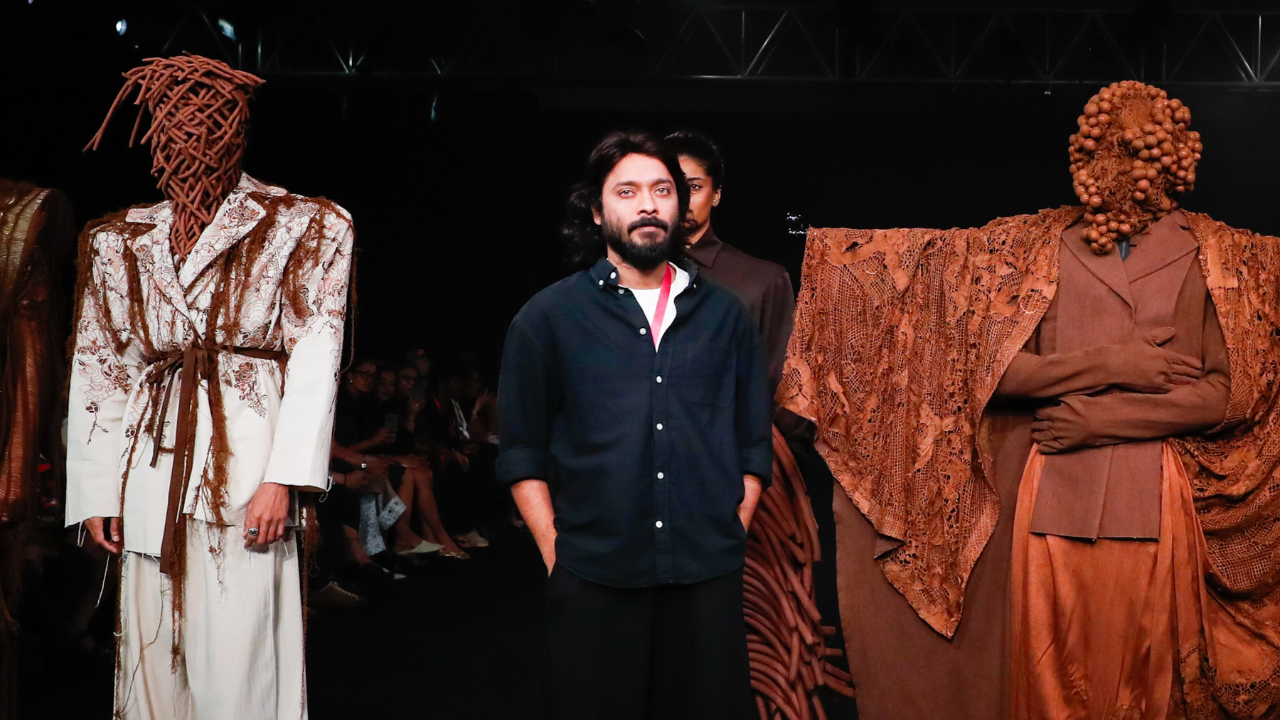
Designer Anurag Gupta is working with women in Biskohar to explore new markets for their handmade products.
From an invasive plant to a fashion material
Water hyacinth, locally known as jalkumbhi, grows rapidly in ponds, lakes and other water bodies. When left unchecked, the invasive aquatic plant can obstruct waterways and disturb aquatic ecosystems.But the plant’s stems can be dried, cut into strips and processed into fibres that can be woven into useful products. These include bags, baskets, home accessories and packaging materials. The leftover plant matter can also be used to make handmade paper.
For Gupta, the possibility of turning this material into a craft opened up a way to explore sustainable fashion while creating opportunities for women in his home region.The designer, who grew up in Siddharthnagar, came across the idea after seeing craftspersons from Bihar making baskets, mats and gift items from water hyacinth at a showcase in Delhi. He later learnt about the work of Earthomadic Foundation, an organisation that works with sex workers and trains them in artisan skills.He began exploring whether a similar initiative could be developed in Biskohar, where generations of women have faced social marginalisation.
Why the women were initially reluctant
The project, however, was not immediately welcomed by the women it was meant to support.According to The Indian Express report, Gupta spent around 10 months trying to persuade them to participate. Their hesitation stemmed from previous experiences of being approached for social initiatives that generated publicity but did not lead to lasting change.One of the women, identified by the publication as Sanichari*, questioned why they should become part of another campaign when earlier efforts had failed to improve their circumstances.“Everybody uses us to get headlines and then forgets us. They use us for their causes, get their grants and leave us midway,” she told The Indian Express.Her response points to a challenge that often accompanies livelihood initiatives involving marginalised communities: building trust can be as important as providing training.
For women who have experienced repeated promises without sustained support, a new project must demonstrate that it can offer something tangible.The women agreed to participate only after the first consignment of products had been booked, the report said.At Lakmé Fashion Week, their hand-spun weaves made from dried water hyacinth fibres featured in designs presented by Gupta. The appearance brought their work into a fashion space that is usually associated with established designers, labels and commercial collections.But a runway presentation is only one step in building a viable business. The longer-term challenge is to ensure that interest in the collection translates into regular orders and earnings for the women involved.
What happens after the runway?
Gupta is exploring ways to connect the craft with different markets, including home and lifestyle products, corporate gifting, retail and e-commerce. Packaging for brands and businesses is another possible avenue.The project is also considering a training programme under which participating women would receive a stipend during an initial month of learning. Those who choose to continue could take up home-based production against orders.Such an approach could allow women to learn a new skill while working around their existing family responsibilities and circumstances. It could also help connect training to actual earning opportunities rather than leaving participants with a certificate but no clear route to employment.For Gupta, the aim is to create a model in which the women can work within their village instead of having to migrate elsewhere in search of livelihoods.The initiative brings together two concerns that are rarely discussed in the same context: the environmental problems caused by an invasive plant and the economic exclusion faced by a marginalised group of women. By turning water hyacinth into a usable material, the project is exploring whether something widely treated as waste can become a commercially viable craft.Its success, however, will depend on what follows the fashion show. Sustained demand, fair payment and continued access to orders will determine whether the women can turn their new skills into dependable livelihoods.For now, their work has moved from a village in Uttar Pradesh to one of India's best-known fashion platforms. The next milestone will be ensuring that the opportunity created by that visibility continues long after the runway lights go out.
KioskNews shows a cleaned-up reading view extracted from the publisher’s page — the original always lives on their site, not ours.