‘The moon is too bright’: is China’s 12345 hotline a victim of its own success?

Liu handles 10 hotline requests a day on average – from rotten fruit to disputes between neighbours and appeals for help with financial hardship. All requests must get a response within 10 working days, and Liu follows up on every case.
She is one of thousands of frontline officials working across more than 38,000 township-level administrative divisions in China.
Much of their work is generated by the hotline. Chinese can call the nationwide number for non-emergency services – enquiries, complaints and requests – 24 hours a day.
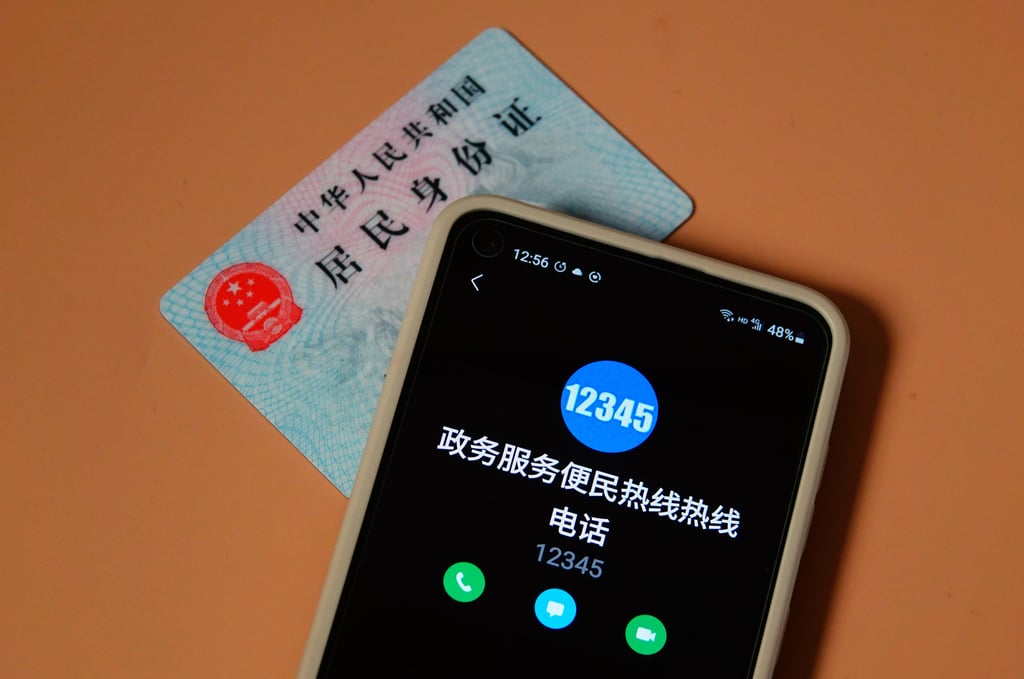
It grew out of the “mayor’s hotlines” of the 1980s that gave residents direct access to local officials, and data collected from the hotline is now used to shape policy and maintain social stability. But misuse of the service has become a burden for the officials tasked with responding.
Unreasonable requests or those outside the scope of the hotline are estimated to account for more than 30 per cent of the total in some areas, according to an October commentary in state-run Xinmin Evening News.
Du Yuchun, an associate professor at China Agricultural University’s College of Humanities and Development Studies, said such demands meant officials were slower in responding to the legitimate calls.
“Unreasonable requests are often vaguely defined and handling one can consume as much time and resources as dealing with 10 or 20 reasonable ones,” Du said.
He noted that government staff were discouraged from turning away requests to stop them from shirking their responsibility.
“So even when a request can be excluded, proving that it is unreasonable takes considerable effort,” Du said.
To address this problem, several cities have introduced new assessment criteria and rules for handling hotline requests.
In October, Yangjiang in Guangdong province released a list of requests that would not be considered. That followed similar moves by Xiamen in Fujian and Ningbo in Zhejiang in August and September.
Du said there had been growing trust in the hotline which had led some callers to assume the government could help them with anything.
He gave the extreme example of a complaint that the moon was too bright and was disturbing the caller’s sleep.
While public satisfaction with the hotline varies by locality it has improved overall in recent years. In Beijing, the public satisfaction rate was 97.7 per cent in 2025 – up from 64.6 per cent at the start of 2019, according to official data.
That adds to pressure on cadres, who want higher scores by resolving all the requests that come in via the hotline – particularly as local governments might compete for better rankings.
The service is not unique to China. Both the United States and Canada have similar hotlines to handle information requests, complaints and non-emergency needs, while Singapore’s OneService collects feedback on neighbourhood maintenance and other municipal issues.
By comparison, China’s hotline gathers information about a “much wider range of social concerns than [Canada’s] 311 typically covers”, according to Rui Hou, an assistant professor in sociology at Saint Mary’s University in Canada.
He said the slogan of the Chinese service – “turn to the government when you need help” – encouraged people to seek assistance even with family and neighbourhood disputes.
There is also a key difference in how officials are assessed on their handling of hotline calls. Hou noted that in North America, “local elections provide a distinct mechanism for holding elected officials to account”. In China, work on the hotline is specifically part of performance reviews.
Beijing was the first place to introduce a system in 2019 where officials are appointed to oversee complaints to the hotline and ranked according to their response and resolution rates, as well as public satisfaction ratings.
District leaders are assessed every month on their handling of hotline calls and publicly praised or criticised by the city’s top leadership for their performance, Xinhua reported in 2019.
That approach has since been adopted by many provinces and cities.
One civil servant at a Beijing subdistrict office said deadlines and assessment criteria varied by locality, but the reviews carried significant weight for officials.
Assessments are carried out across the administrative hierarchy, with subdistricts rating officials at the community level, districts ranking subdistricts, and cities assessing districts.
The civil servant – who declined to be named because of restrictions on speaking to the media – said the results could potentially be included in the performance reviews of senior leaders.
Hou said that for local leaders the hotline was “an easy project to invest in and an achievement that is easy to publicise”.
“[The hotline] fits the party’s emphasis on the ‘mass line’ and on livelihood policies, and it also answers the call for big data and modernised governance,” he said.
02:52
Looking for love? Chinese Communist Party launches ‘matchmaking’ service
The mass line – a central principle of the Communist Party – calls for officials to maintain close contact with the public, understand their concerns and respond to their needs.
Mao Zedong set out the idea in 1943 as founding leader of the People’s Republic of China. It has been carried through by President Xi Jinping, who has frequently spoken about the importance of the party maintaining close ties with the people.
As well as the hotline, Chinese can raise problems with the government and seek help via the centuries-old petitioning system, known as xinfang.
Petitioning allows people to seek official intervention in grievances over everything from land disputes to unpaid wages or report abuses of power by local officials. They can also appeal to higher authorities over unresolved problems.
But in the early 2010s the leadership became concerned about petitioners travelling to Beijing from all over the country to air their grievances, fearing the impact on social stability.
Officials subsequently expanded online petitioning and tightened the rules on appeals made in person in an effort to resolve more disputes locally.
Du said that while the petitioning system was still in use it was “losing its appeal” because of a negative public image and the higher costs involved.
In contrast, he said the hotline was “a relatively inclusive channel for people to voice their concerns”.
“Making a call is fairly easy – even elderly people in rural areas have phones they can use to call,” he said.
The Chinese government has put more emphasis on the hotline in recent years as the economy and technologies have developed.
National guidelines issued in June last year called for stronger oversight of the hotline and operational improvements to better address the needs and concerns of residents and businesses and improve governance.
The Central Committee also called for public service platforms such as the hotline to be strengthened to ensure that “when the people call, we respond”, in its recommendations for the next five-year plan released in October 2025.
Talking through a problem over the phone can bring relief and help people see things differently
Du identified another reason the authorities valued the hotline – because the data it collects can help shape policy.
“12345 brings together small pieces of information scattered among residents and turns it into a basis for urban governance and decision-making,” he said.
Even a small complaint about a rotten durian and a vendor who cannot be found could reveal a wider issue if there is a cluster of similar cases in particular areas or at particular times – meaning the authorities could respond through policy.
According to Du, Beijing draws on data from the hotline to come up with a dozen or so policies each year that have broad public impact.
“When making decisions and allocating resources, authorities need to know how much demand there is,” Du said.
“Even the simplest aggregation of 12345 data can give them a clearer picture of how strong that demand is.”
He said the hotline aimed to ease public frustration and help maintain social stability, though there was no clear evidence of its impact.
“Without 12345 as a channel to voice their concerns, people might resort to more extreme ways of expressing them,” Du said.
He added that – beyond resolving practical issues and answering queries – the hotline also helped people to work through negative emotions.
“Talking through a problem over the phone can bring relief and help people see things differently,” Du said. “The hope is to allow frustrations at the grass-roots level to be expressed and absorbed in an orderly way.”
06:45
SCMP Explains: How does the Chinese Communist Party operate?
Meng Tianguang, a professor at Tsinghua University’s School of Social Sciences, said the hotline also helped to prevent disputes and to catch existing ones before they escalated.
Meng and a team of researchers released two reports last month on the value of hotline services in China and worldwide.
He said the 12345 hotline coordinated with emergency hotlines including the police, which helped to “ensure that urgent or potentially serious cases reach the appropriate authorities promptly”.
Meng said the hotline worked in tandem with efforts to tackle problems early, including through community consultations where residents, officials and other stakeholders work together to resolve local issues.
That means some problems can be resolved before they recur or “develop into hotline requests”, according to Meng.
Shenyang in Liaoning province set up the first government hotline in 1983 as a way for local officials to directly hear the views and suggestions of residents.
The idea spread to other cities from there, and in 1999 what was then the Ministry of Information Industry started promoting the easy-to-remember number nationwide.
But it took until the end of 2021 for all government hotlines to be consolidated across the country under the 12345 number following an order from Beijing.
Bao Xiaohui, a professor of urban economics and public policy at the University of Cambridge, said complaints varied according to the local conditions.
For example, waterlogging is a recurring concern in Wuhan, while parking and property disputes feature prominently in Beijing, said Bao, who co-presented the reports with Meng.
But across China, the hotline now followed a “fairly uniform institutional arrangement with distinct local practice”.
National standards took effect in January last year covering government hotline operations, integration, knowledge-base development and data use.
But Bao said practices across the country varied and there were differences in how cities operated – with the smaller cities not tending to perform as well as the largest ones.
She added that Beijing’s success rested on “high-level authority and fiscal resources that most cities lack”.
KioskNews shows a cleaned-up reading view extracted from the publisher’s page — the original always lives on their site, not ours.