The Guardian view on the far right’s plans for Brussels: doing the work of Xi, Putin and Trump | Editorial

Following the Brexit referendum in 2016, Marine Le Pen was in a predictably celebratory mood. Britain’s vote to leave the European Union, she told one interviewer, was the first breach in the “Brussels Wall”. Ms Le Pen’s Front National party was at that point committed to taking France down the same path, given the chance. But as the UK’s self-inflicted economic wounds became a cautionary tale for the rest of Europe, the notion of Frexit was put on ice.
Instead, Ms Le Pen now hopes to lead far-right allies in hollowing out the EU from within. This month, both she and the leader of Alternative für Deutschland, Alice Weidel, outlined their visions of a “Europe of nations” in which EU institutions would be stripped of both cash and power. Ms Weidel’s “new deal for Europe” would abolish elections to the European parliament, and seek German opt-outs in areas such as migration, defence and common borrowing. Ms Le Pen’s party, now called National Rally, proposes slashing French contributions to the EU budget by 60% over a five-year presidential term, and ending the role of Brussels in proposing common policies for the 27 member states.
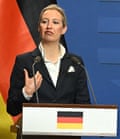
Similar ideas have long circulated in far-right thinktanks. But they are now in the programmes of parties that lead the polls in France and Germany – Europe’s historic engines of integration. Ms Weidel has targeted 2029, when the next German election is due to take place, as the year in which a critical mass of anti-EU leaders can begin to effectively unravel the European project. By then, Eurosceptic ultra-nationalist parties could conceivably be in power in France, Italy and Poland.
Faced with plotting in plain sight and a putative timetable for action, the response of pro-European forces has been distinctly underwhelming. From the economy to the climate emergency and security, Europe faces challenges that can only be properly addressed through the greater pooling of resources, allowing it to punch its continental weight. Mario Draghi, the former head of the European Central Bank, has warned that without an industrial policy to compete with China and the US, the continent faces an existential struggle. But other than the beleaguered and soon-to-be-departed French president Emmanuel Macron, it has been hard to find any EU leader speaking with the same sense of urgency.
Ms Le Pen and Ms Weidel’s interventions should be treated as a wake-up call. The kind of Europe they envisage would be less than the sum of its parts, distracted and weakened by competing national interests. In relation to defence, the moves towards European strategic autonomy would be undermined. The green transition, in the absence of collectively agreed goals, would stall. Adopting such a direction of travel would be an act of continental self-harm, opening up vulnerabilities that Xi Jinping and Vladimir Putin (and any Maga successor to Donald Trump) would eagerly exploit.
As a pivotal period in the history of the EU approaches, the time to start making such counter-arguments is now. The case for a strong Europe at a time of geopolitical volatility and anxiety is overwhelming. But it will need vigorous advocates as a battle for hearts and minds looms. For the time being, to paraphrase WB Yeats, the pro-Europeans appear to lack all conviction, while their opponents are full of passionate intensity.
-
Do you have an opinion on the issues raised in this article? If you would like to submit a response of up to 300 words by email to be considered for publication in our letters section, please click here.
KioskNews shows a cleaned-up reading view extracted from the publisher’s page — the original always lives on their site, not ours.